
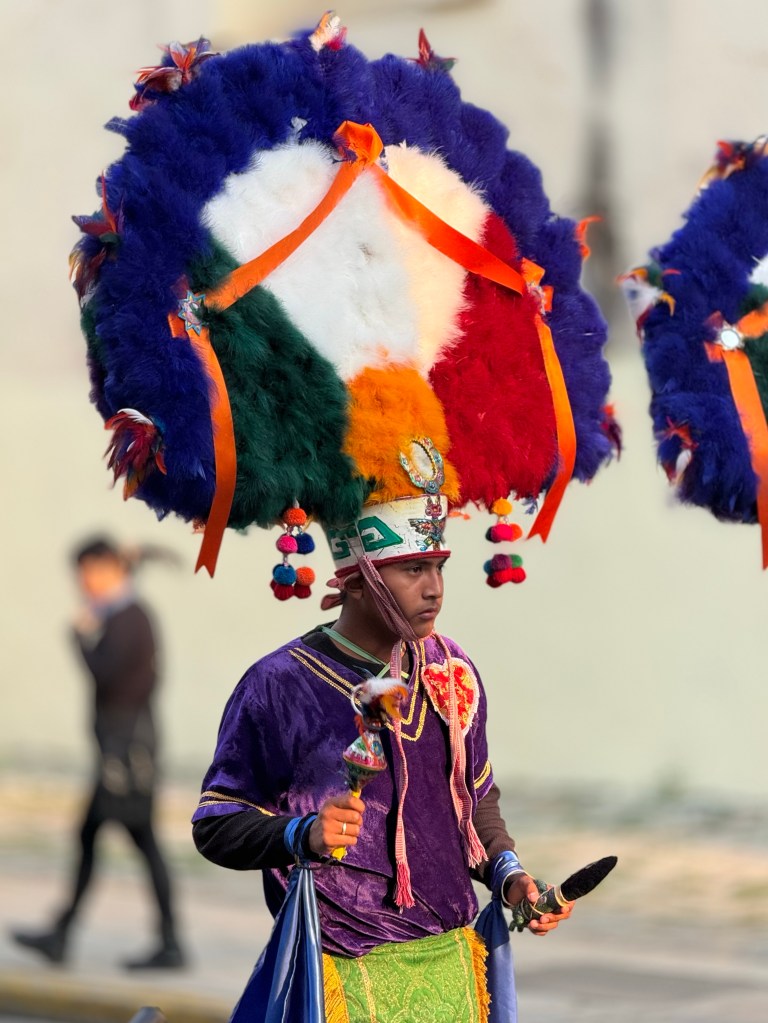
Oaxaca is a city in the south west of Mexico and since 1987, a UNESCO world heritage site. It has a rich history stretching back 1000’s of years with notable Mayan sites nearby.
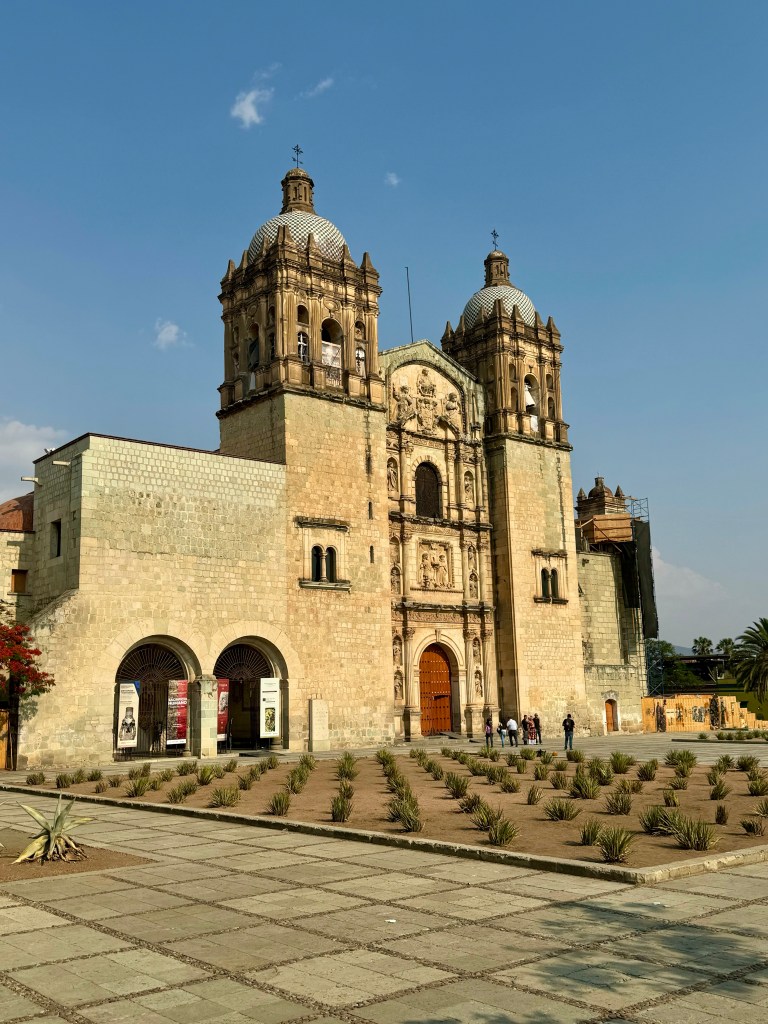
It has become a district known for its cuisine as well as for the high quality Mezcal produced in the area.

The district has a large number of subdivisions, more than many other Mexican states, many of which are autonomous leading to some conflicts on governance.

It is a wonderful and culturally rich city that we soon became entranced by.
Apologies in advance for the long post but this place deserves the attention!
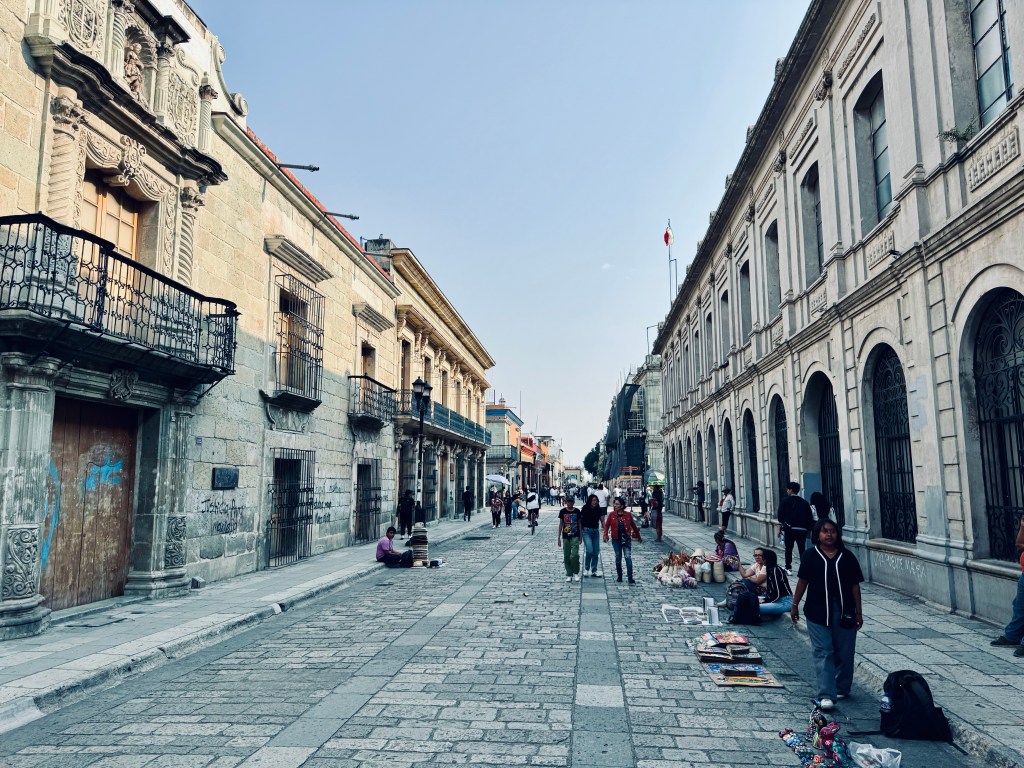
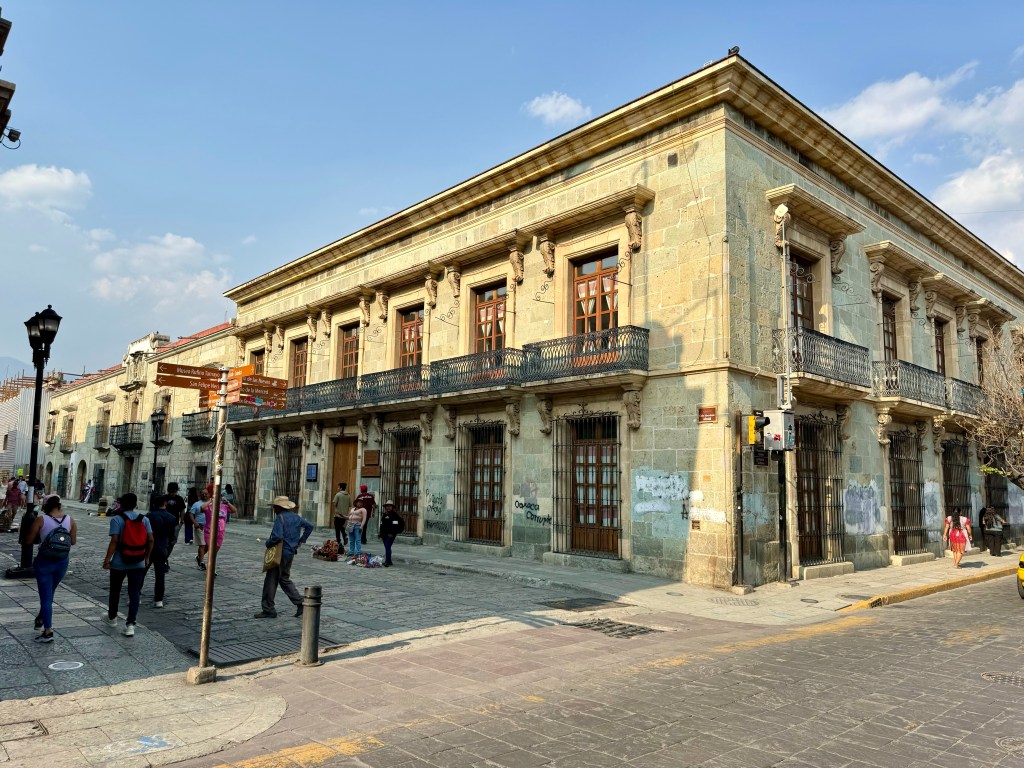
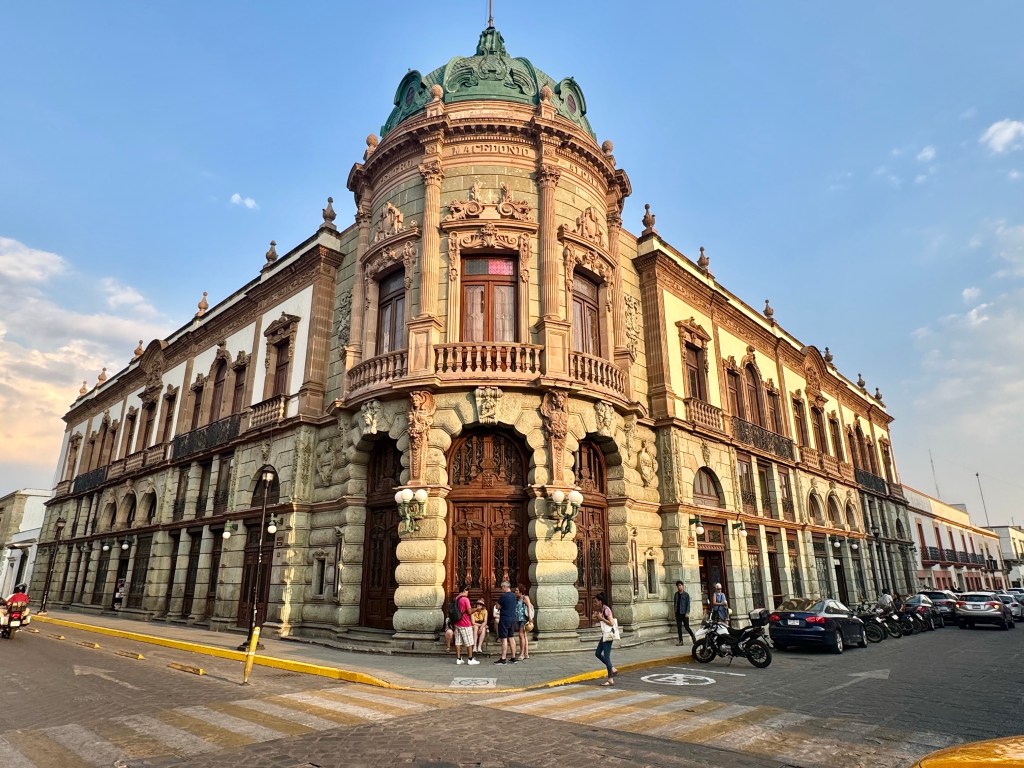
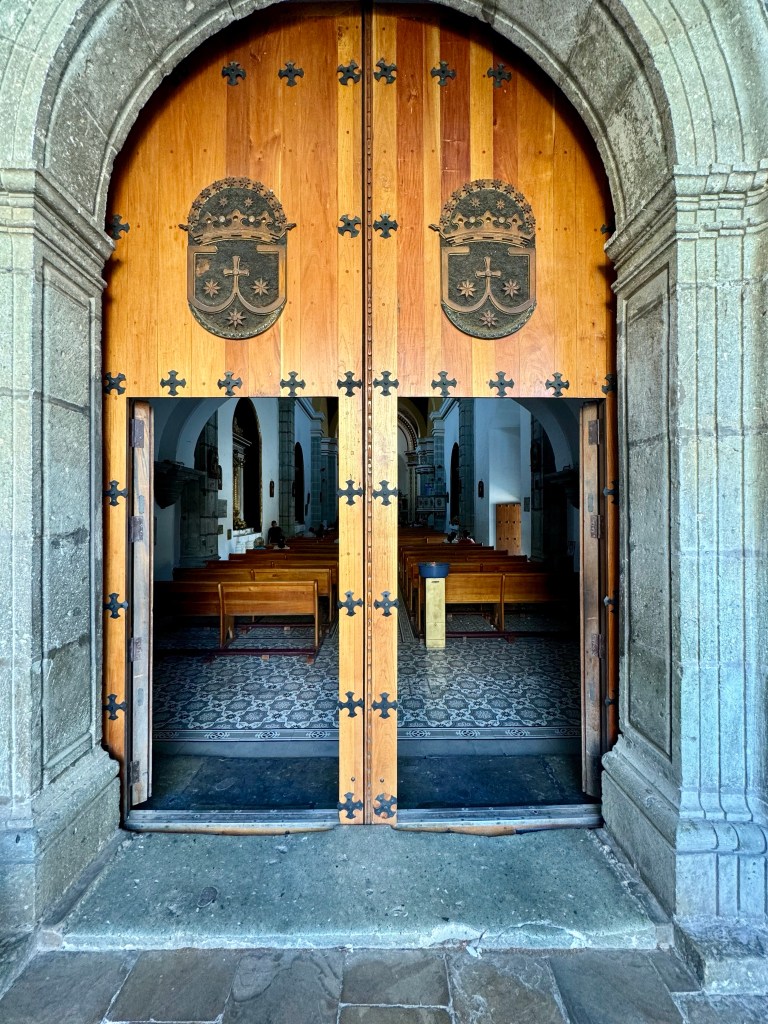
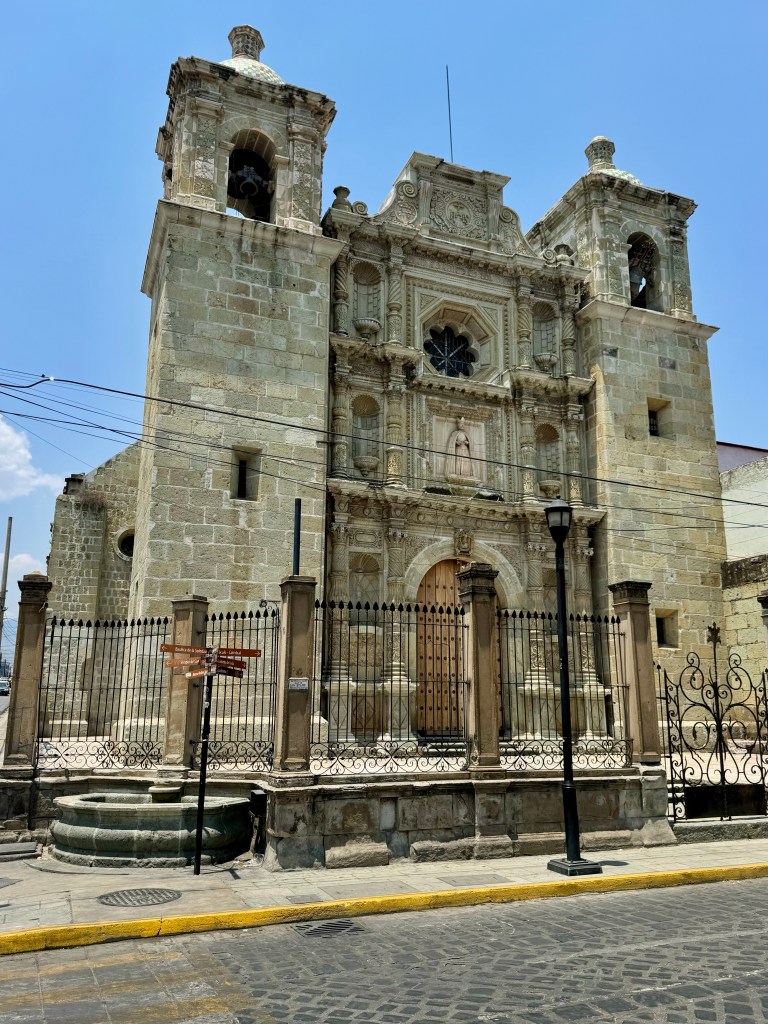
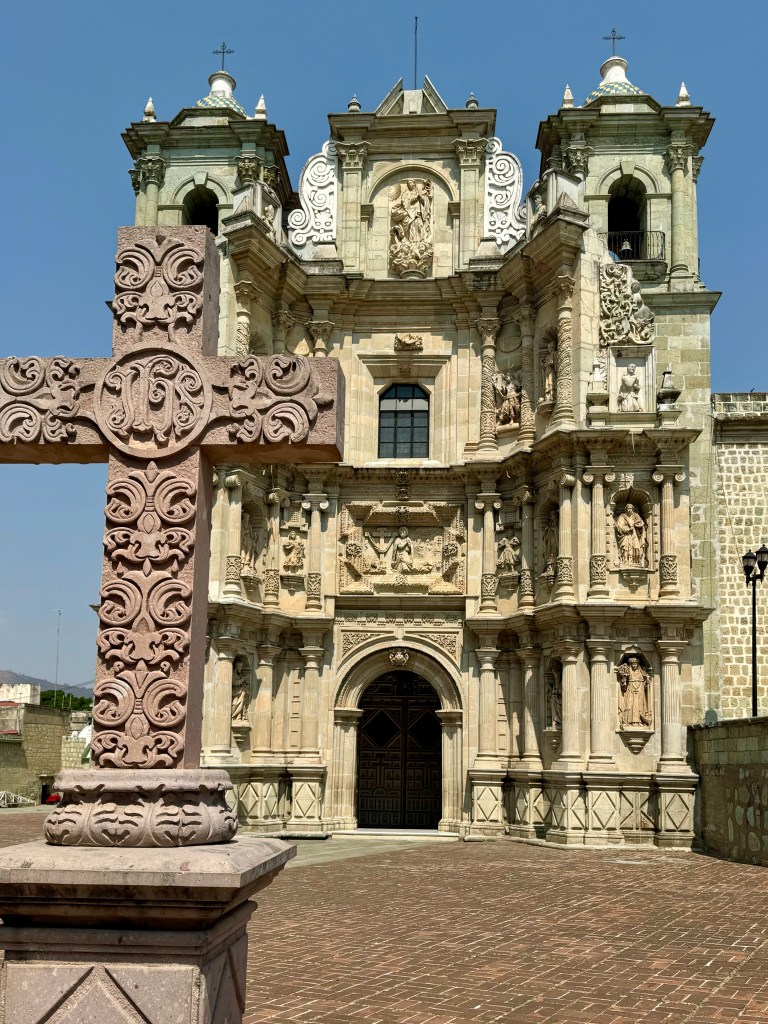
As an old Spanish colonial city there are of course plenty of rather grand churches to be seen.
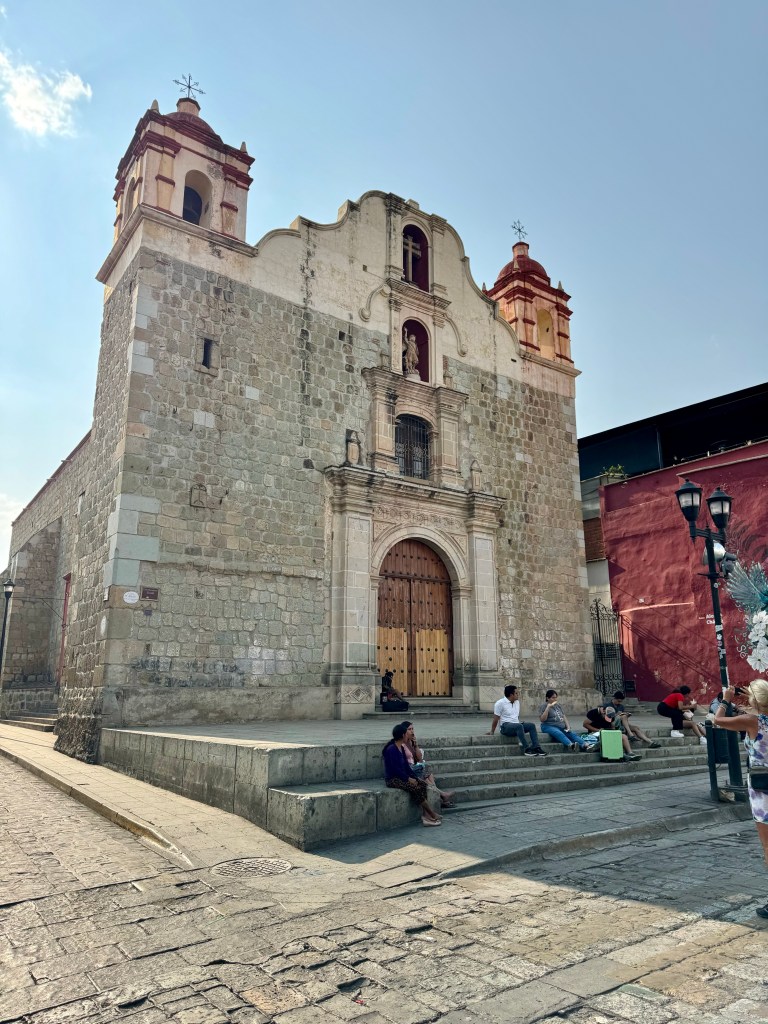
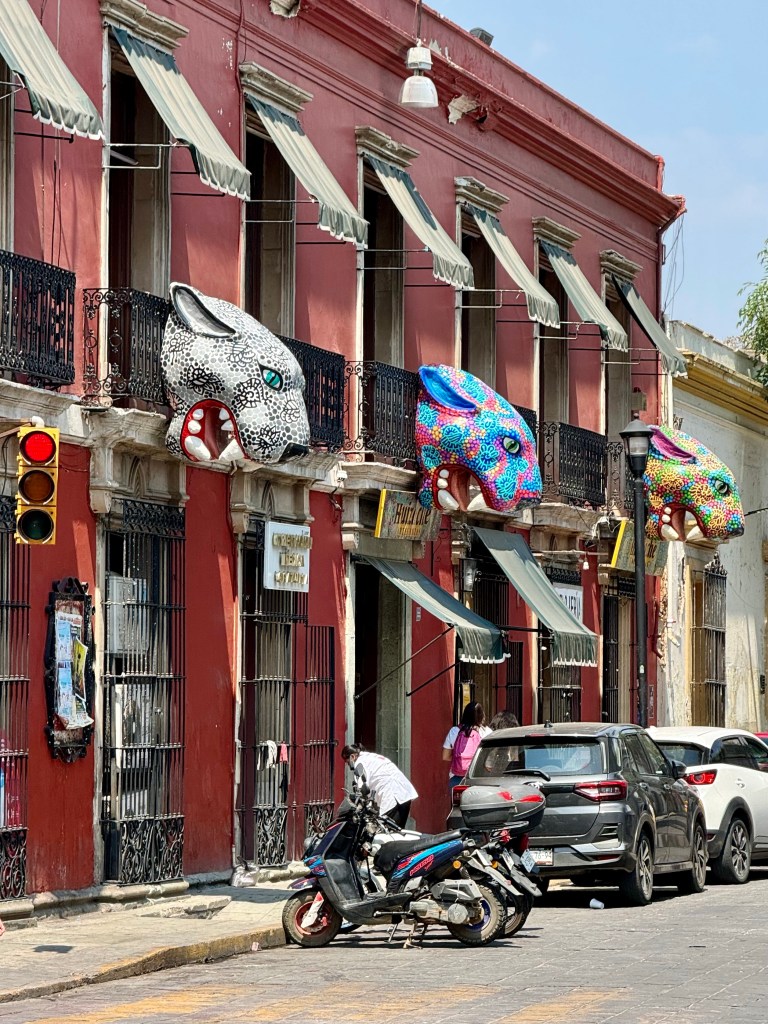
It is one of those cities that you can walk around and find something interesting around every corner.
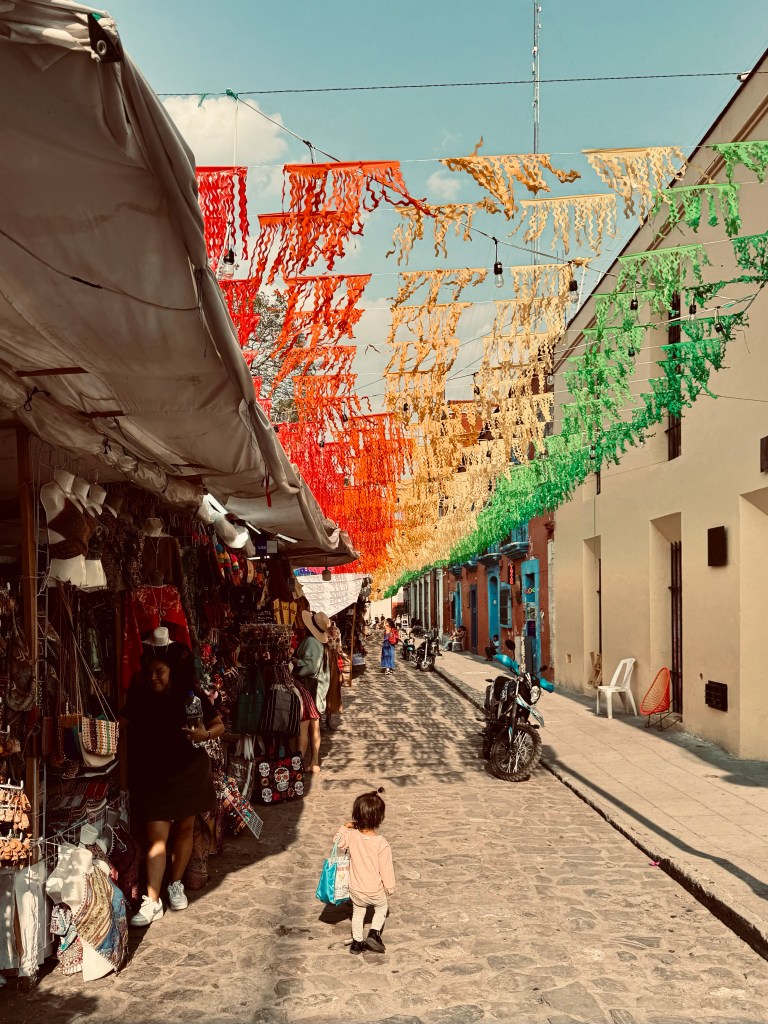

One of the best experiences when travelling is just stumbling across something interesting taking place, often without understanding what’s going on and why!
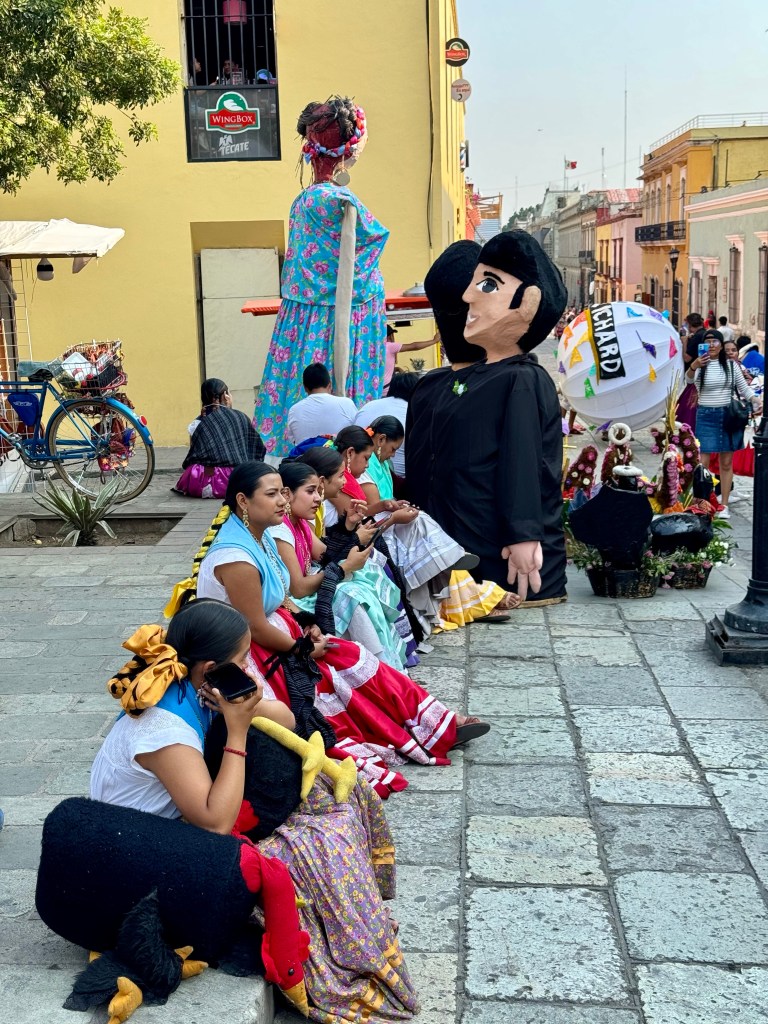
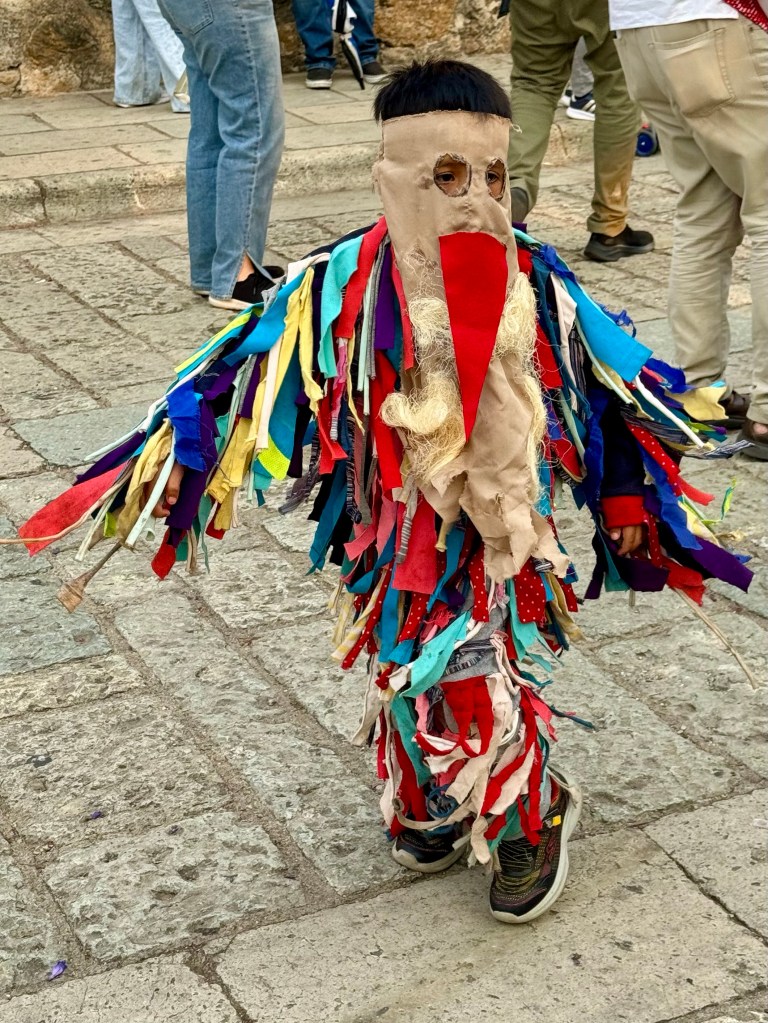
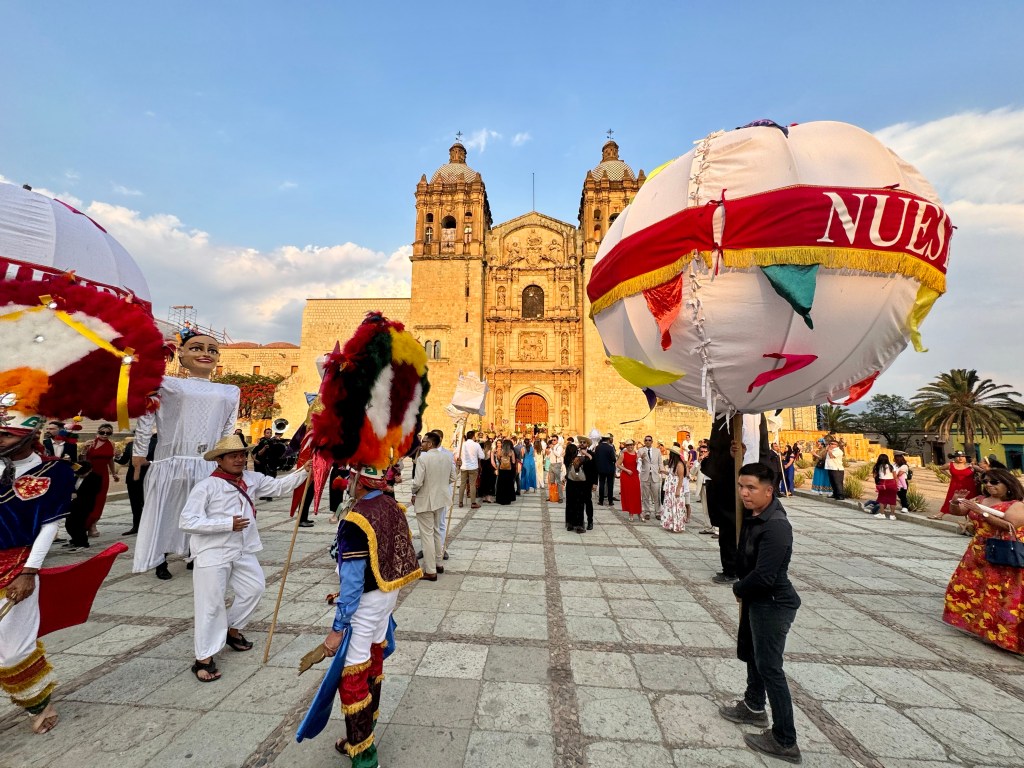
We stumbled across a number of ‘calenda’ events. These, we later learned, are street celebrations of weddings or graduations or just celebration events.

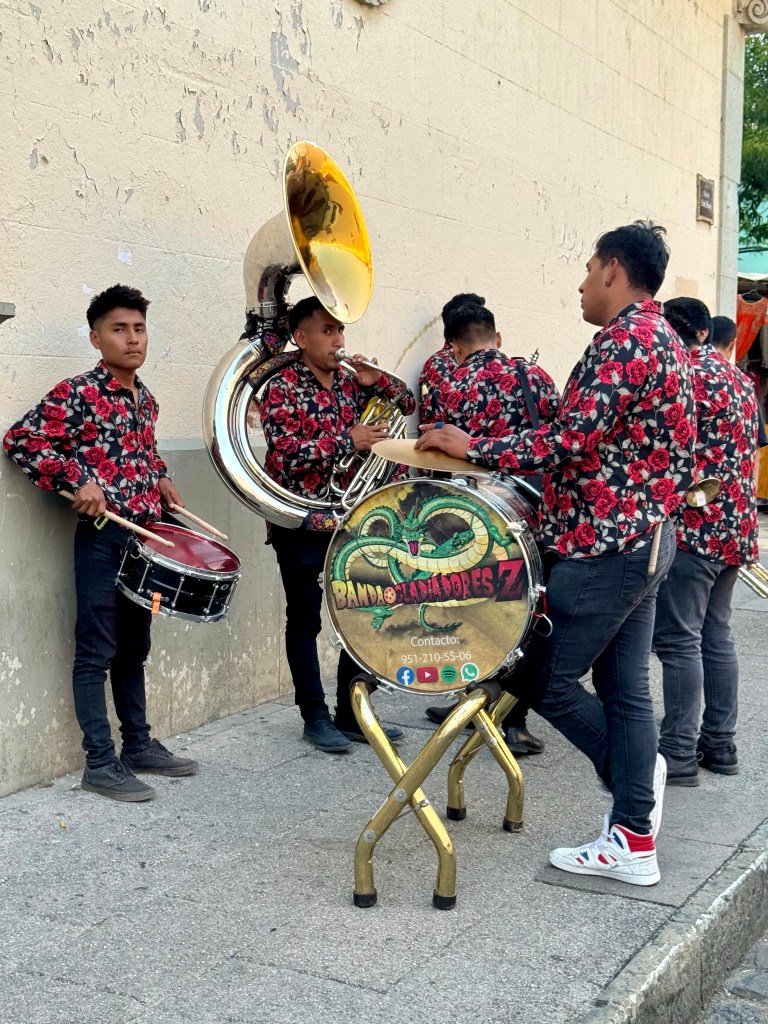
The parties dance and walk through the streets, including a band, dancers and the principal guests.
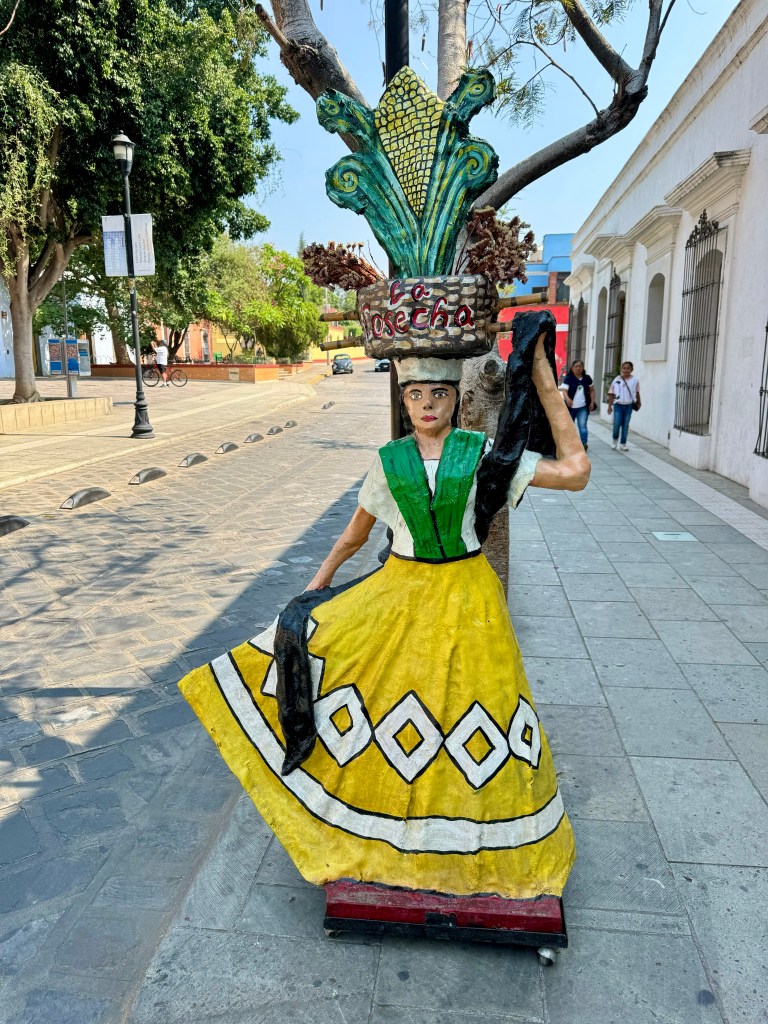
The procession also features large paper and fabric dolls called Monos de Calenda that represent the bride and groom for weddings.
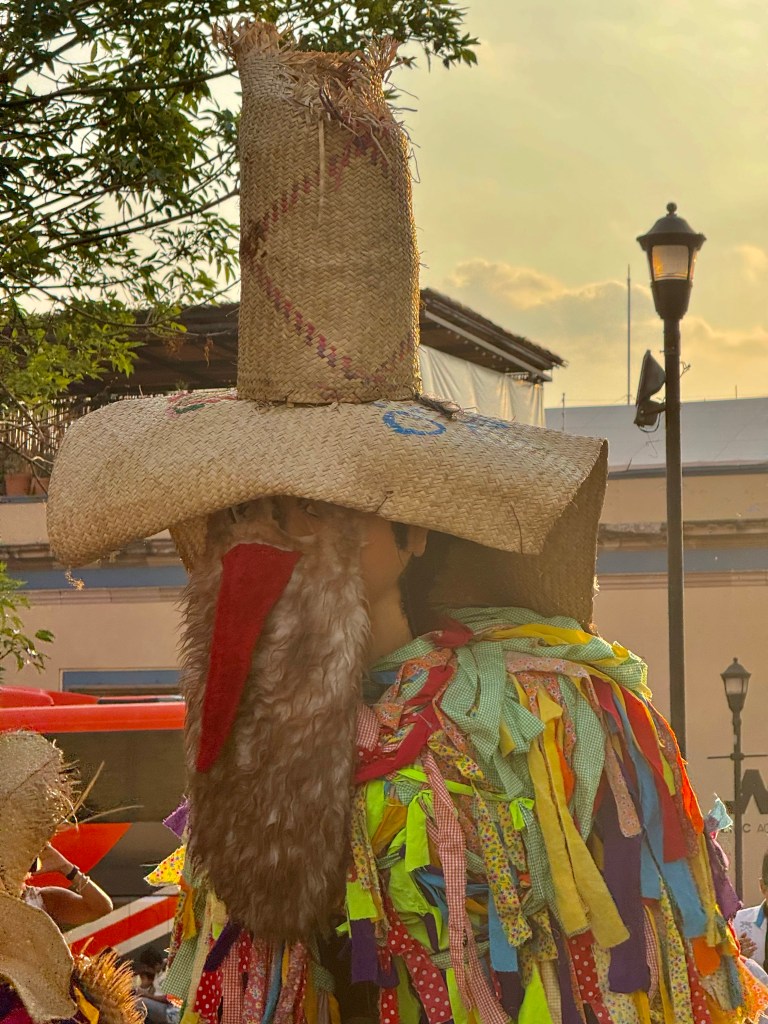
Some younger participants also join in.
Below a band take a break before the procession moves on.
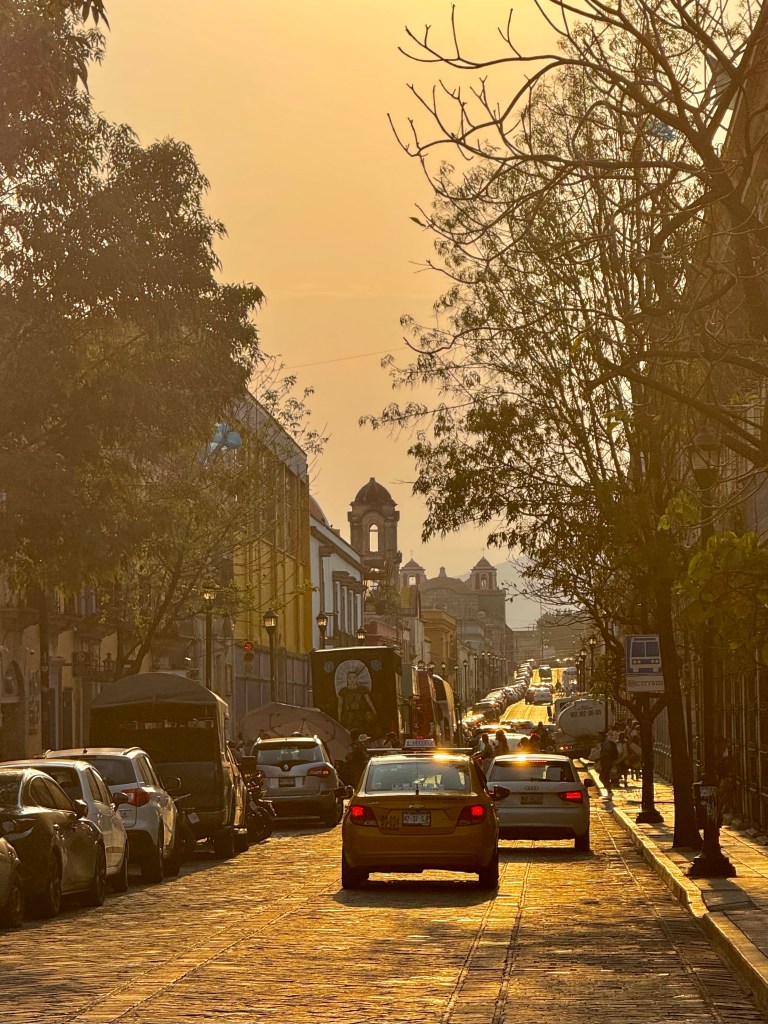
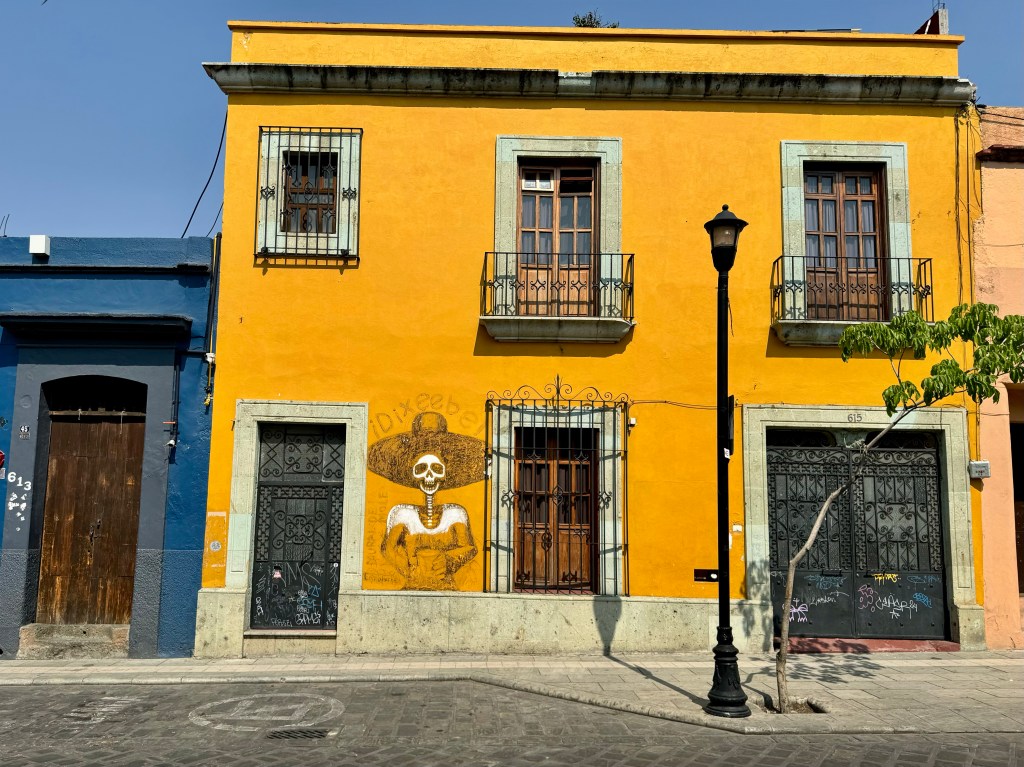
Oaxaca is such a beautiful city, there are wonderful views at every turn.

We have seen and heard a number of these organ players below (organilleros) in the streets of Mexico and had to wonder what was going on.
After a little investigation it appears that these organs originally emanated from Germany in the early 1900’s and at the time were courted by high society.
However, even with my tone deaf ears it seems that most had lost the ability to tune their organs anymore 😉

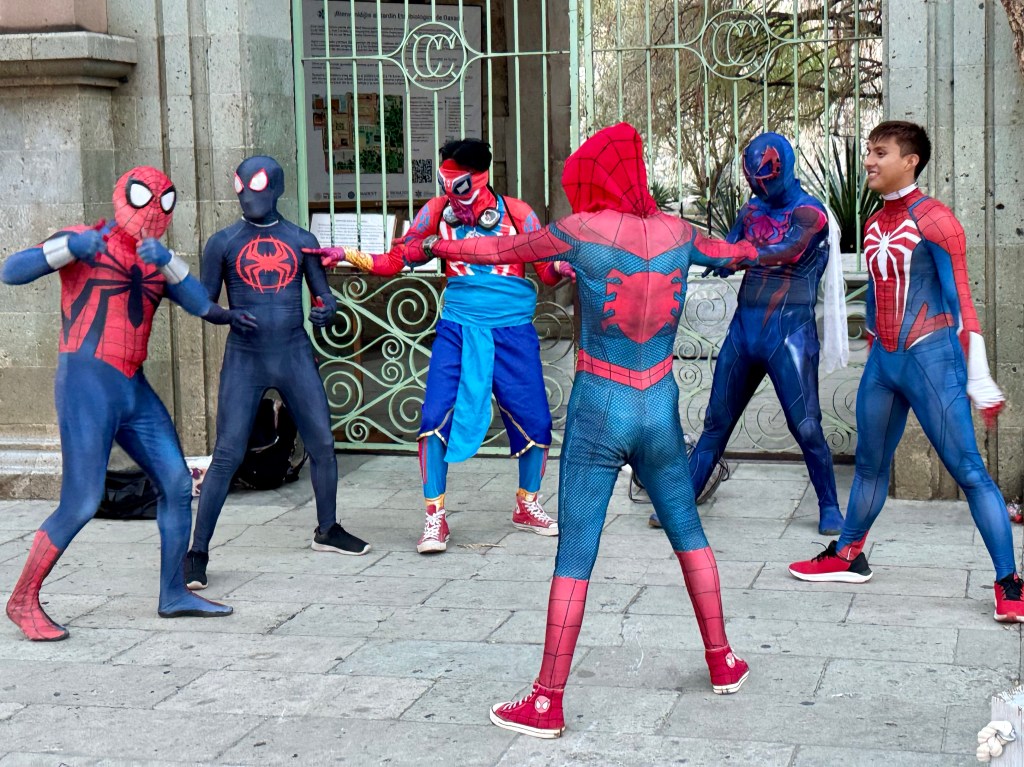
And, mentioning the unexpected, we spotted a strange Spiderman event happening outside the Botanical gardens one morning!
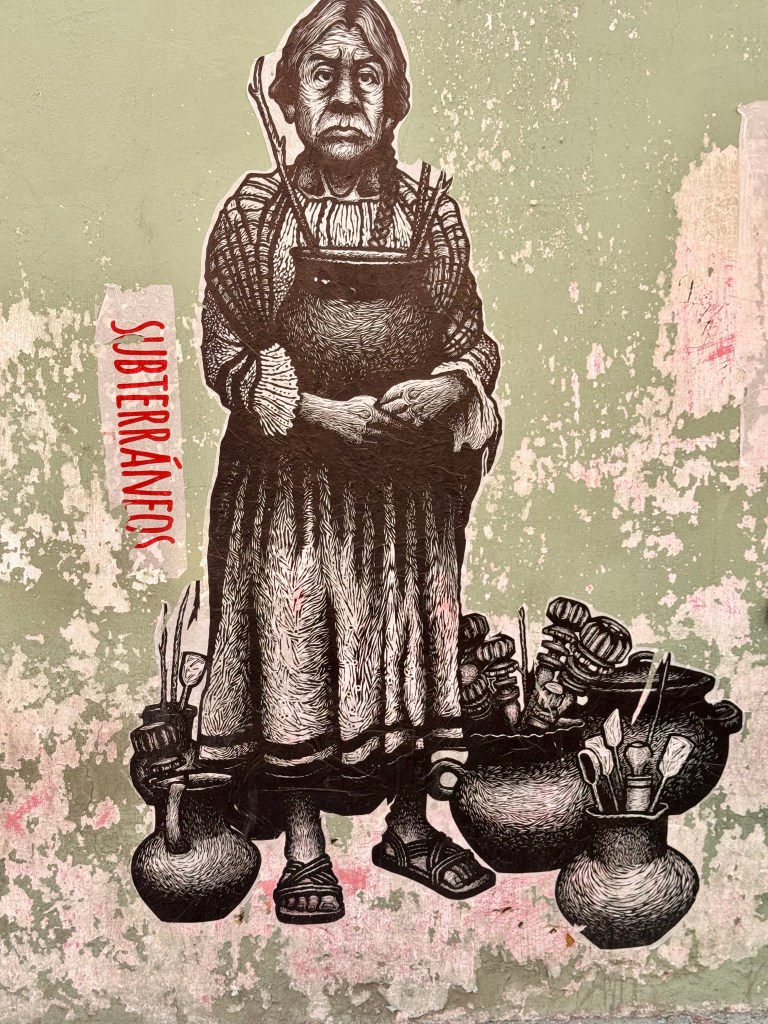
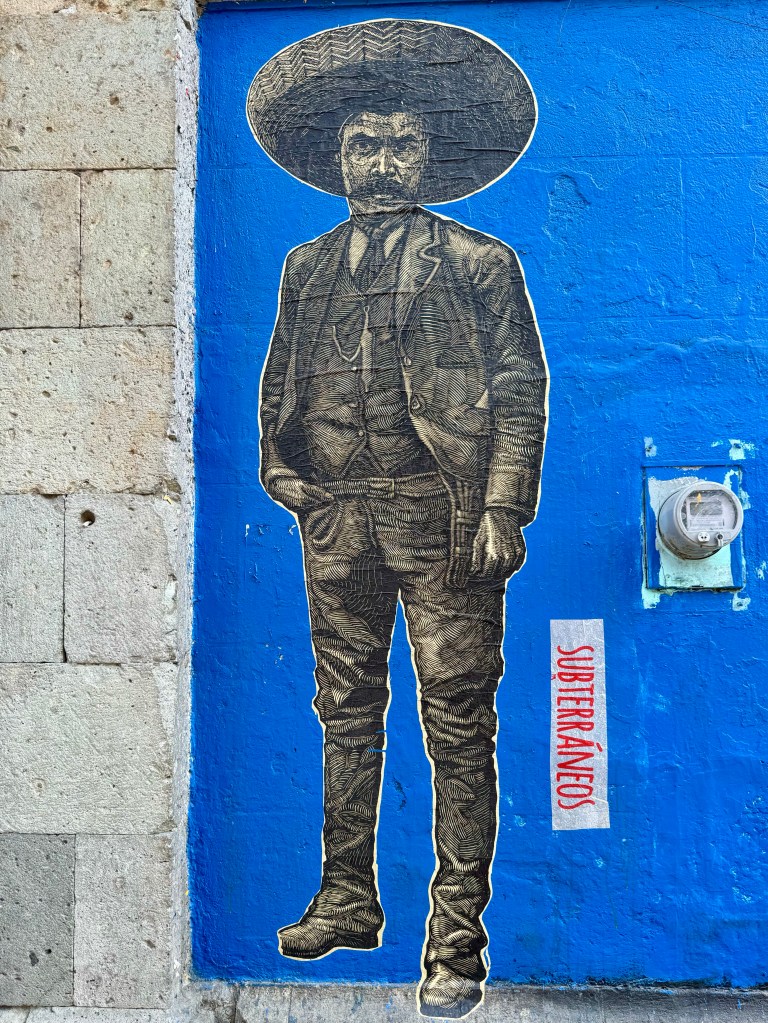
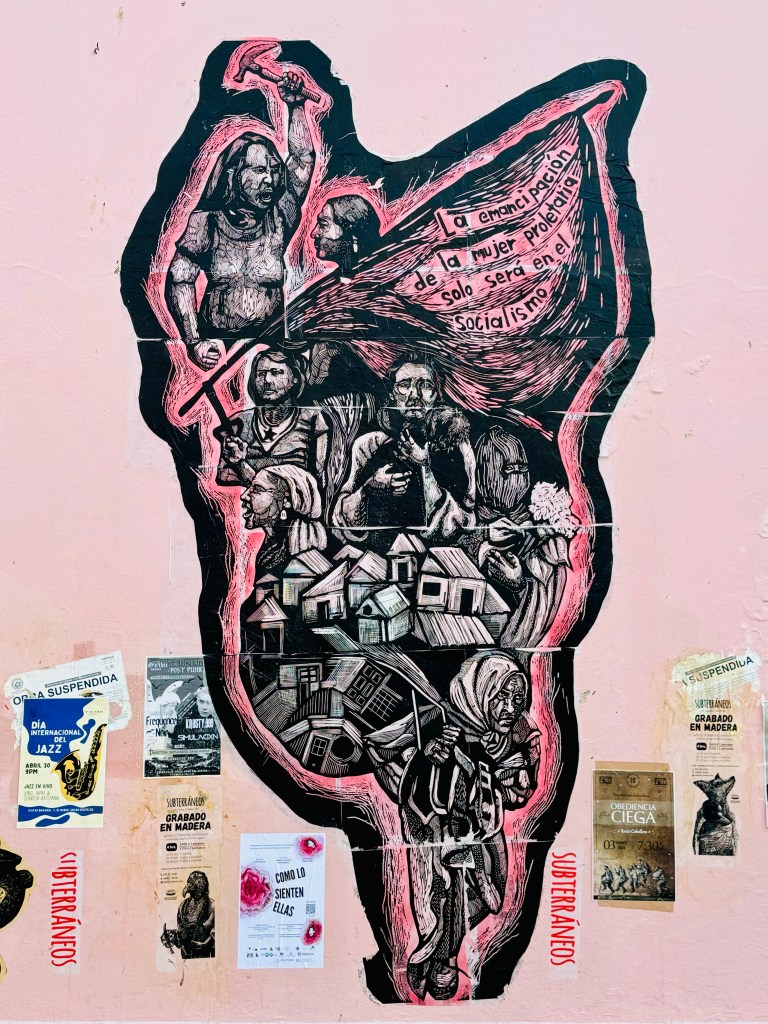
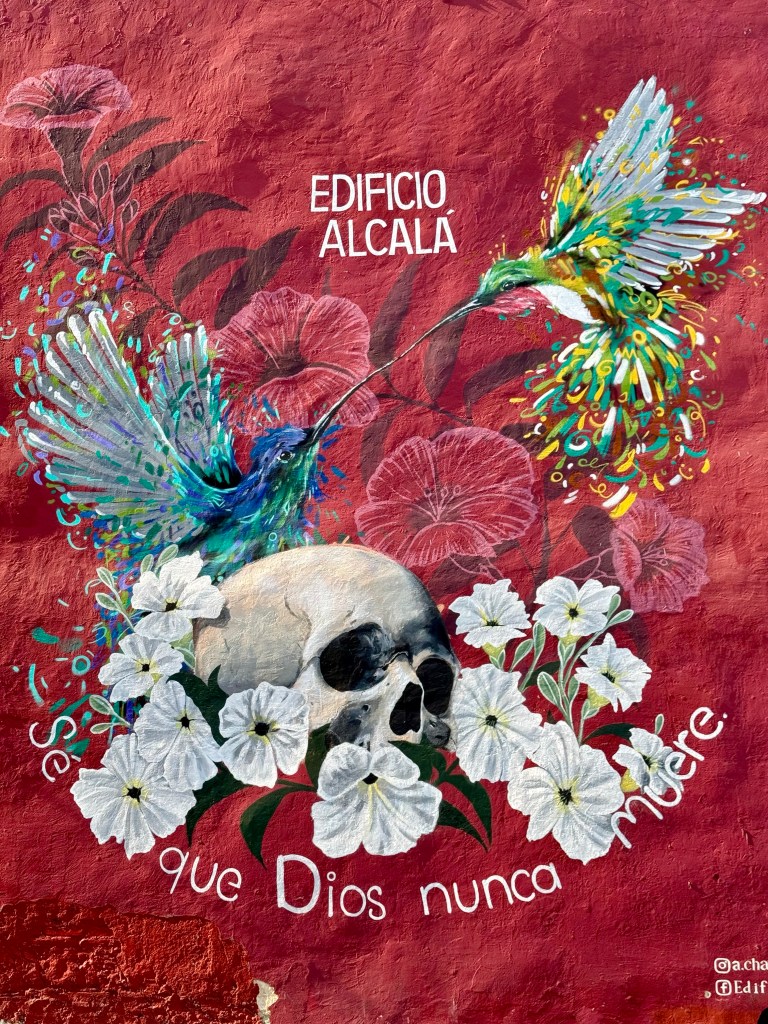
There are lots of stencil based street art to be seen across the city, Banksy beware.

We visited a lovely art gallery in the city, the Museum of Oaxacan Painters, free to enter with only donations needed.
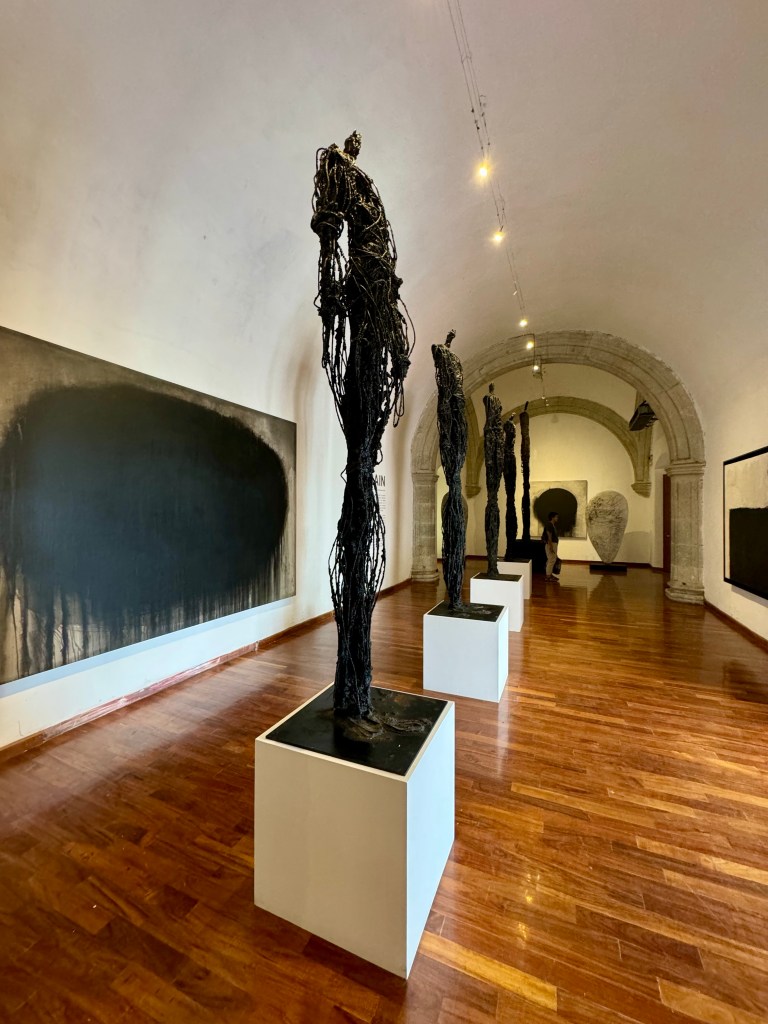
It’s one of those small but perfectly formed galleries and it is well worth a visit.

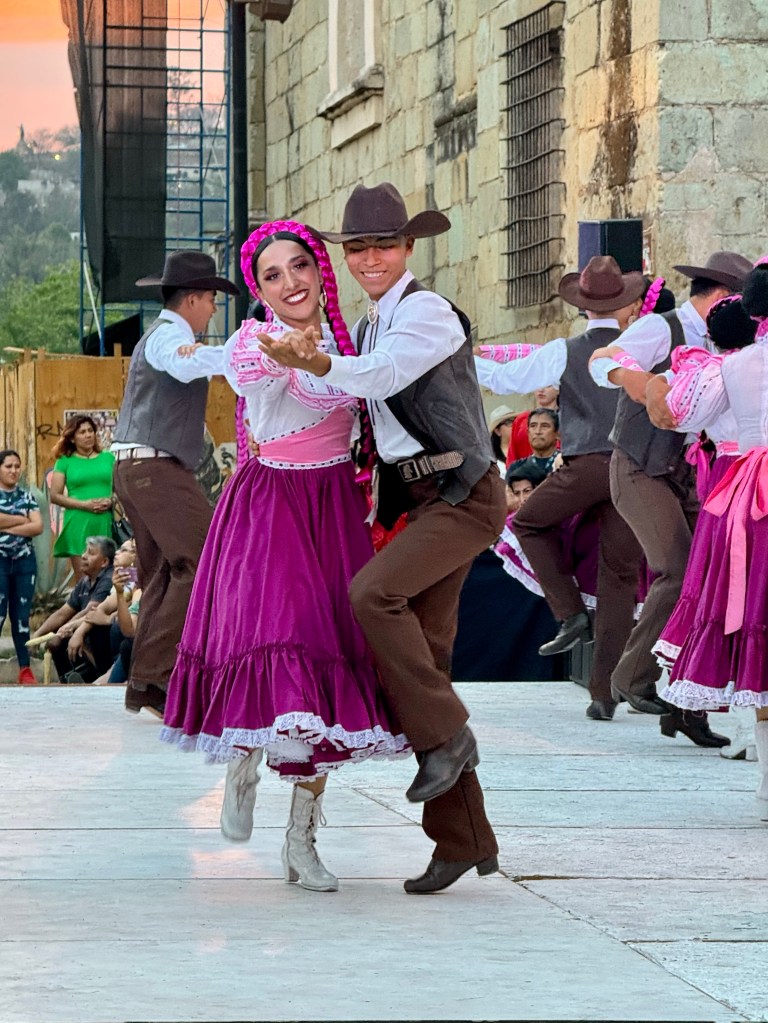
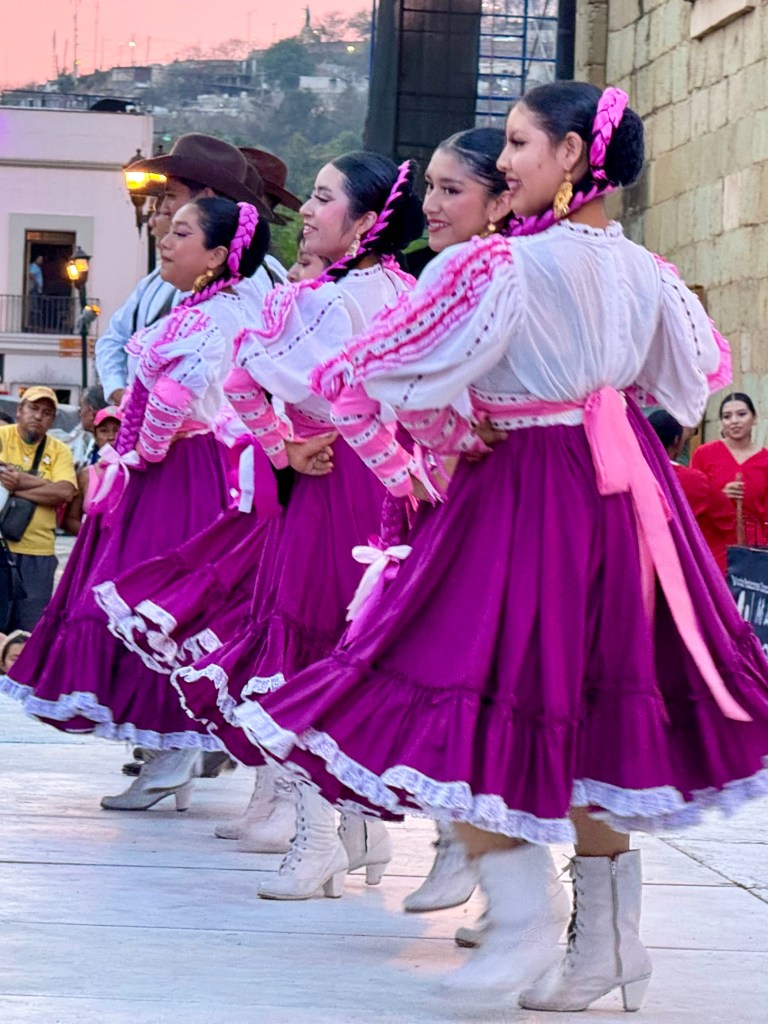
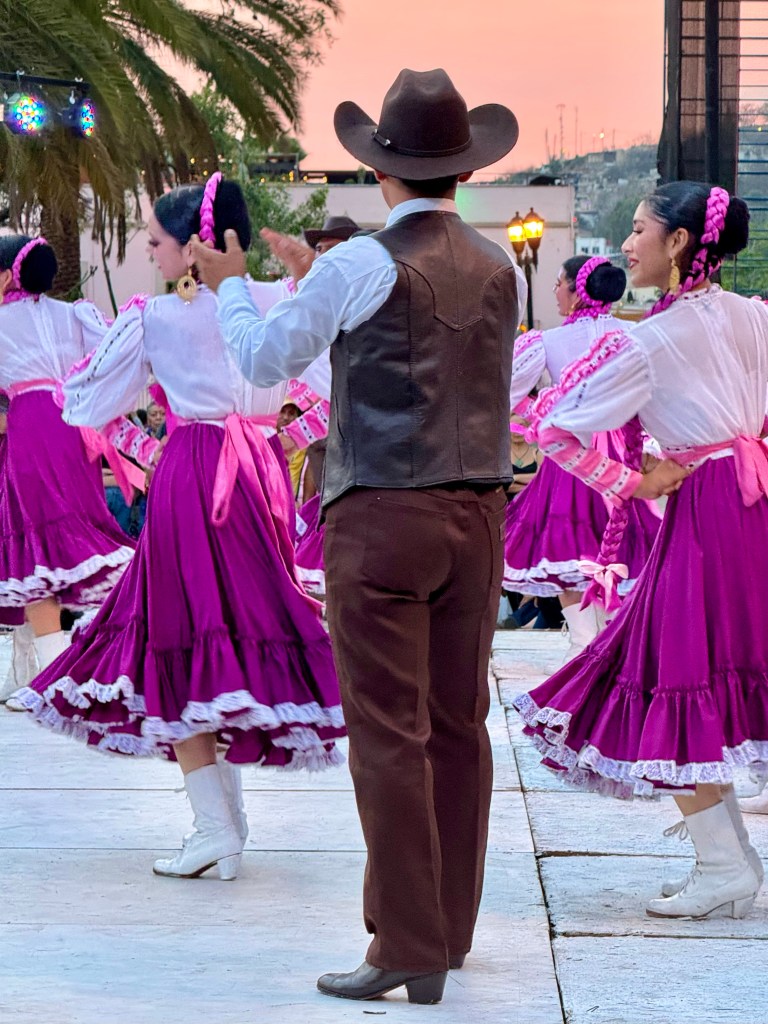
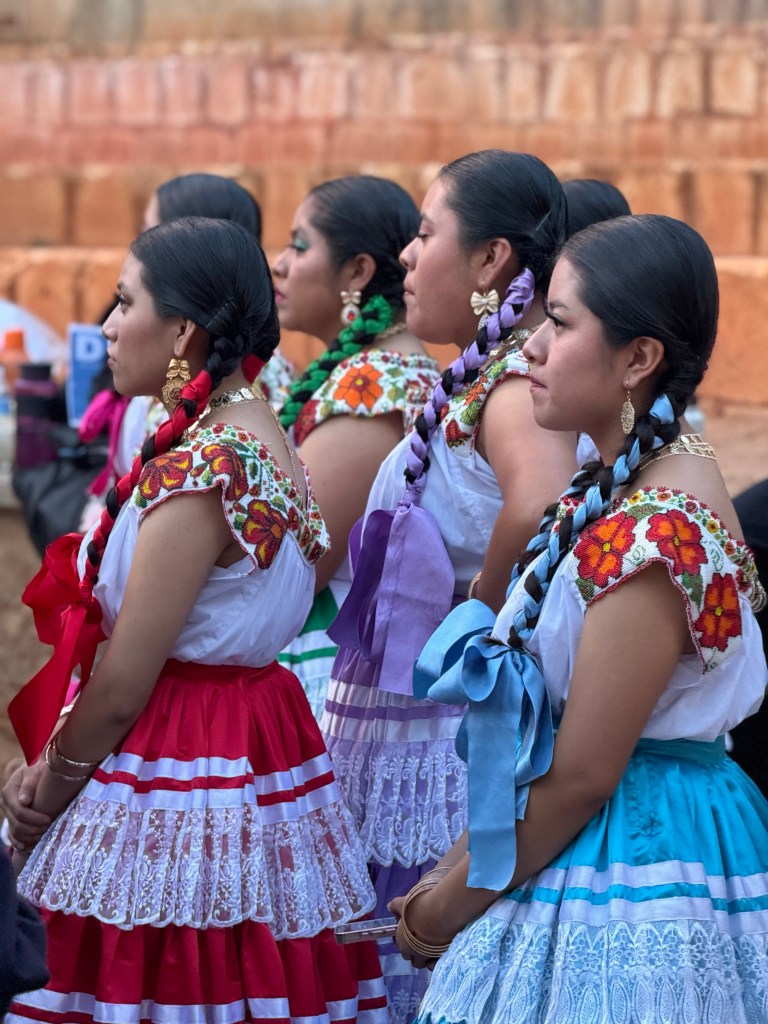
Next we stumbled upon this dancing event near a church, another unexpected encounter that makes this city so special to any visitor.
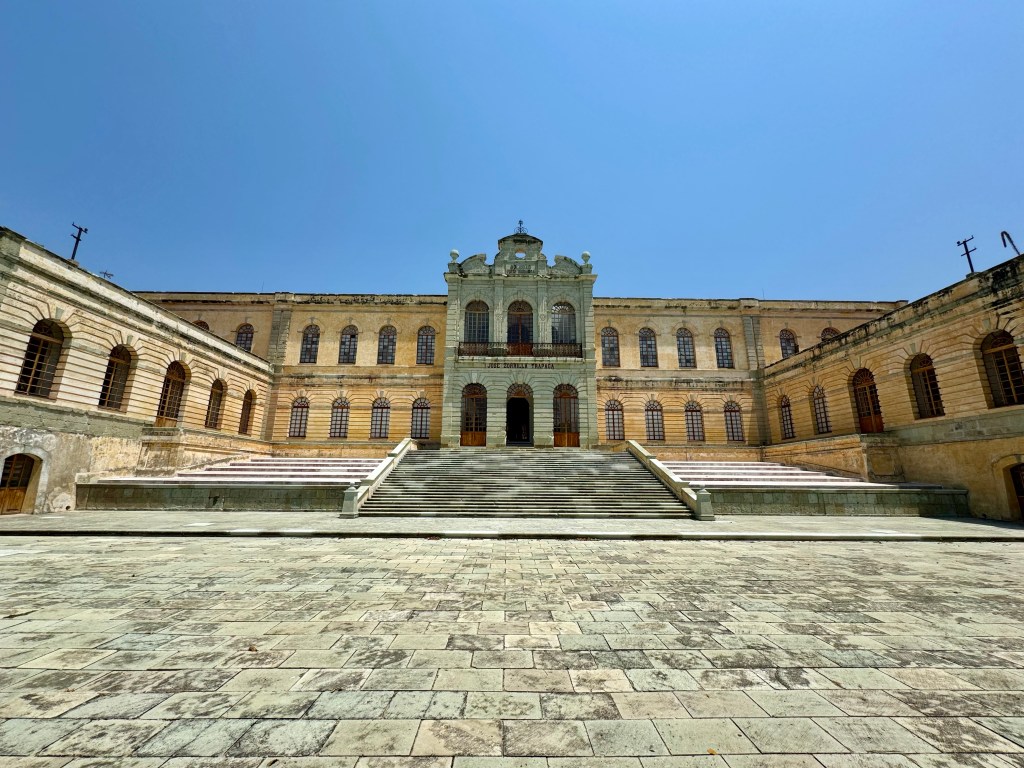
We took a couple of trips out of the City, our first was to the seemingly little visited mountain town of San Agustin Etla, less than an hour’s ride from Oaxaca.
It’s not on the mainstream list of places to visit but do go there!

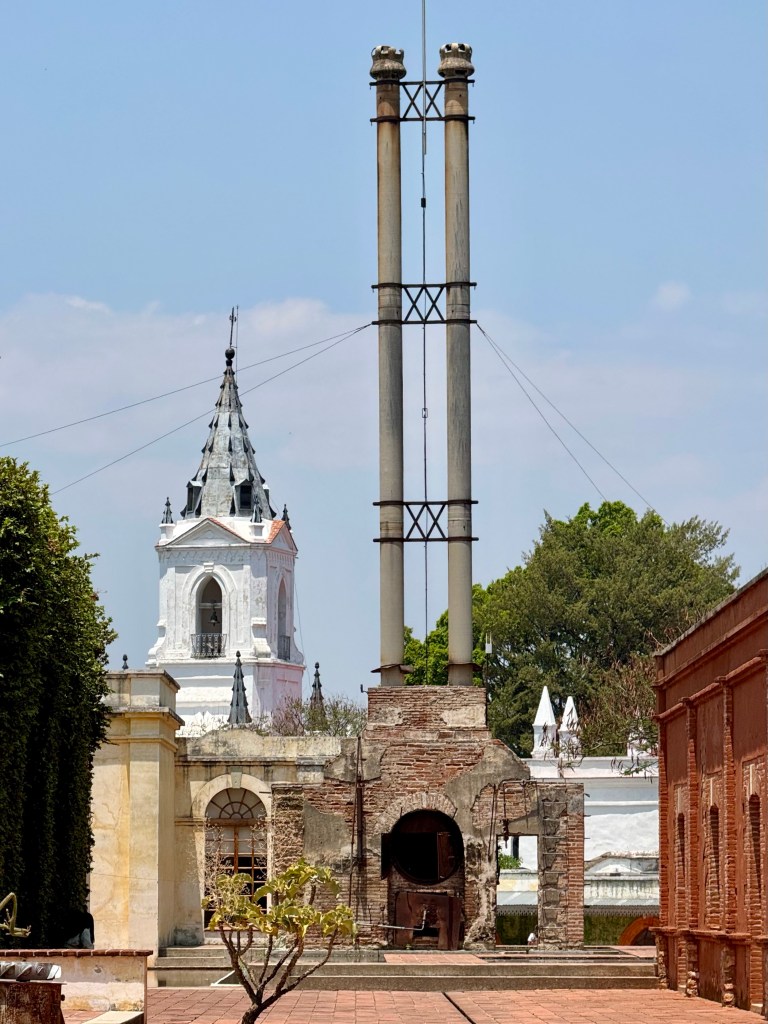
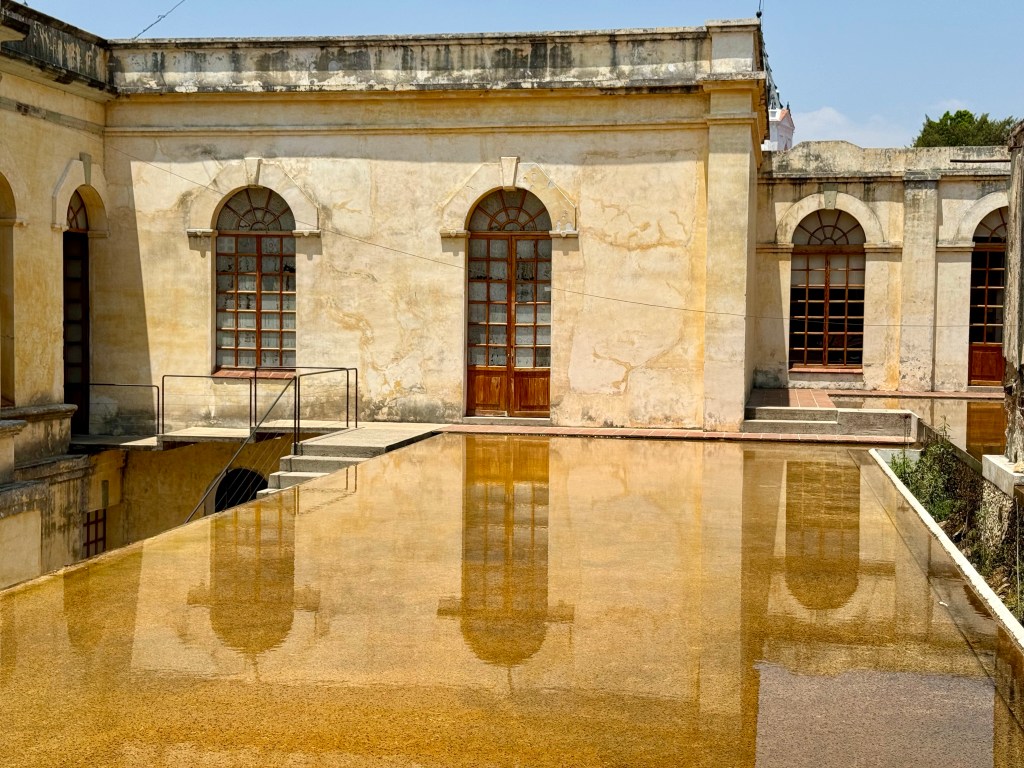
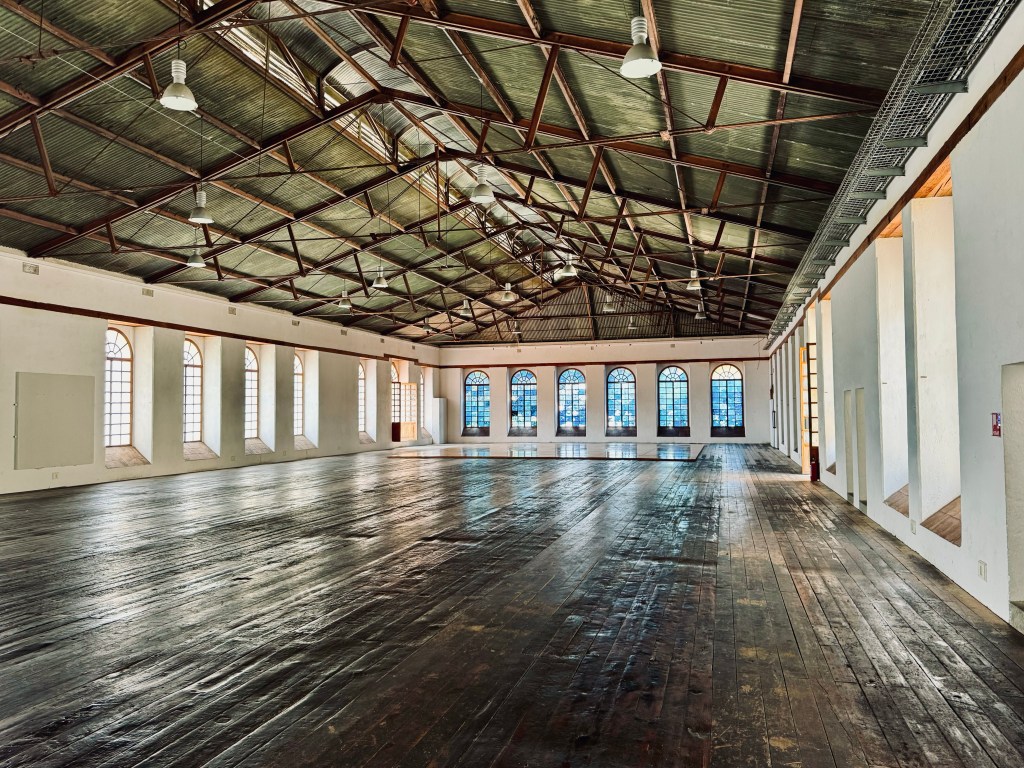
The building is a former textile factory, now reborn as an arts centre. Originally built in 1883 but as the textile markets declined it eventually became derelict.
In 2000 a local artist spearheaded an initiative to transform the buildings into an ecological arts centre.

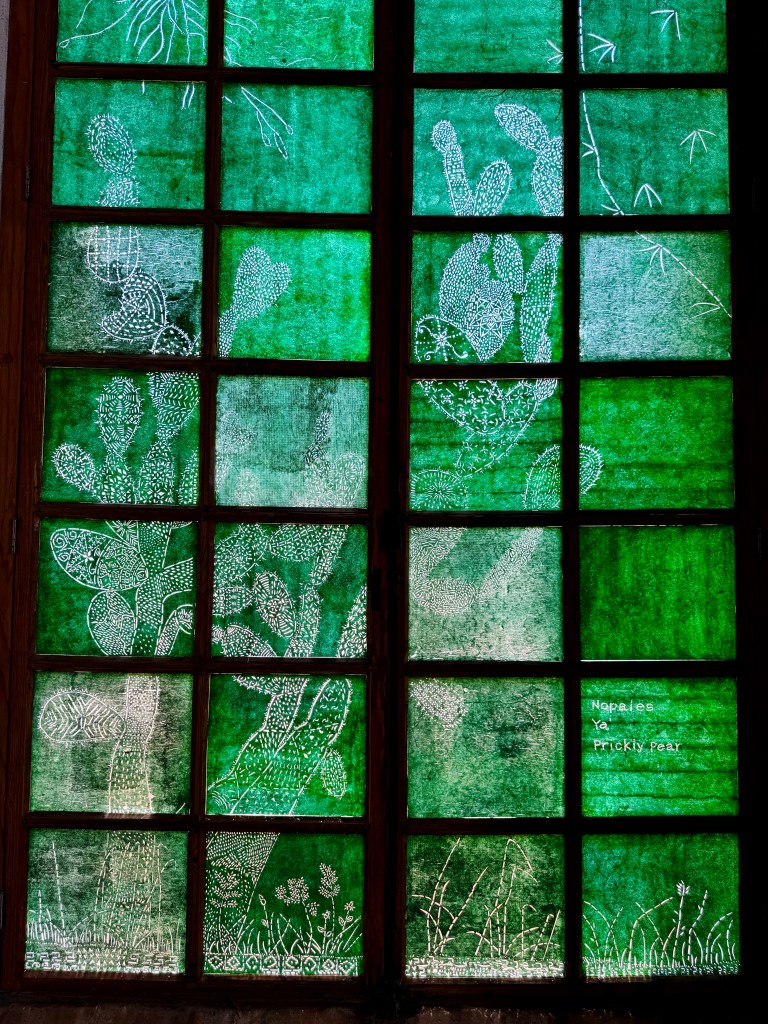
It is a wonderful building to walk around, the remnants of its industrial history apparent, now further enhanced with some interesting art works.


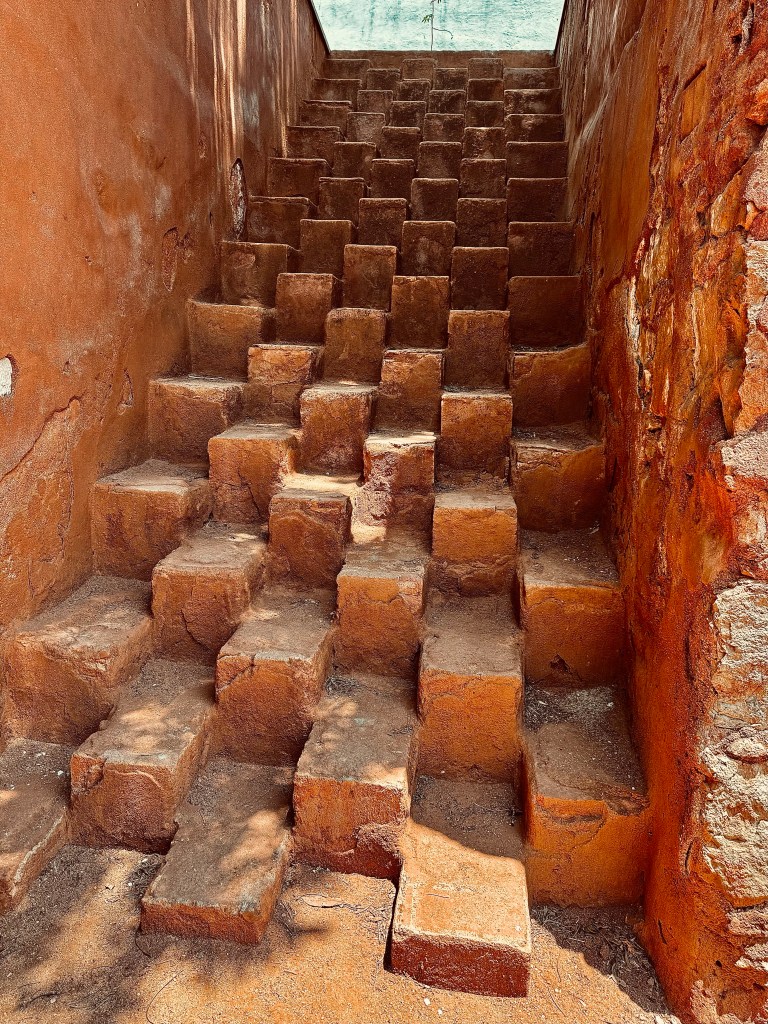
These cuboid steps below are interesting and actually easy enough to climb although perhaps best done sober!
Reading about them they are apparently an example of ‘vernacular architecture’ whatever that might be.
Some suggest the design was intended to make it difficult for invaders to run down, others that this was to break up water flow for drainage and the town is certainly rich with water from the mountains.
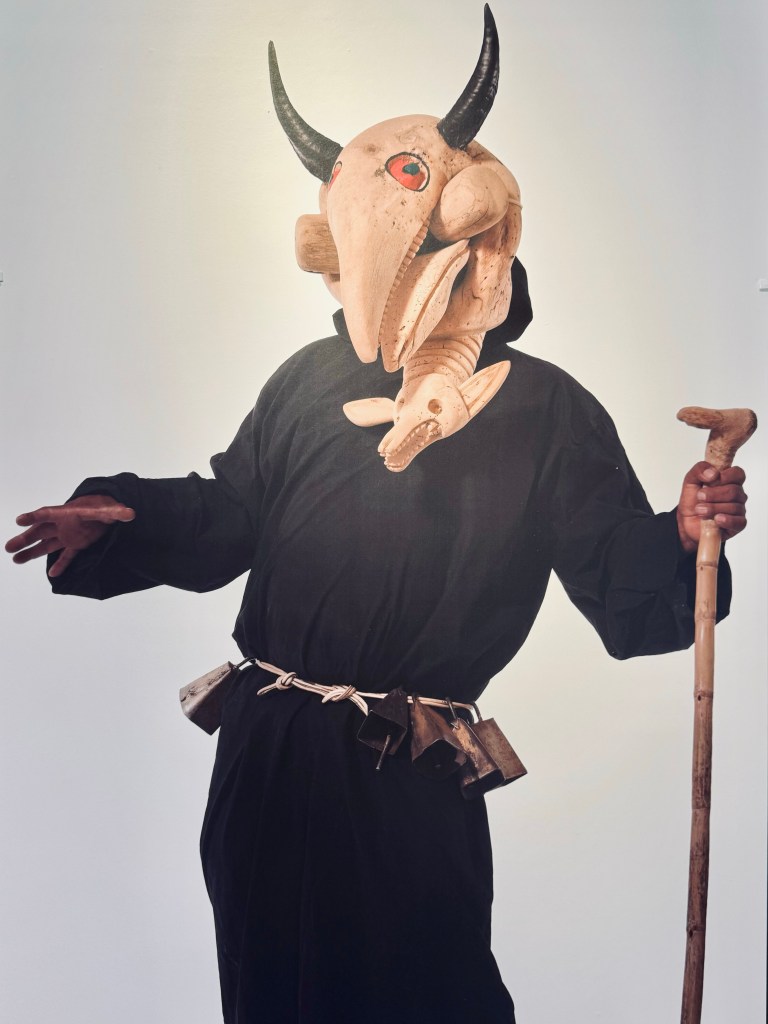
Some of the indigenous masks below on display at the art centre.
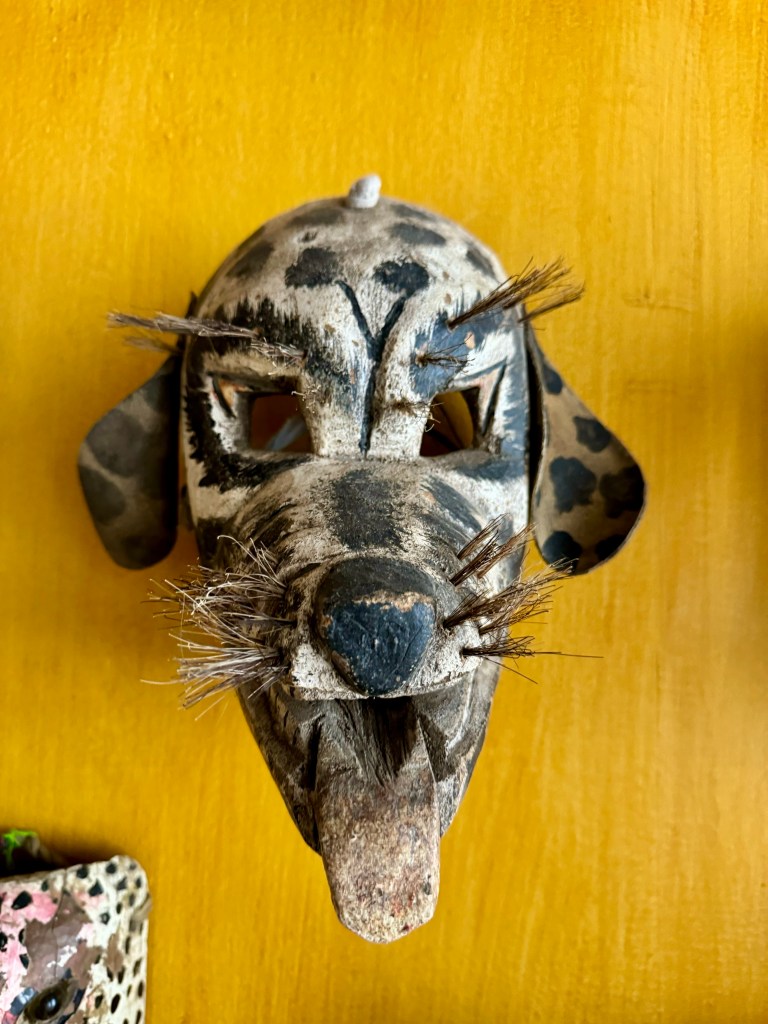

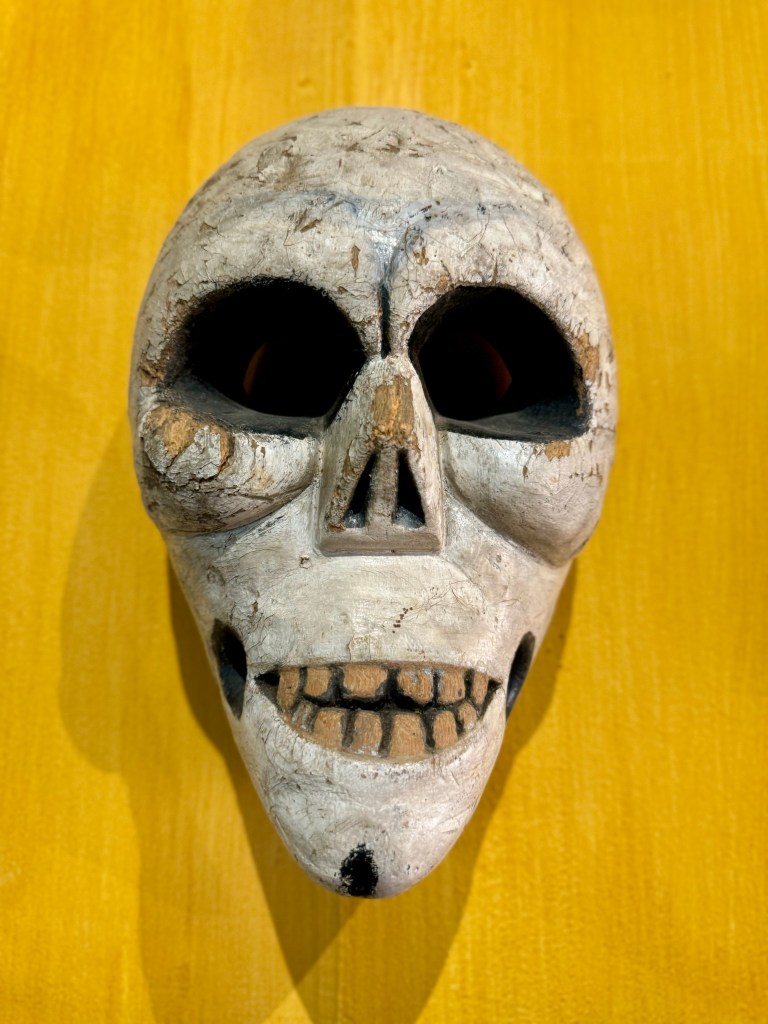
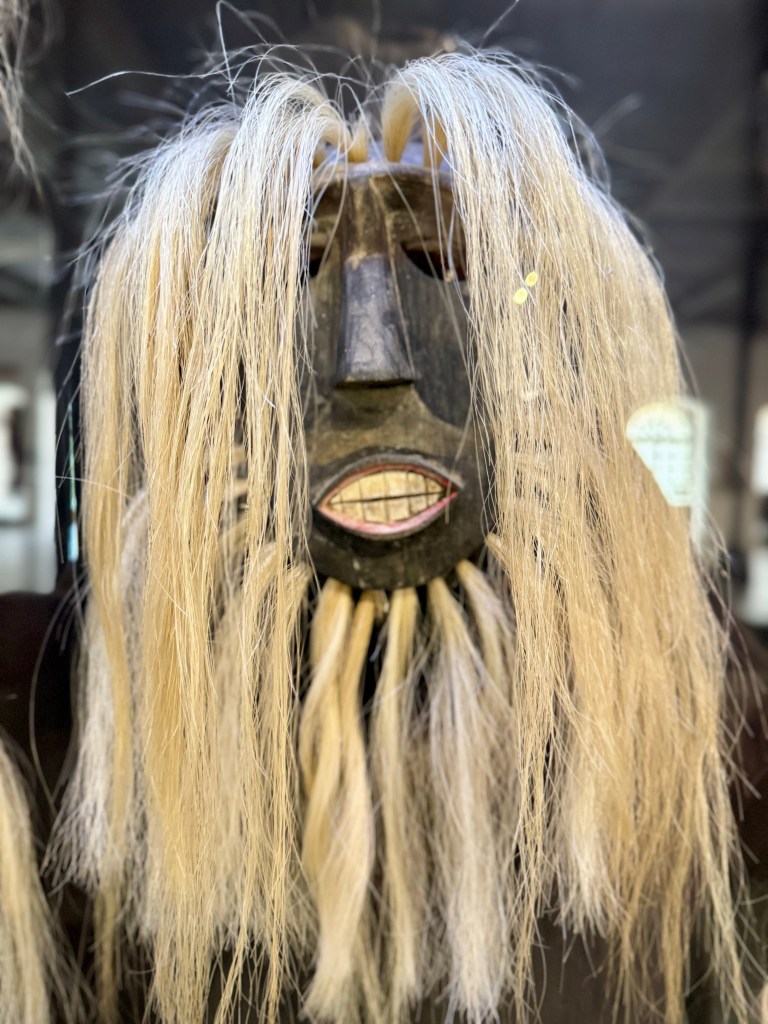

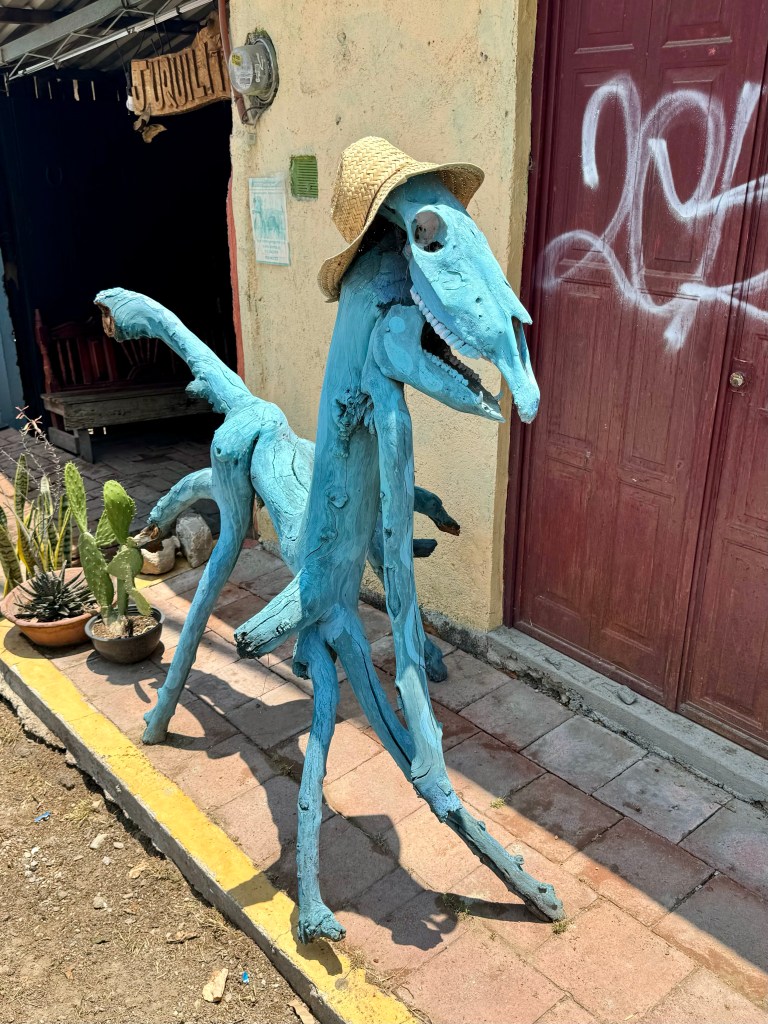
We saw this odd item on the walk down from the art centre into the town.
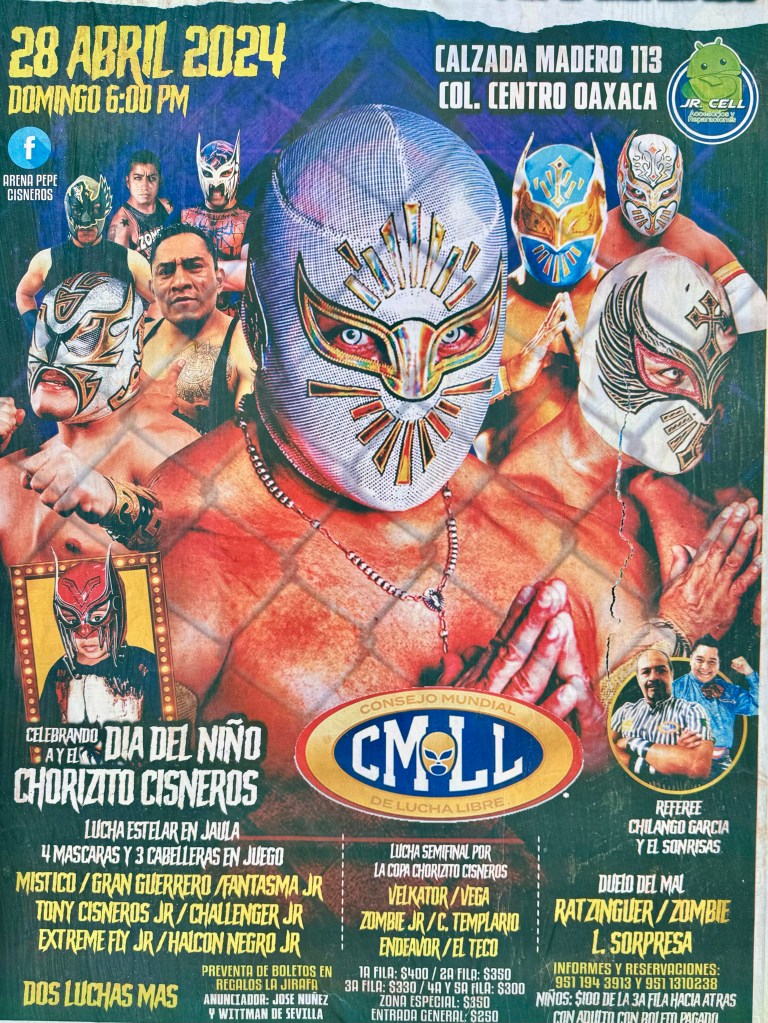
Below, a poster for a mexican wrestling match, unfortunately we didn’t attend having seen something similar in La Paz sometime ago.
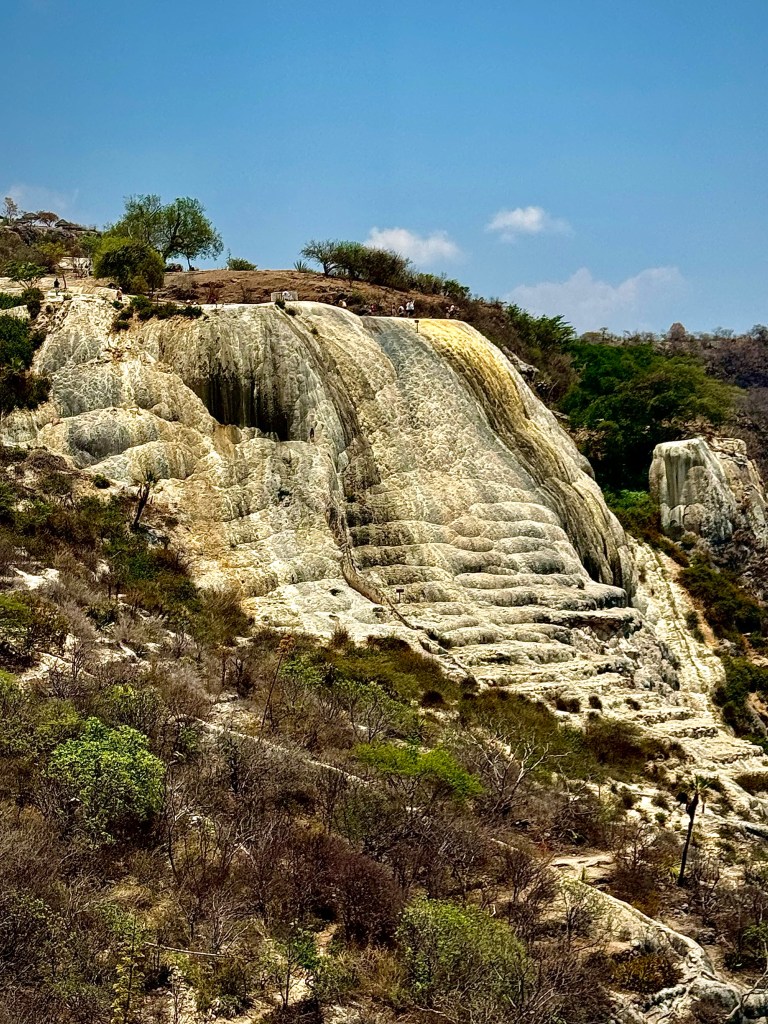
Our last trip out of the City was to Hierve Del Agua, translated from Spanish, it means ‘the water boils’.
As it happens the water is cool and the boiling is actually bubbling of the water which you can see as the water traverses grooves in the rocks into the pools.
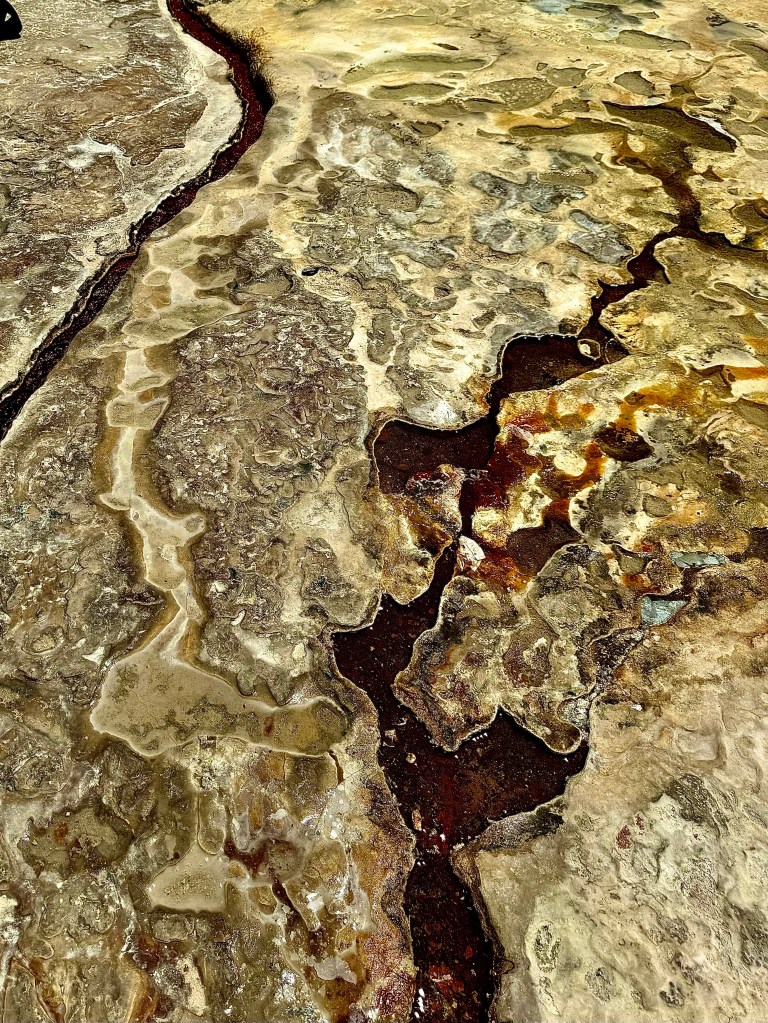
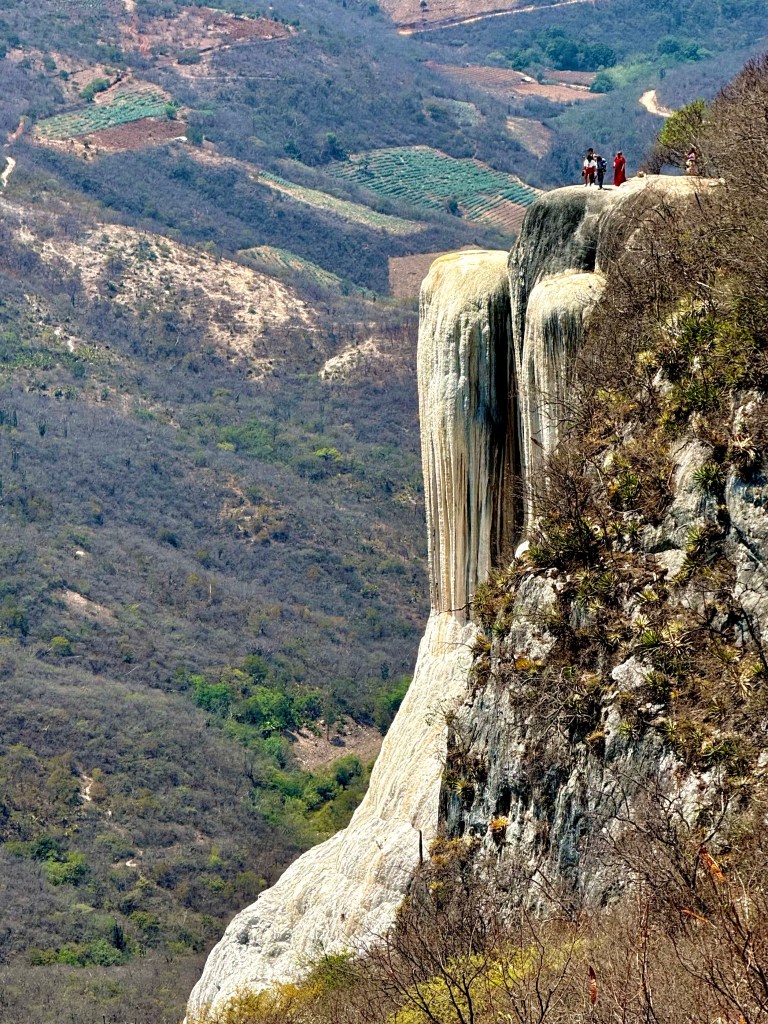
There are waterfall like features which are actually similar to stalagmites, with the mineral rich waters building up sediment as they run down the mountain side.

It is a very impressive location with views across the mountains and cool mineral rich water pools to dip in to cool you down.

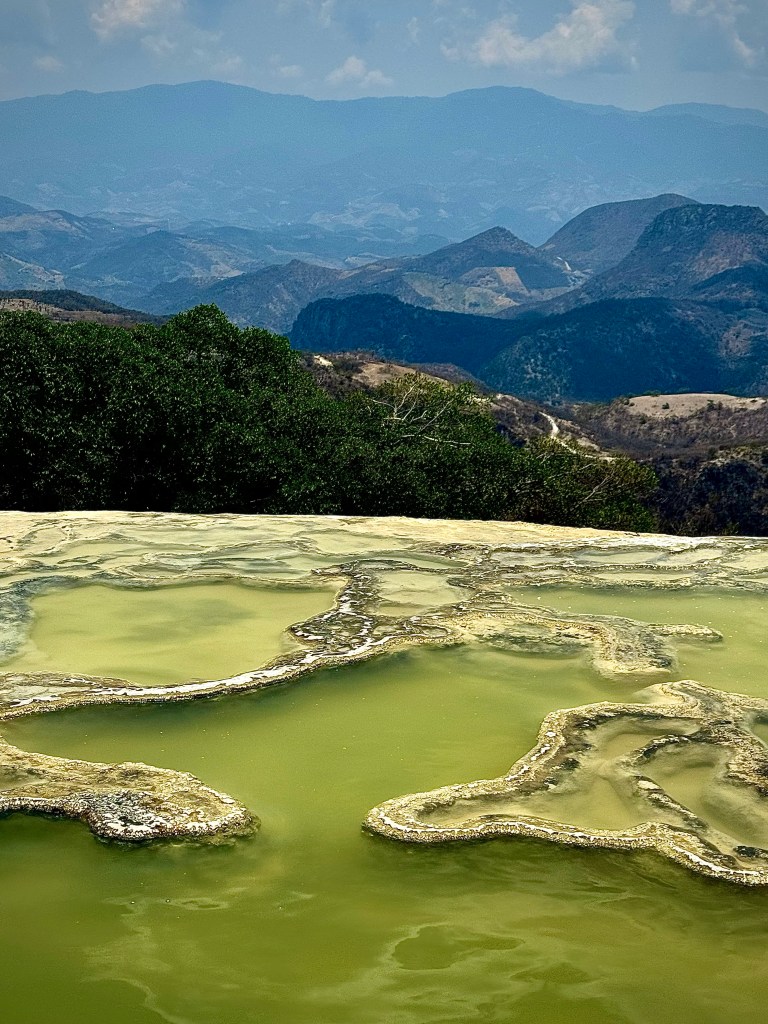
Our guide told us the area was contentious with ownership and revenue being disputed by the two neighbouring towns. So much so that a separate road was built to provide greater isolation between them, even our guide was not permitted to join us on this part of the tour.

And of course, when in Oaxaca, you would be remiss not to visit a Mezcal distillery.
And we learnt many things, although the tasting element of the tour may have skewed my memory a little bit if honest.
Below are the Agave plants that are used to make Mezcal, but the leaves are not used, just the pineapple like base of the plant underground.

Mezcal can be made from any agave plant type but Tequila is made from blue agave only. There are also only certain regions where either Tequila or Mezcal can be made to be deemed bonafide.
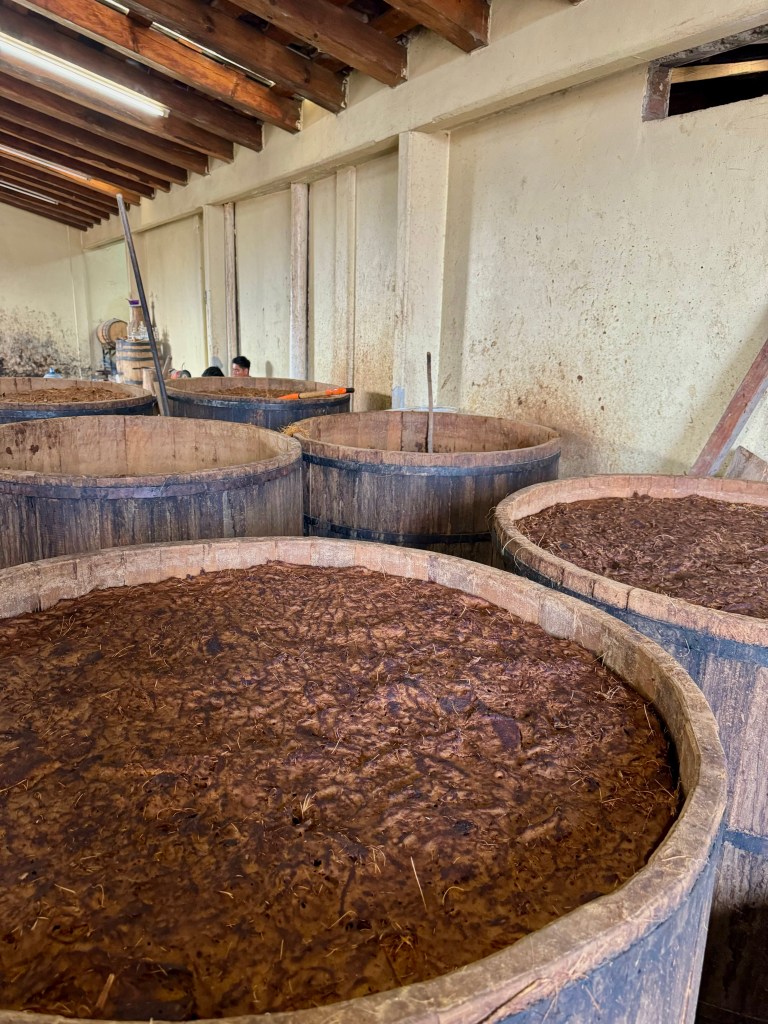
Mezcal is said to have a smokey flavour which is an outcome of the production method. The agave base is put into a pit and effectively roasted to remove the water content.

Next it is put into vats to ferment after which the spirit is distilled and ready to be bottled and sold.
We did a bit of tasting of course! It is a nice, if potent drink. Sipped not slammed is the way here and best accompanied by a slice of orange (not lemon) and some worm salt.
Worm salt is new to me and apparently these are the worms found at the base of the agave plant ground up to produce an enhanced taste. It seemed to work for me at least.
In Mexico, Tequila and Mezcal are the country’s preferred spirits, ask any local and they will wax lyrical about the variants and producers like any scotch/whiskey/bourbon drinker elsewhere.

We tried an interesting variant on the way back to the city, wonder why I can’t remember how we got home!
Oaxaca was a fabulous introduction to an authentic Mexican town after our beach time in Tulum and Playa del Carmen. Obviously still a key tourist destination but the cultural richness was fabulous.
We spent four days here but could easily have spent much longer. If you get a chance add this to your itinerary and do let me know where my missing afternoon on Mezcal went!
Next we take a 3 hour coach ride to the Pacific coast at Puerto Escondido.
 Jeff's Travel And Photo Blog