After our mini safari taster at Hell’s Gate, we set off to one of the most impressive reserves in Africa, Kenya’s Masai Mara.
The reserve is around 1,500 square kilometres in size and is home to over 95 species of mammals and over 570 bird species.
It is known for having the highest concentration of wild animals in the world, more than 40% of Africa’s larger mammals can be found here.
We had two safari drives, one in the late afternoon after our six hour ‘bumpathon’ drive from Nairobi and a full day safari the next day.
Only a few minutes after entering the park your head is scanning left to right drinking in the richness of the reserve.
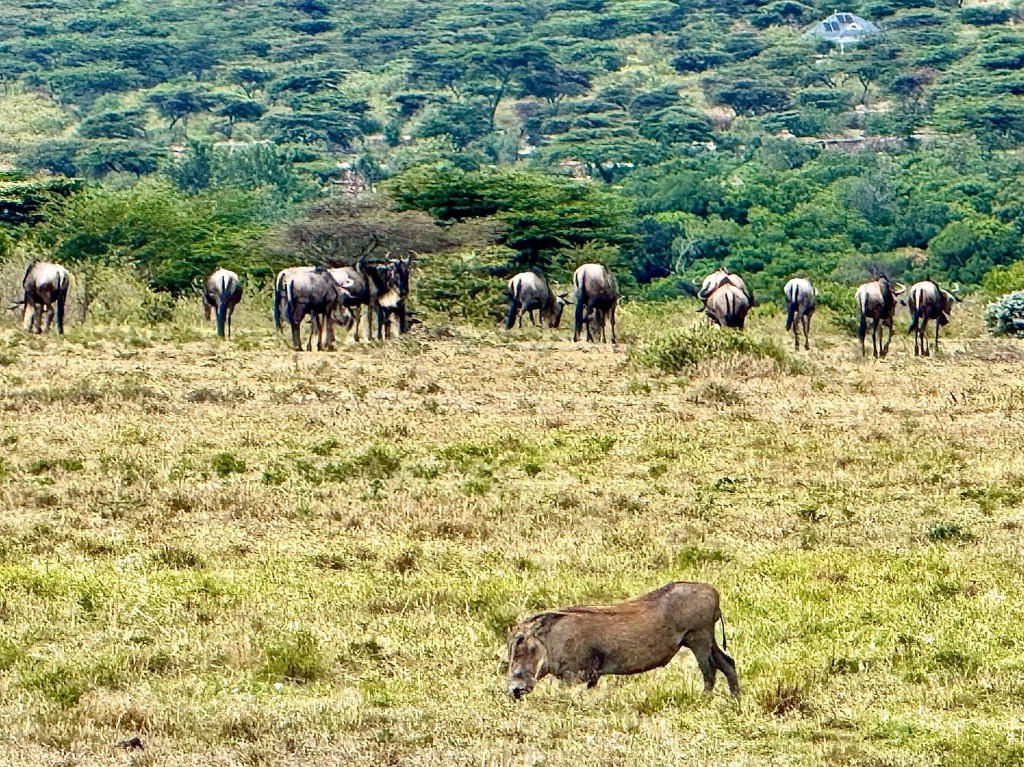
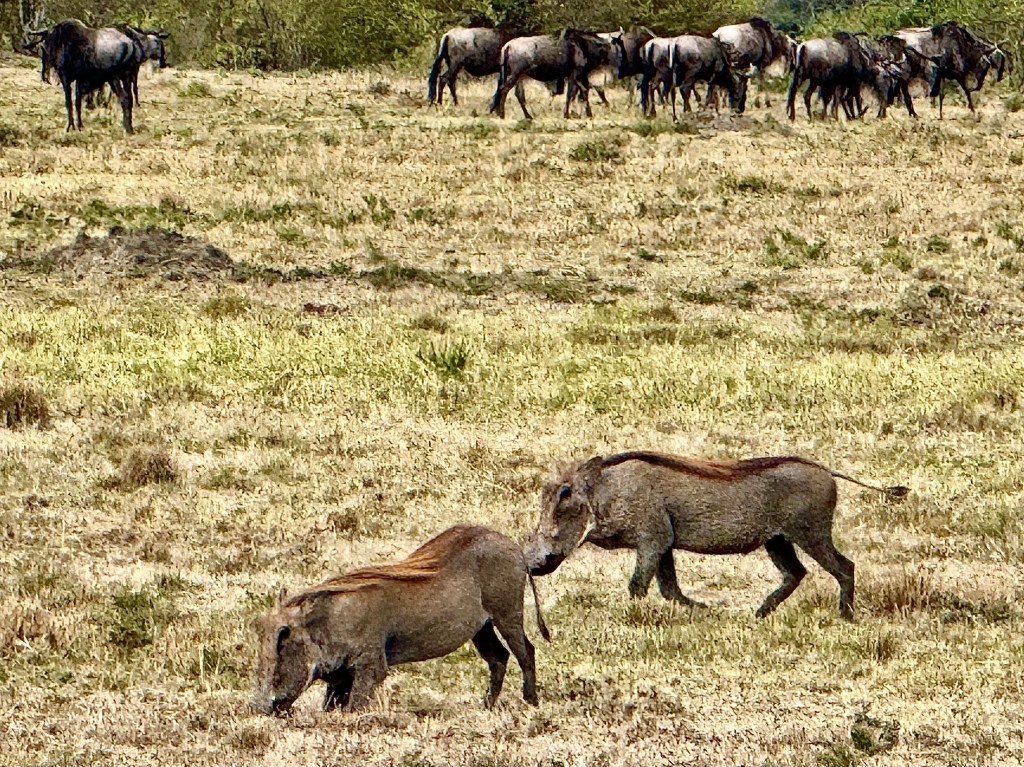
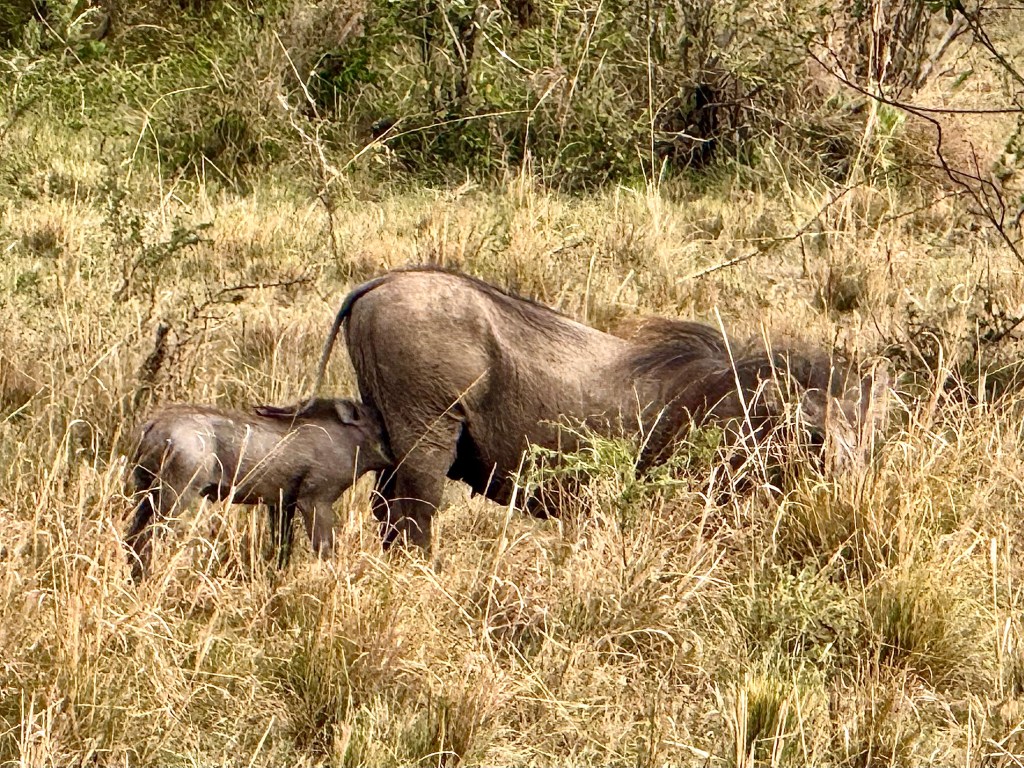
Our first spot were Wart Hogs (Pumbaa!).
They graze on grasses and roots, bending their front legs to reach them.
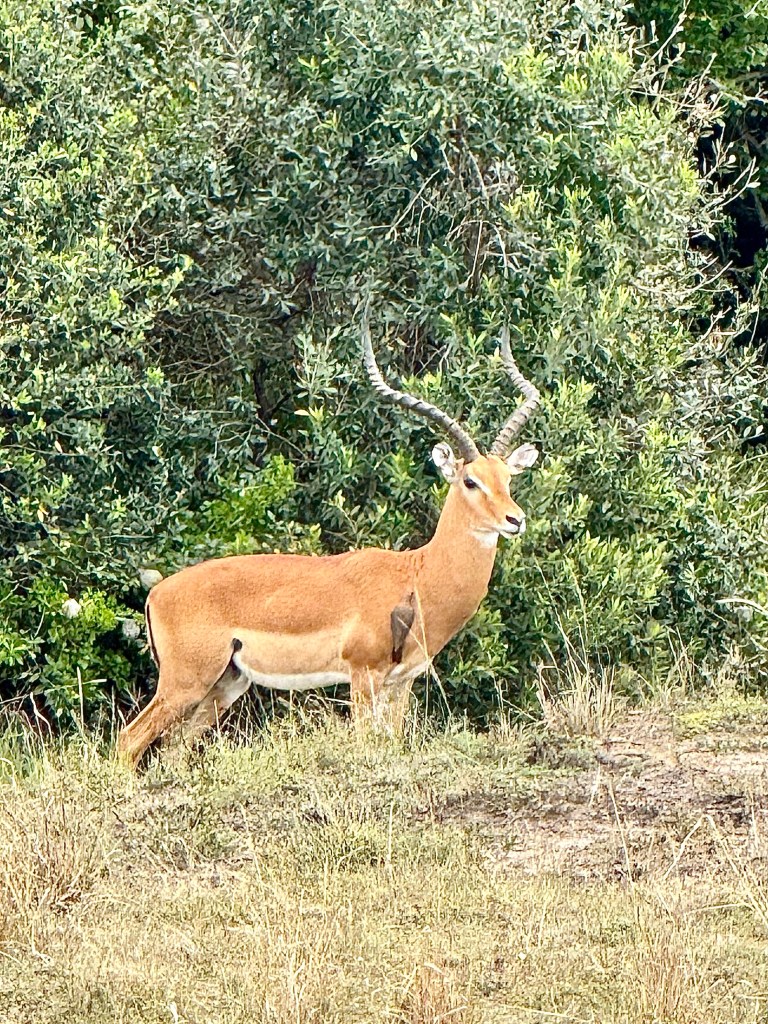
There lots of Antelopes in the reserve too, below are Impalas.
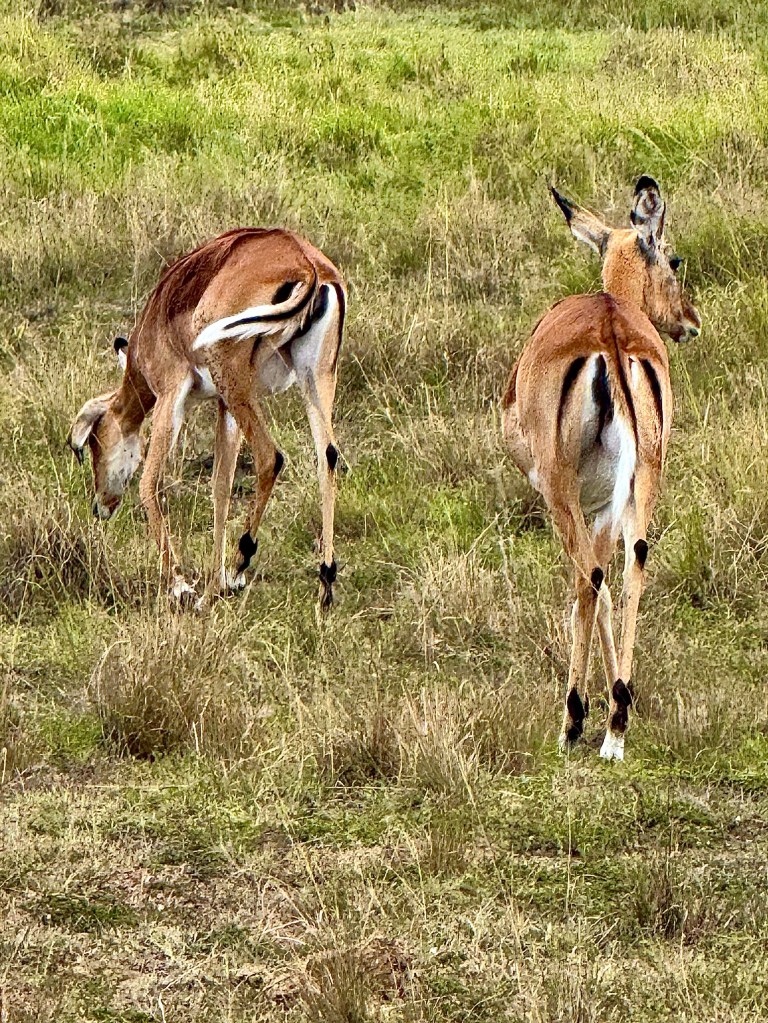
They are lovely looking creatures, constantly on the alert for predators.
They can jump up to 10ft high and 30ft in length, reaching speeds of up to 55mph.
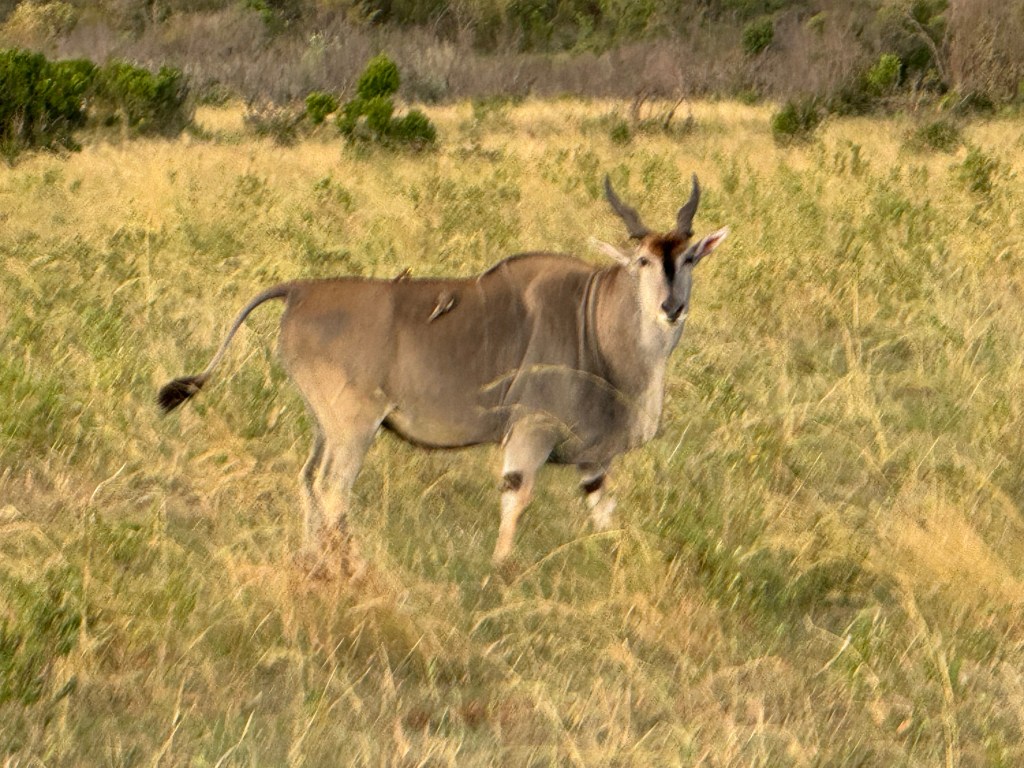
Captured below is a Common Eland, one of the biggest antelopes, only eclipsed by the Giant Eland. They can jump 2-3 metres high from a standing start!

Also in the Antelope family are Wildebeest, aka a Gnu.

The Wildebeest migrate every year from the Masai Mara in Kenya to the Serengeti in Tanzania.
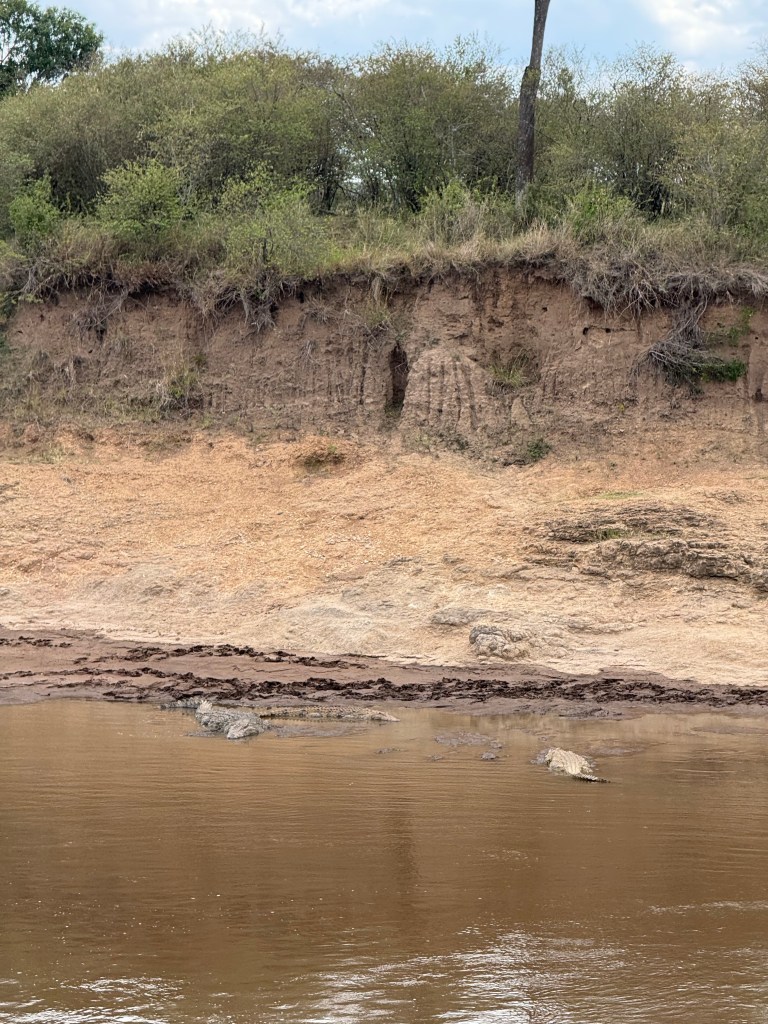
The migration is very hazardous, lions ready themselves for the passing prey and Crocodiles await them at the river crossing.

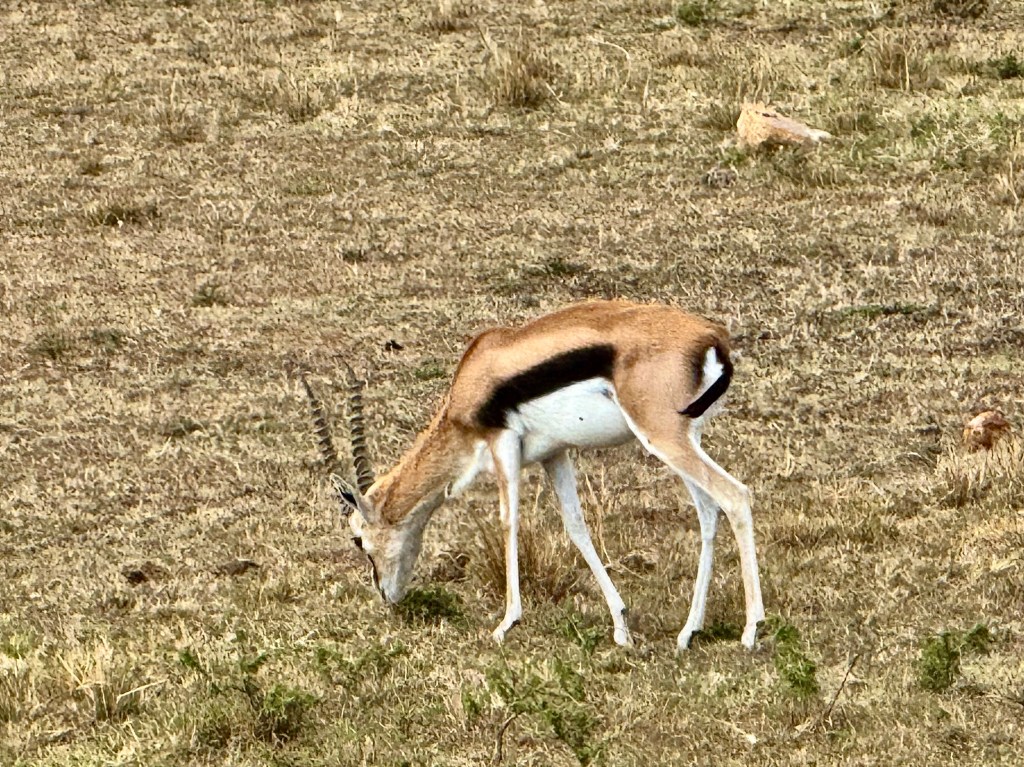
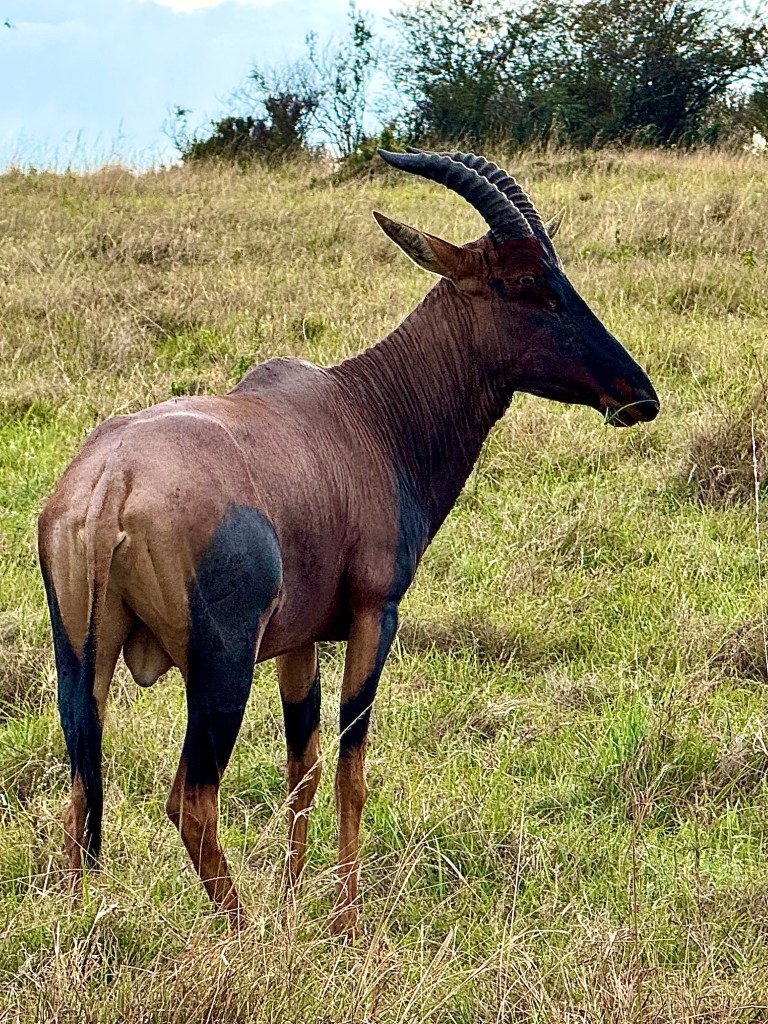
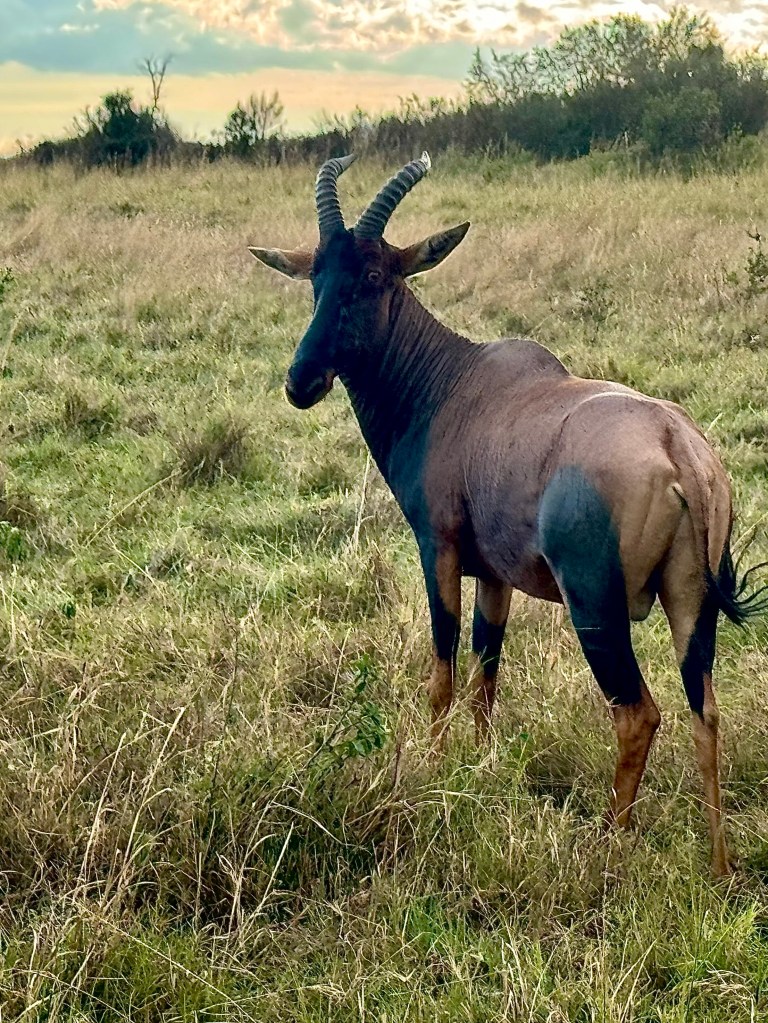
The antelope below is commonly known as the Blue Jean Antelope or more formally known as a Topi.
It’s purple/blue hind legs leading to its common name.
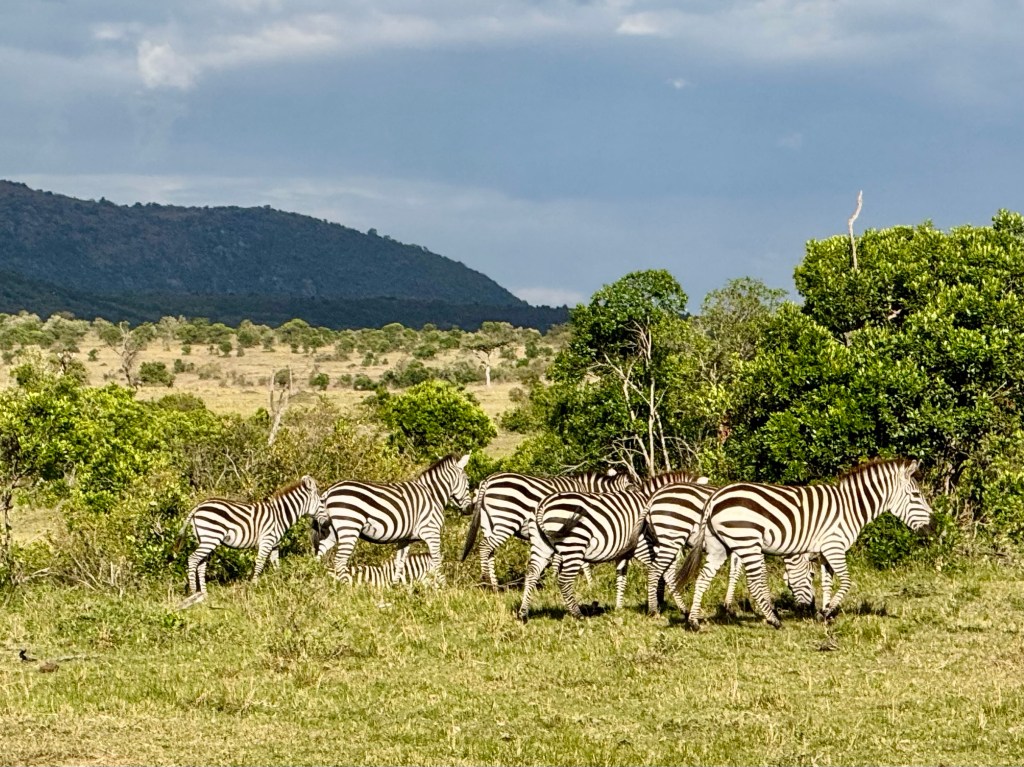
There also plenty of Zebras to be seen, some groups with their young.
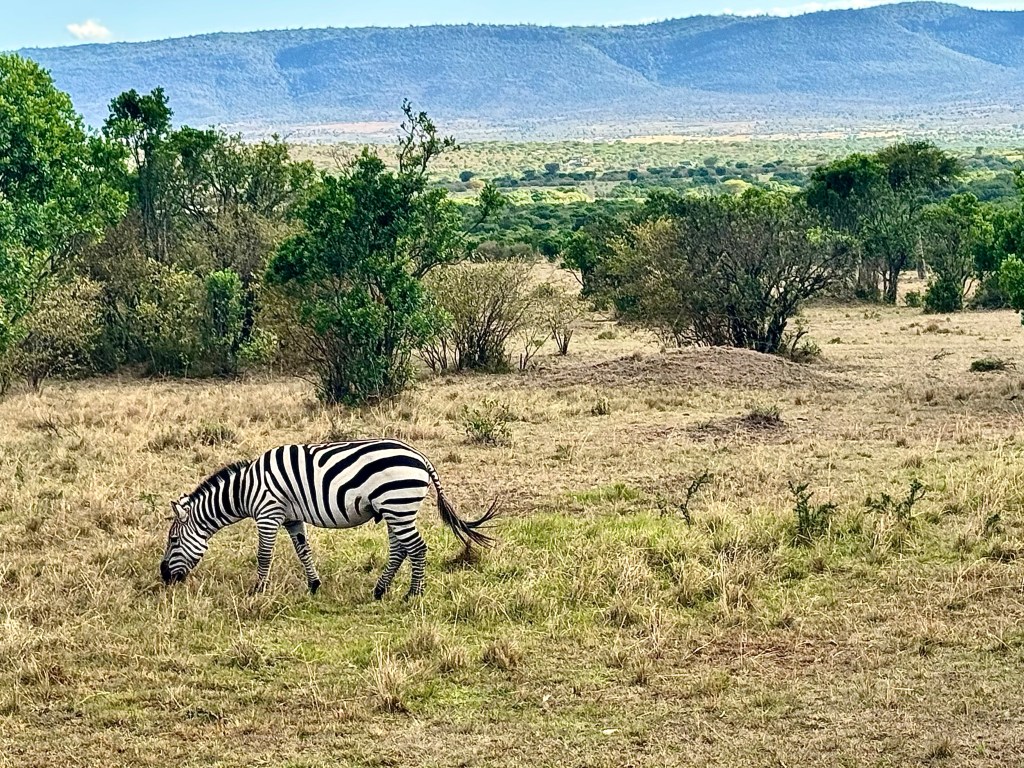
The arrangement of a Zebra’s stripes is unique to each individual, like a human fingerprint. Essential for foals and mothers to identify each other.
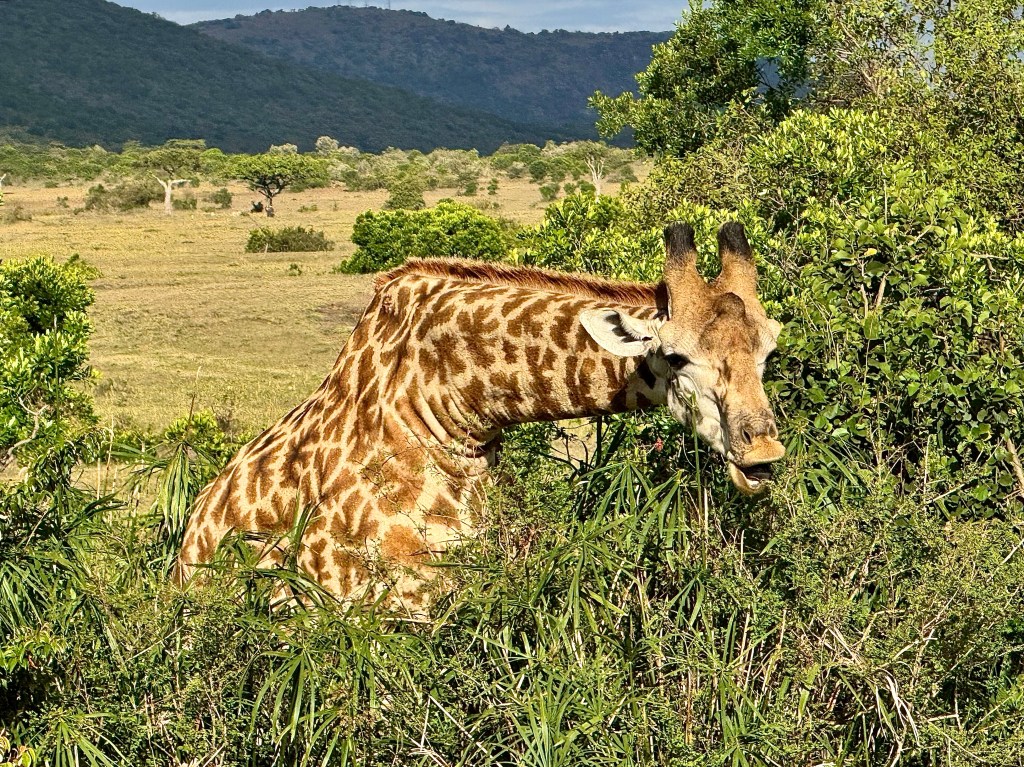
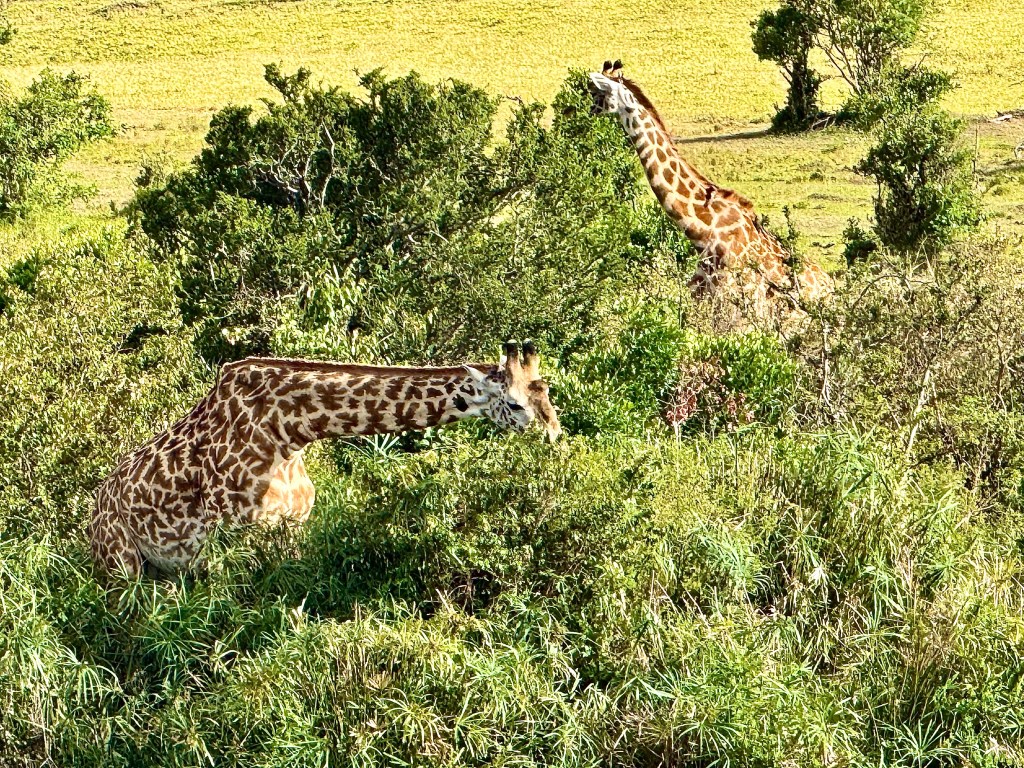
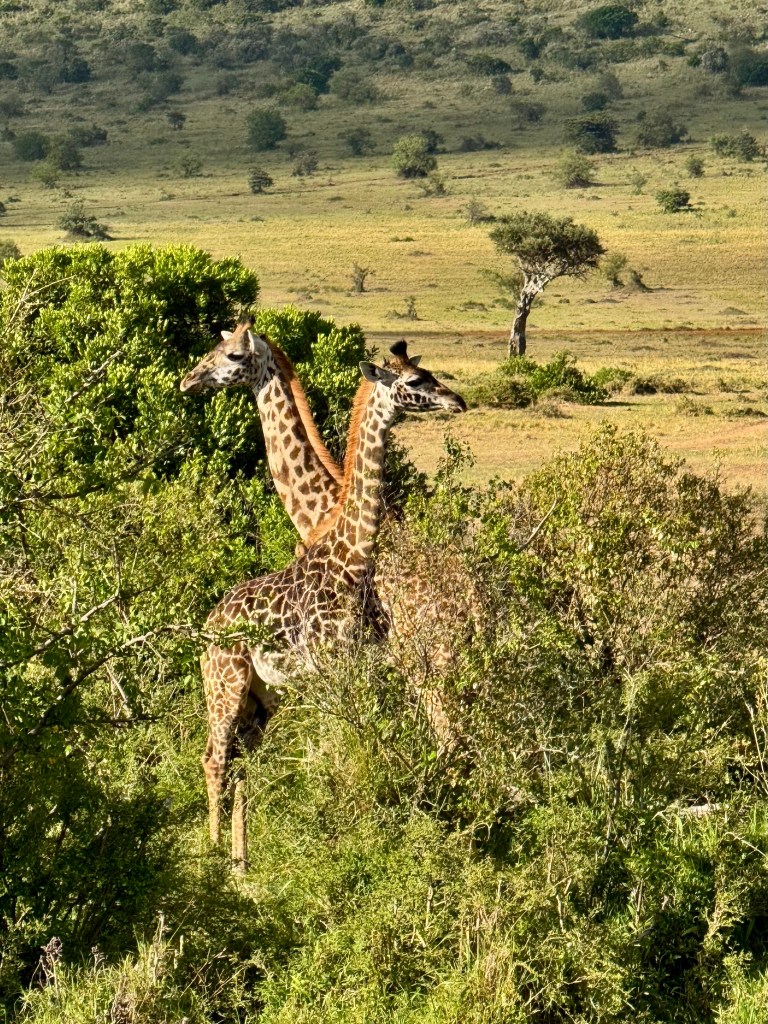
There are plenty of Giraffes to be seen too. For such tall animals they always seem very graceful.
Giraffes can run up to 35mph for a short period, very impressive for an animal of this size.

Their eyesight is also very impressive, with an ability to spot movement as far as a mile away!
We also saw some interesting birds on our drive.
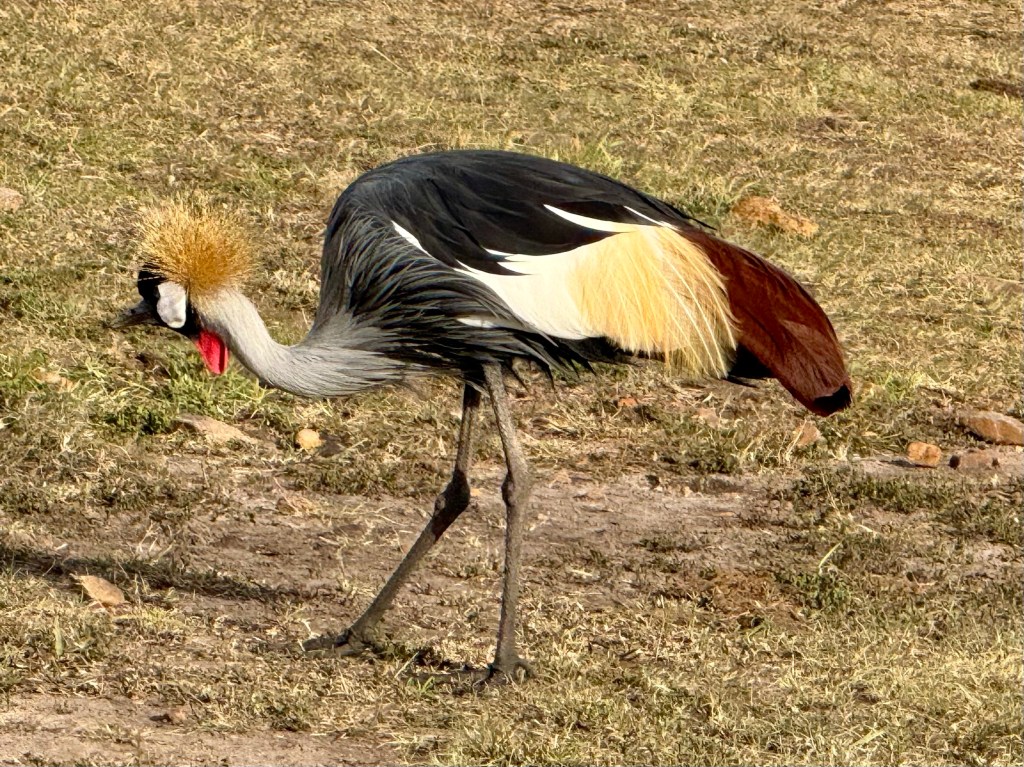
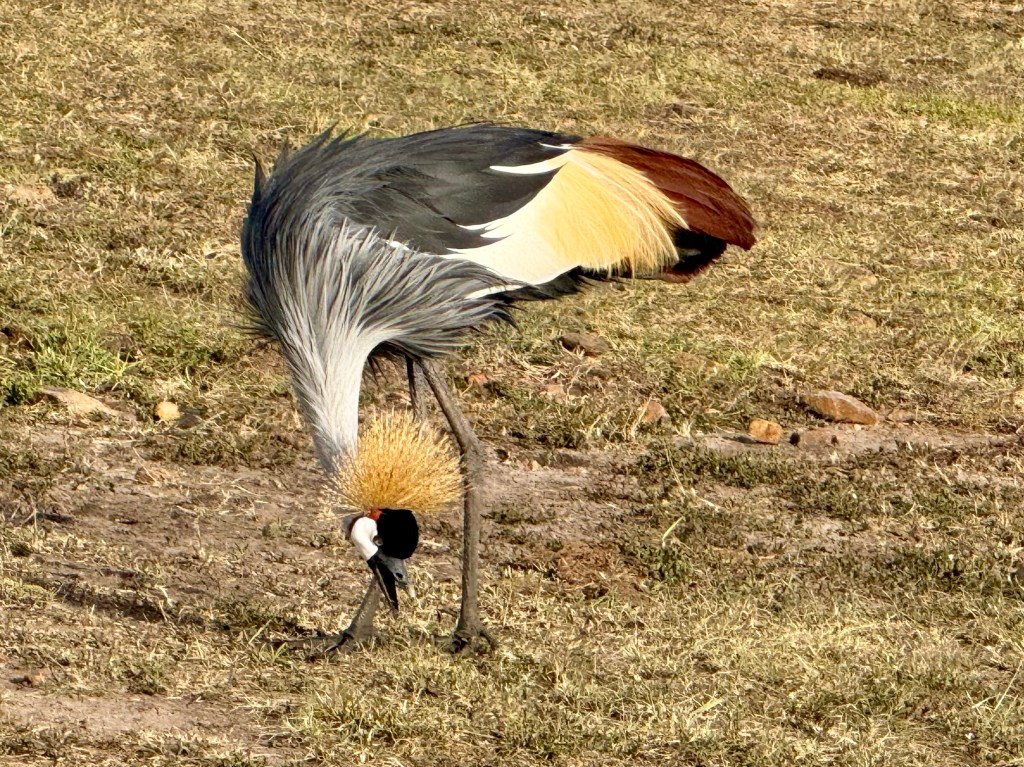
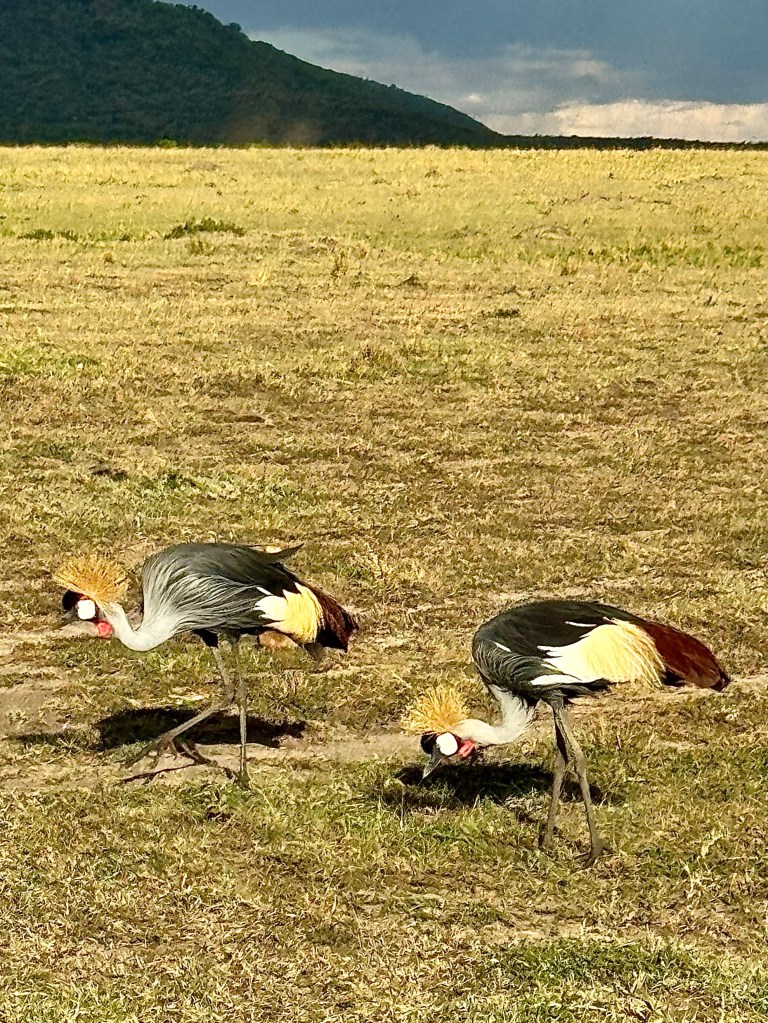
These are Grey Crowned Cranes, looking very majestic with their colourful feathers and golden crests.
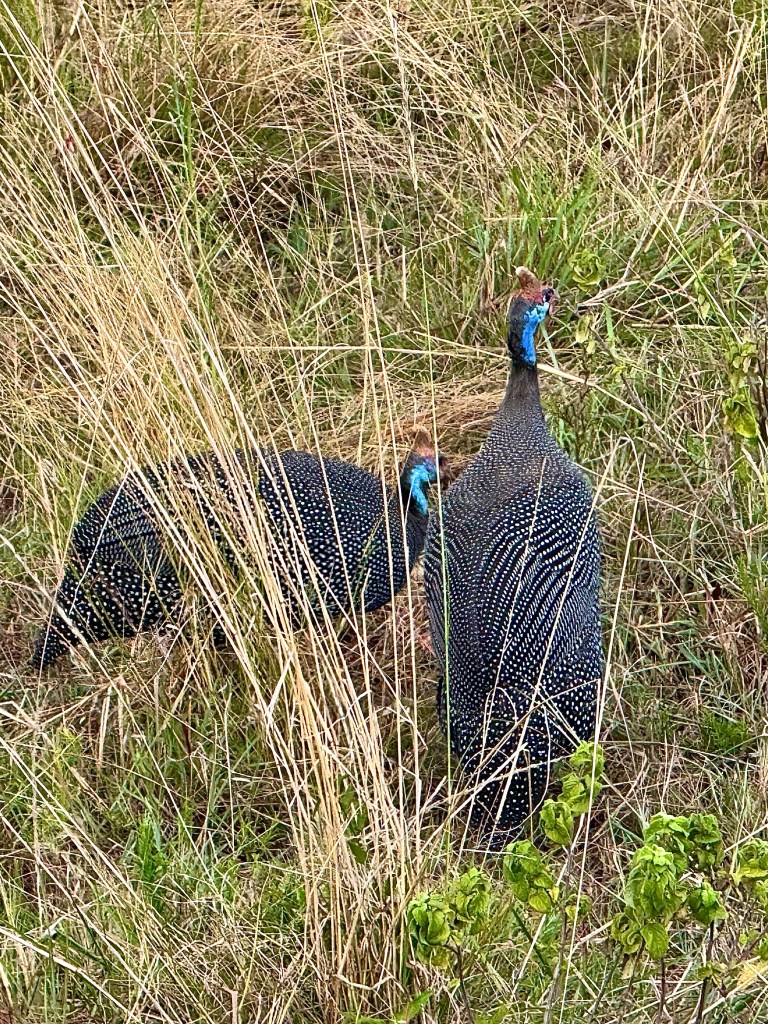
Below are Helmeted Guinea Fowl. Their blue faces and spotted feathers make them very striking.
We stopped at an area in the park where some visitors were having picnics. Whilst there we spotted some tall birds which I initially thought were statues but then one moved!
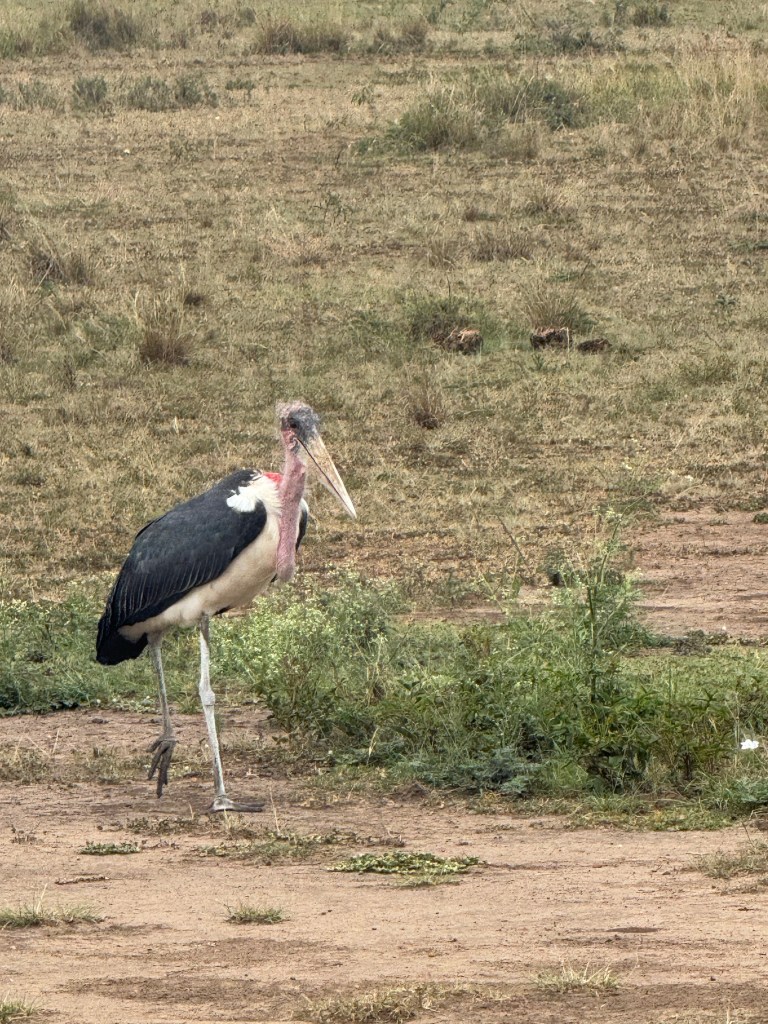
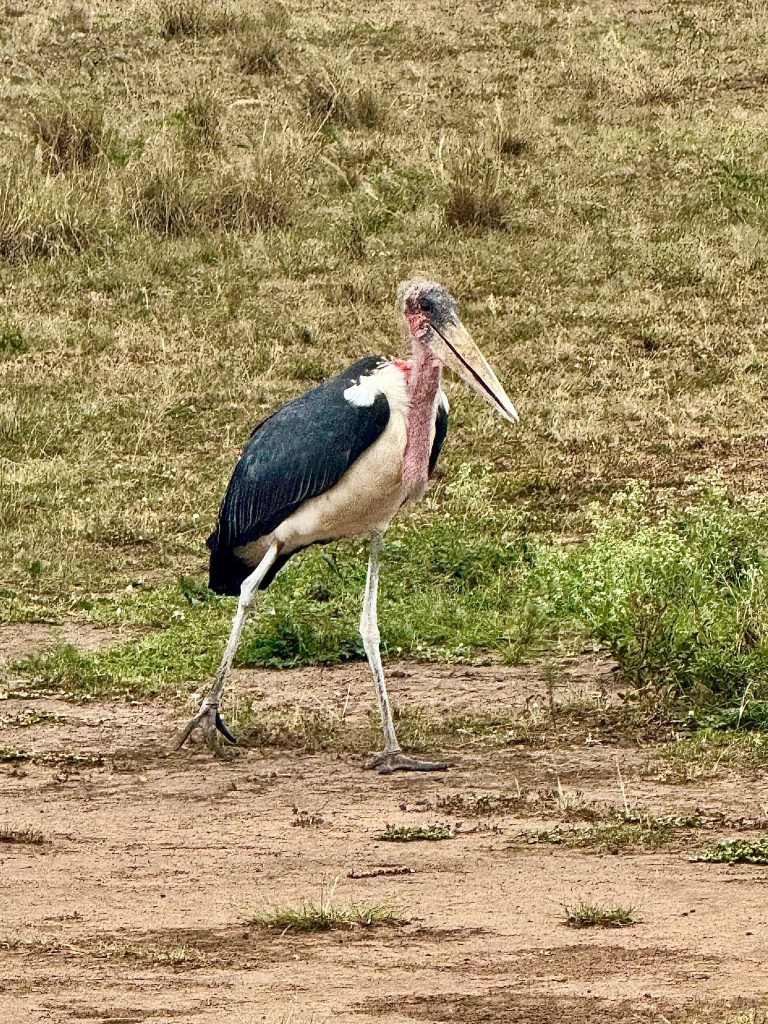
They are called Marabou Storks and are one of the largest land birds standing up to 5 ft tall, with a wingspan of up to 3 metres.
Also known as the ‘undertaker bird’ due to how they look from behind.

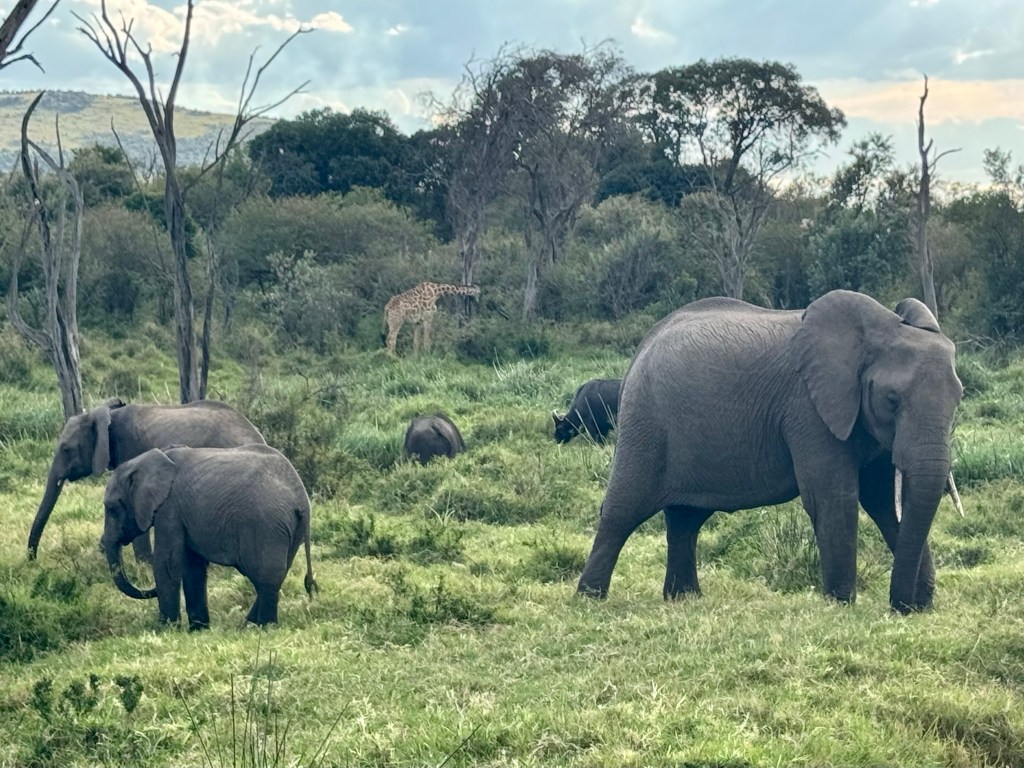
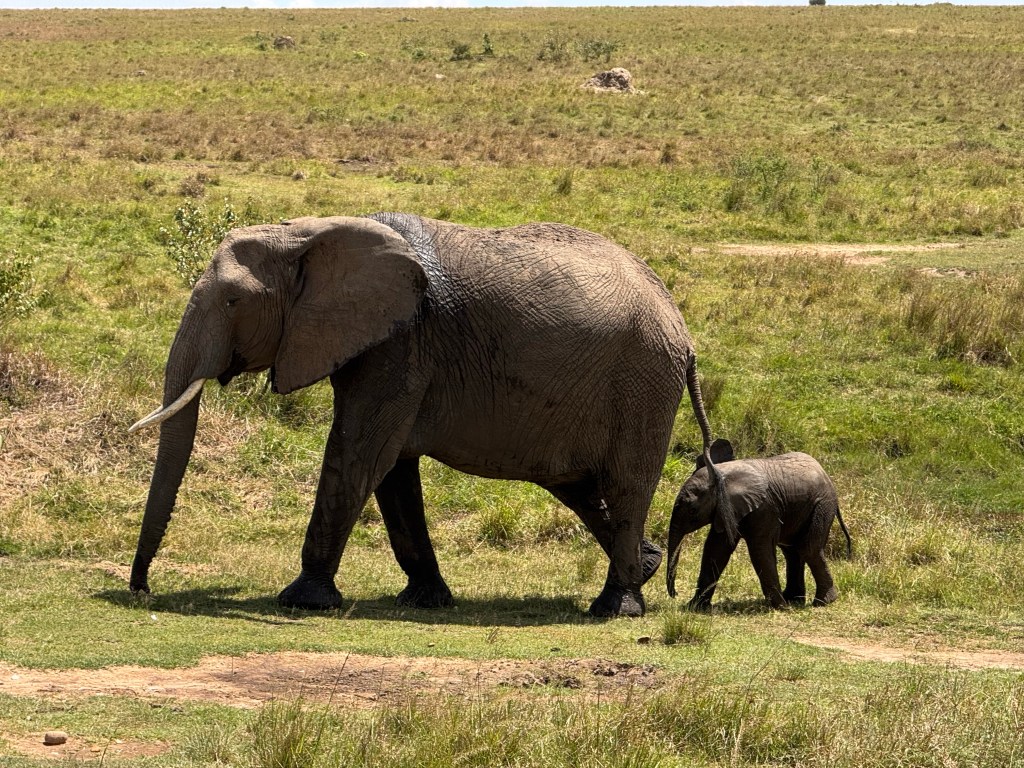
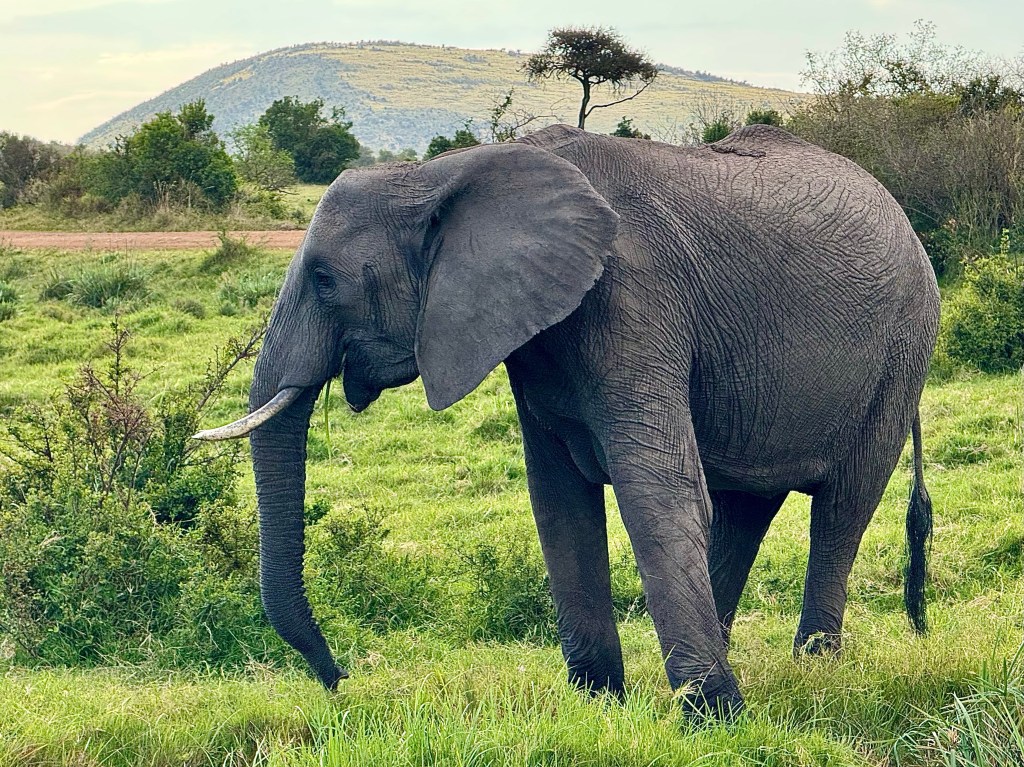
There are over 2,500 African Elephants in the reserve and we encountered lots of these magnificent creatures.
There were many groups with their young, likely born just six months ago. Adults are said to consume around 150-300kg of grass a day.
Our first tick in the big five box was achieved.
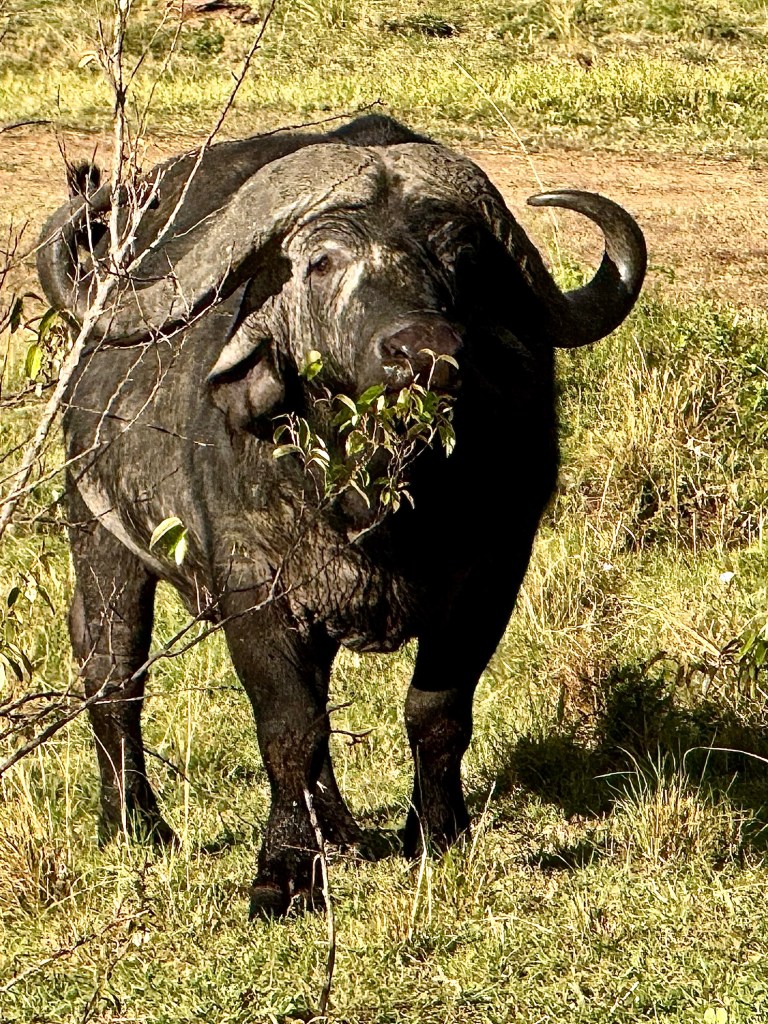
Our next encounter was with a pair of African Buffaloes. They can be very unpredictable and potentially dangerous given their size and strength.

This has led them to be part of the Big Five. The water buffalo in Asia are largely domesticated.
Second tick in the big five box.
Our afternoon safari was coming to an end with the sun starting to hang low in the sky.

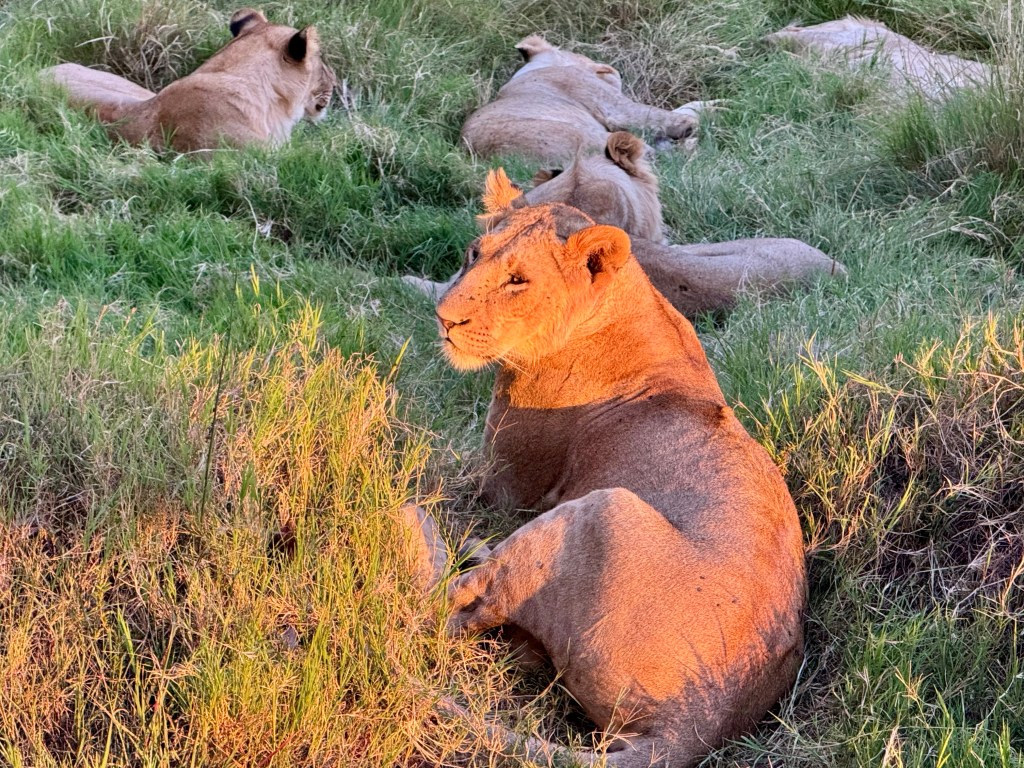
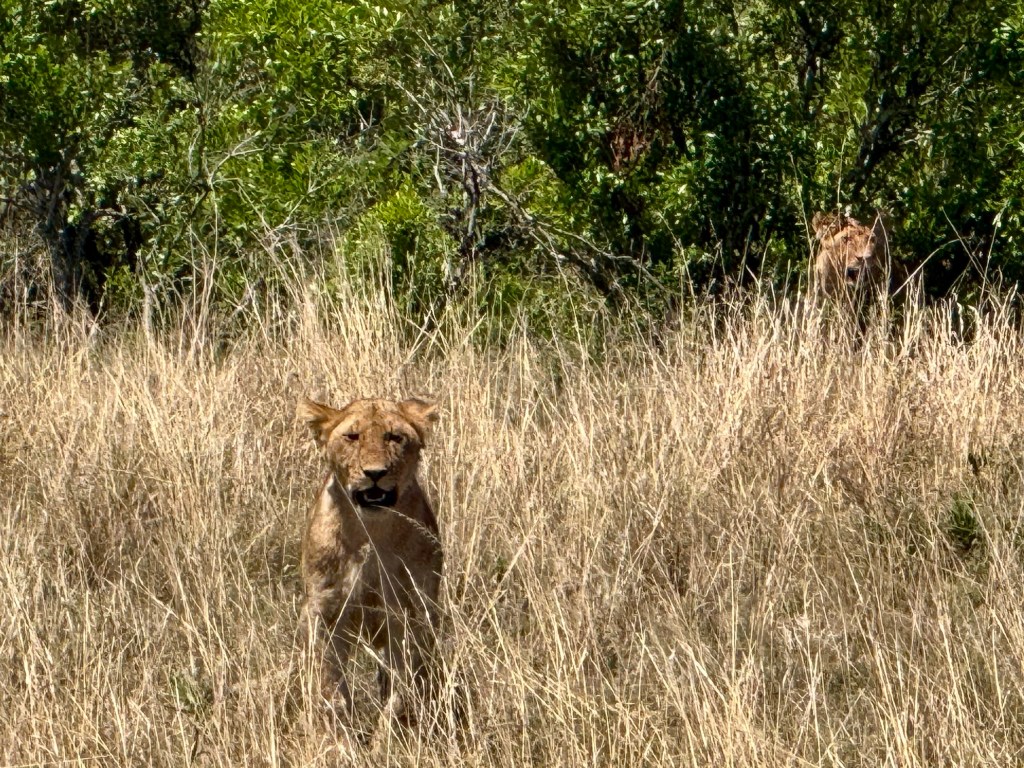
We found a group of lions sat resting in the last of the day’s sunshine.
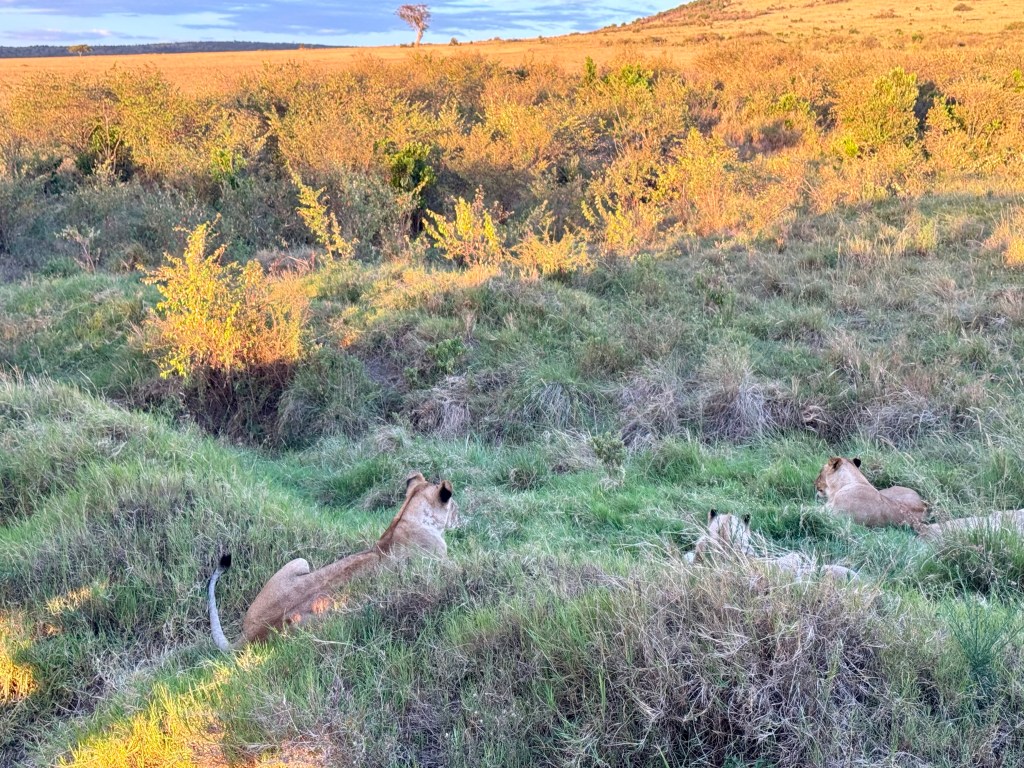
We were very close to them in our jeep, maybe just 2-3 metres away, yet they were completely uninterested in us.
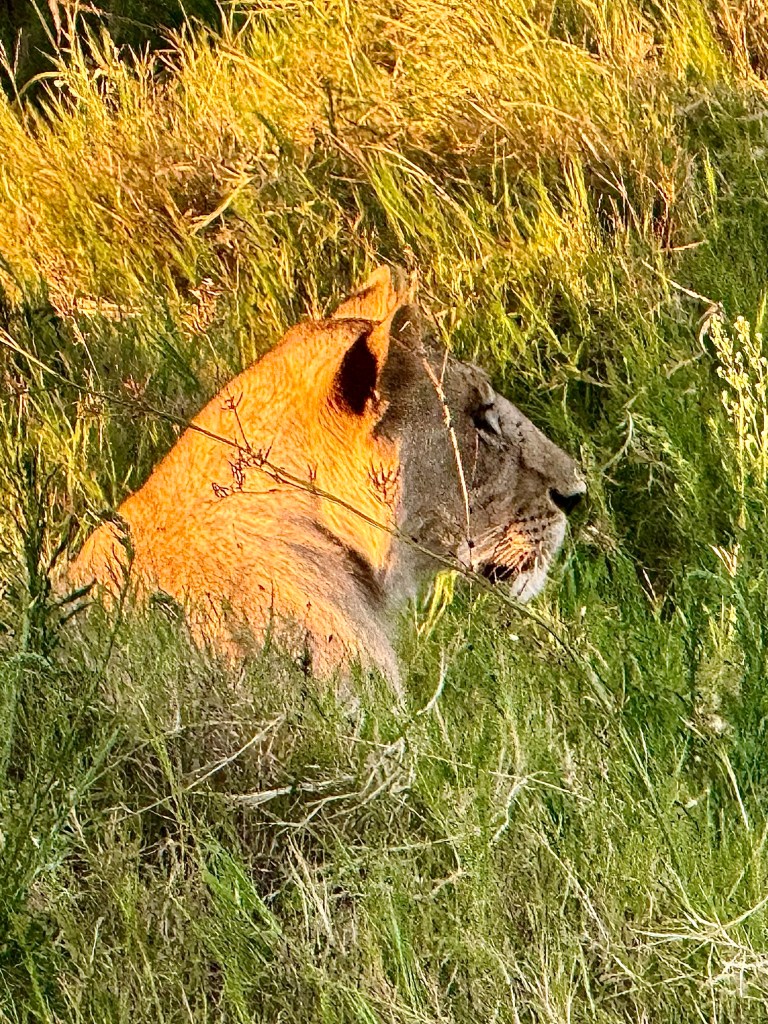
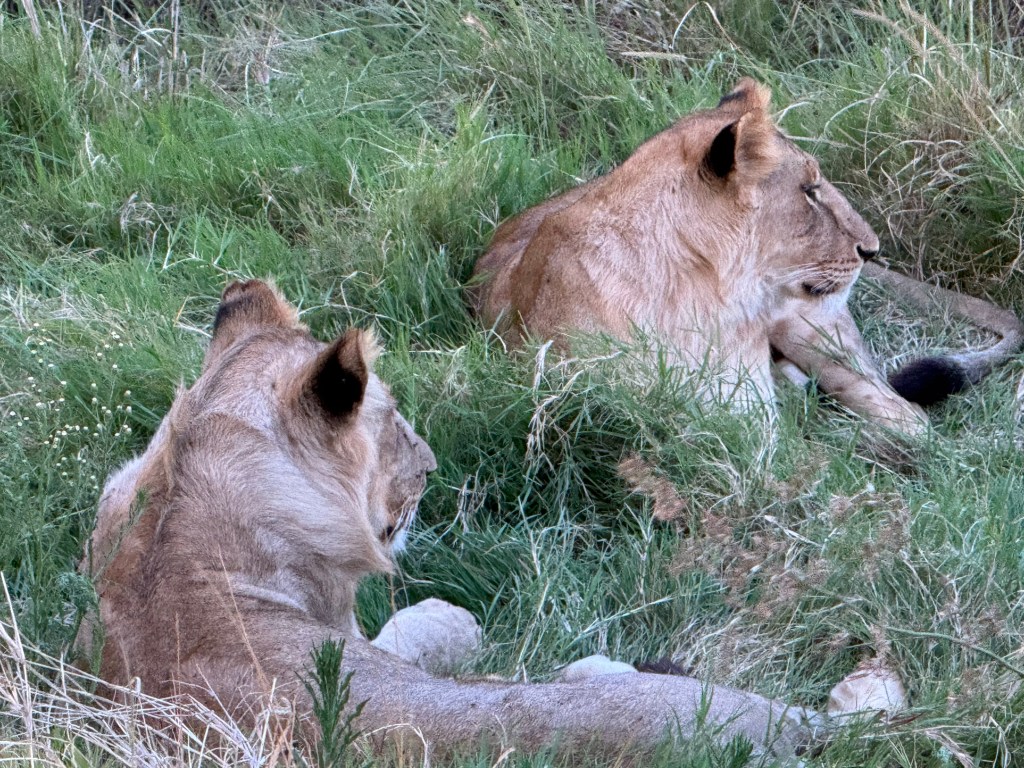
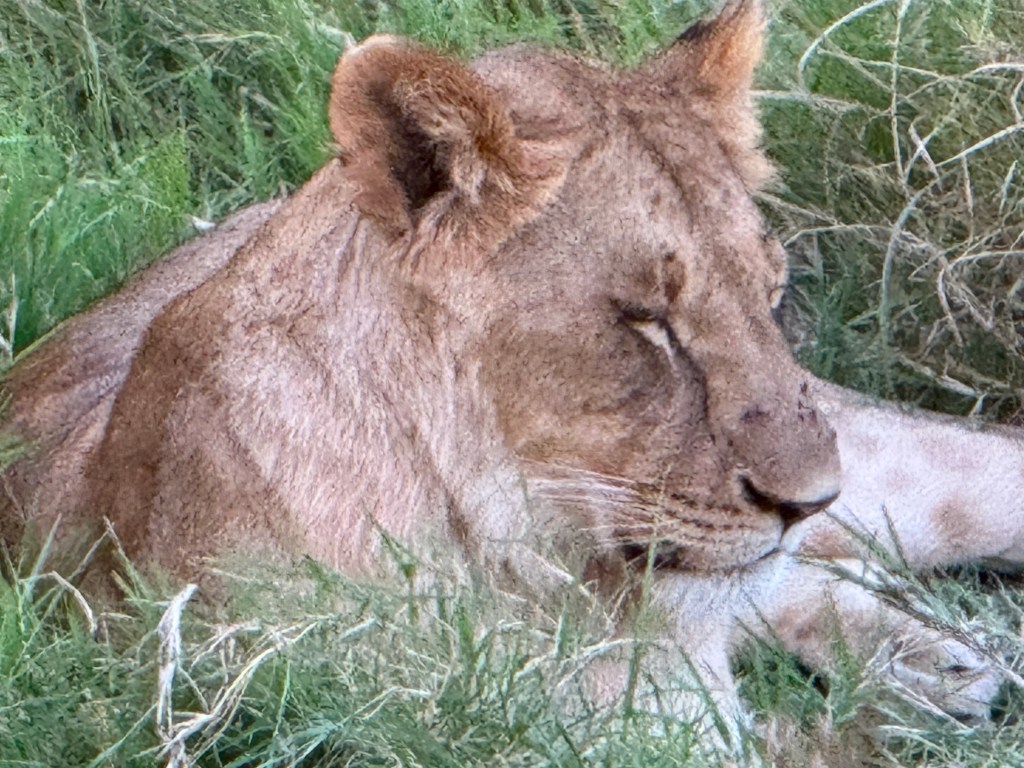
Seeing them so close was magical.
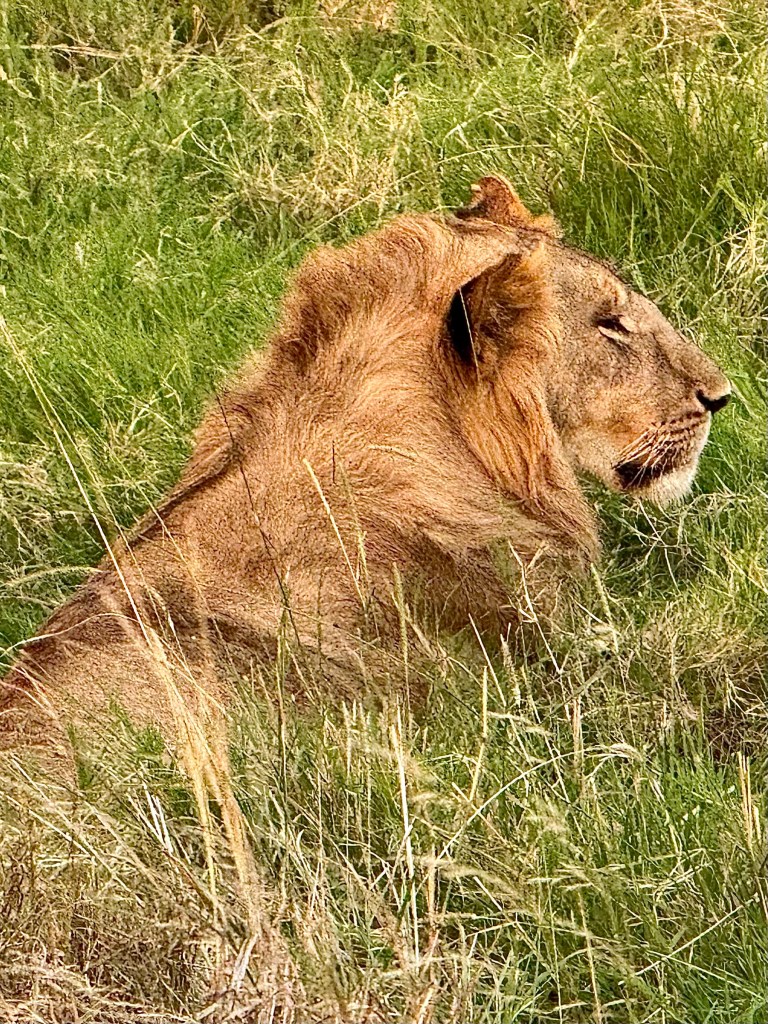
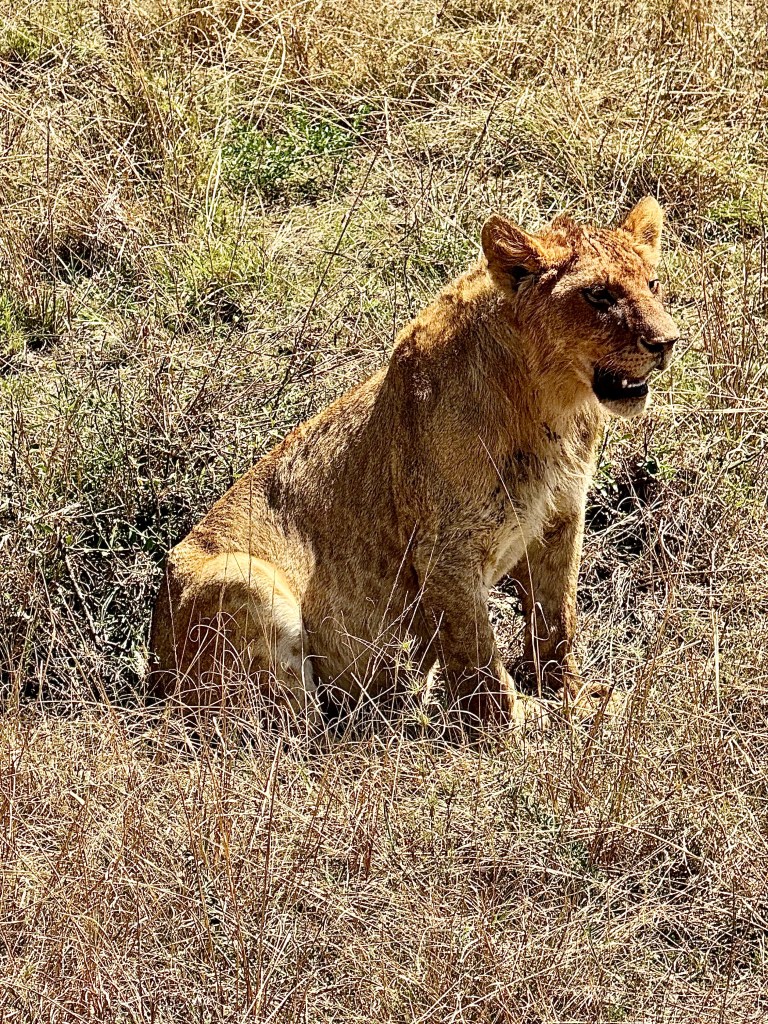
Below is a young male, it’s mane just starting to grow out.
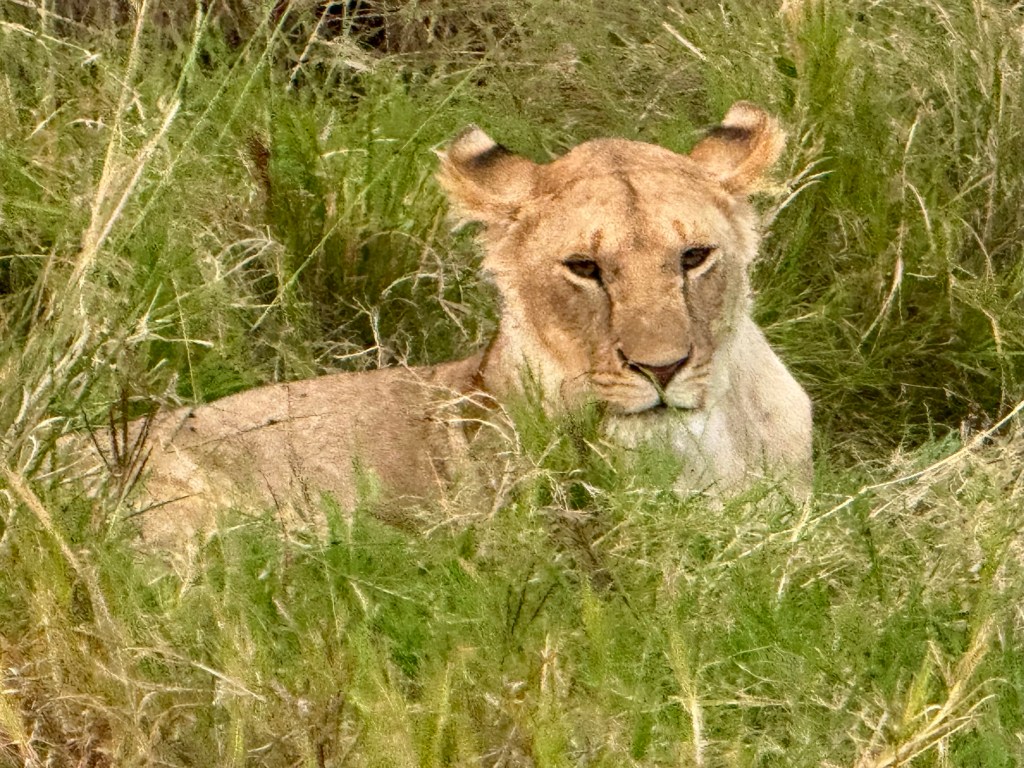
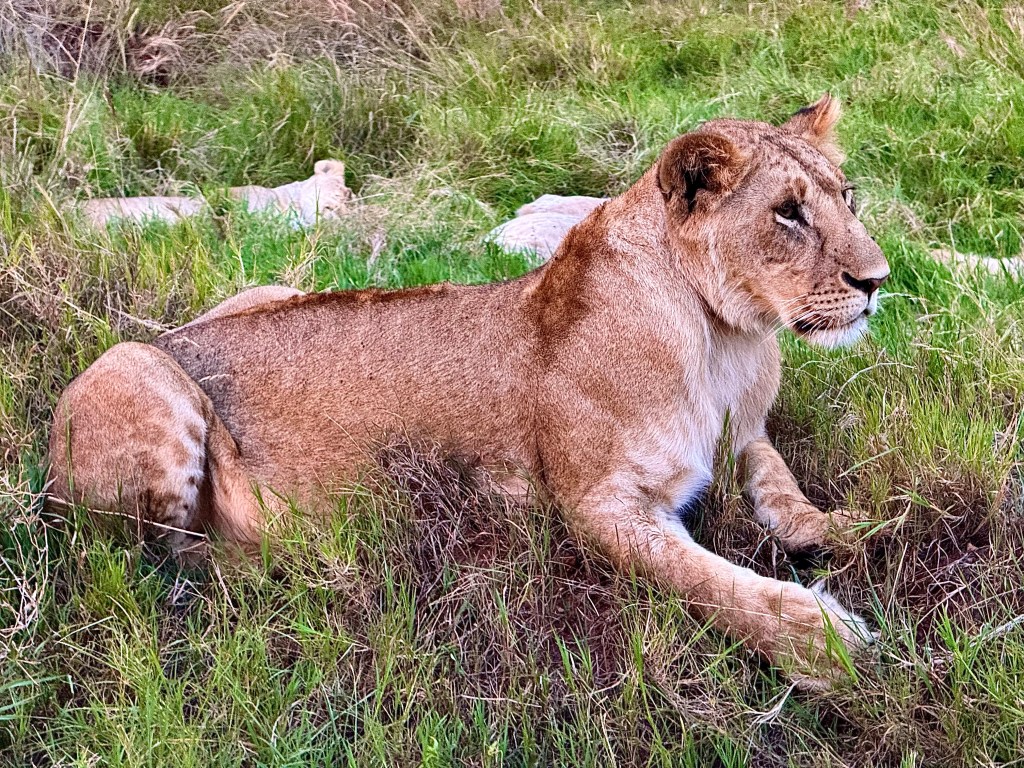
We drove on for a short distance and stumbled upon these two lionesses stalking a herd of Impala antelope.
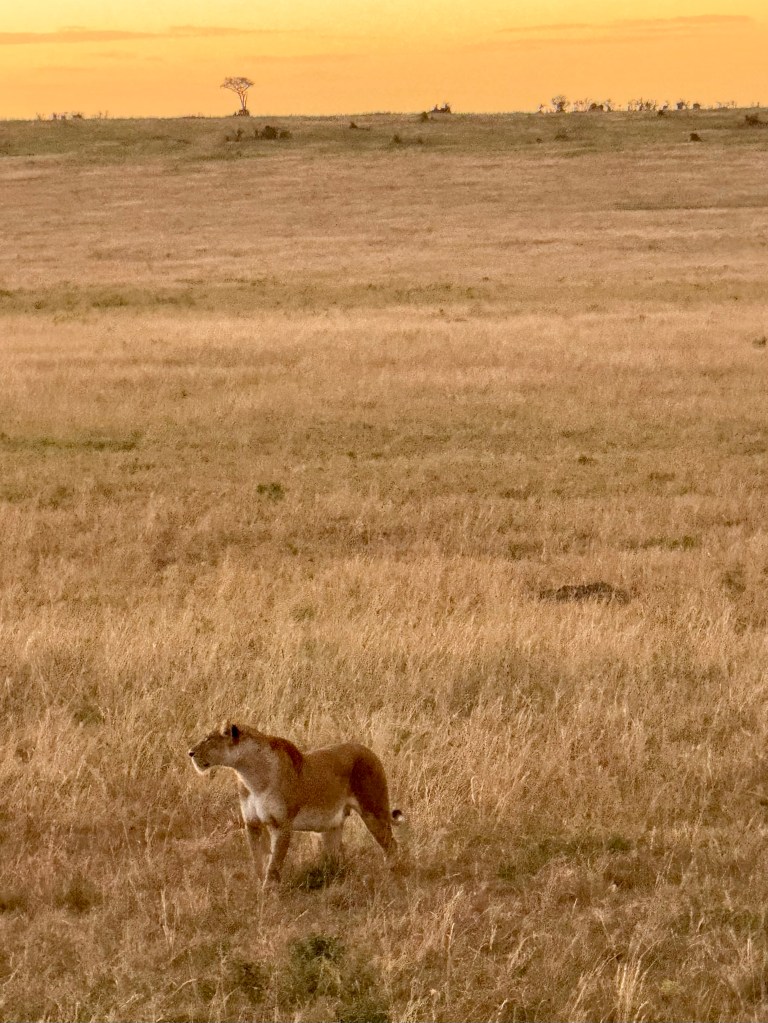
We stopped to watch them slowly creep forward.
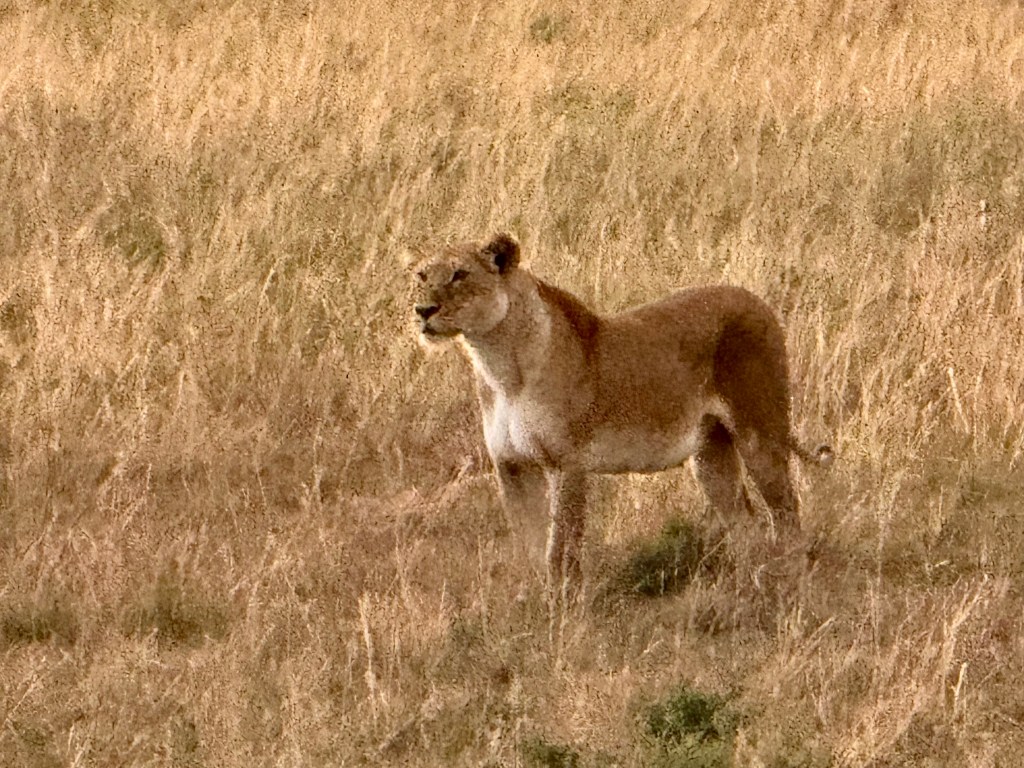
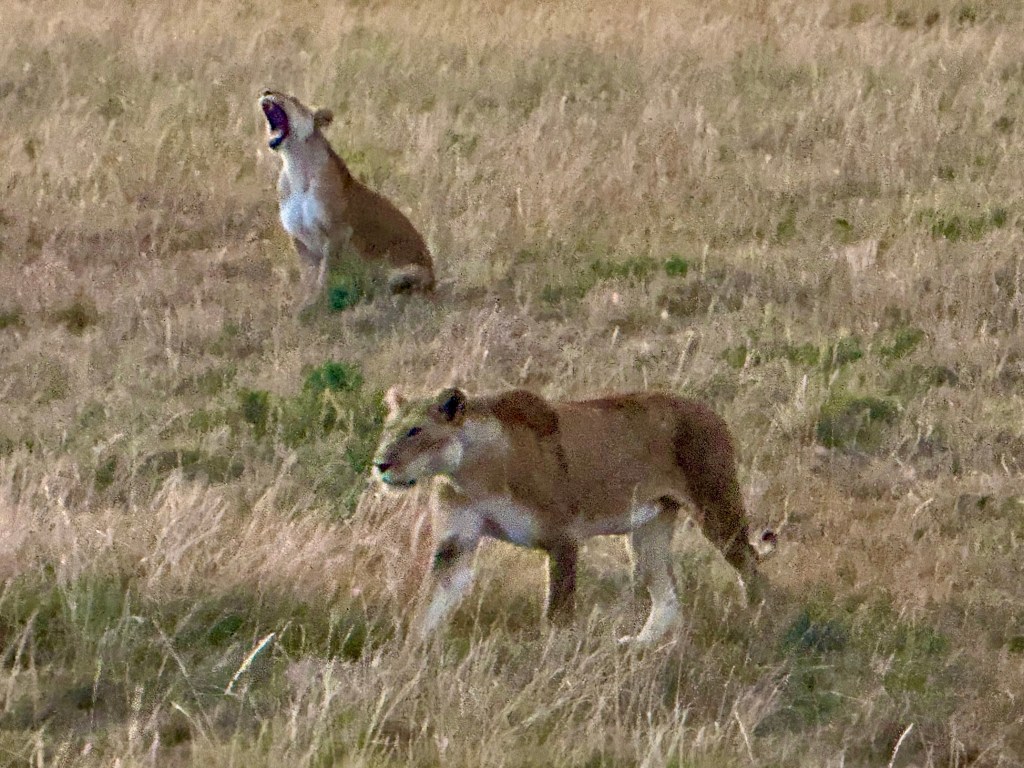
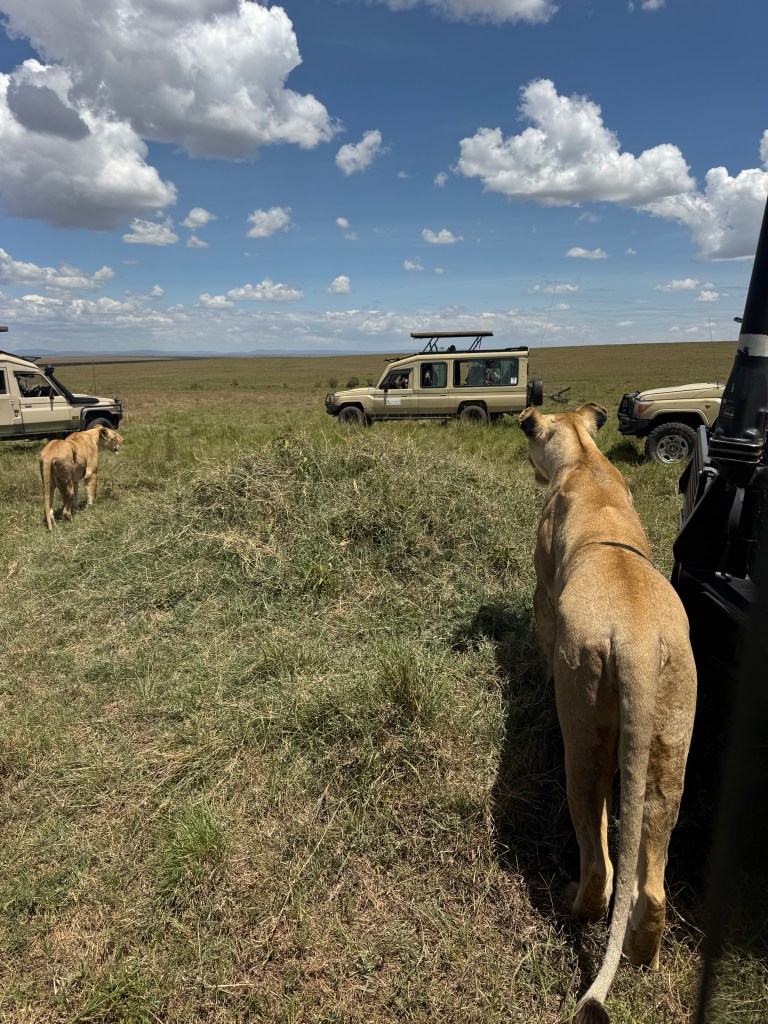
The jeep below was clearly being used by the lions to hide behind.
The occupants look a little exposed with a rolled up side panel.

However, the lions see the jeep as one large object, with smells and sounds unlike their usual prey.
Third tick in the big five box.
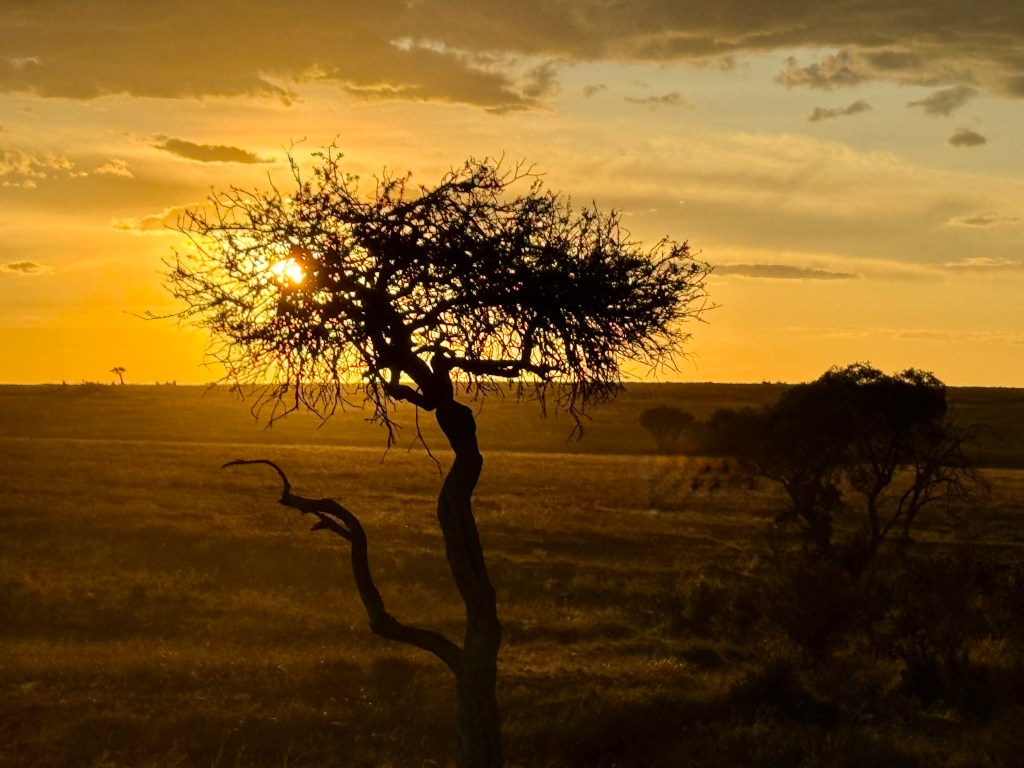
Our guide sped off towards the exit trail, saying little, which we had learnt meant he had spotted something. Saying nothing in order to avoid any potential disappointment.
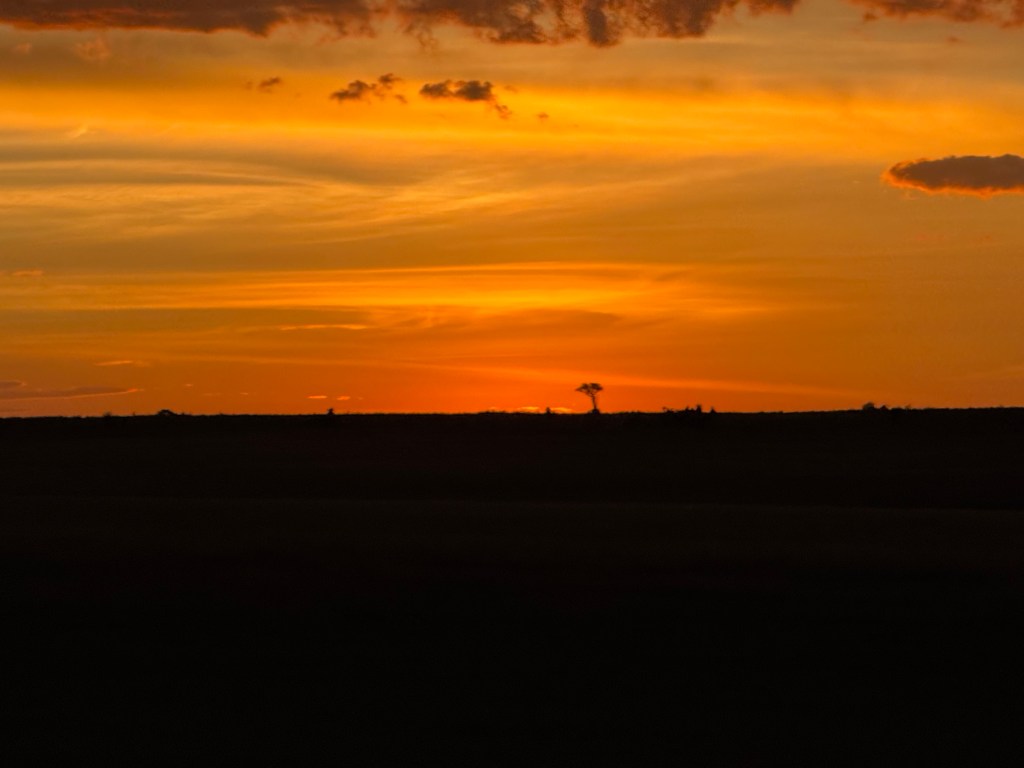
The daylight had gone, but he had spotted a black Rhinoceros, quite a rare sight to see. There are thought to be only 35-50 in the reserve but conservation work is slowly helping the numbers increase.

The pictures are not great given the darkness but it kindly stayed still.

In our short safari we had spotted 4 of the big five on day one.
We set out on our second safari, this time a full day.
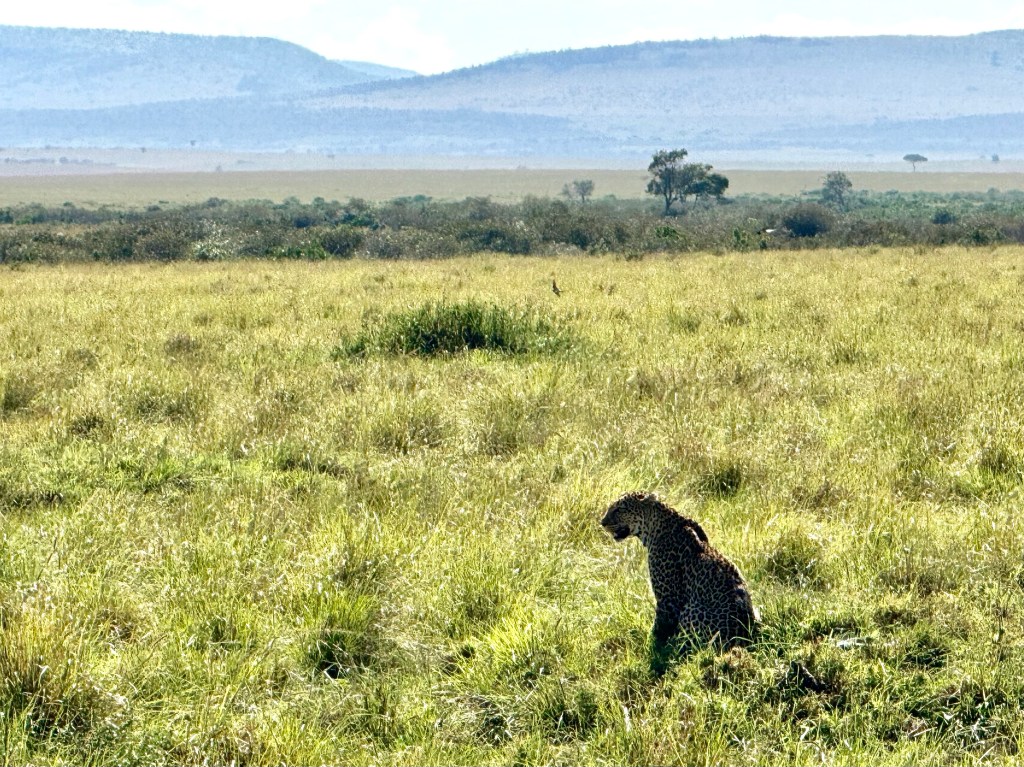
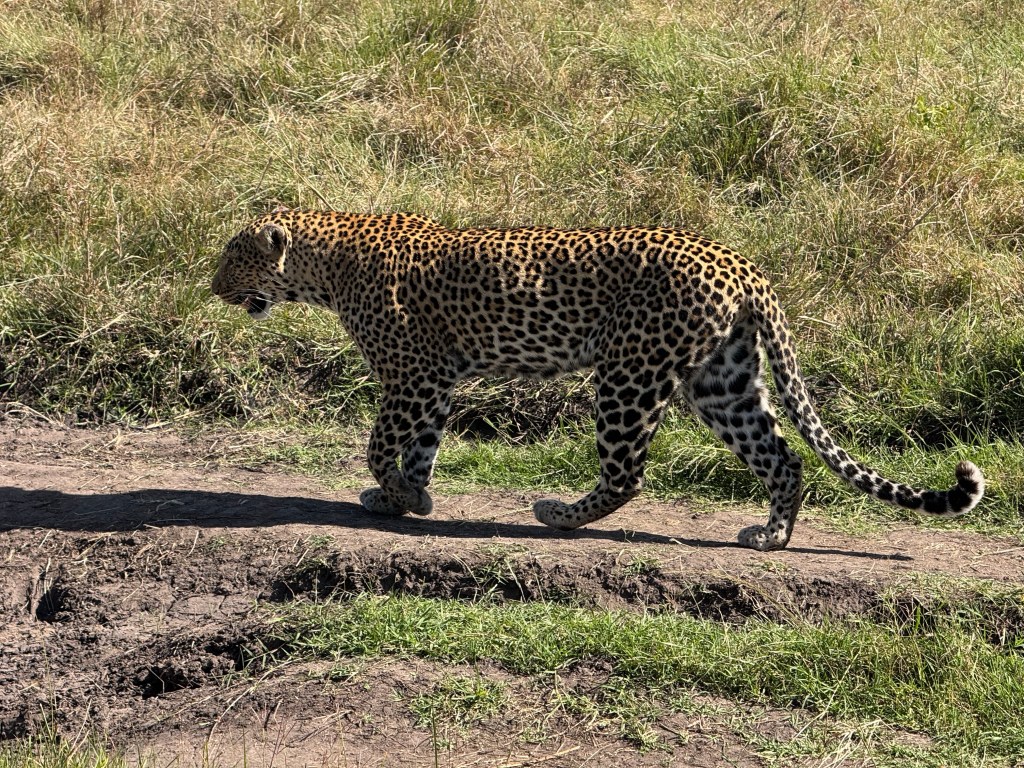
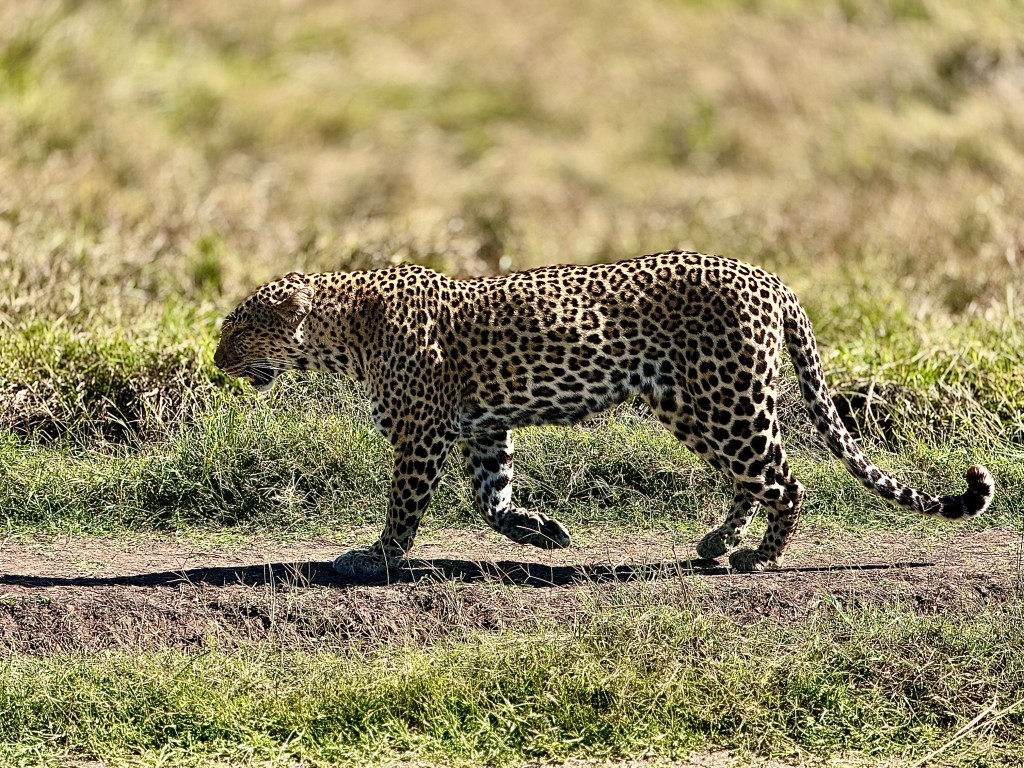
Soon enough, we encountered a Leopard, completing the big five sightings.
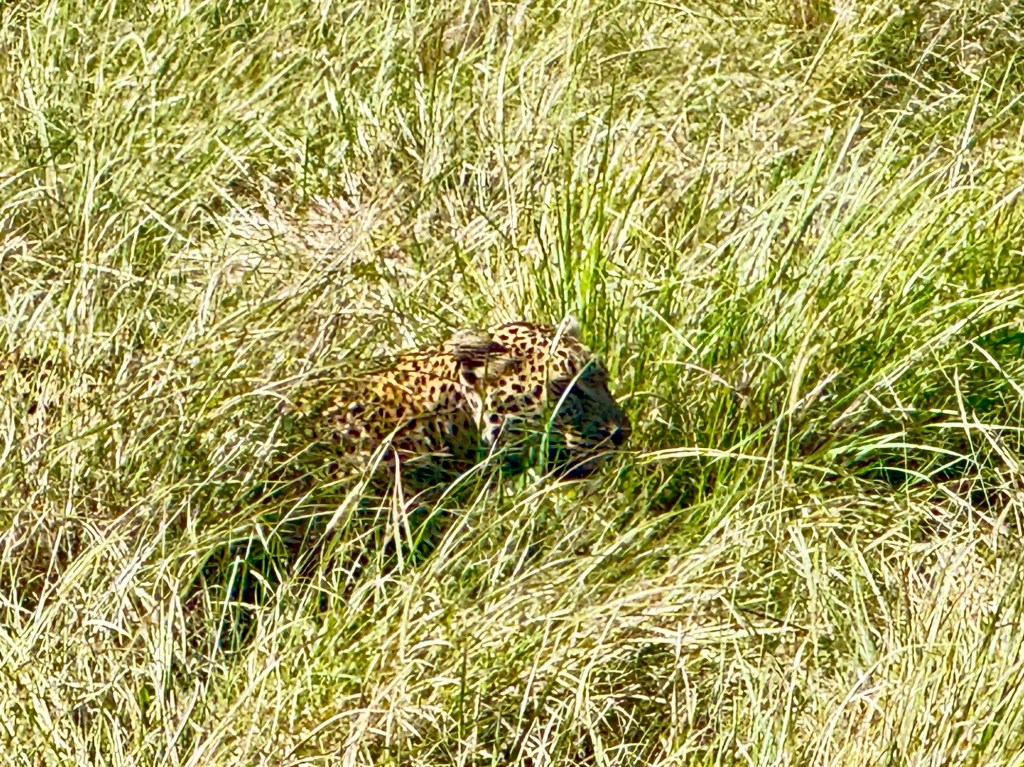
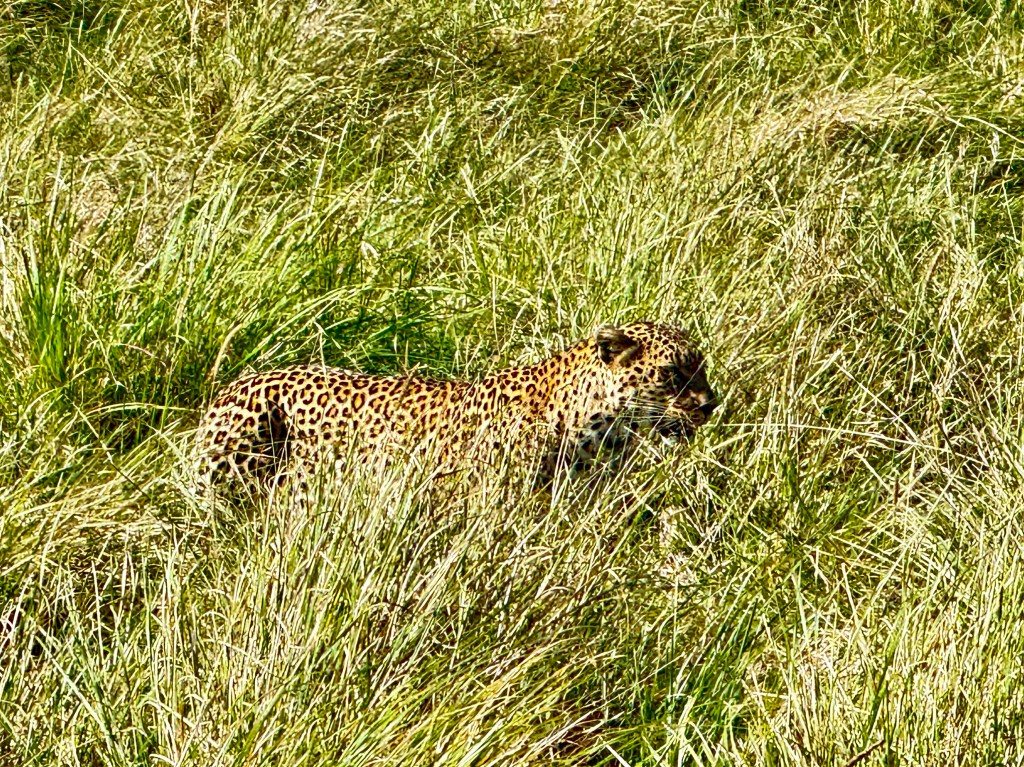
It’s the first time I have seen one in the wild and they are tremendously impressive to watch. It’s camouflage making it blend into the the tall grasses.
The leopard attracted lots of attention, with many jeeps and a reserve warden there too. The leopard, like the lions, had no interest in us.

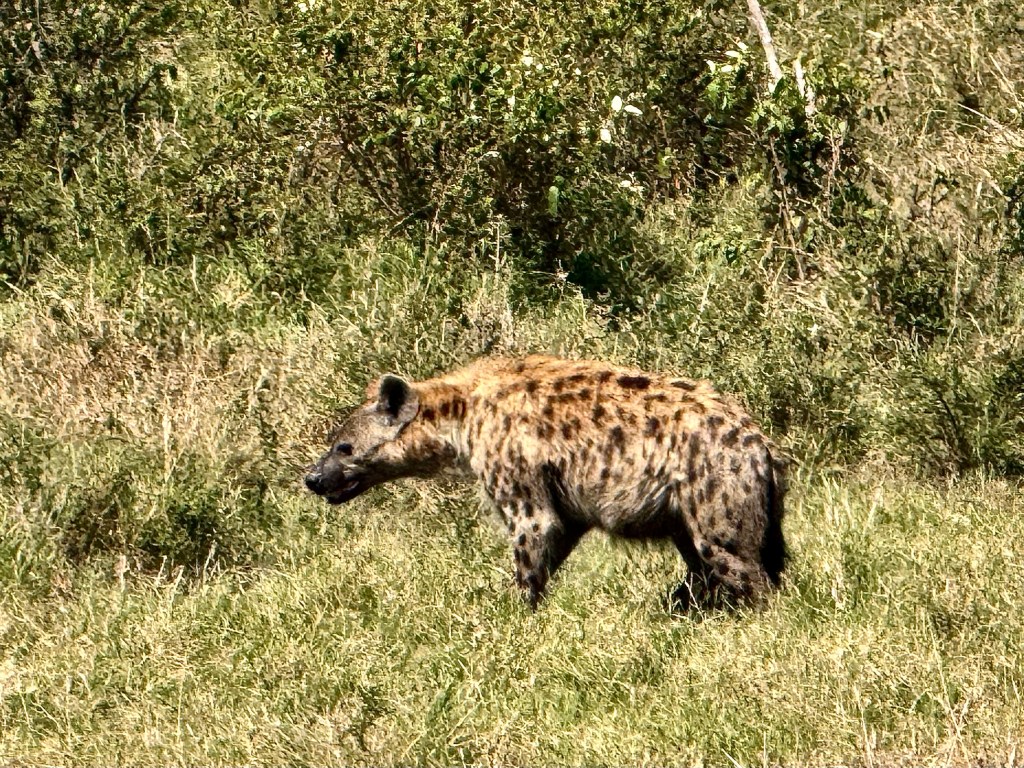
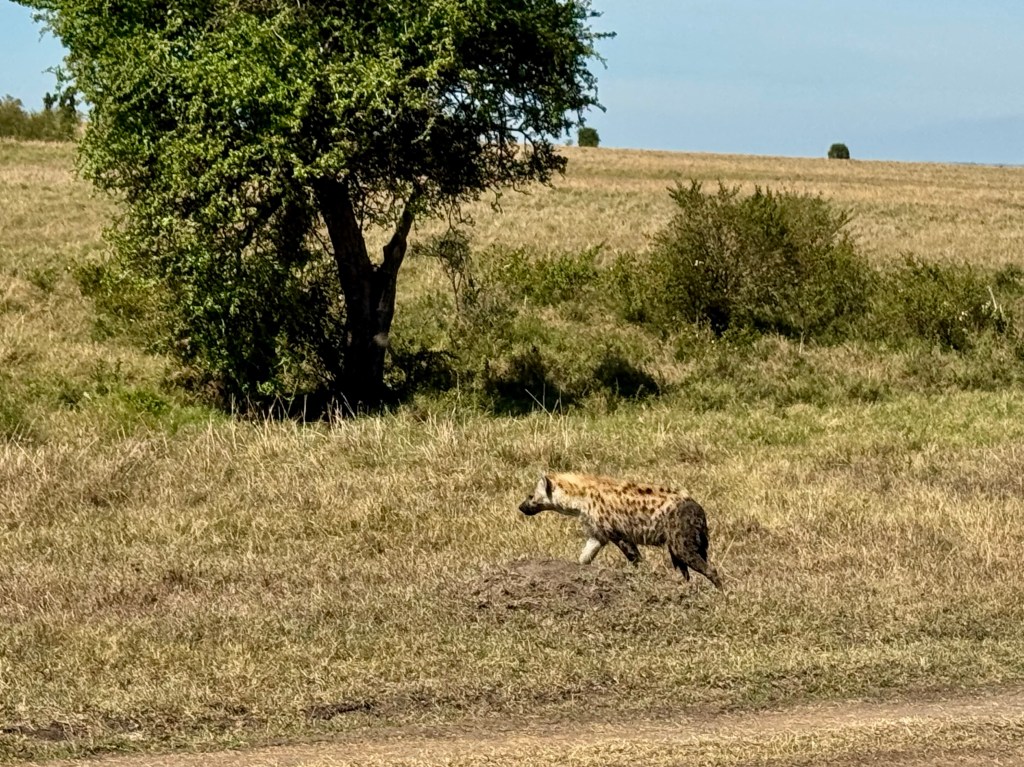
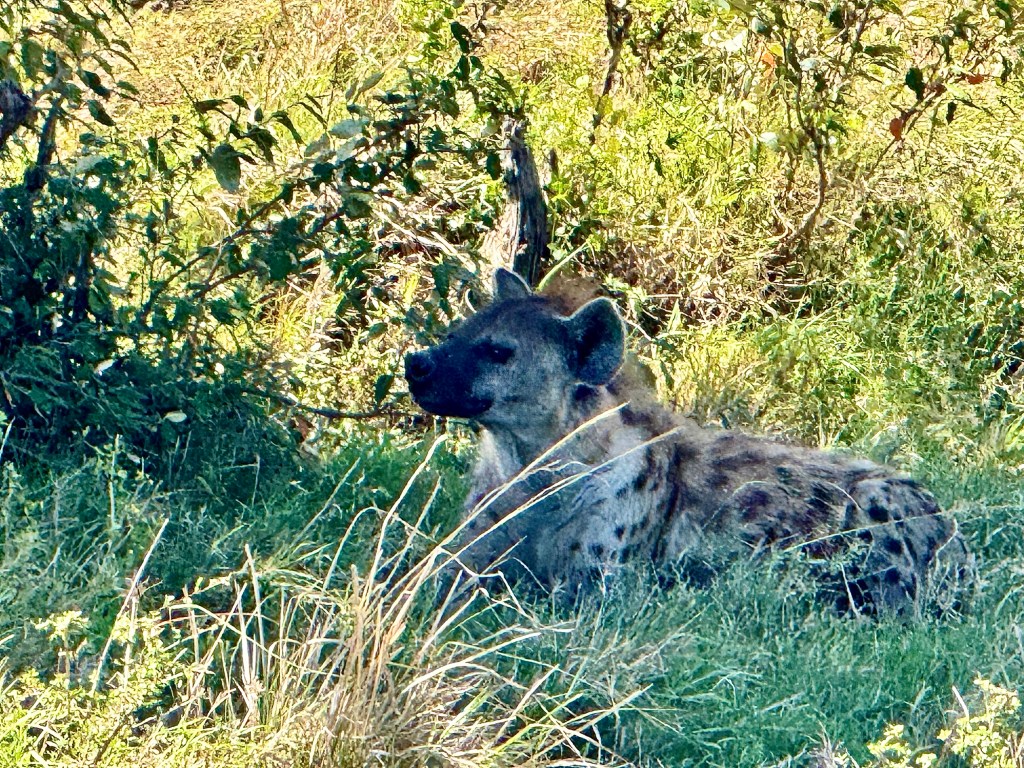
Leaving the leopard behind, our guide spotted a couple of hyenas.
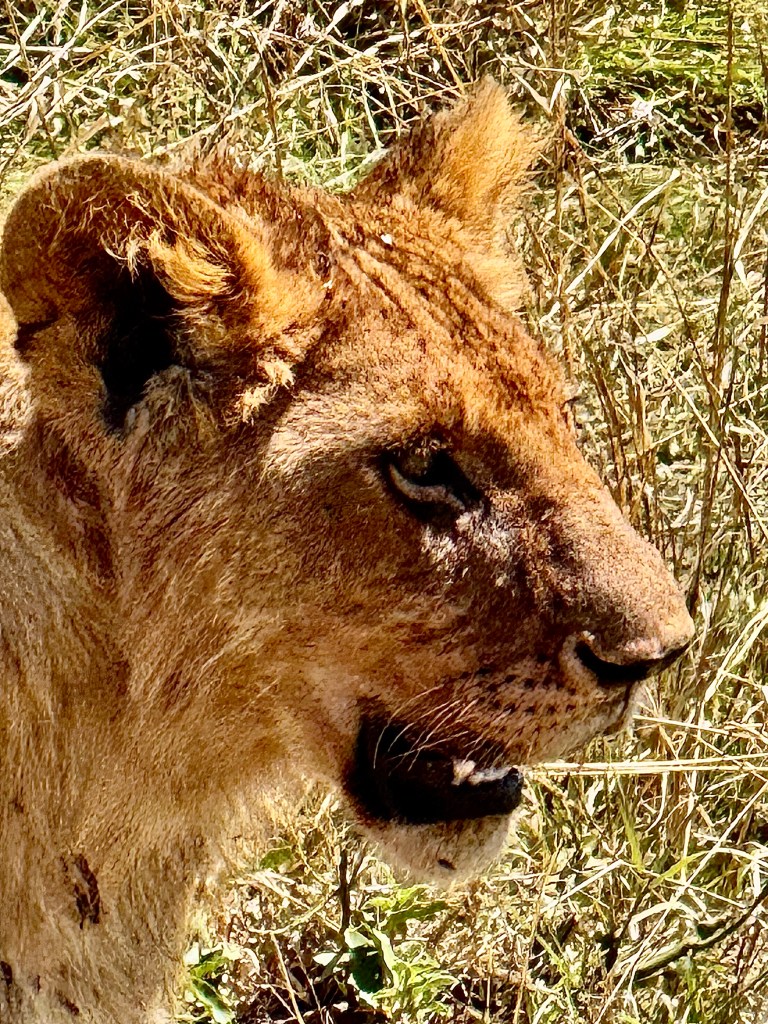
We spotted another pride of lions, these were feeding on a dead buffalo, likely dead for a couple of days.
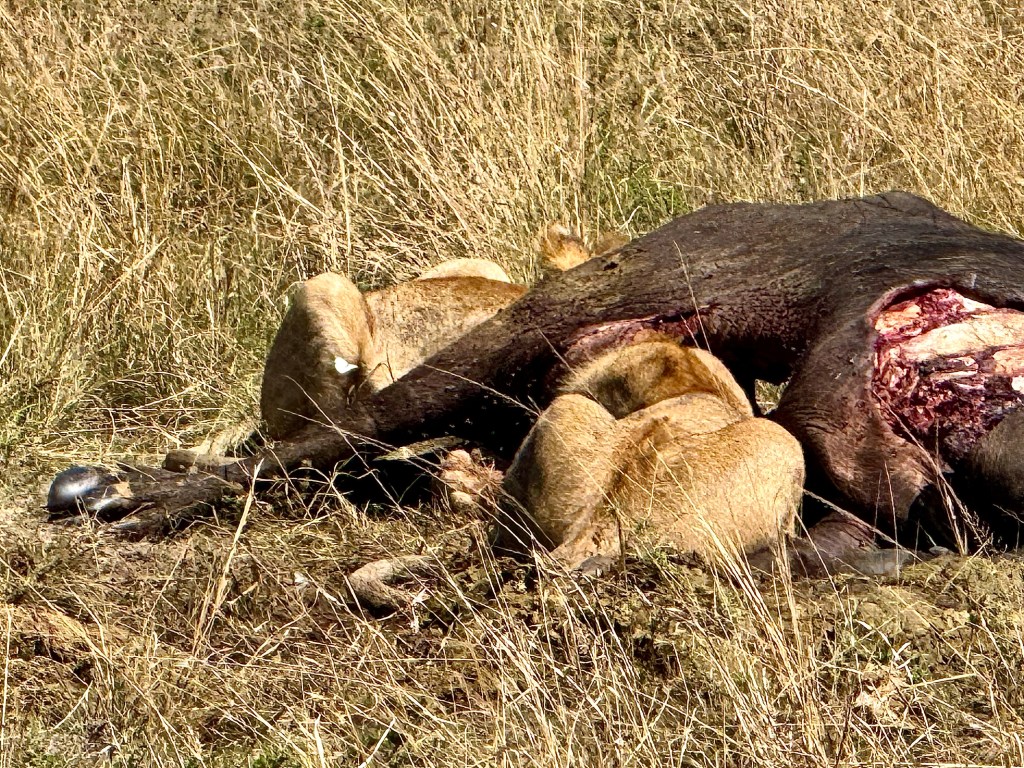
It was the lionesses turn to feed and these two were eating through either side of the carcass.
One with its head inside the carcass reaching for fresh meat.
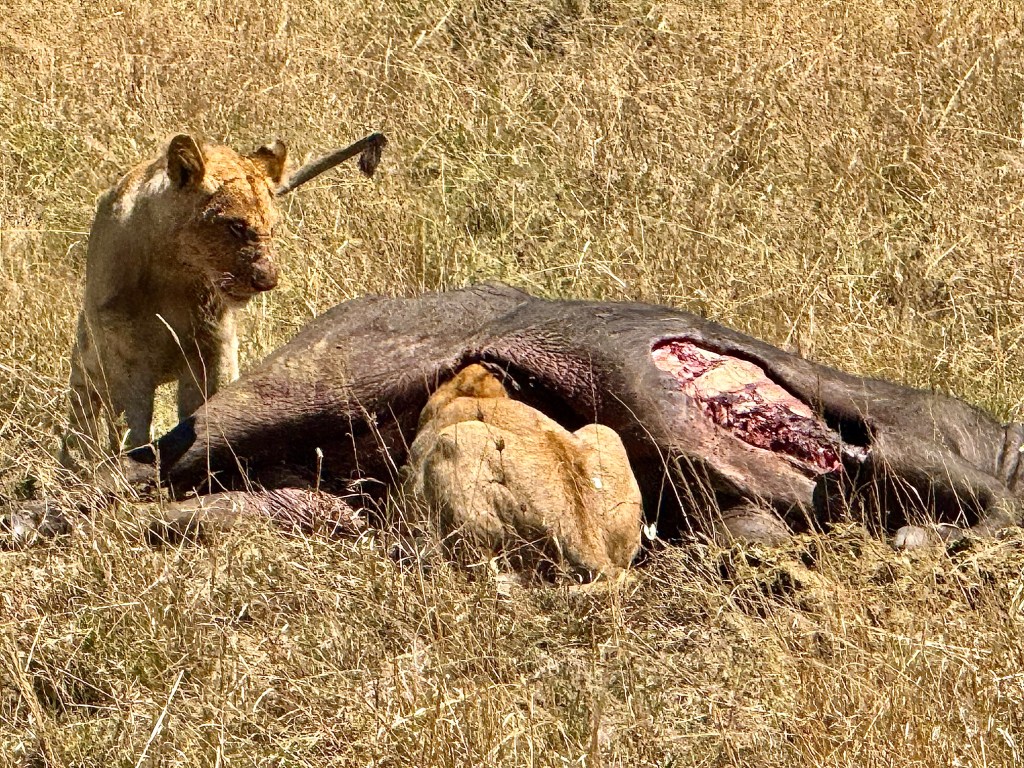
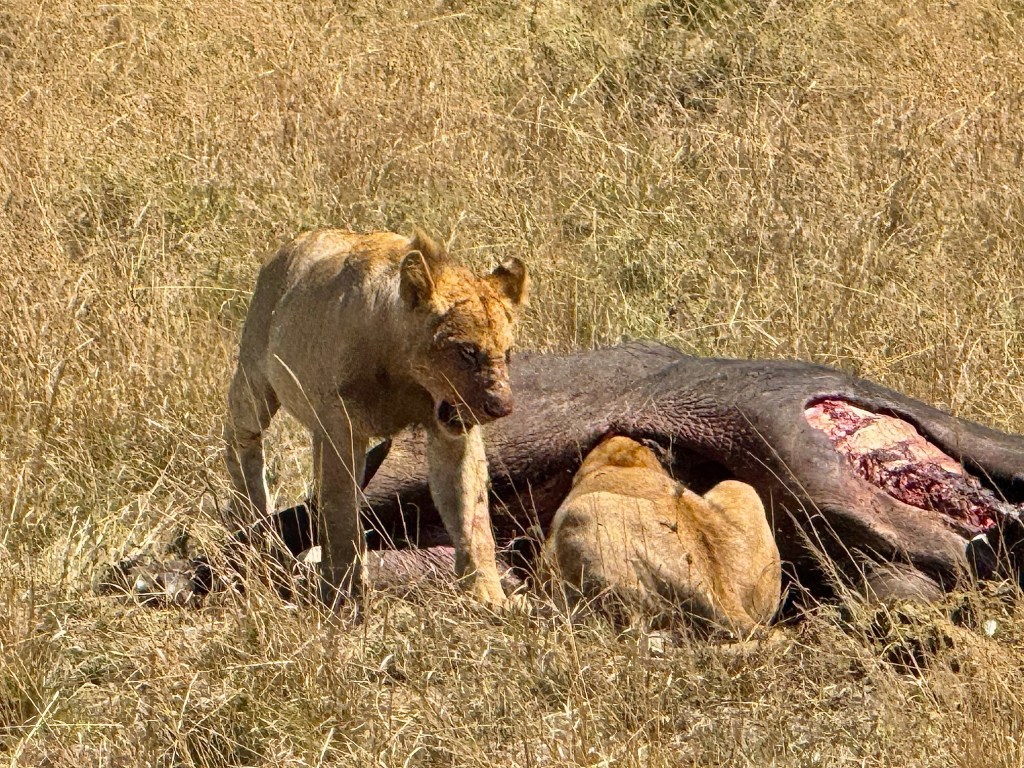
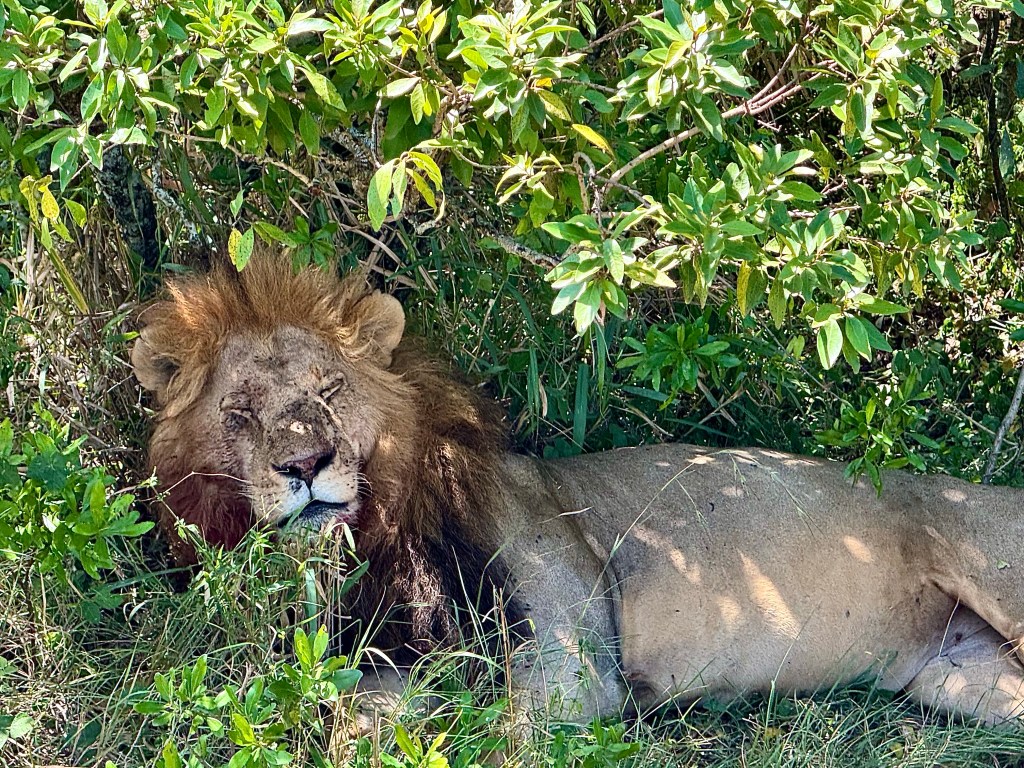
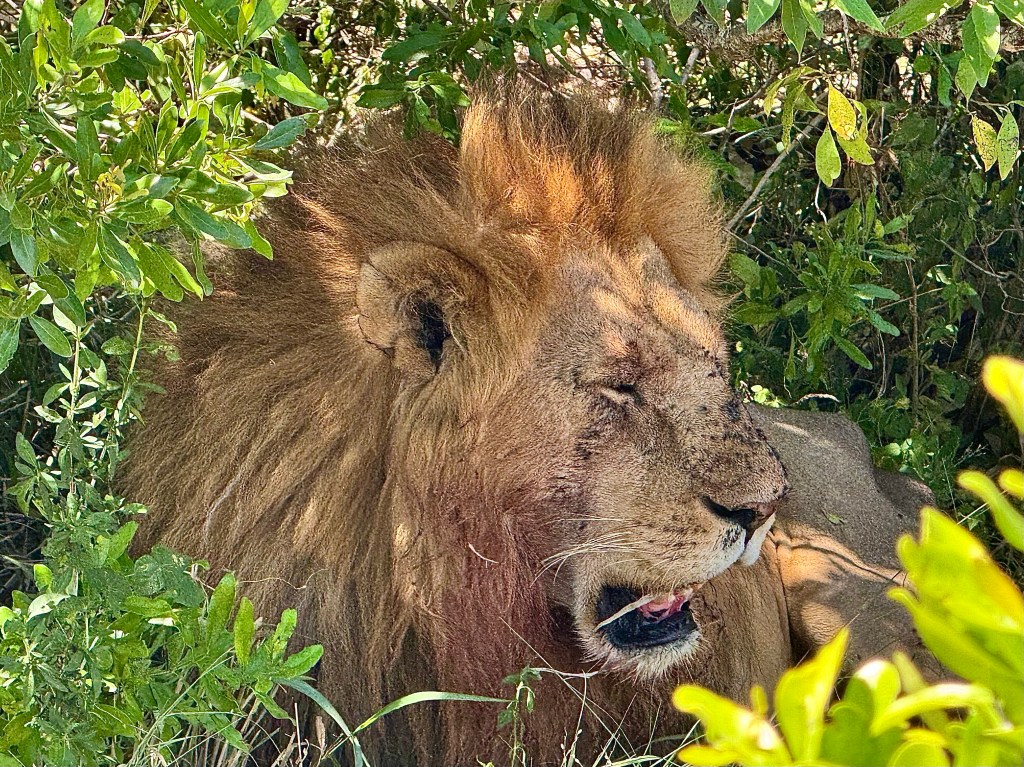
Nearby the male lion rested in the shade having had his turn to feast first.

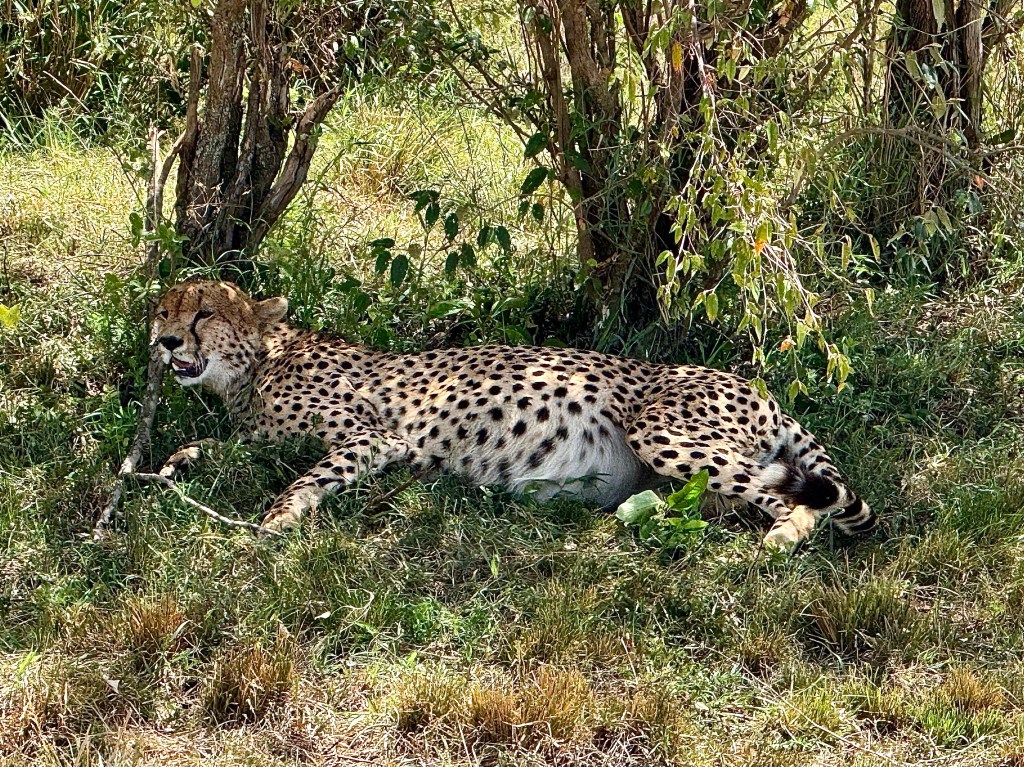
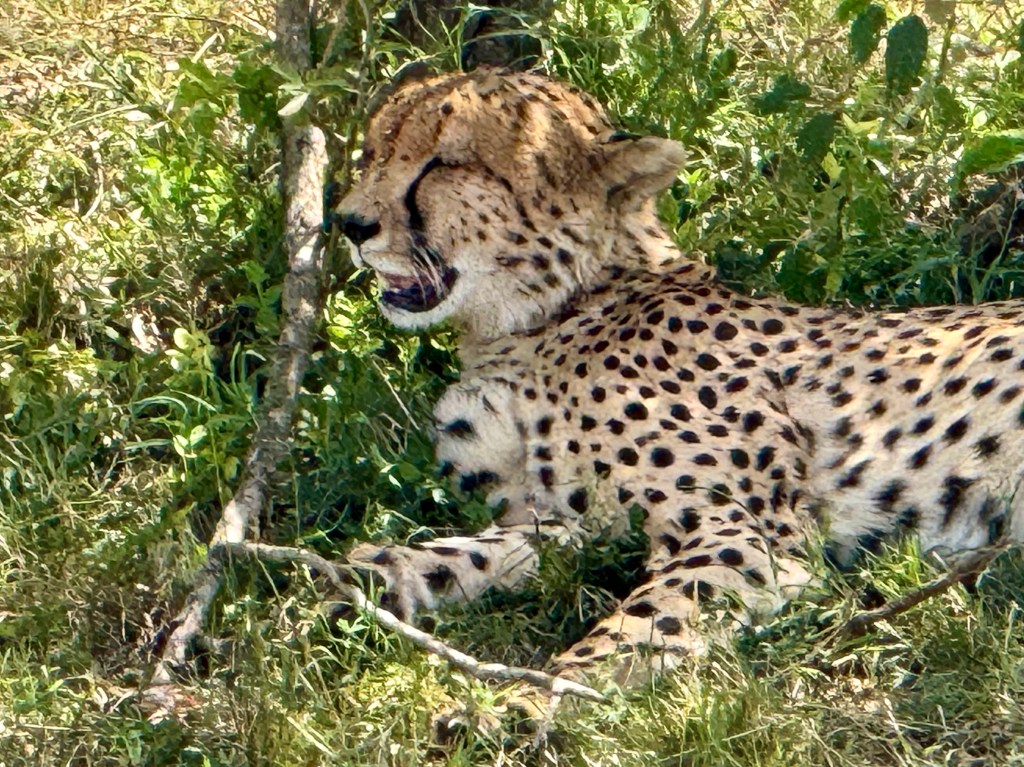
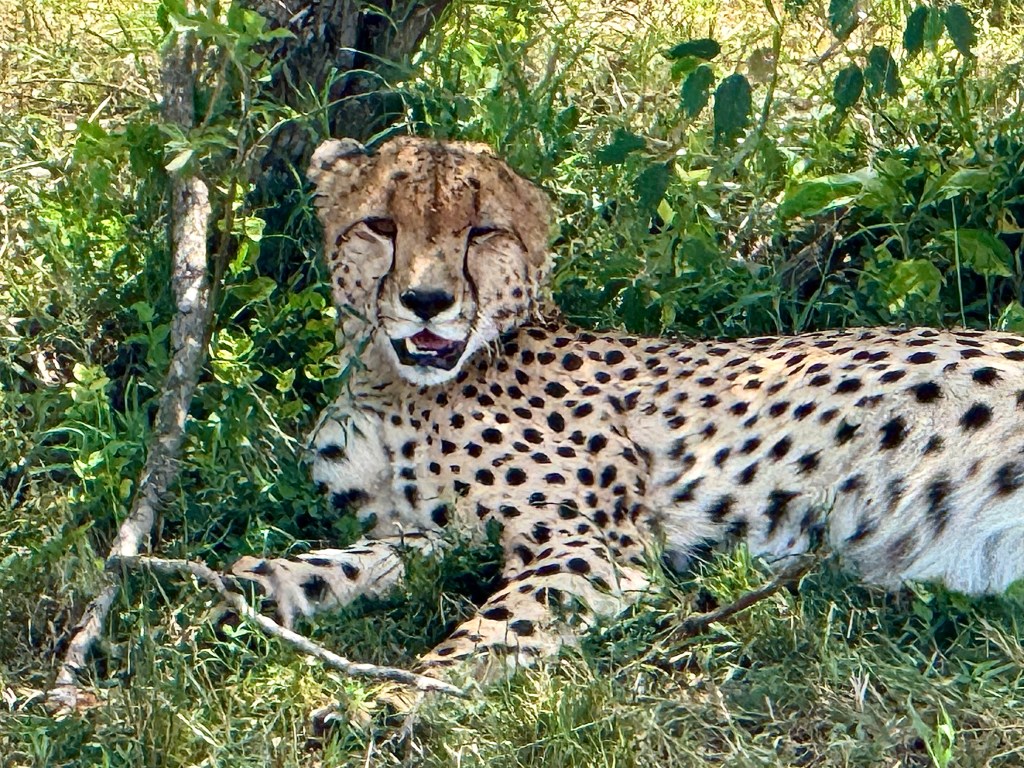
Shortly afterwards we spotted another big cat, this time a Cheetah, sitting under a tree shading itself from the midday sun.

The cheetah is the fastest land mammal, reaching up to 60-70mph.
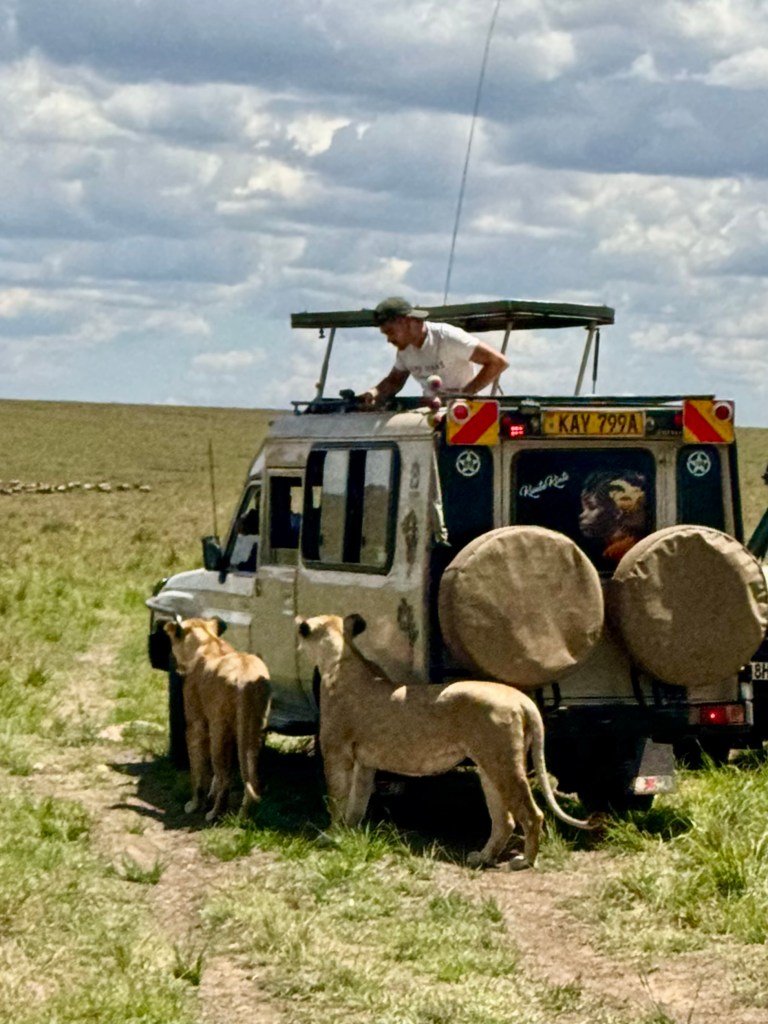
Moving on, we found more lions, these were not just using the safari jeeps for shade but also for cover as they tried to stalk a herd of Impala a few hundred metres away.
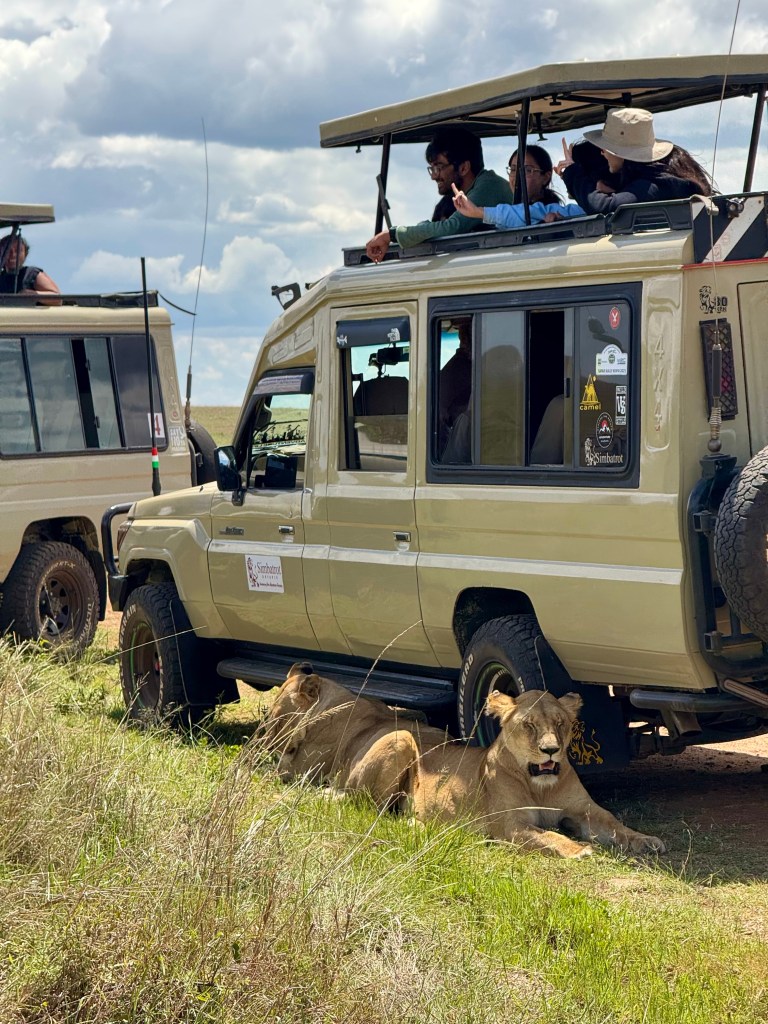
Close encounters, amazing!
We stopped for a picnic lunch by the Mara river, one of the primary locations for the annual migration.
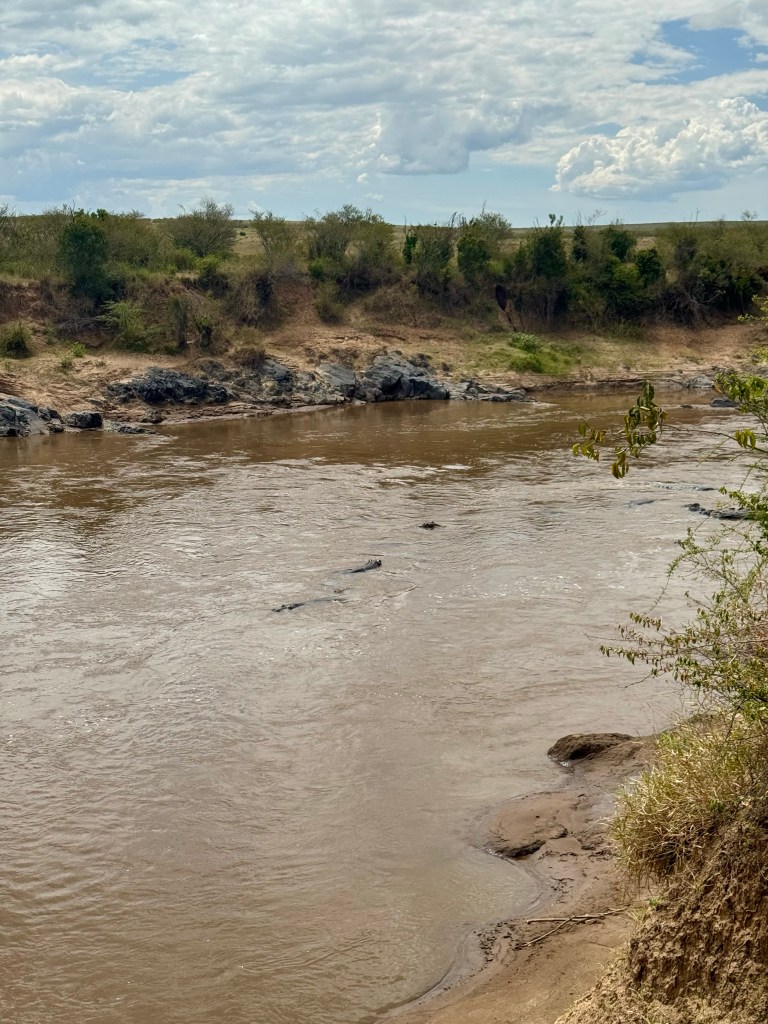
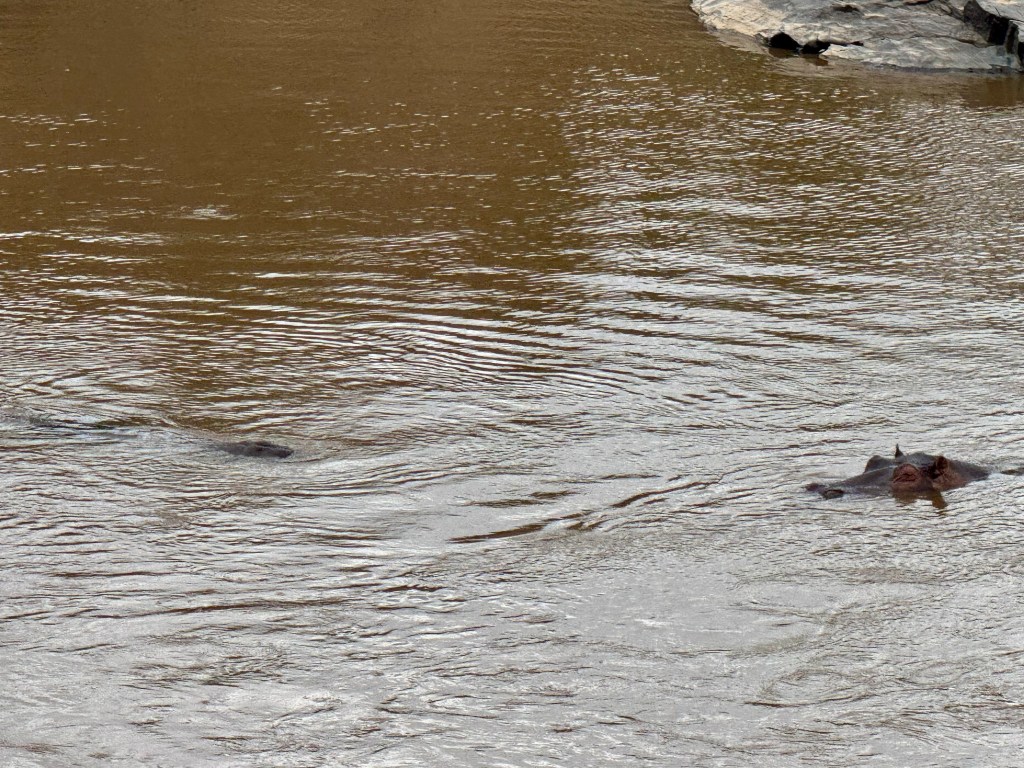
We saw hippos in the river as well as big crocodiles on the river banks.

Nearby is the border between Kenya and Tanzania, joining the Masai Mara with the Serengeti, marked by this stone.

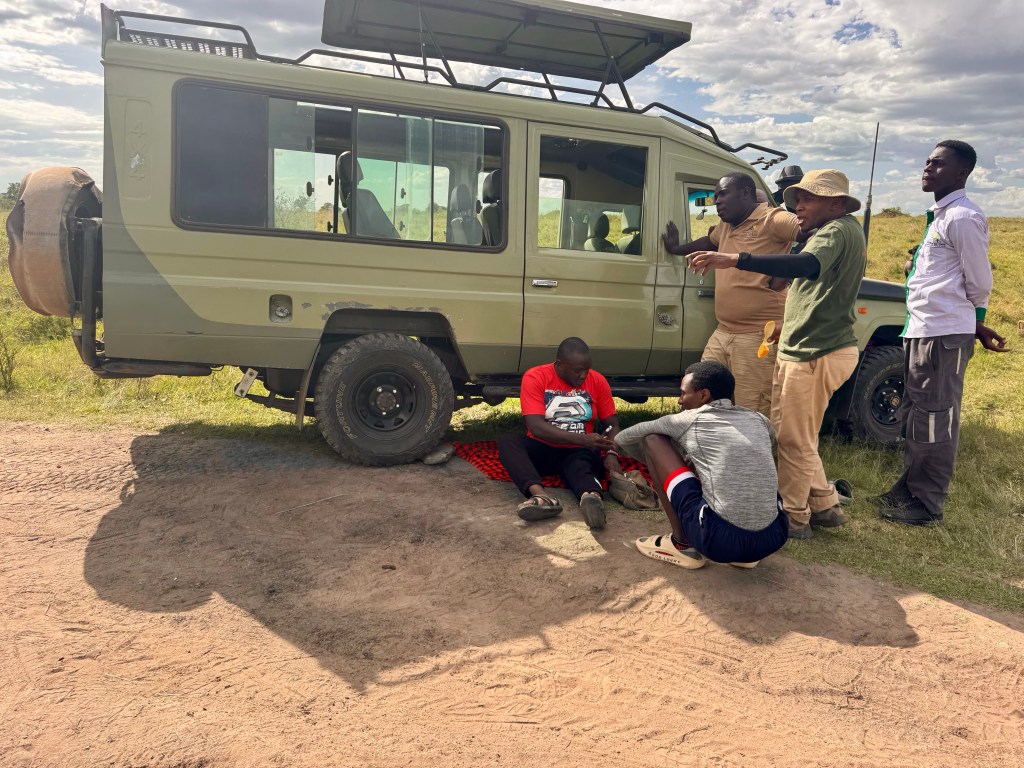
Heading back from the border area we attempted to cross through a small creek but hit a big ditch damaging our vehicle.
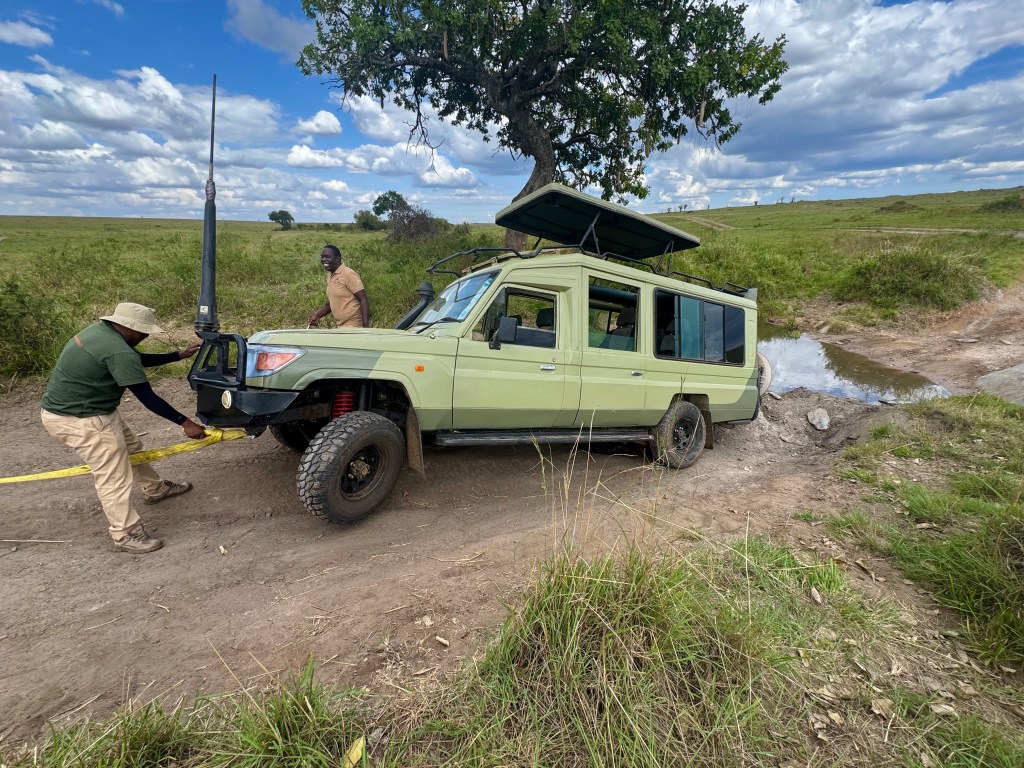
It was great to see the other jeep drivers come to our rescue and soon enough we were on our way, although we were no longer a for wheel drive vehicle!
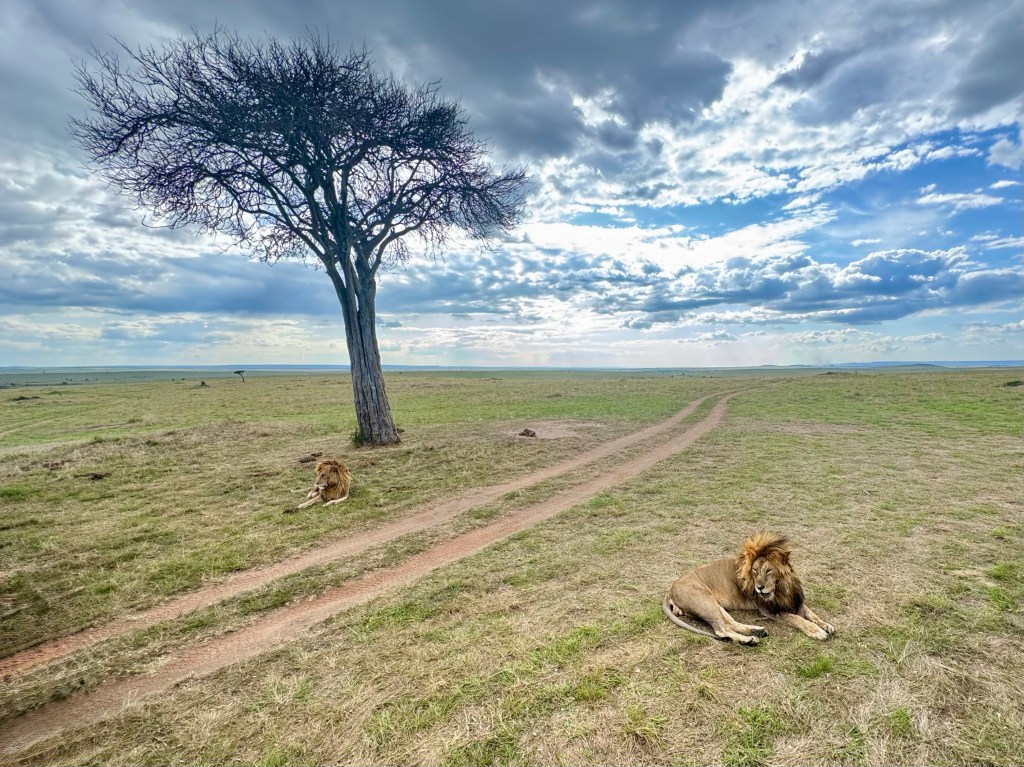
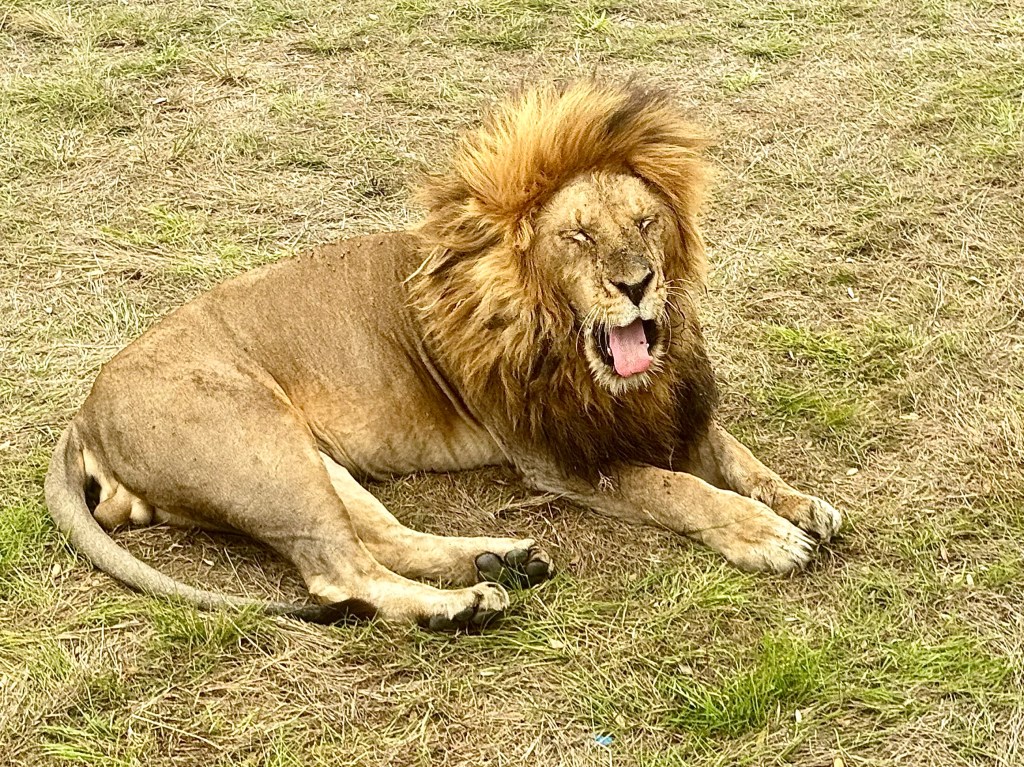
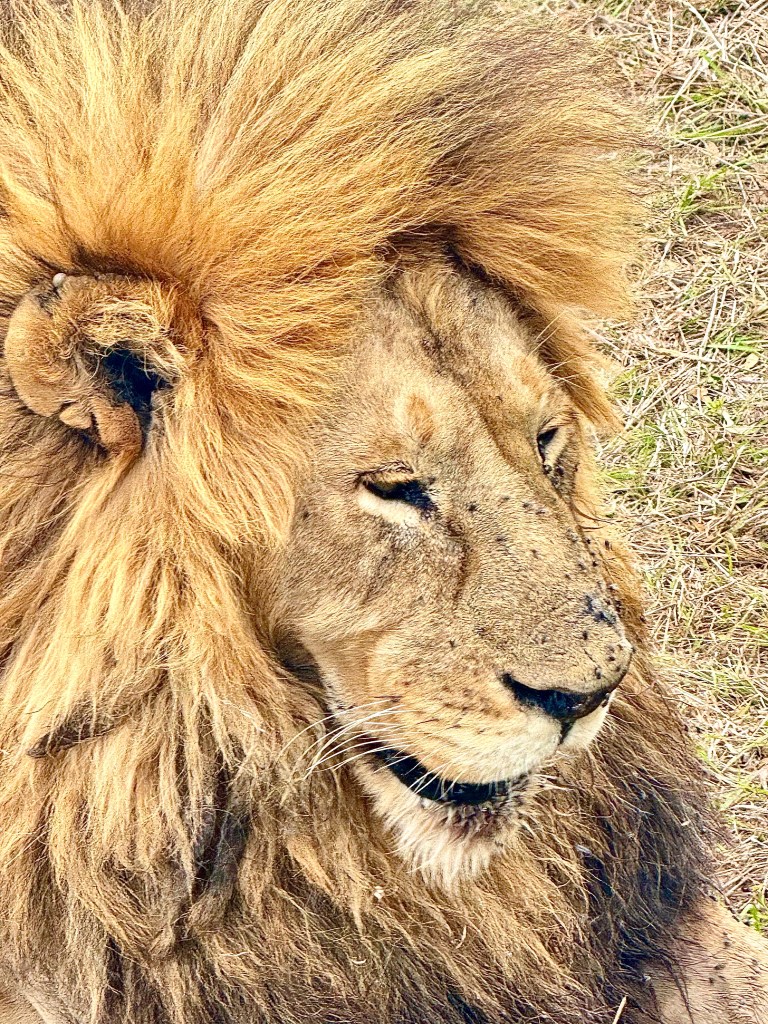
Heading out of the park we spotted more lions, this time with a big male close by.



What an incredible experience, I hope I have managed to relay at least some of what we have encountered.
If get a chance to visit the Masai Mara, just do it!
 Jeff's Travel And Photo Blog
fab pics and very educational !! glad you loved it !
LikeLike