
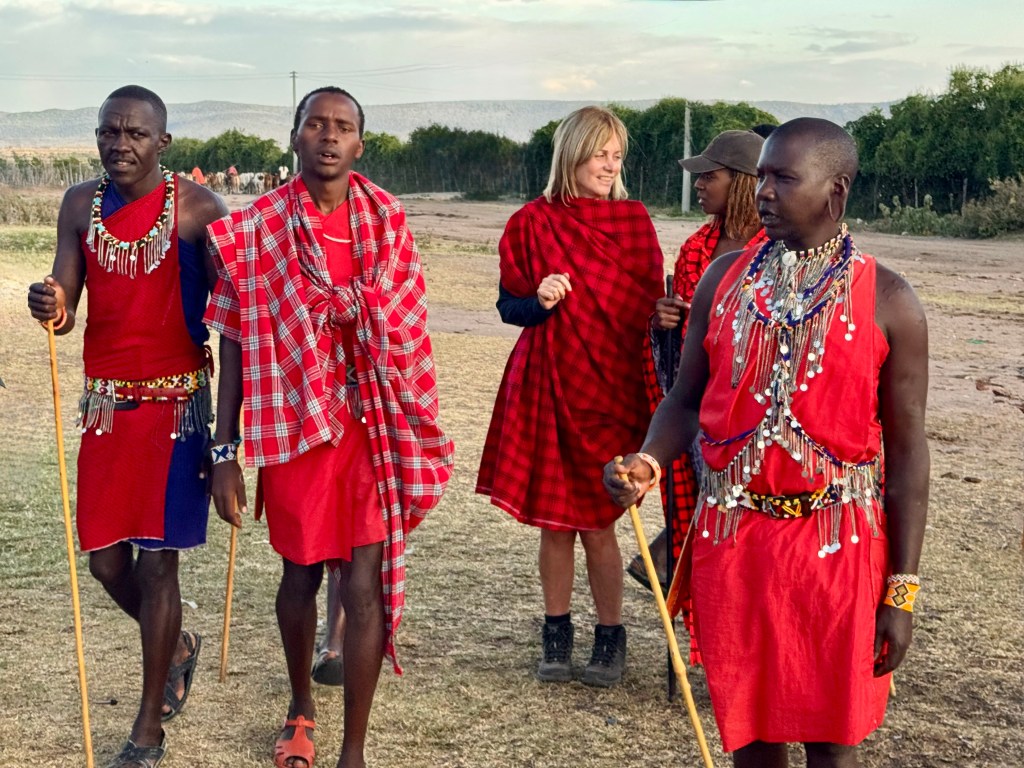
At the end of our final day’s safari we were able to spend an hour visiting a local Maasai village.

200 people live in this village and we were treated to a traditional welcome dance.

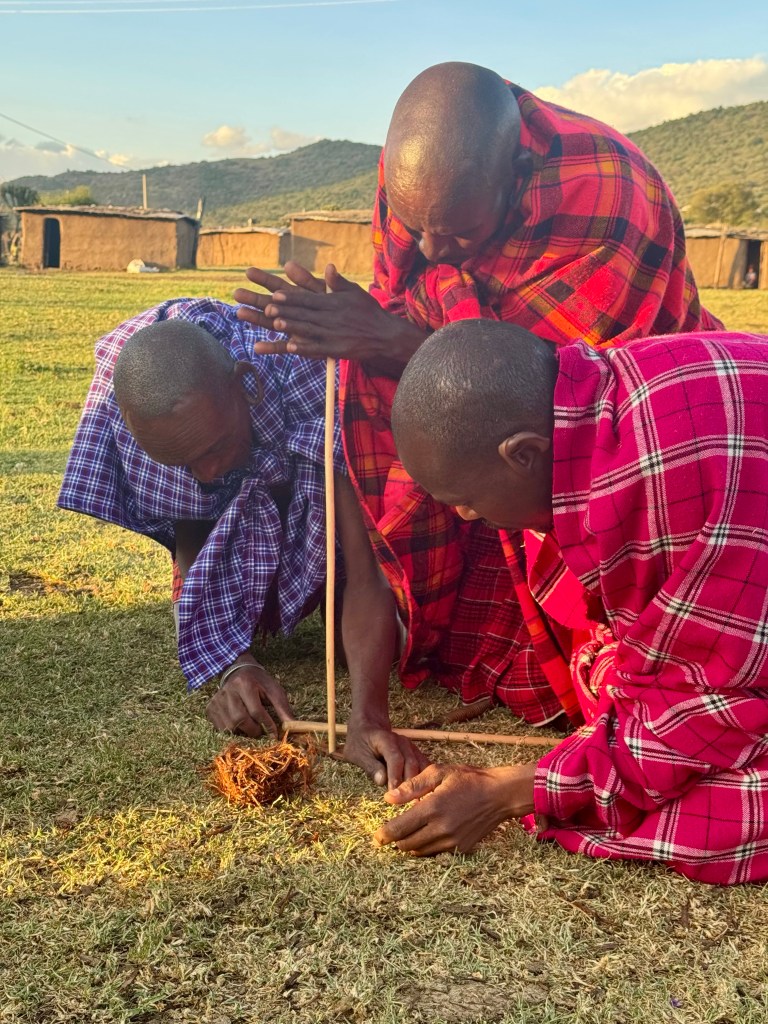
We were shown how they make fire without matches or flints.
The cloaks the Maasai wear differ by family, each with their own uniqueness.
The village Chief’s son invited us in to see inside their huts, made from sticks, cow dung and mud.

The hut was hot, very small and had very little natural light, just a small hole. This is to maintain an even temperature and to protect them from predators.

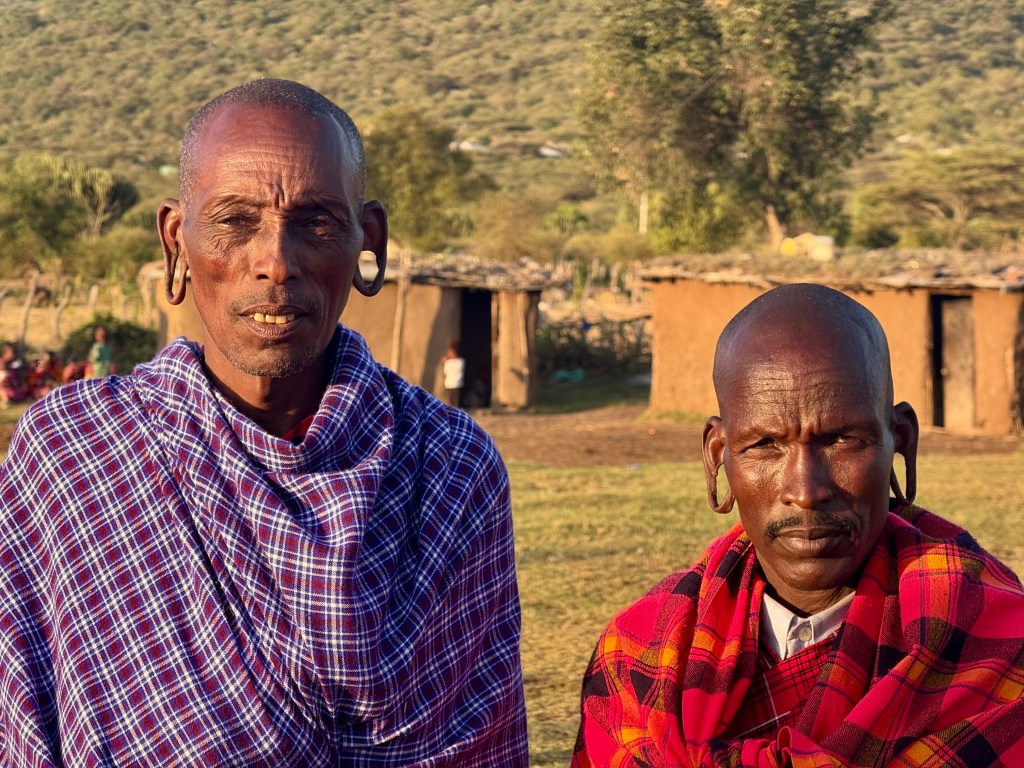
Traditions are evolving in the village, the older tribesmen have elongated ear lobes.
The younger members no longer follow this practice but many still remove two of their lower teeth.
The people we met were very friendly and engaging, keen to share information about how they live and their traditions.
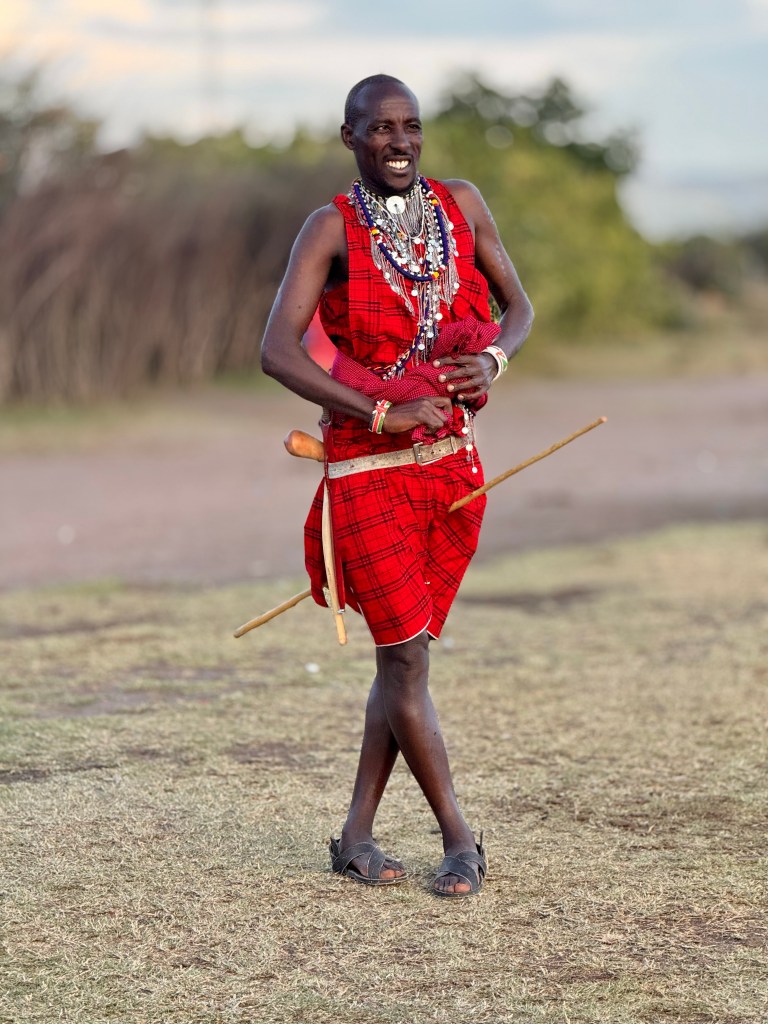
My wife was invited to wear a traditional Maasai cloak and joined in with a jumping display.
I was given a Maasai Rungu which is a small wooden club used as a weapon (often thrown) and as a tool.

It was amazing to get a little insight to these peoples, the Maasai have a history dating back to the 15th century.
There are nearly 2 million Maasi surviving, distributed across Kenya and Tanzania.
After our visit we headed back to our camp and prepared for the journey back to Nairobi the following day.
 Jeff's Travel And Photo Blog