Eswatini is one of Africa’s smallest countries, it is land locked between Mozambique and South Africa.
Prior to 2018 it was known as Swaziland, but apparently the King changed it’s name to avoid confusion with Switzerland!
Eswatini means ‘Land of the Swazis’.
We flew into Johannesburg and drove around 5 hours to get to Eswatini. We stayed in a lovely hotel complete with its own botanical garden.
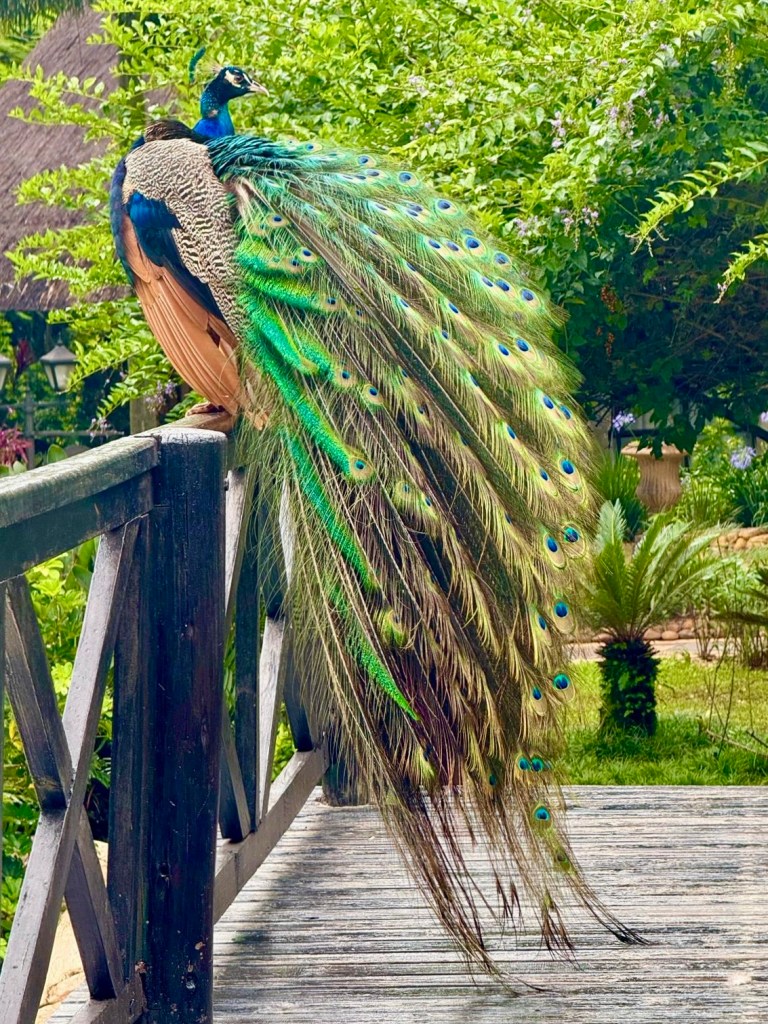
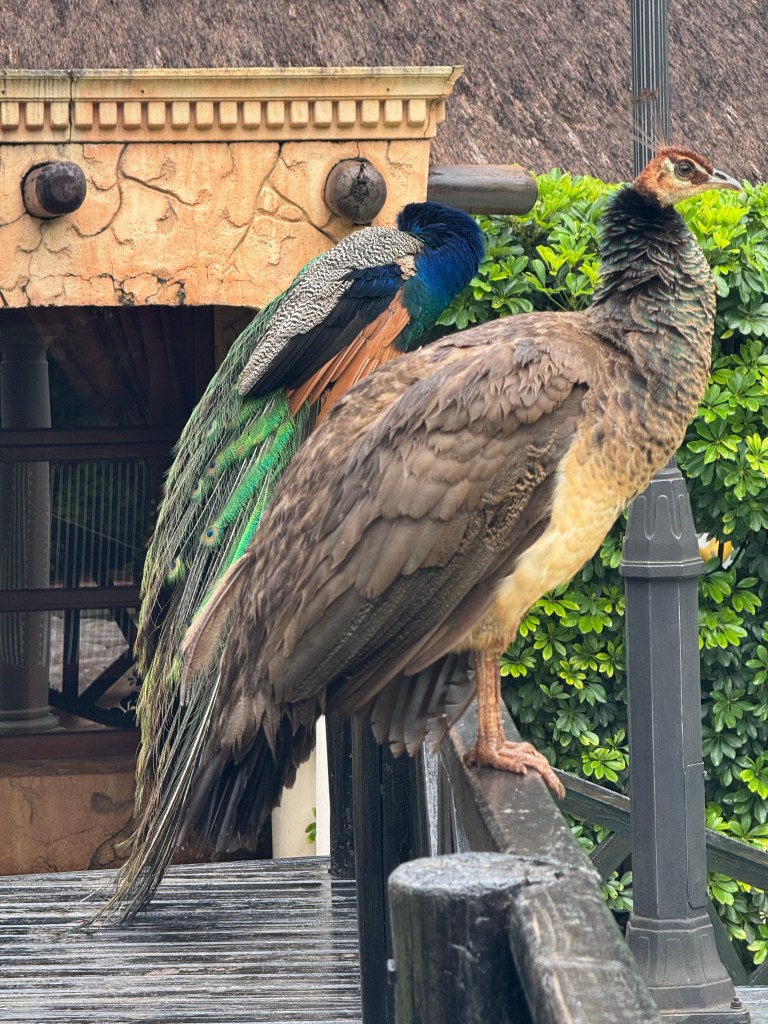
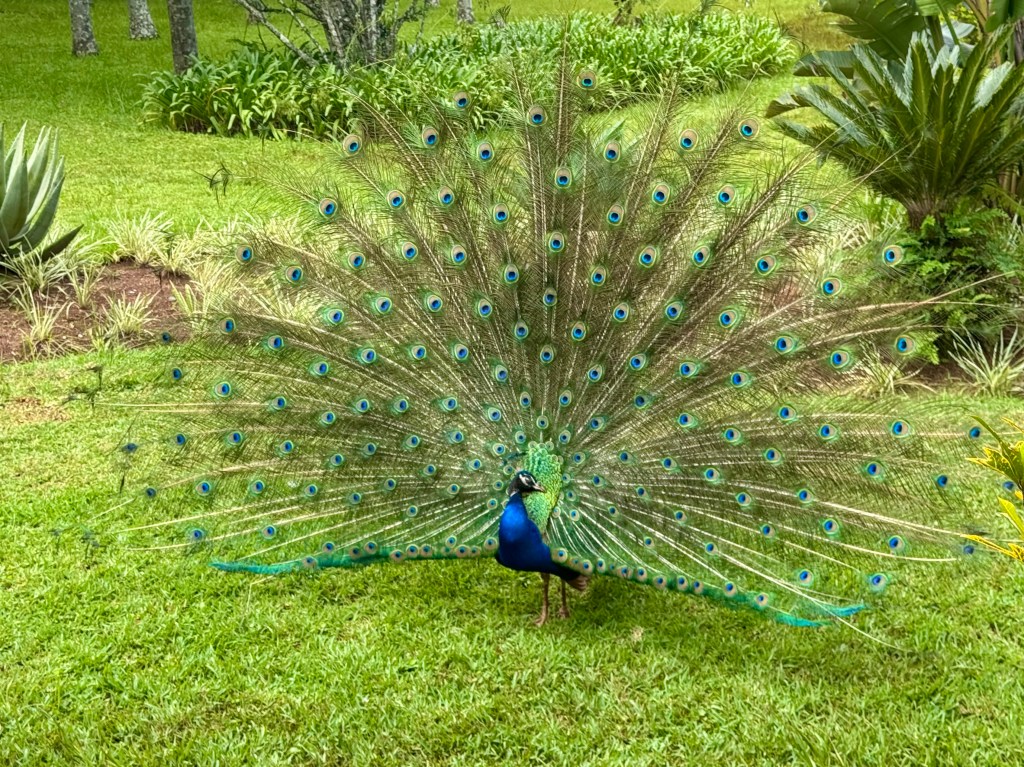
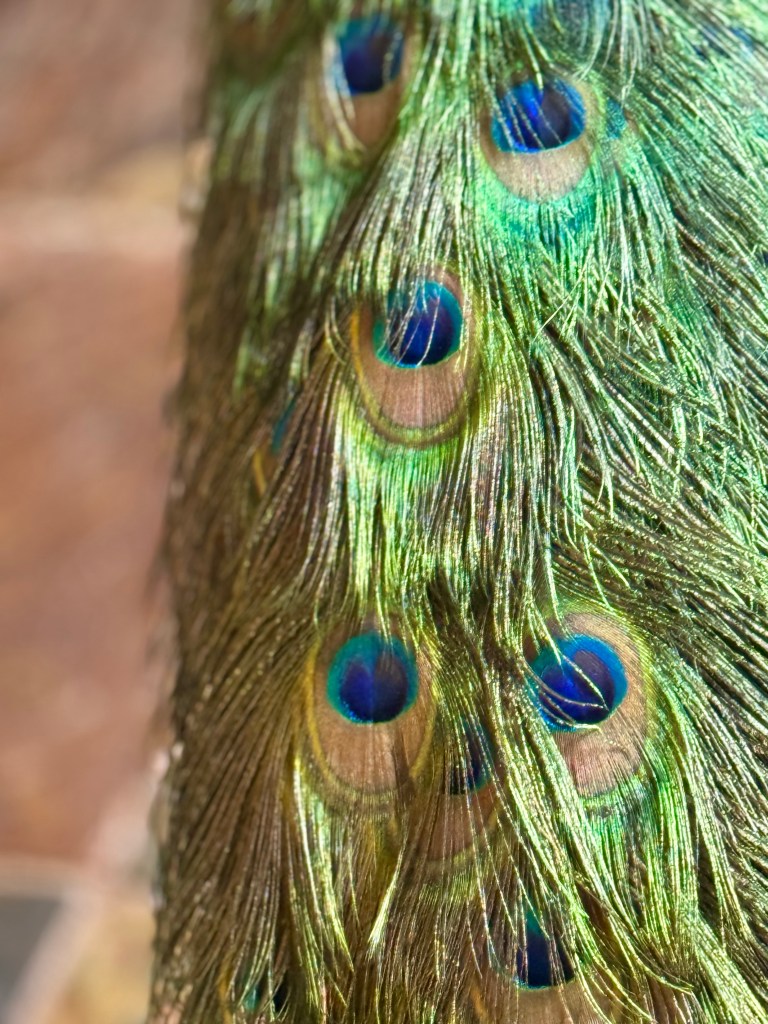
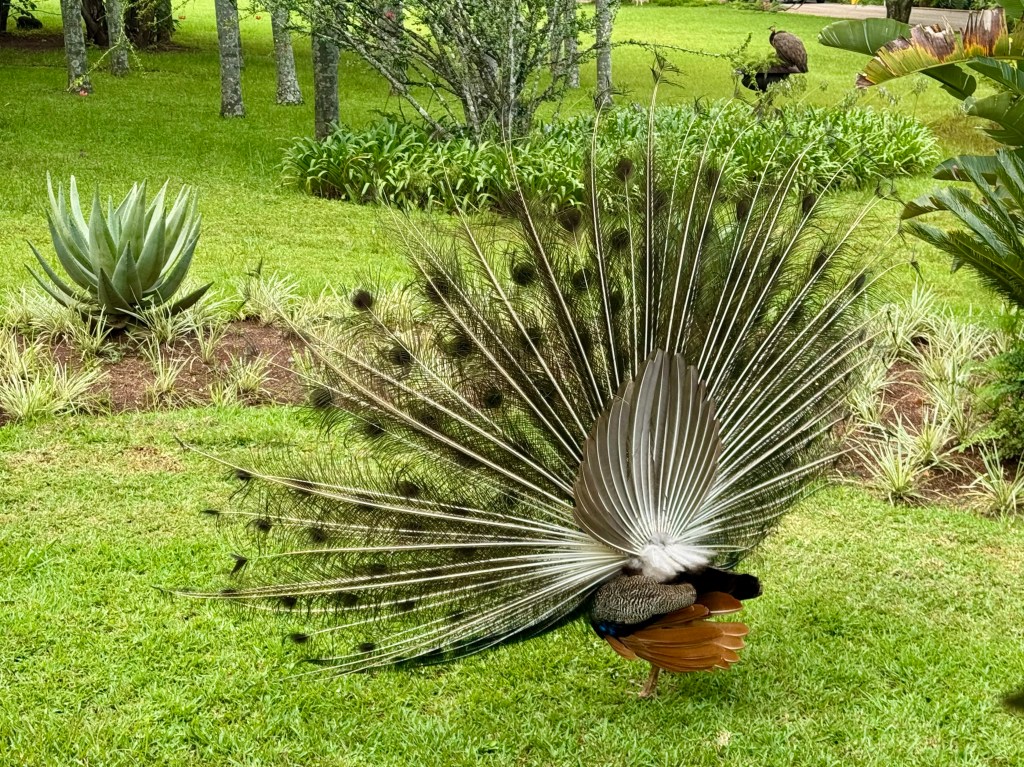
Peacocks roamed around the hotel like VIP guests, even wandering in at breakfast.
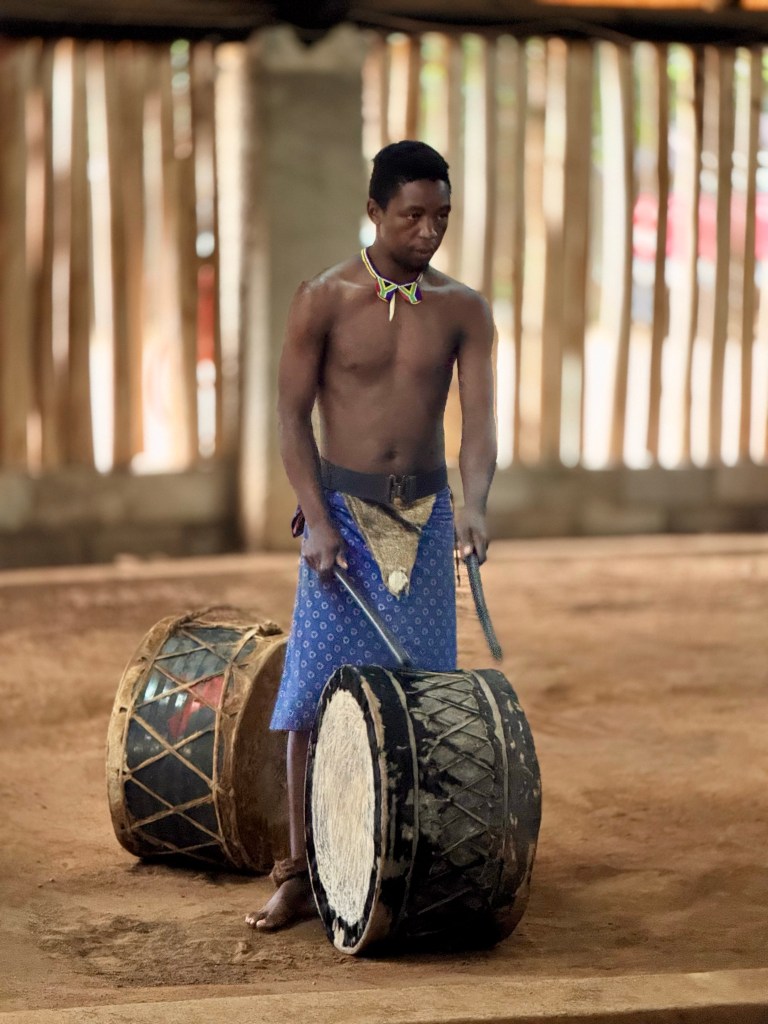
Our first trip out was to the Mantenga Cultural Village where we were treated to some traditional dancing and singing which was very good.
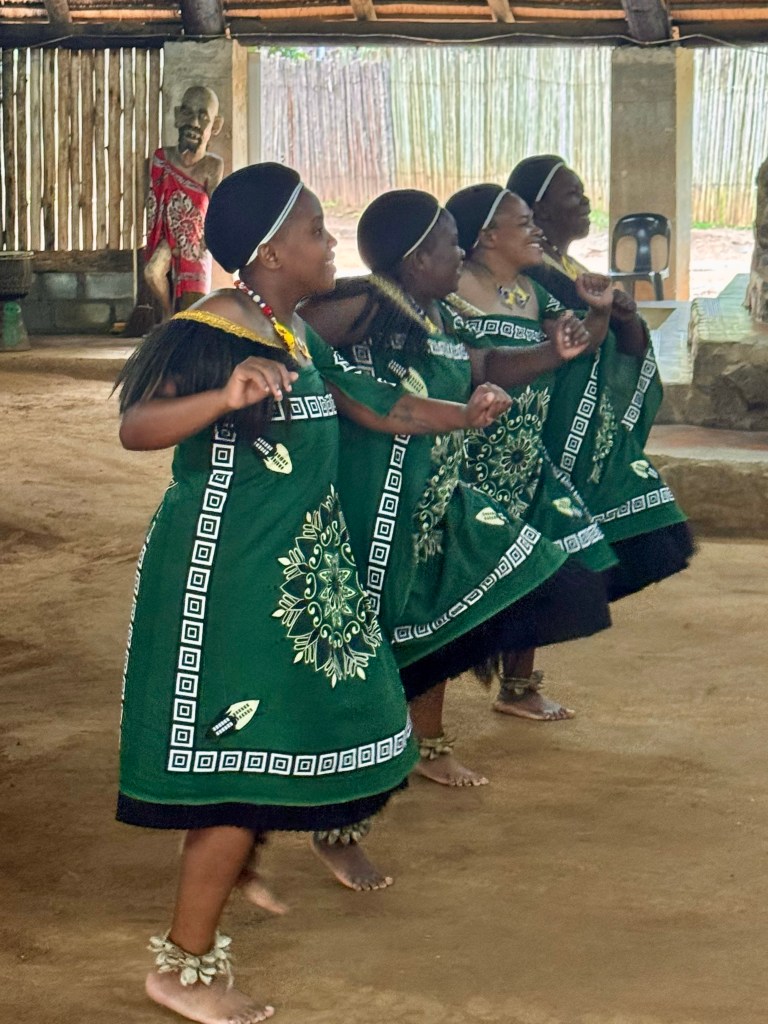
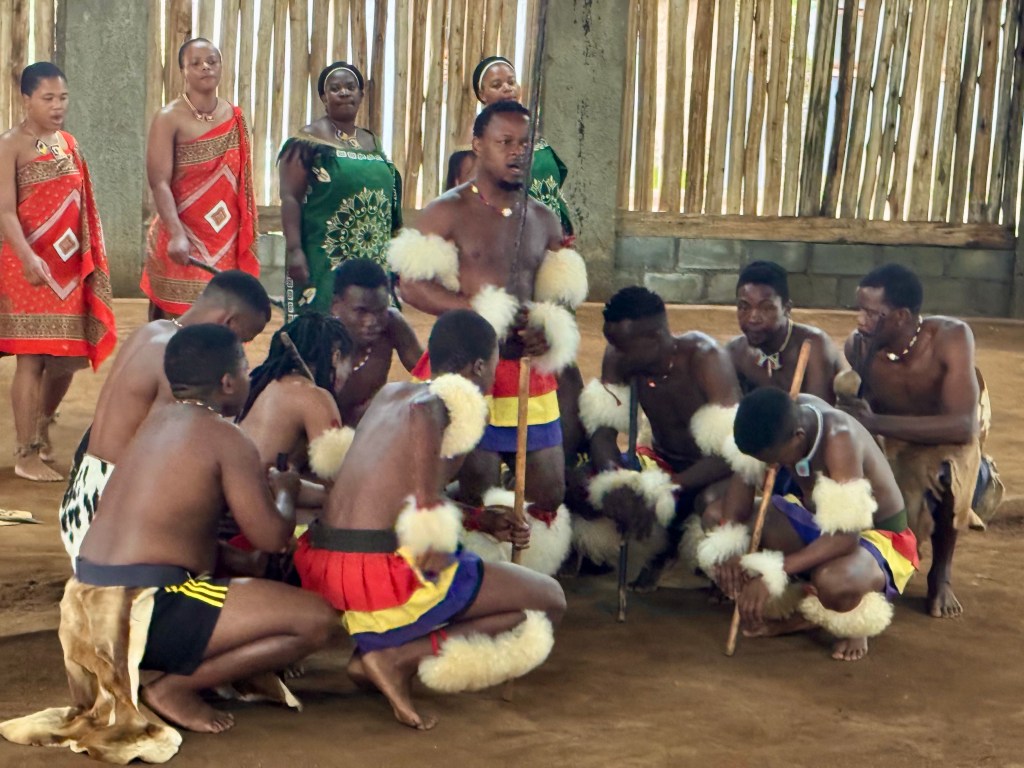
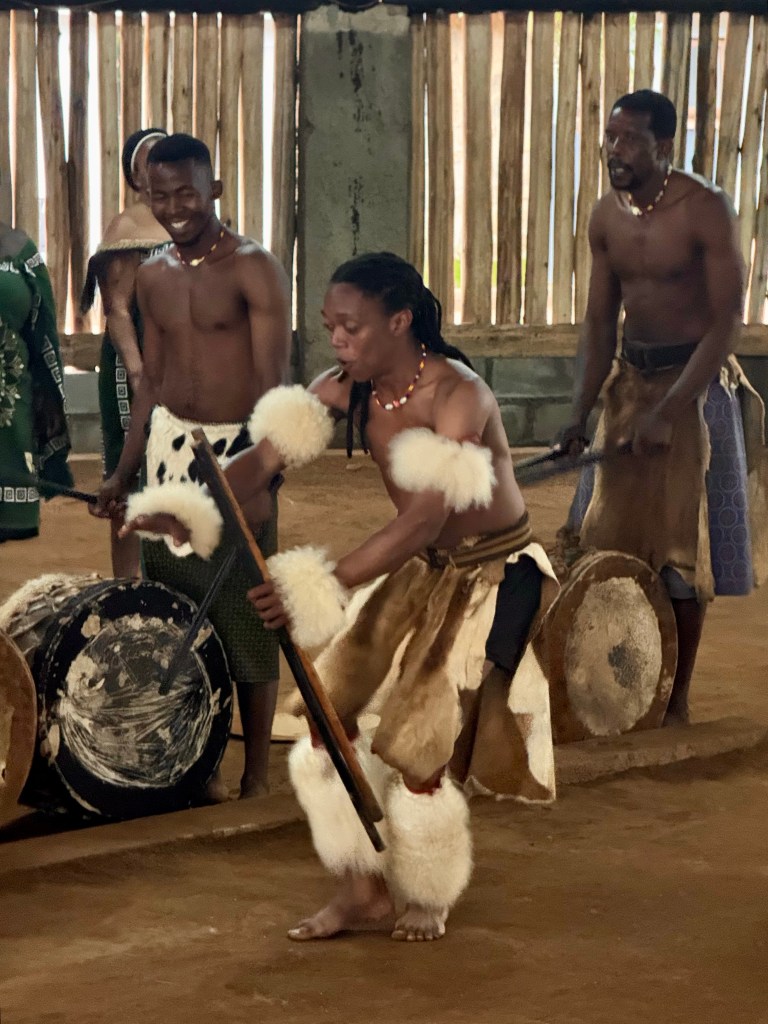
Arriving in low season, there was only a small group of people along with us, so it was a little like a private session!
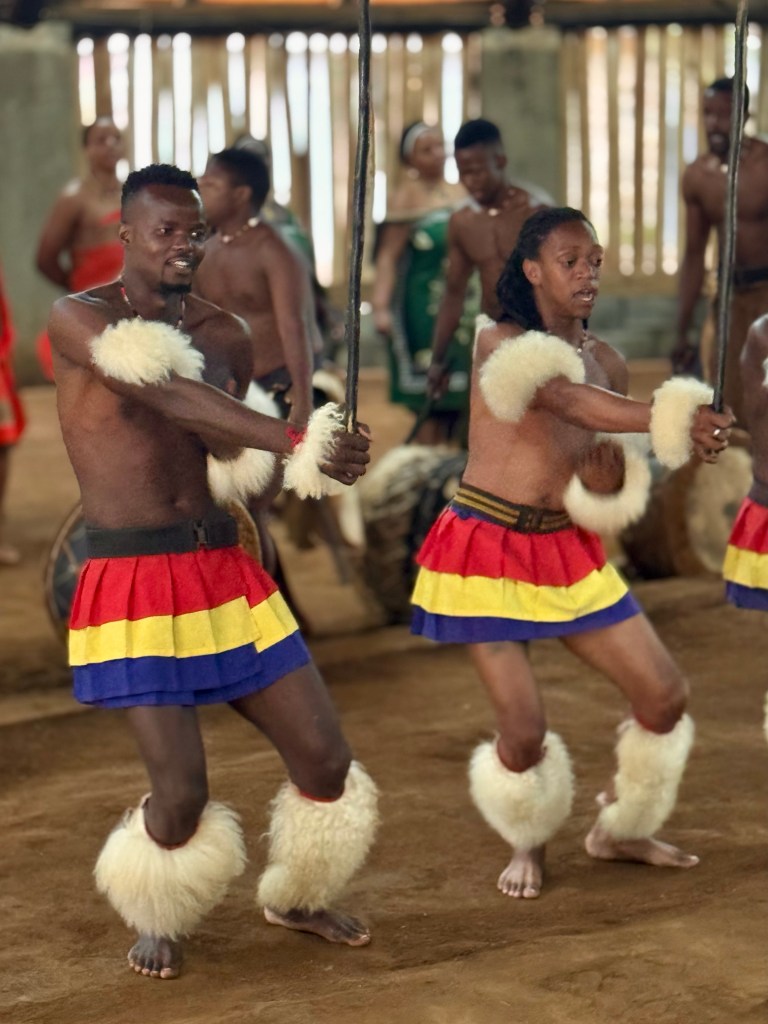
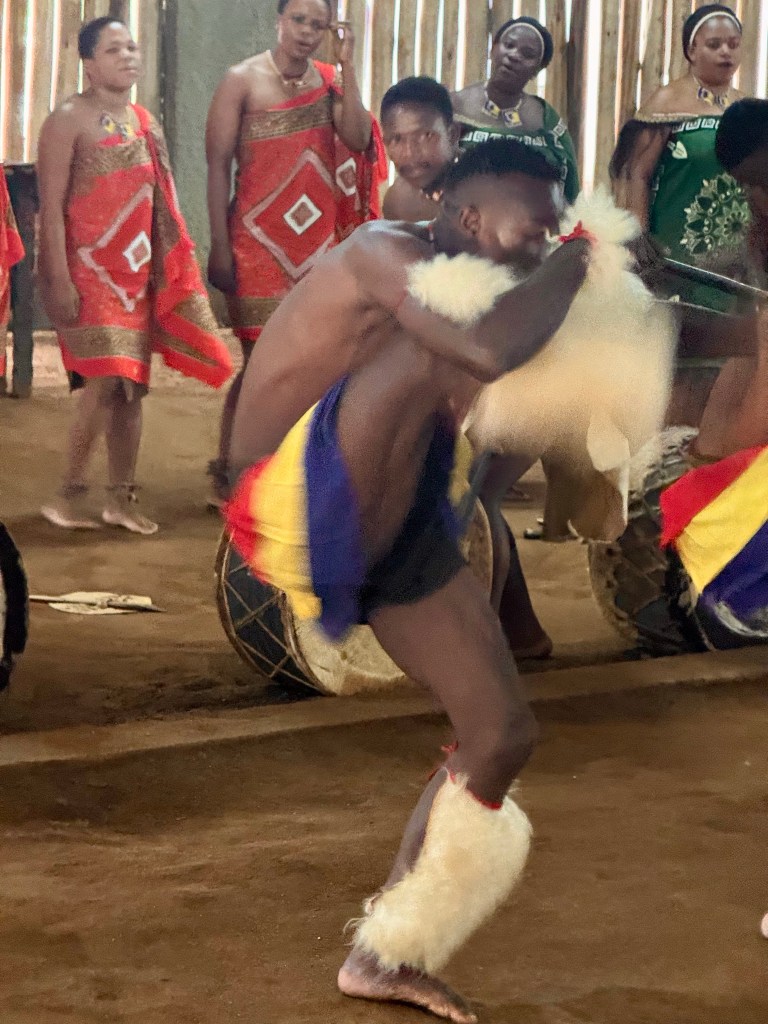
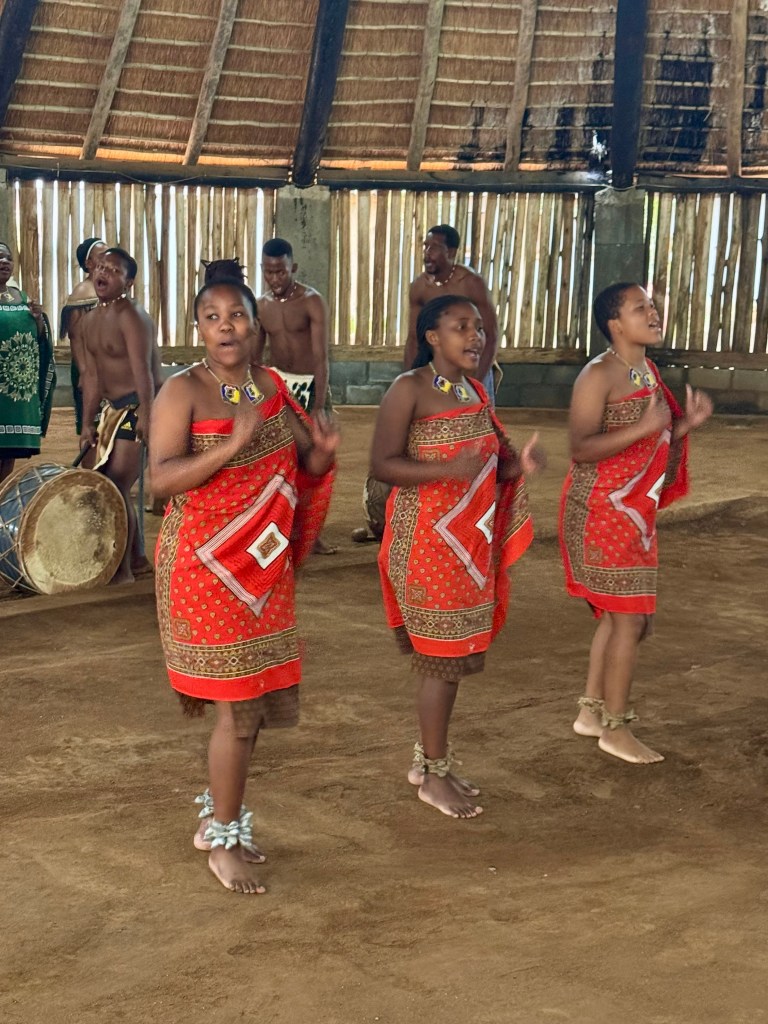
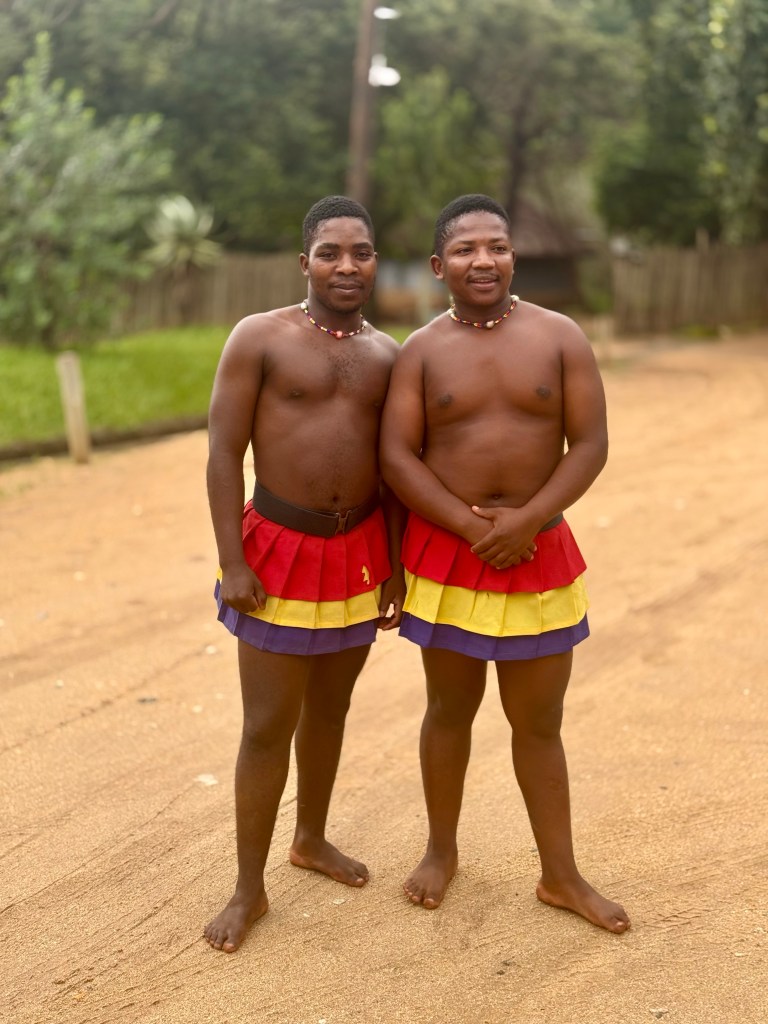
A couple of the performers posed for a photo after the show.
We were then led around a small representative traditional village.
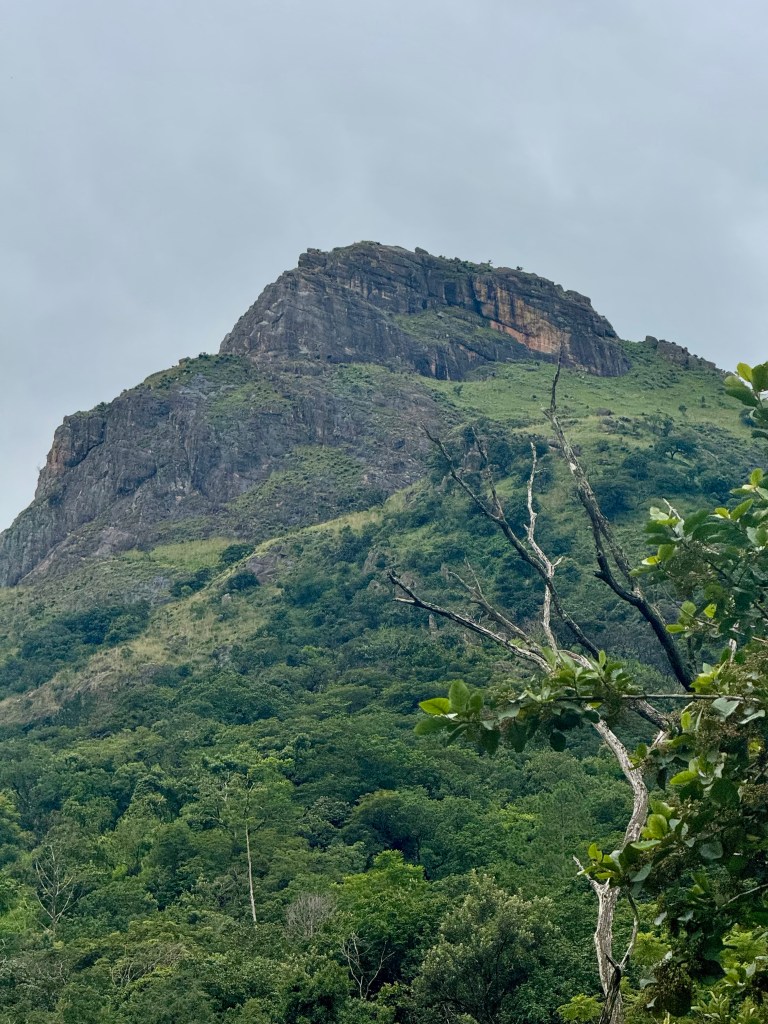
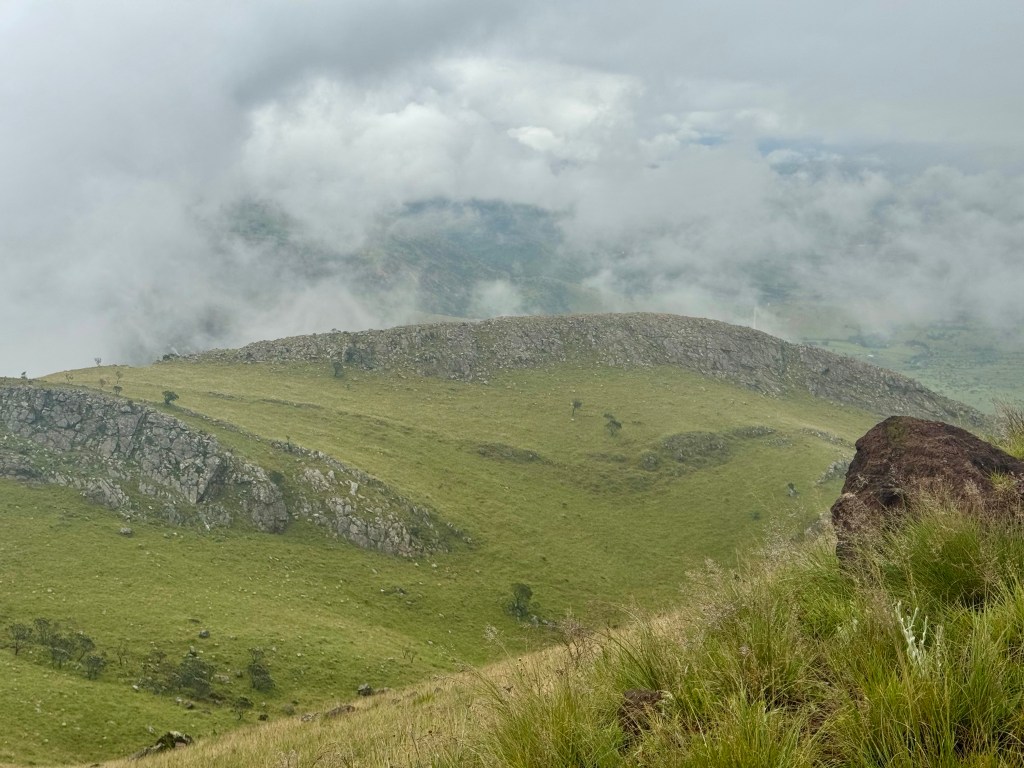
Our guide explained that up until their independence in 1968, anyone found guilty of murder would be taken up to the top of the mountain shown below and made to jump to death.
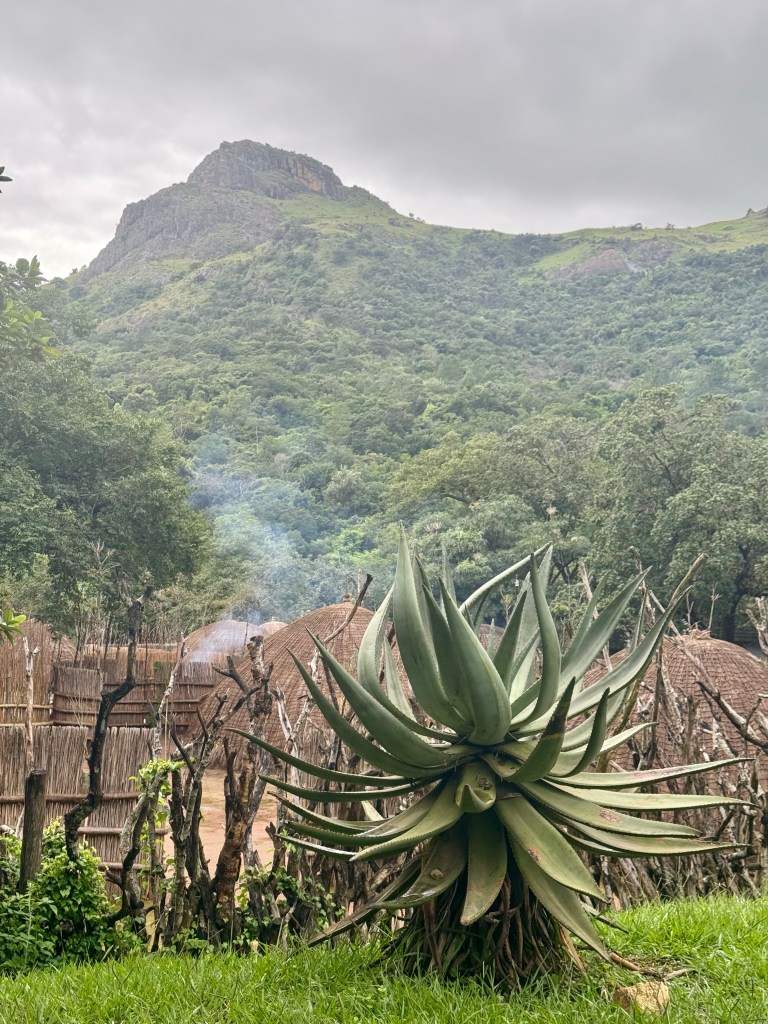
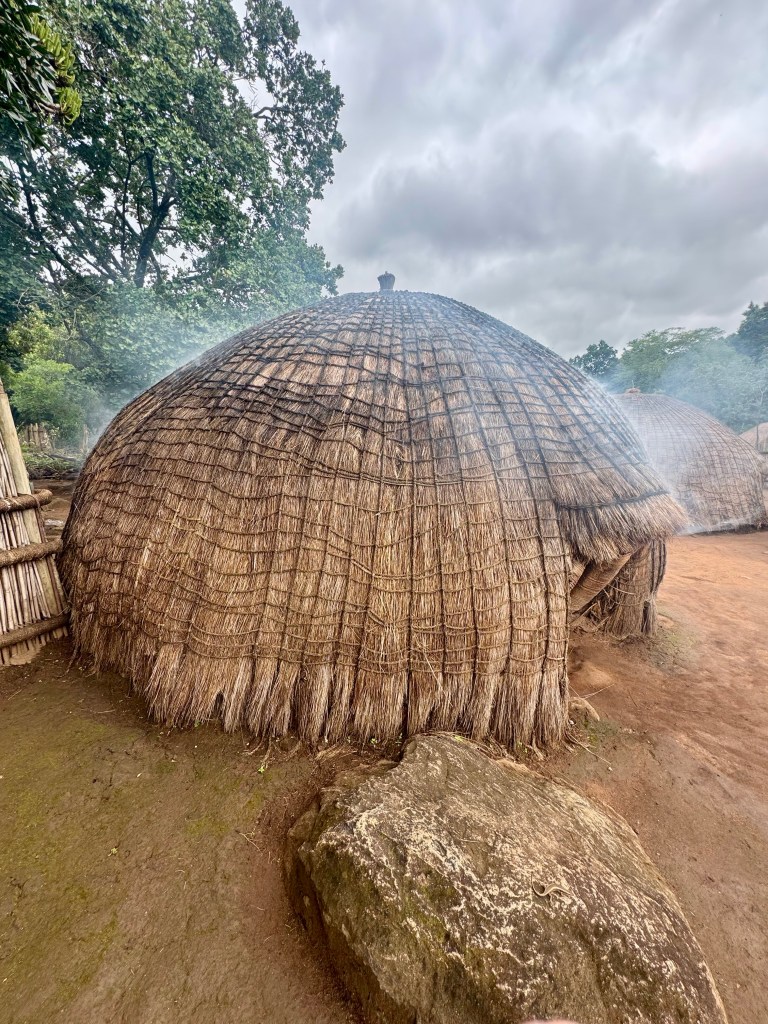
We got to enter the small huts which were designed so that they can be moved if needed.
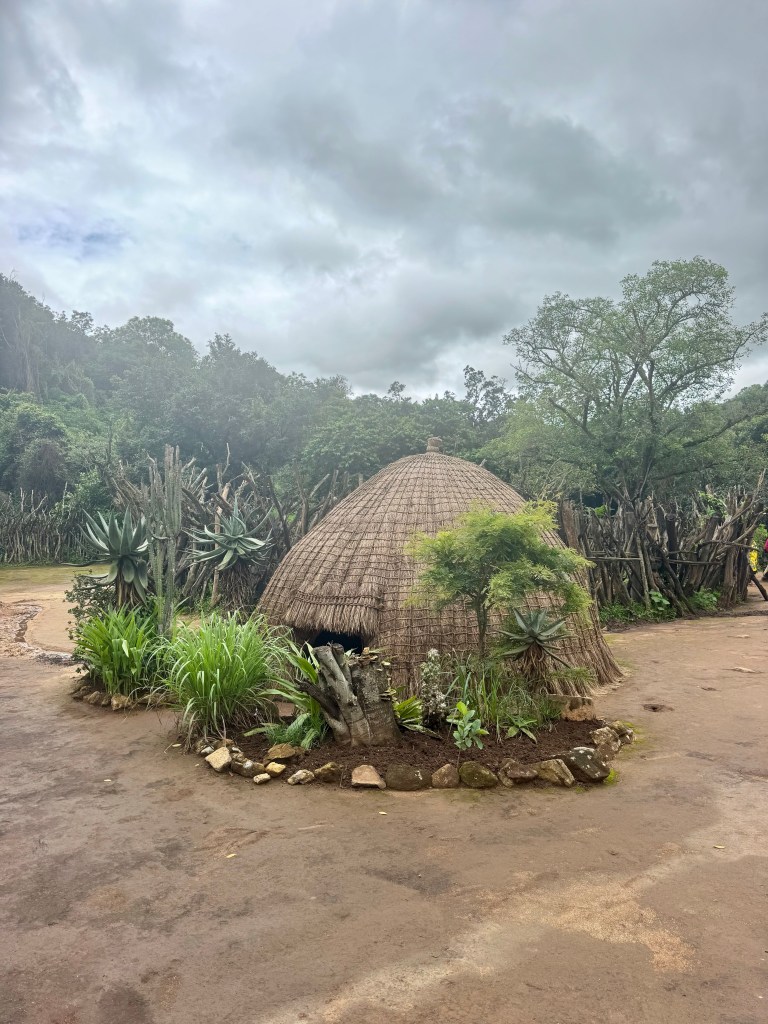
Above is the medicine man’s hut complete with various medicinal plants growing outside.
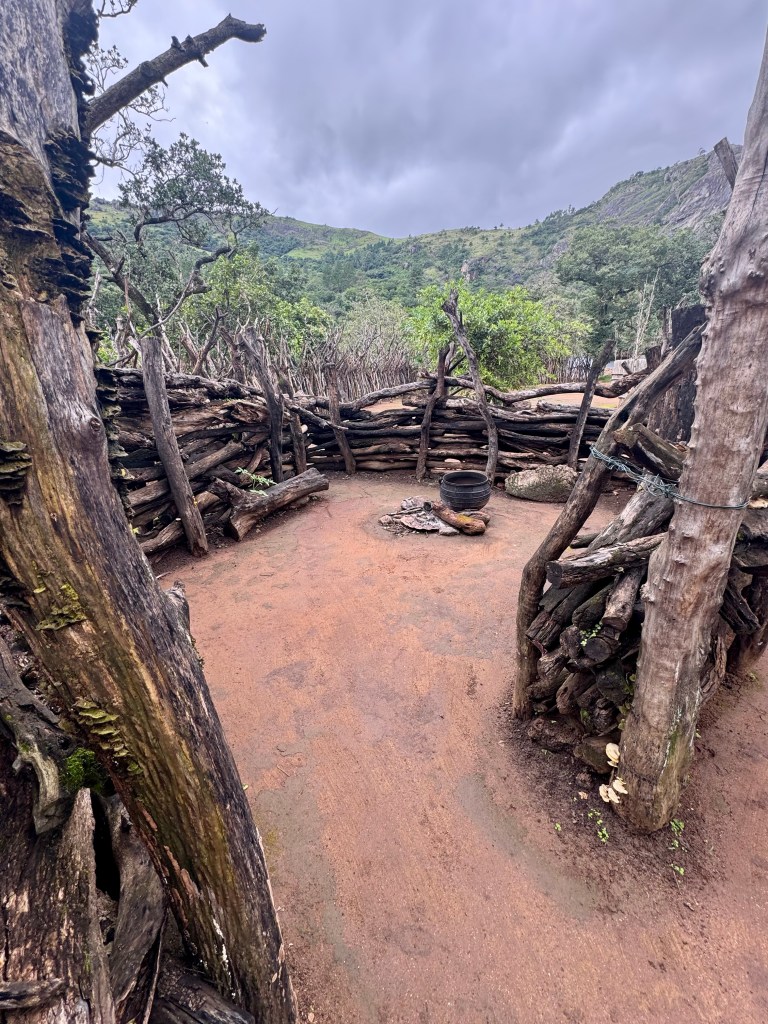
We were shown an area strictly for the male tribe members only.
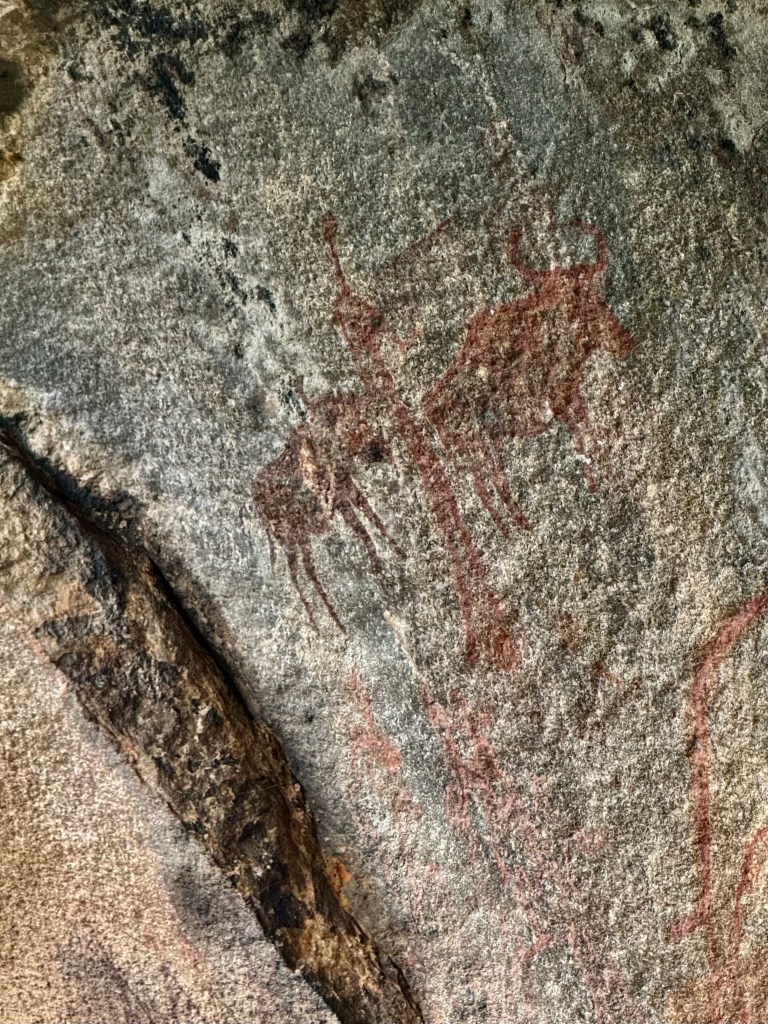
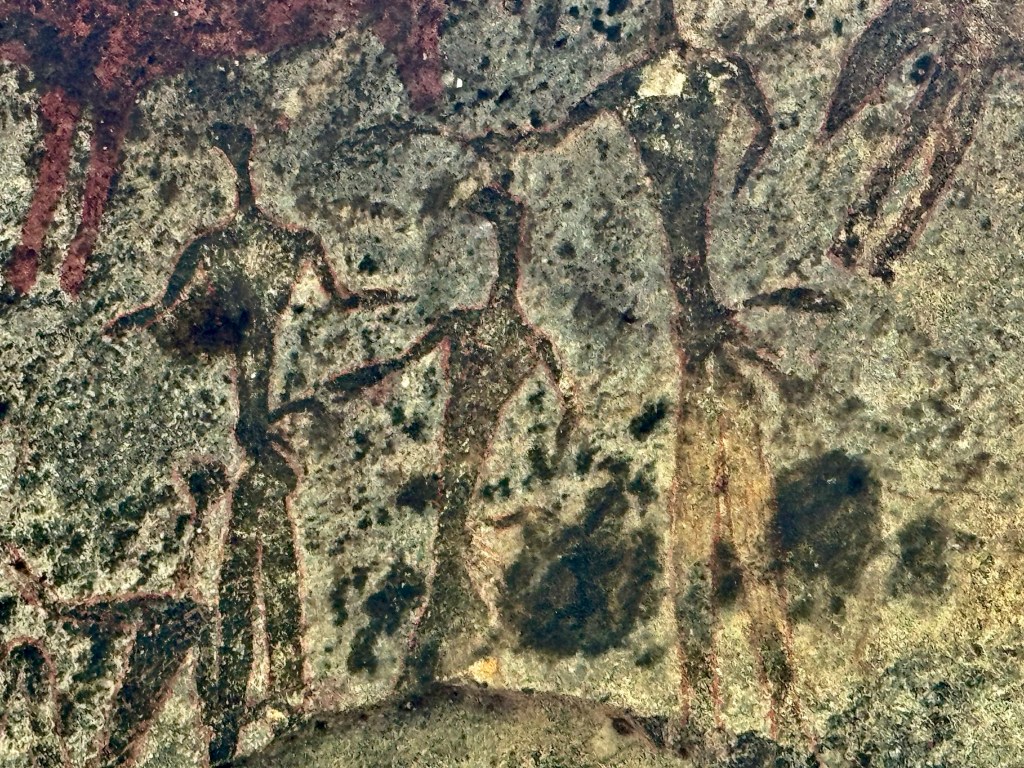
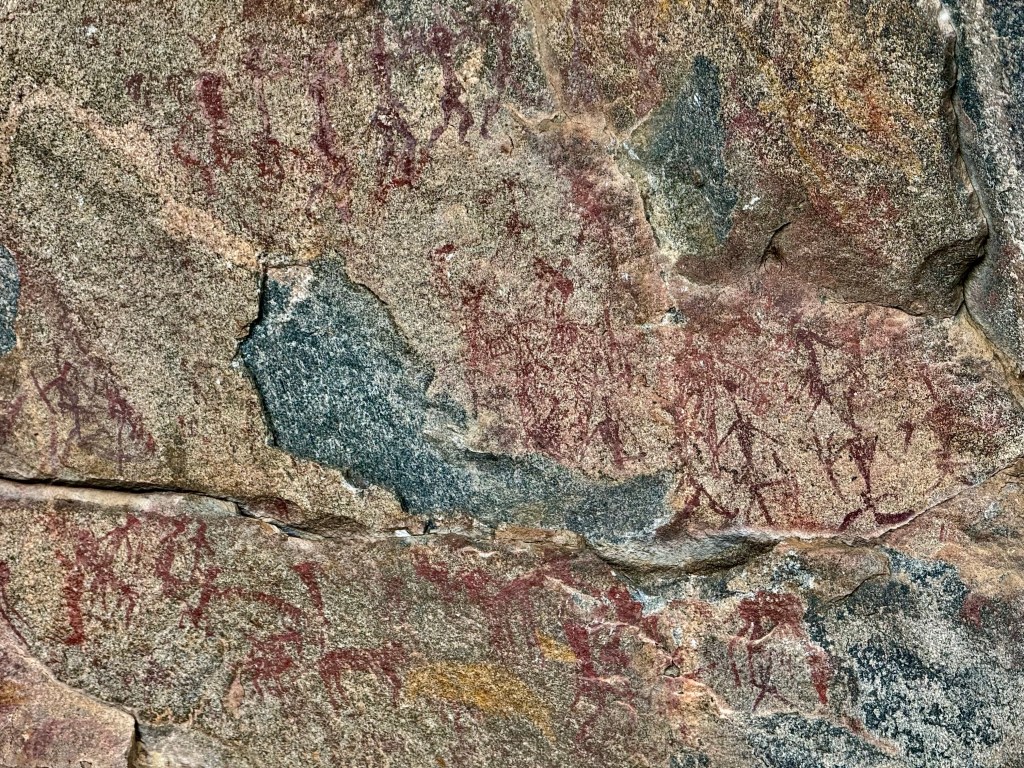
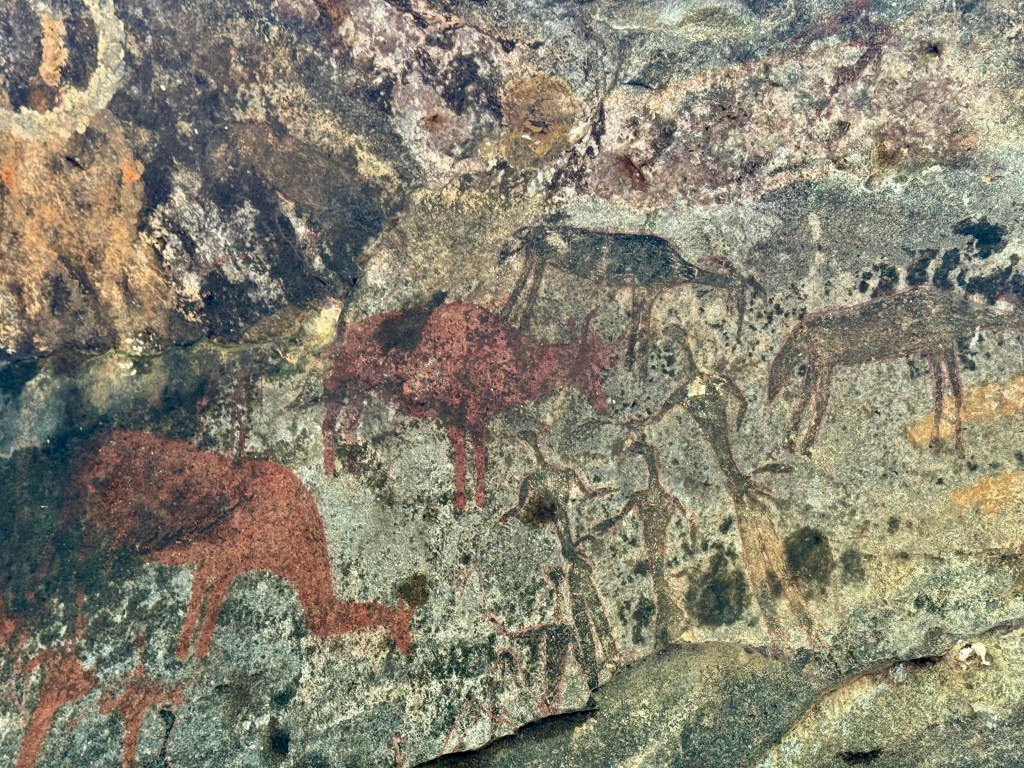
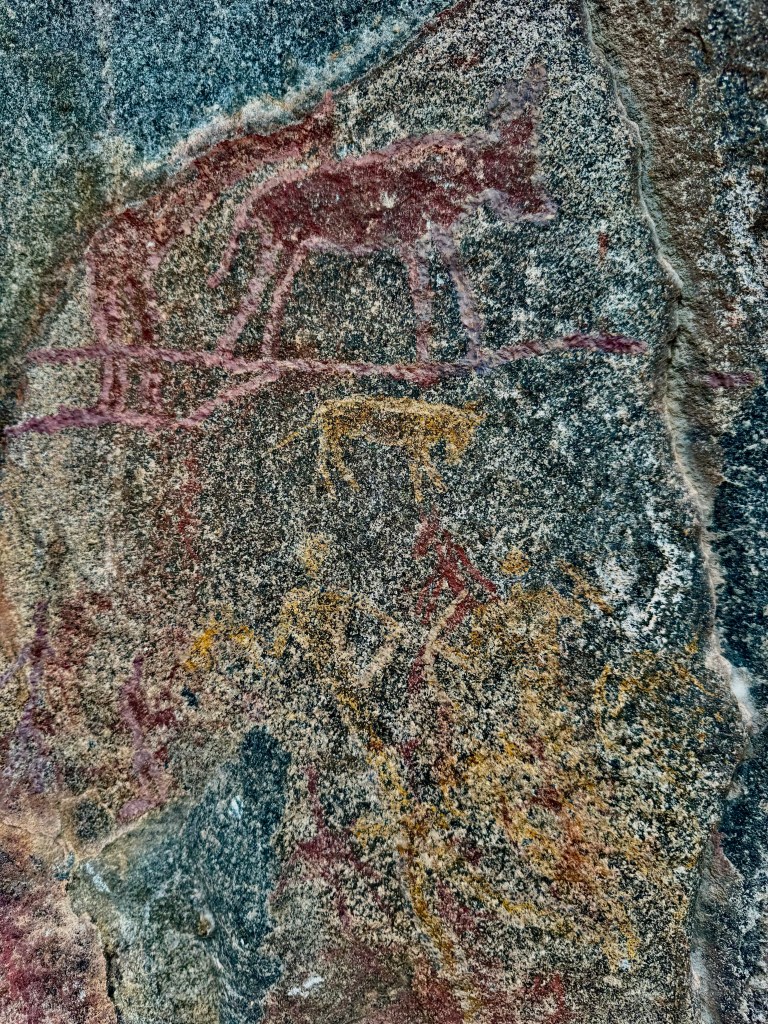
We took a longer drive to see some ancient cave paintings, said to have been created by the ancient San/Bushman people and are up to 4,000 years old, to find it look for Nsangwini Rock Art.
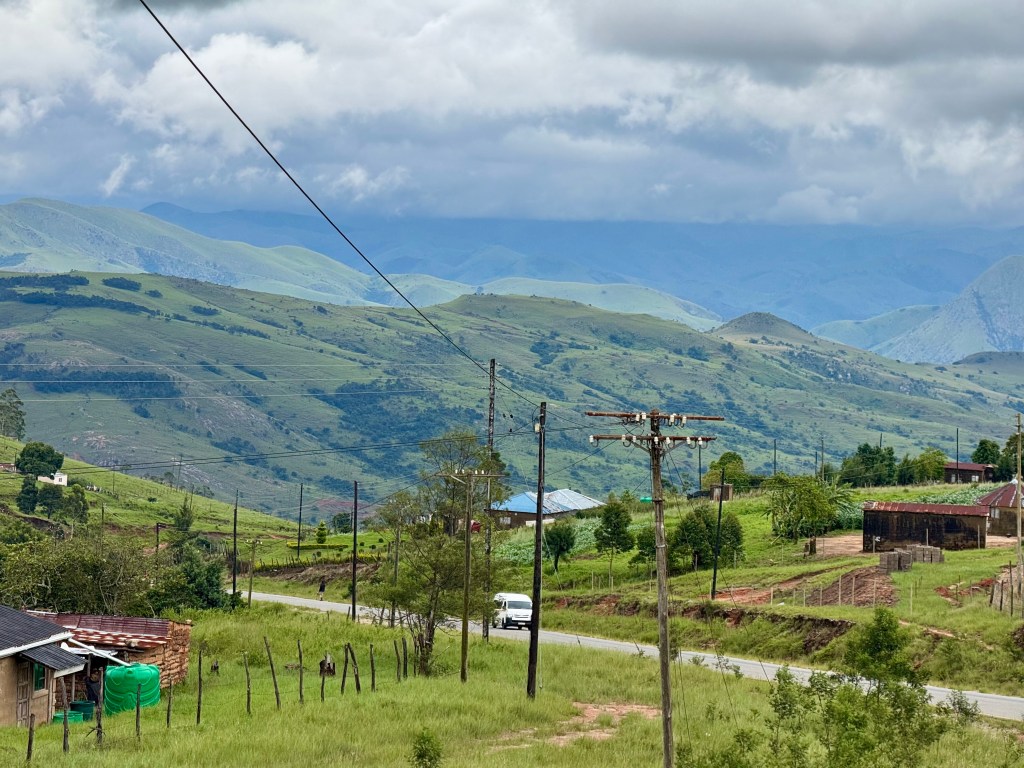
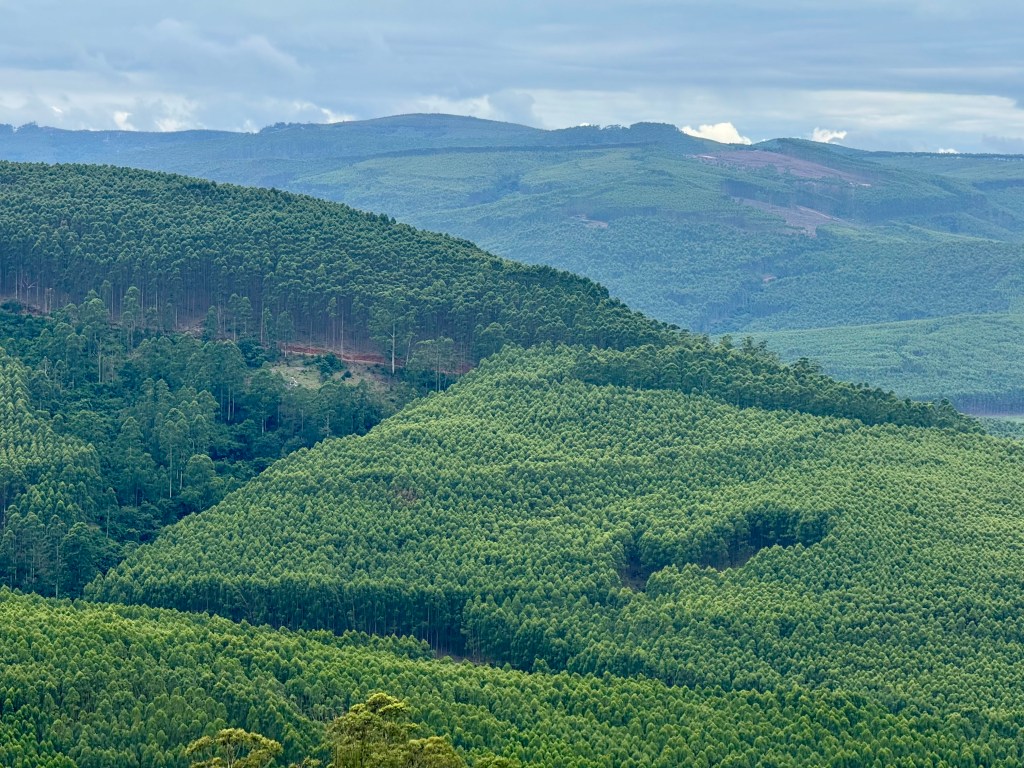
The drive there exposed us to some of the local villages and hilly landscapes of the country.
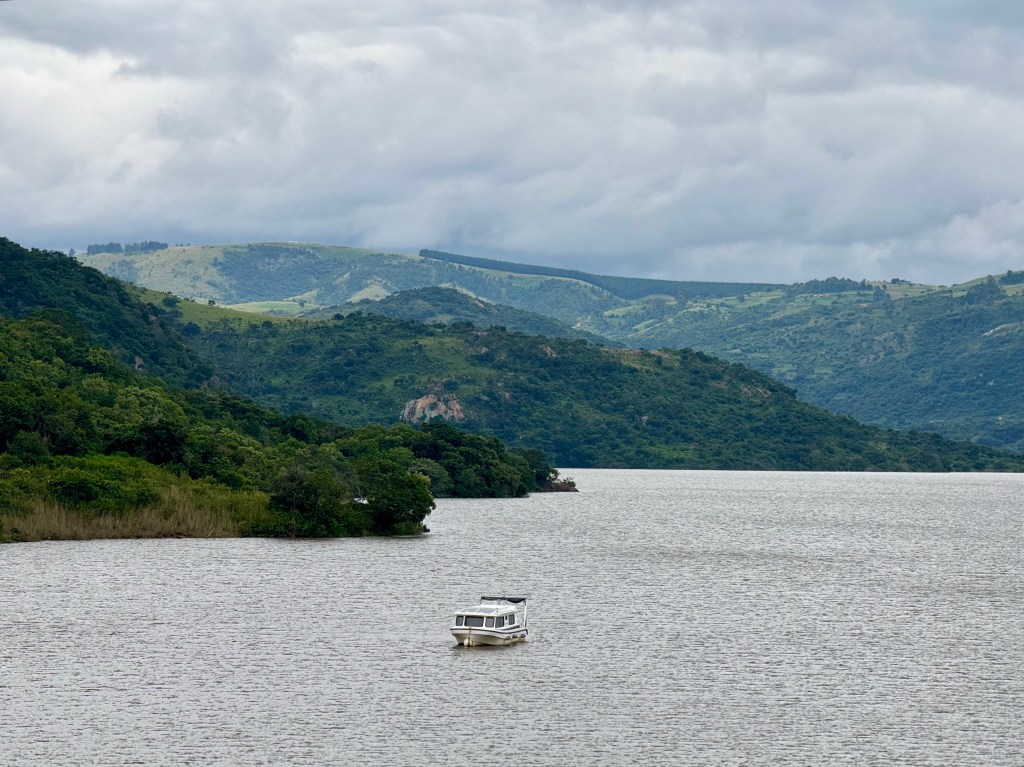
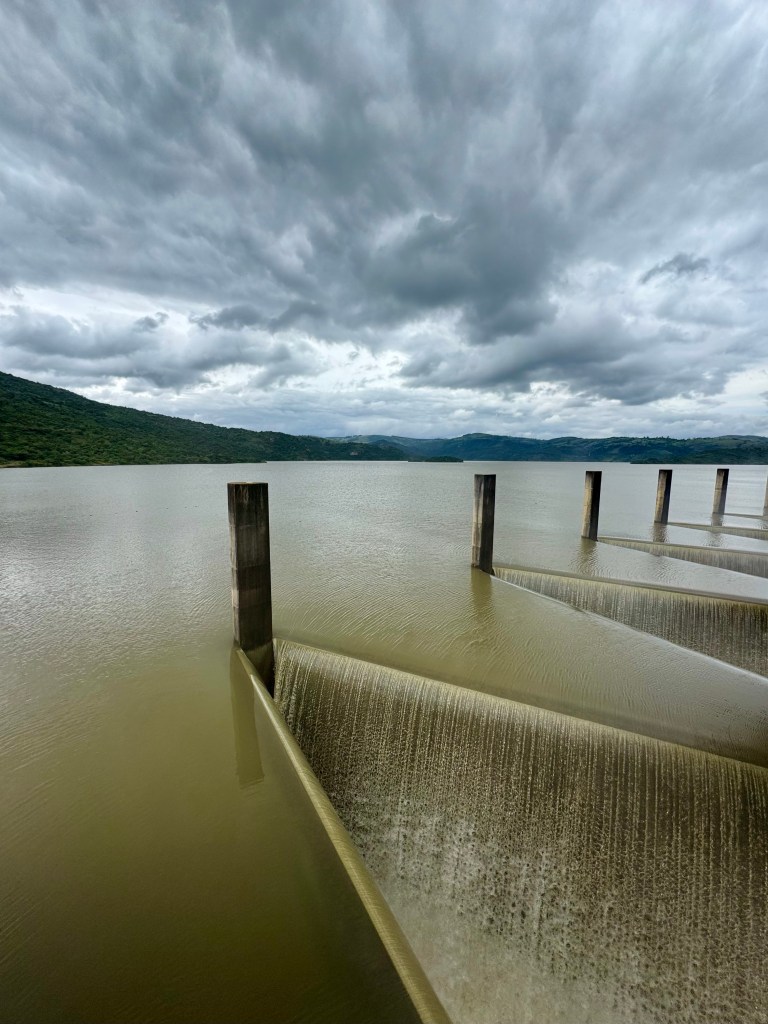
Along the way we passed the Maguga Dam.
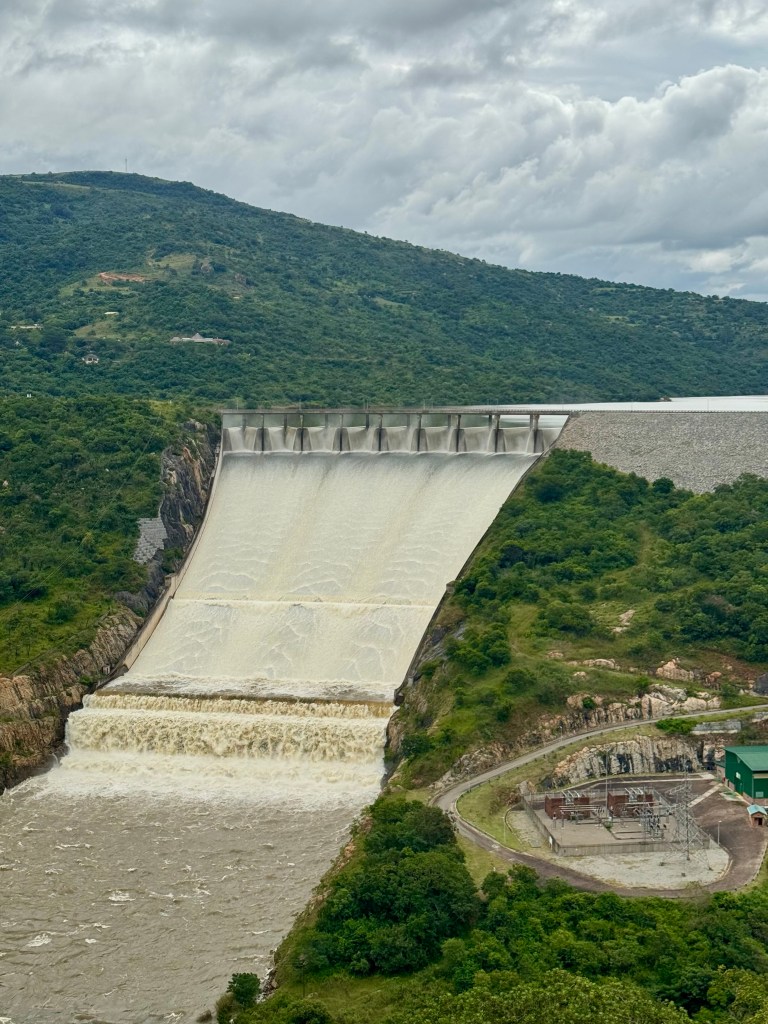
The dam is actually very impressive, not usually something on our travel itinerary but we spent ages here taking photos of the hypnotic sluice channels that proved strangely photogenic!
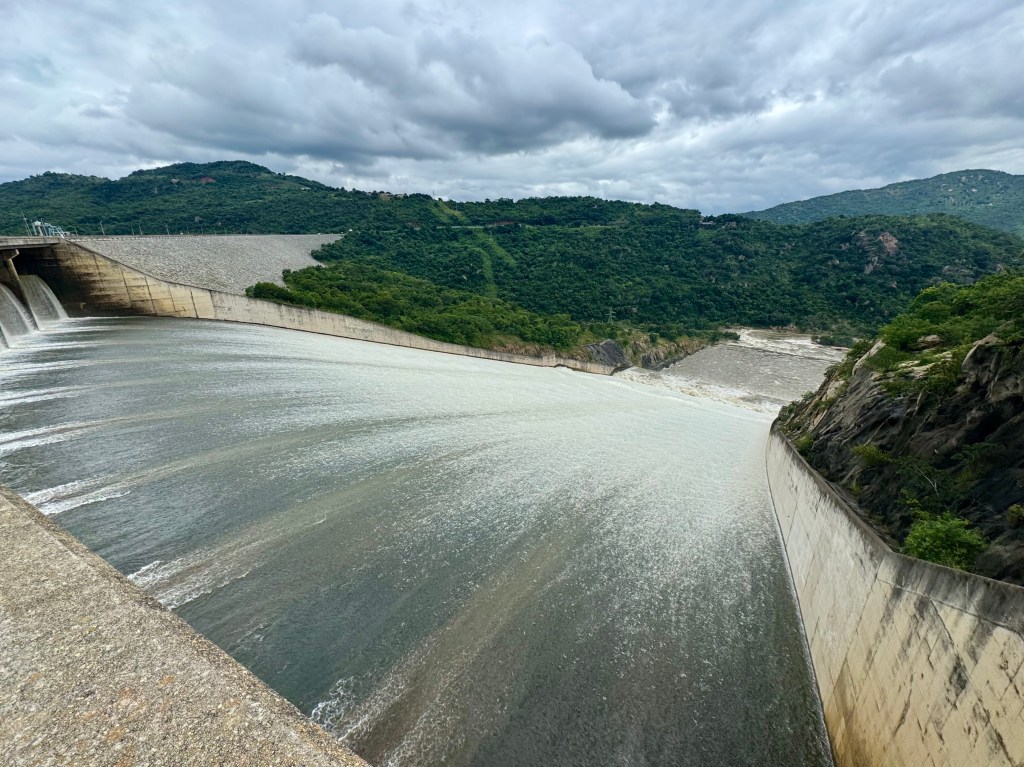
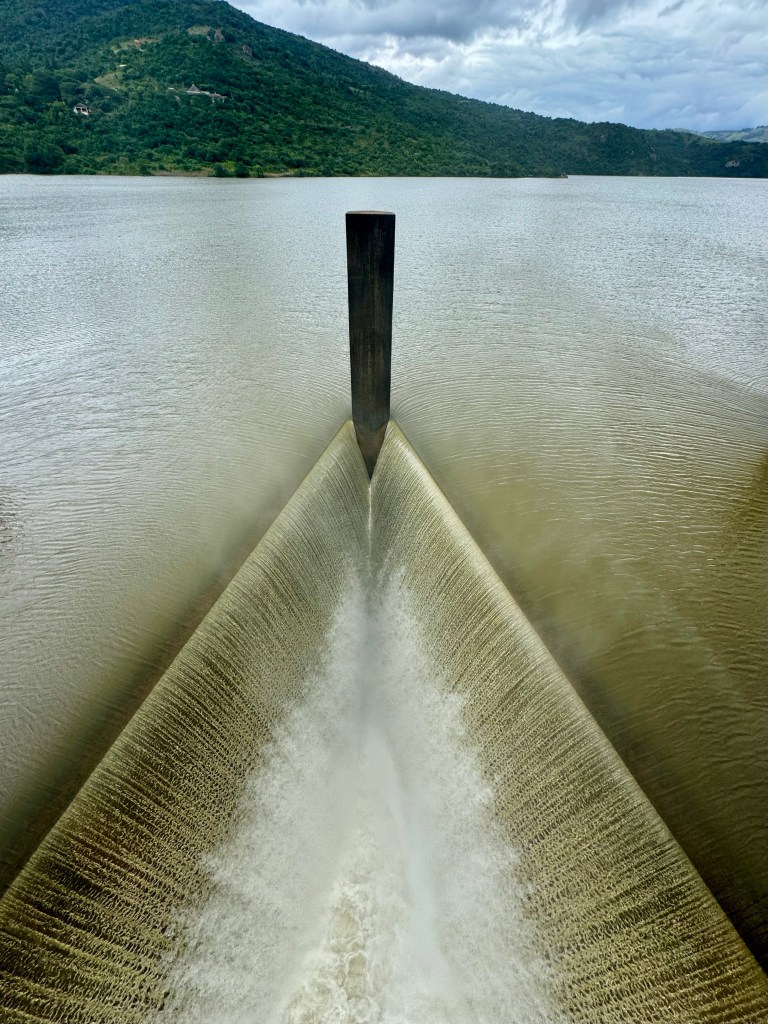
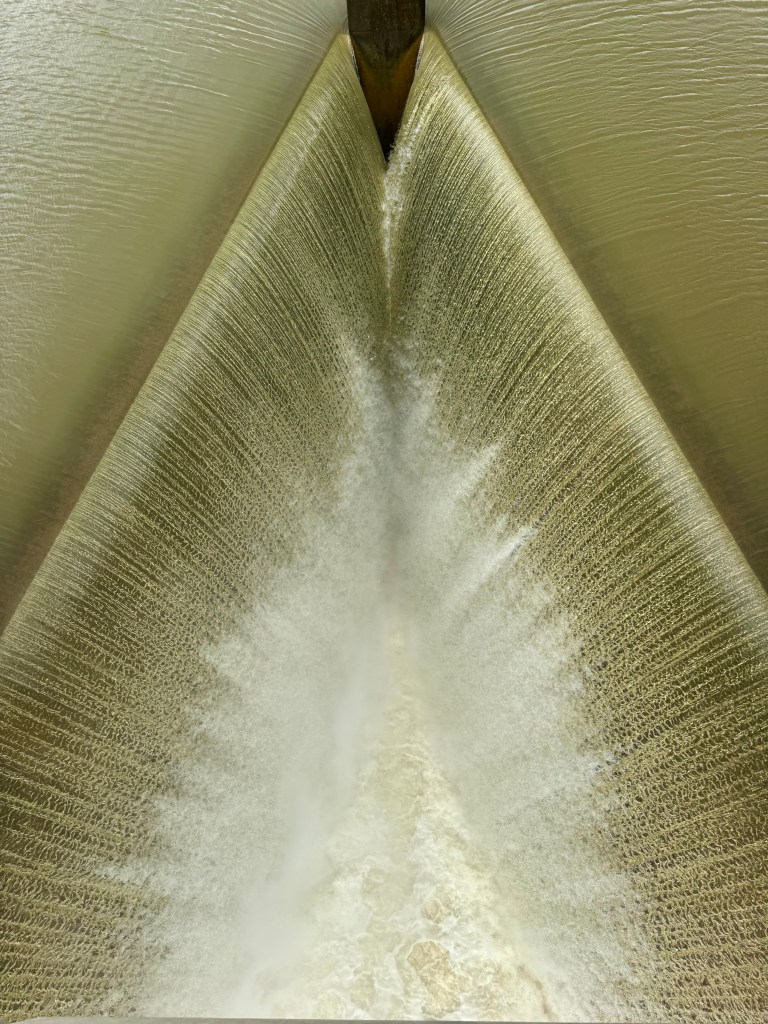
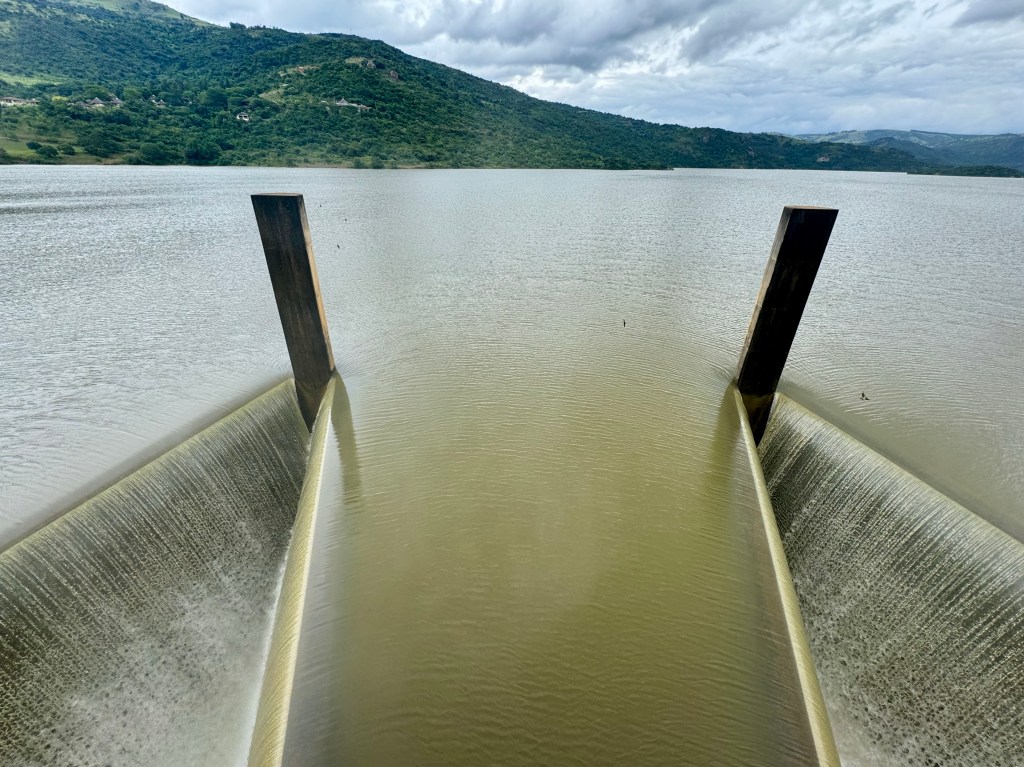
We will have to see if dams become a more frequent addition to our itineraries in the future!
There is a 5km off Road section to the rock art area and we nearly gave up as the road was wet, muddy and well, not really a road at all. But we persevered even after the satnav had led us astray.
We were invited to use the local convenience but politely declined.
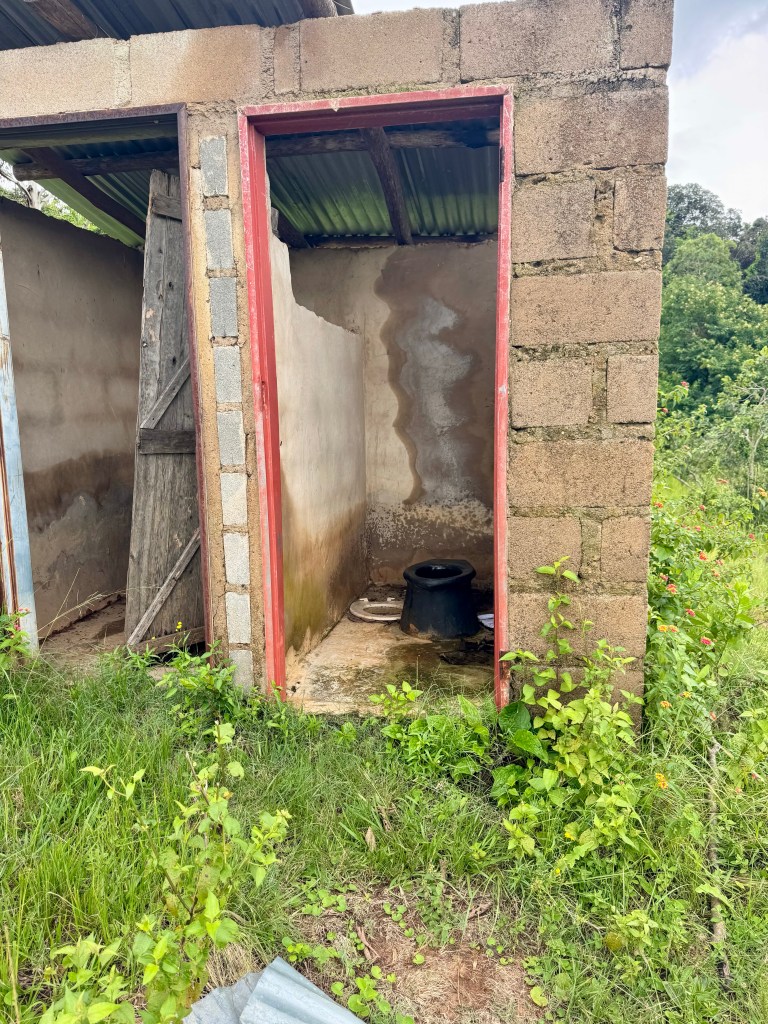
We hadn’t made an appointment but we spotted driving that way and someone alerted our guide that we were coming, very cautiously.
On arrival our guide led us along a 20 minute hike up a small hill and then down a trail towards the river below.
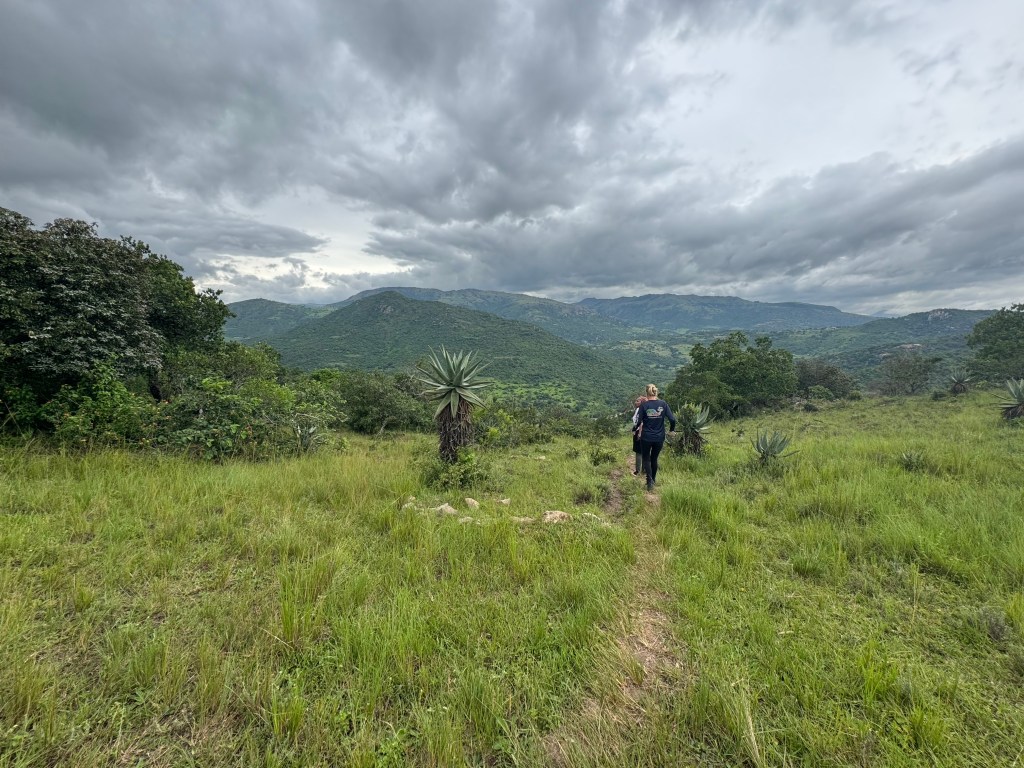
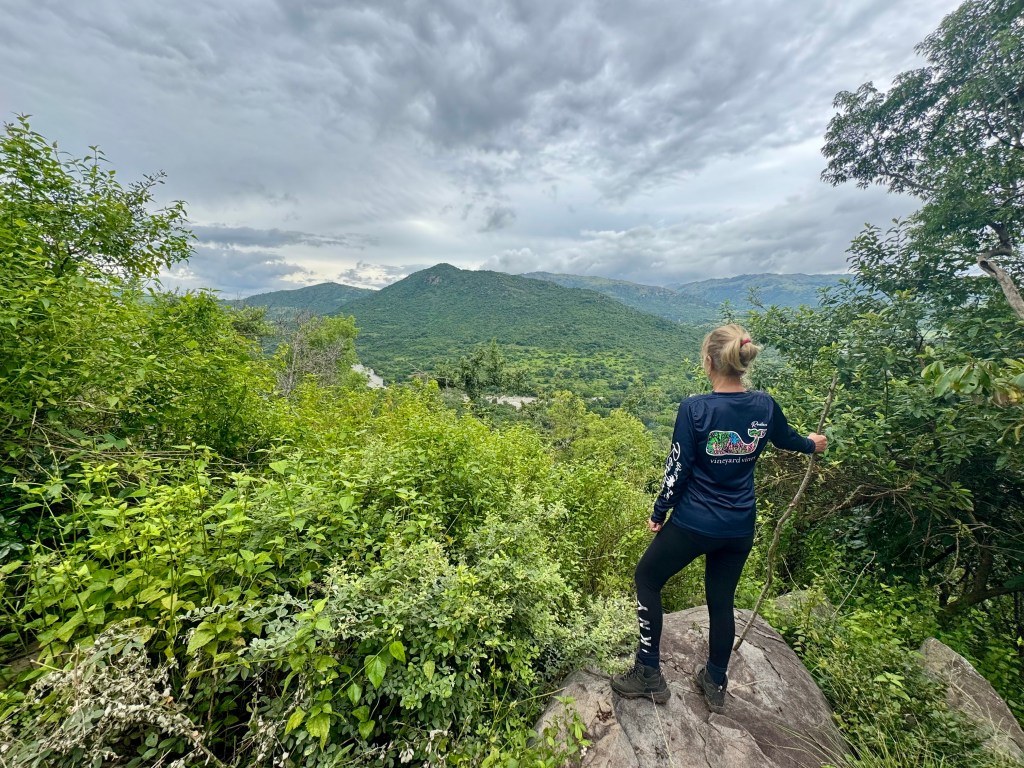
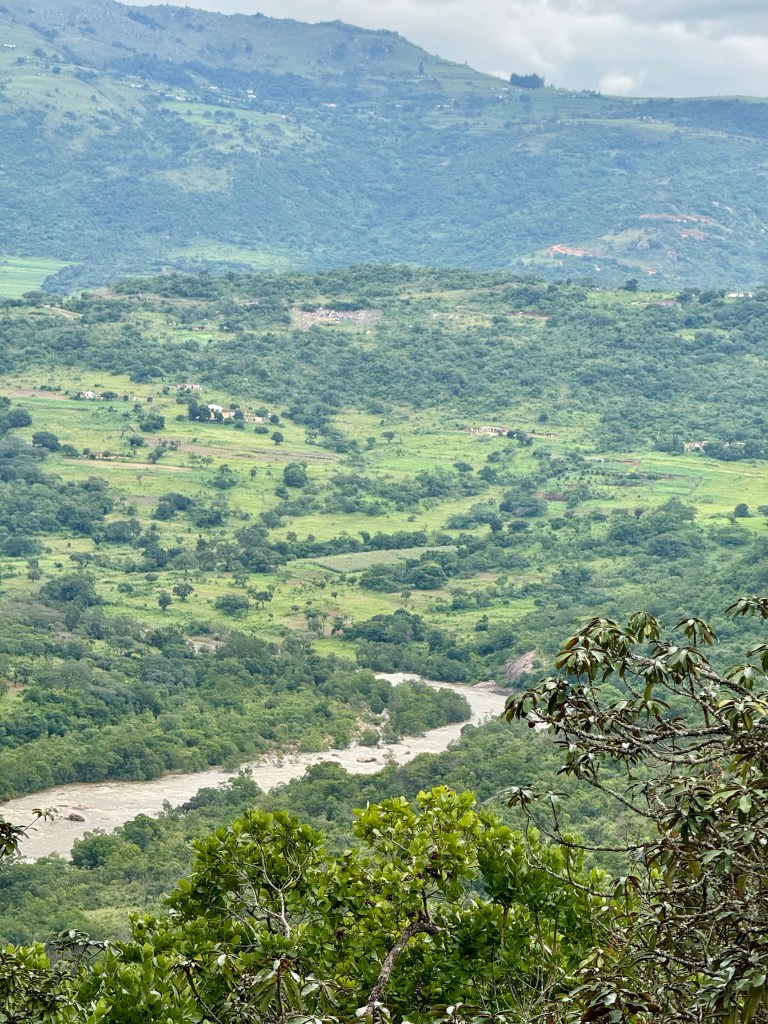
The paintings are on a smallish, unassuming rock some way before the river.
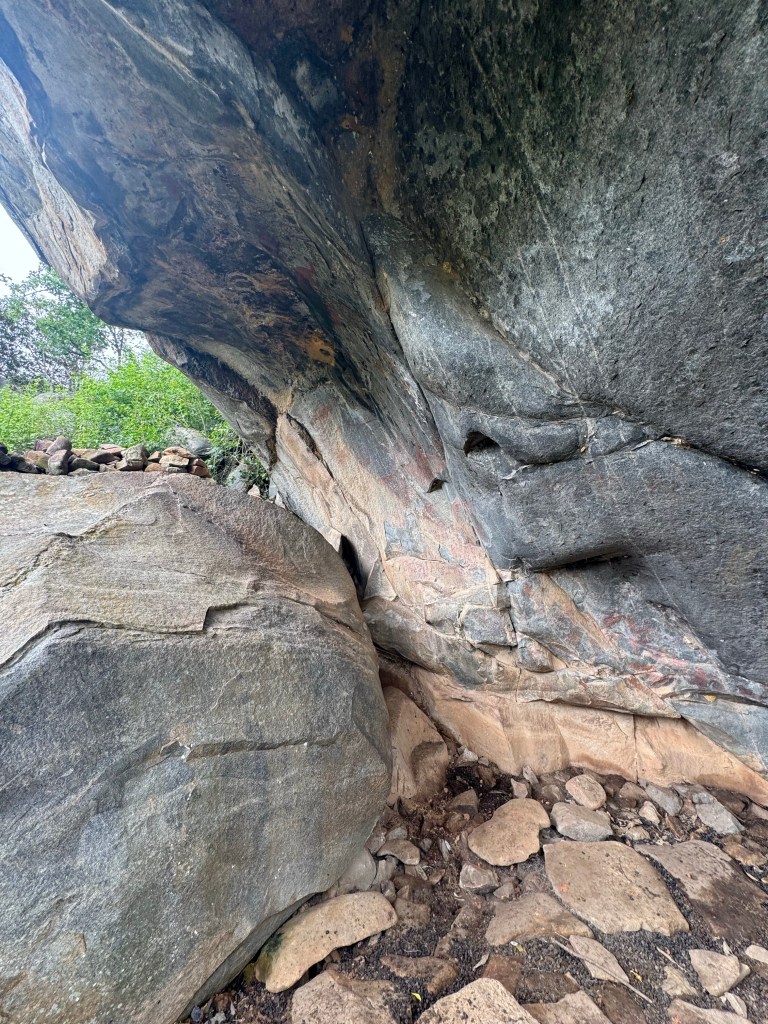
The paintings were made with a combination of ochre and animal blood and fats.
Upon first look it was hard to see much but as your eyes acclimatise the painted figures become more visible.
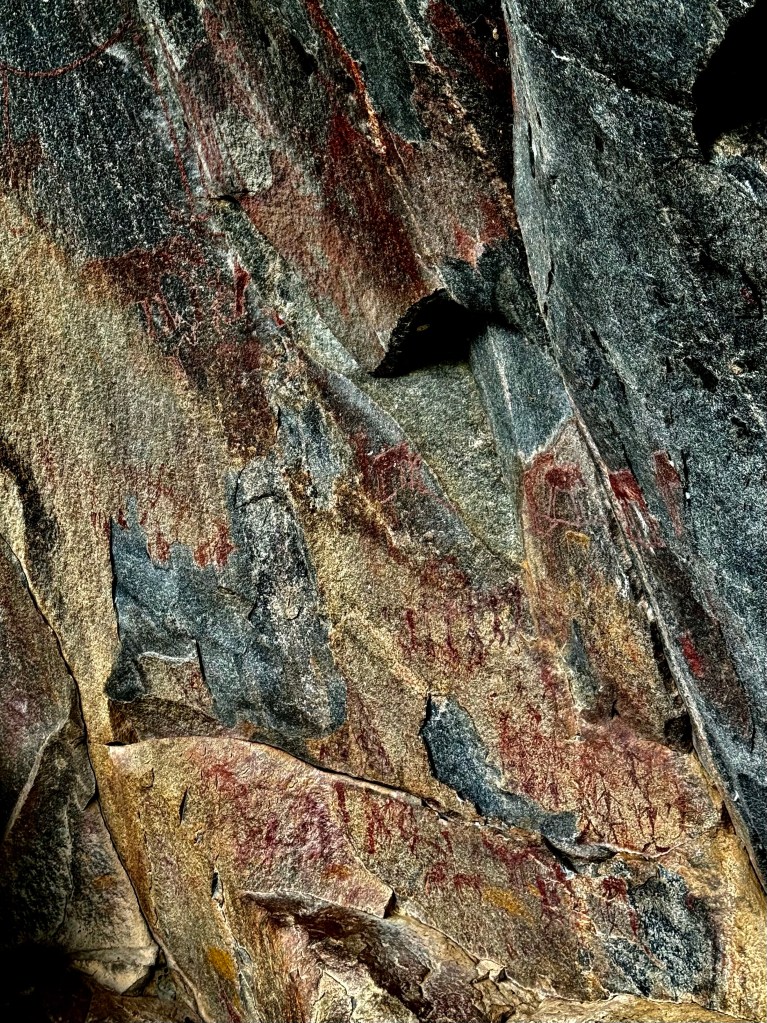
There is a specialist app you can purchase which is meant to make it easy to see them, but all you get here is my Iphone pictures, sorry about that!
The next day we decided to visit a glass factory and also a place called Lion’s Cavern.
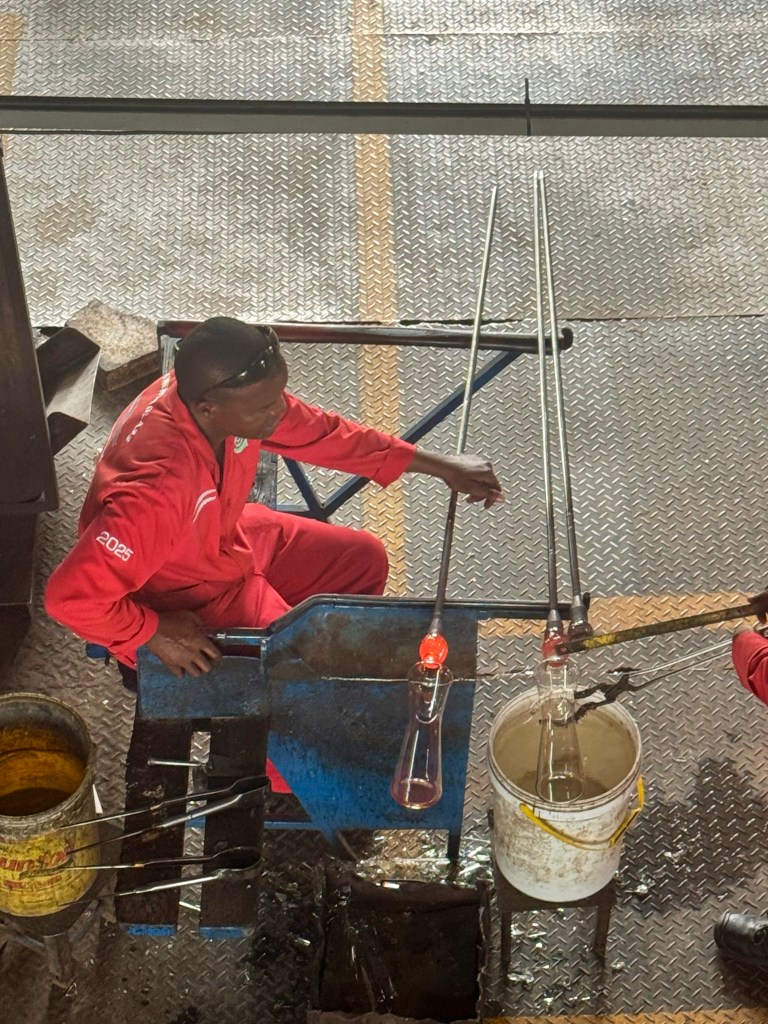
The Ngwenya Glass factory is actually very interesting. There is of course a shop there selling their work but you can also walk along a gangway above the factory to see the actual production.
First the glass is heated to the required temperature so that it is malleable.
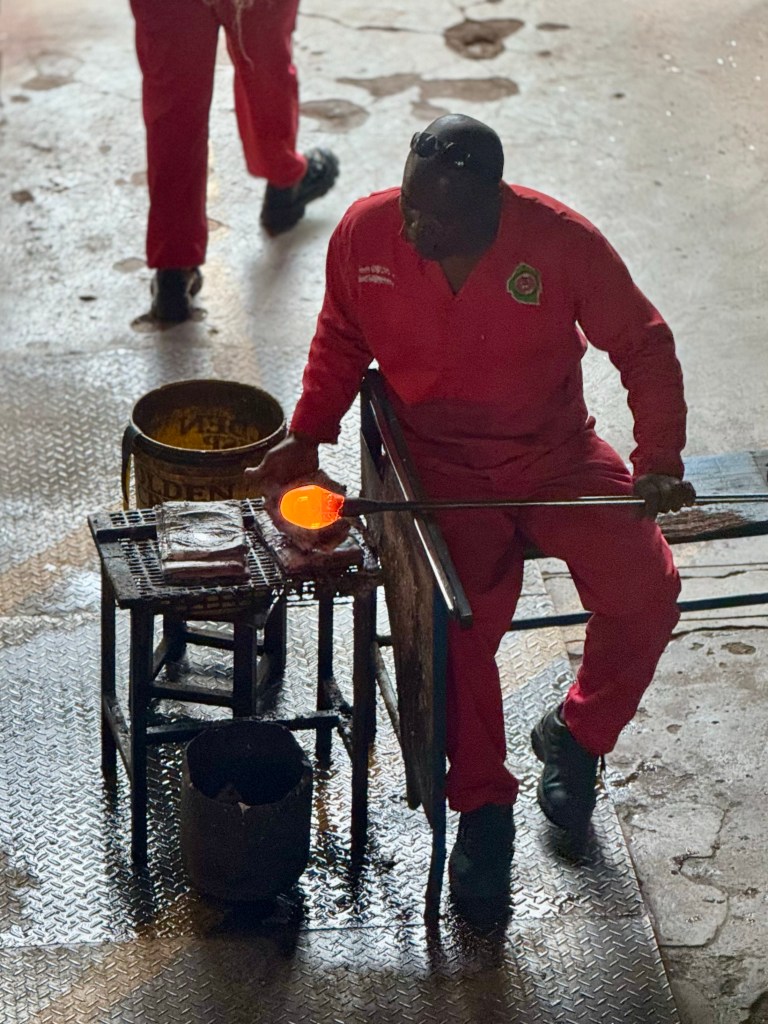
Then it is put into a cast and blown to form the required shape.
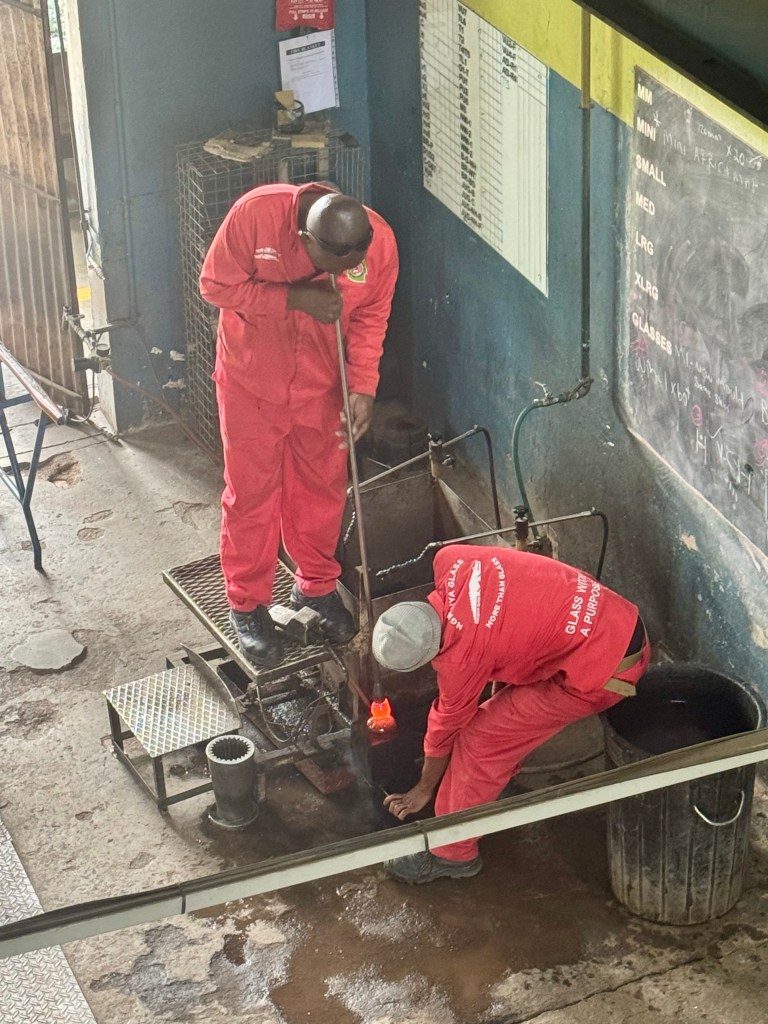
Finally the shaped glass is cooled down and separated from the tube it is attached to.
It’s rather hot in the factory with the furnace going but really interesting to watch.
And yes of course we bought a couple of small things from the factory shop as well as in some of the other craft shops on the site!
We drove onto the Lion’s Cavern, which in fact is nothing to do with Lions at all.
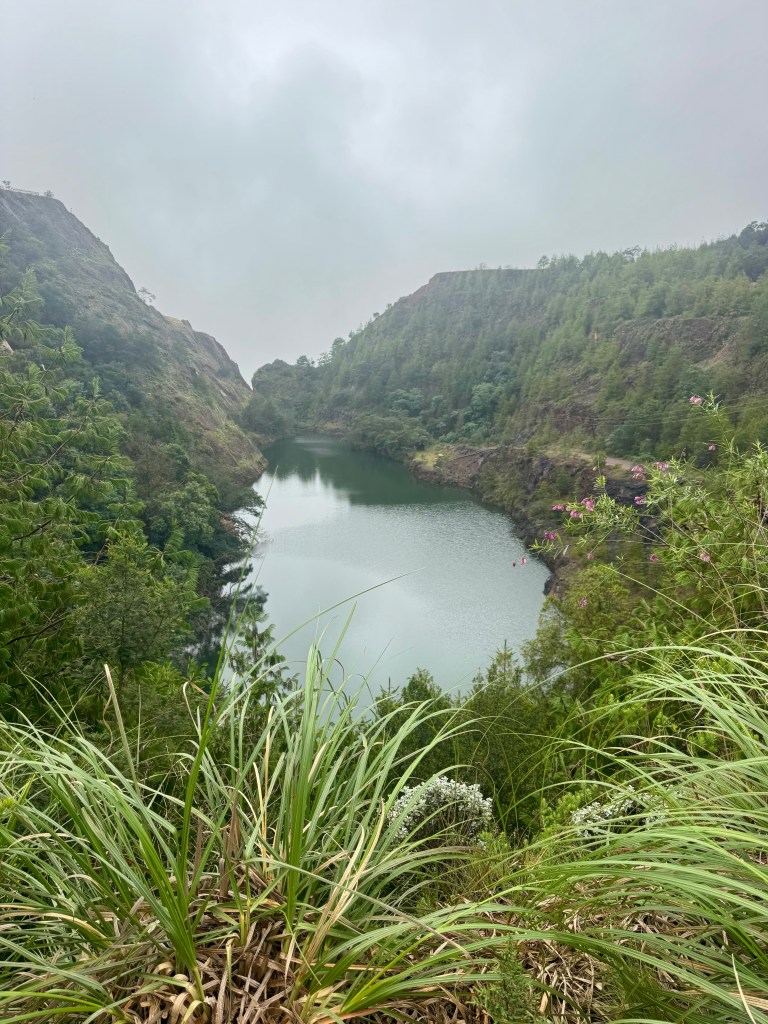
The weather was not very clear when we visited. Once you reach the entrance you pay a fee and the gate keeper who is also the guide hops in your car as you drive up to the car park.
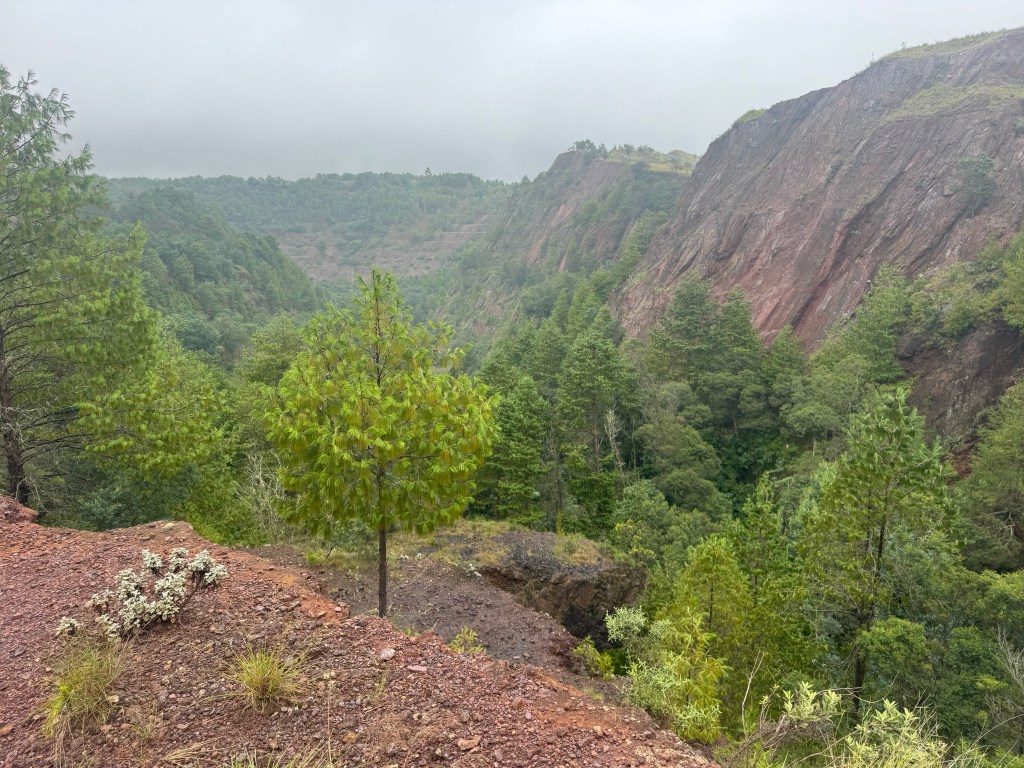
There is a short trek up and along the hillside to see the cavern.
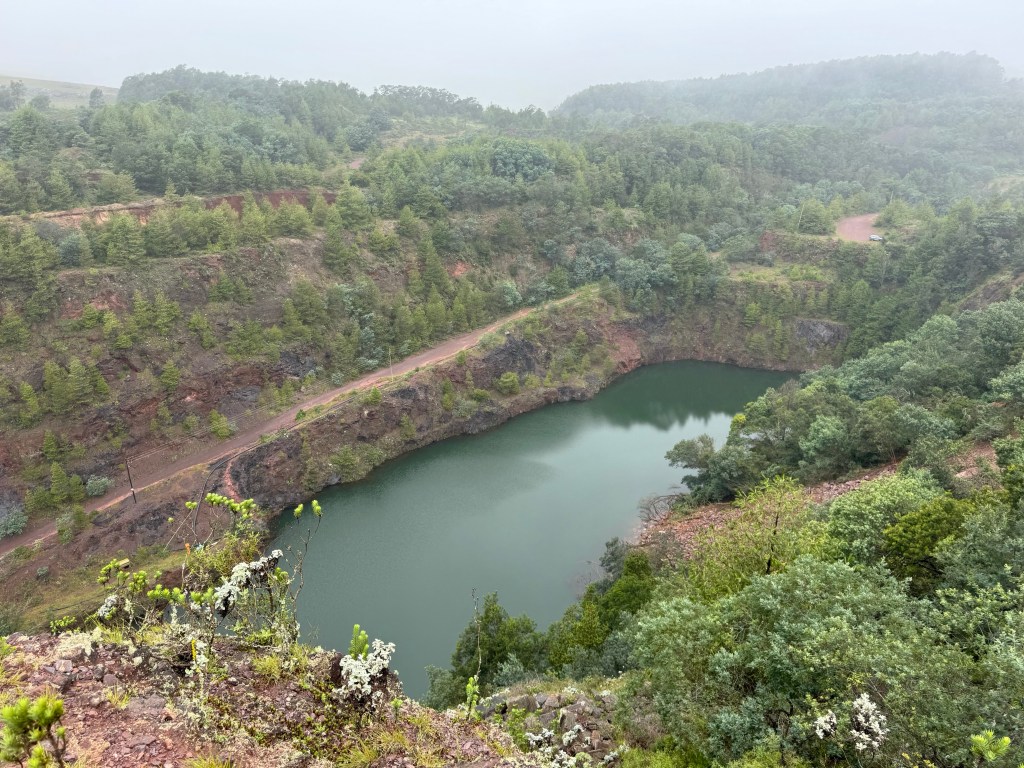
The real theme is that it is an old mine, in fact the oldest known mine in the world.
Evidence has been found that over 40.000 years ago middle stone age settlers extracted red ochre from this site. One report suggests that over 100.000 tons of material had been mined in this area, suggesting an ancient near industrial level of organised activity had take place here.
In more modern times a rich vein of iron ore was identified. At it’s prime the iron oxide was extracted and transported via Mozambique and then onwards for processing. However, the quarry is now flooded and no further work is currently carried out although there have been some recent attempts.
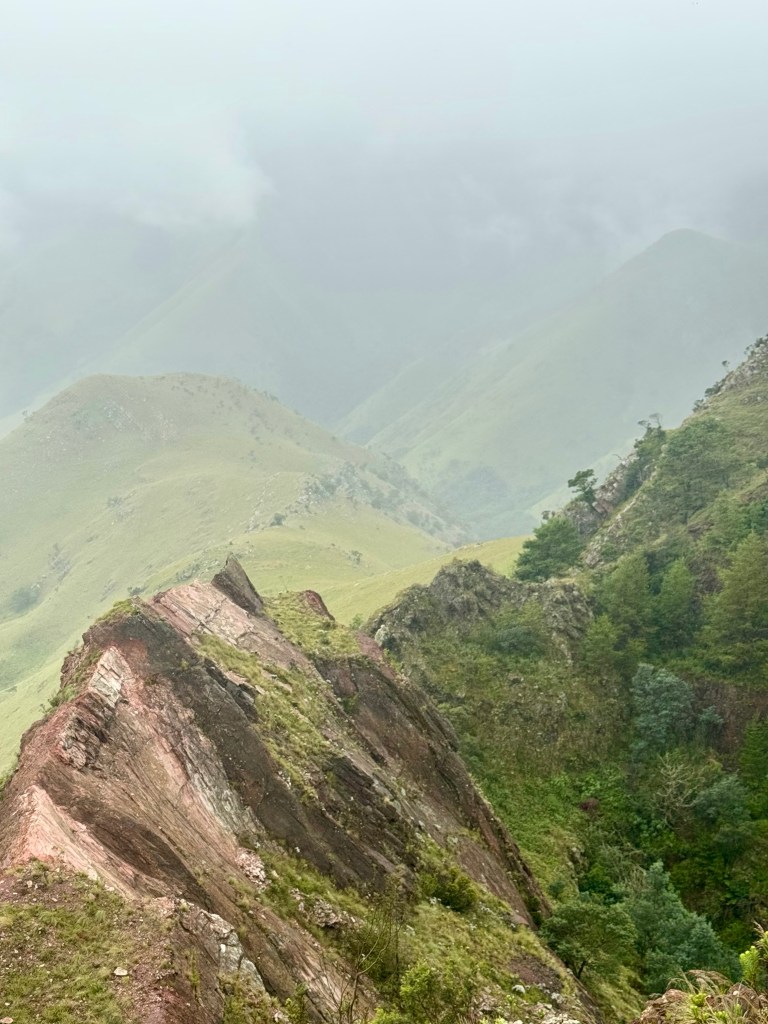
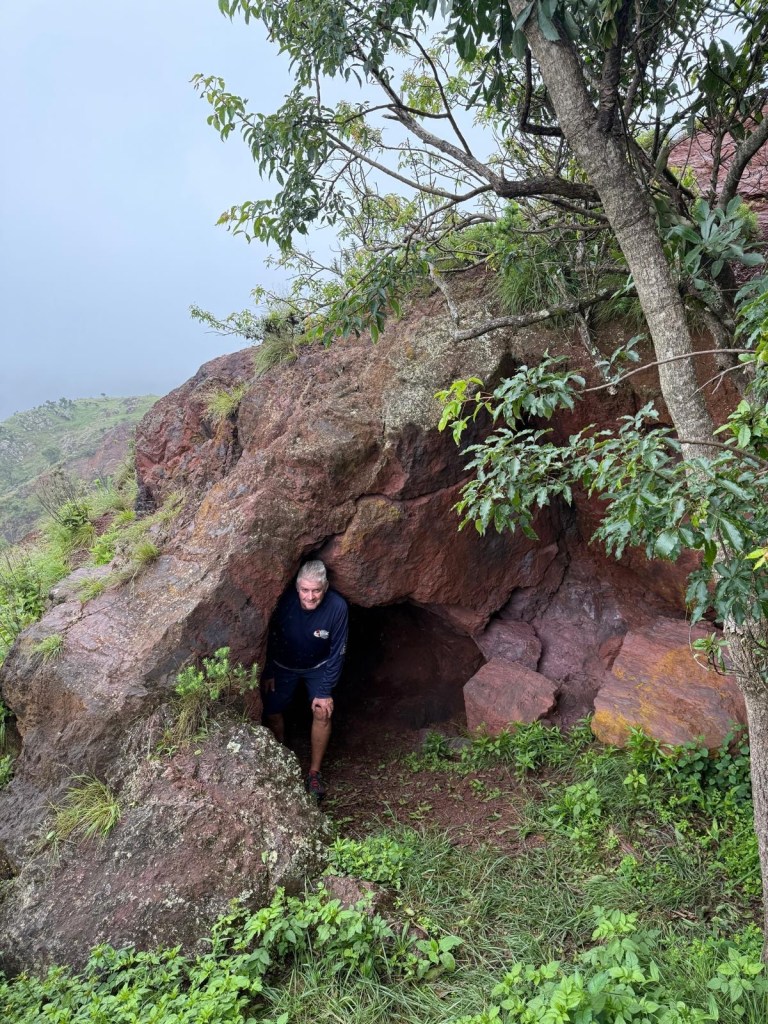
Below is the Lion’s cavern, so named as from some angles it looks like a lion’s face. It’s small and strangely insignificant given the bigger historical claims for this site.
We only spent six days in Eswatini but found it an interesting, safe a d friendly place to visit.
If you are in the area and have the time, I think it’s worth a visit, we didn’t visit the wildlife parks given our recent Serengeti safari’s but I hear they are worth visiting too.
Tomorrow we leave the country and drive back into South Africa to visit Drakensberg.
 Jeff's Travel And Photo Blog
Another fascinating post, looks beautiful.
LikeLike
Fabulous! Love the peacocks and the photos of you both.
I spent 3 months in SA and Zimbabwe (when it was Rhodesia) and wanted to go to Swaziland but we were prevented from travelling there (long story) but we saw so much when we were there, no regrets. Enjoy ________________________________
LikeLiked by 1 person