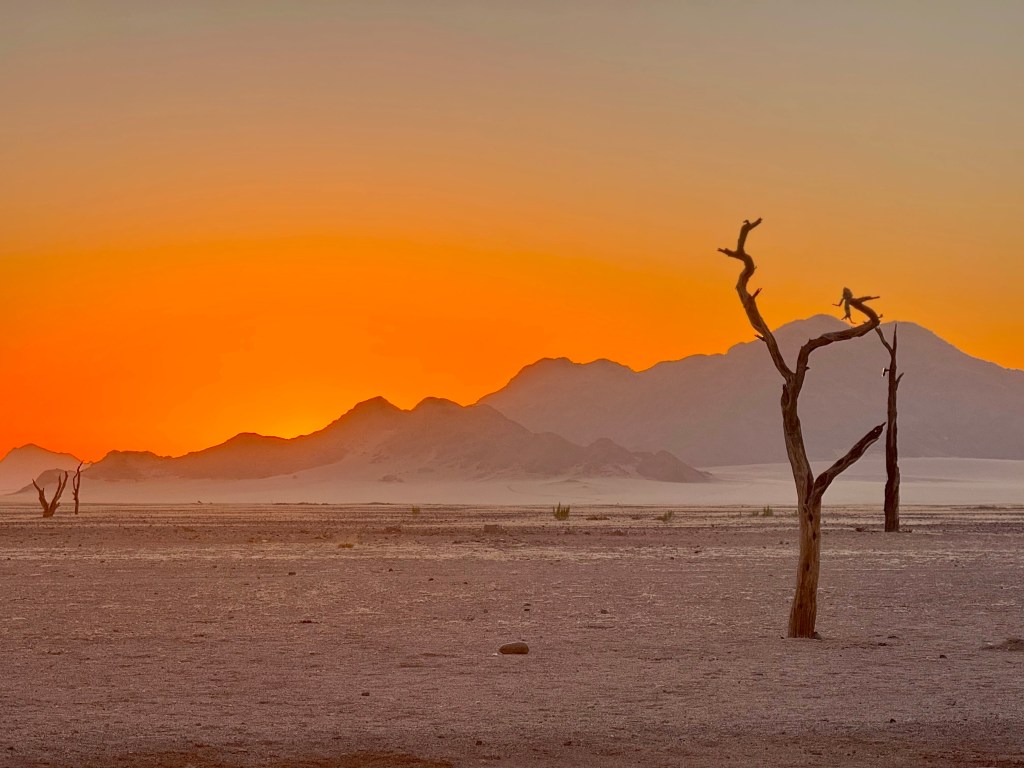
We flew into Windhoek, Namibia’s capital city and the next day picked up our 4×4 car and headed into to the desert.
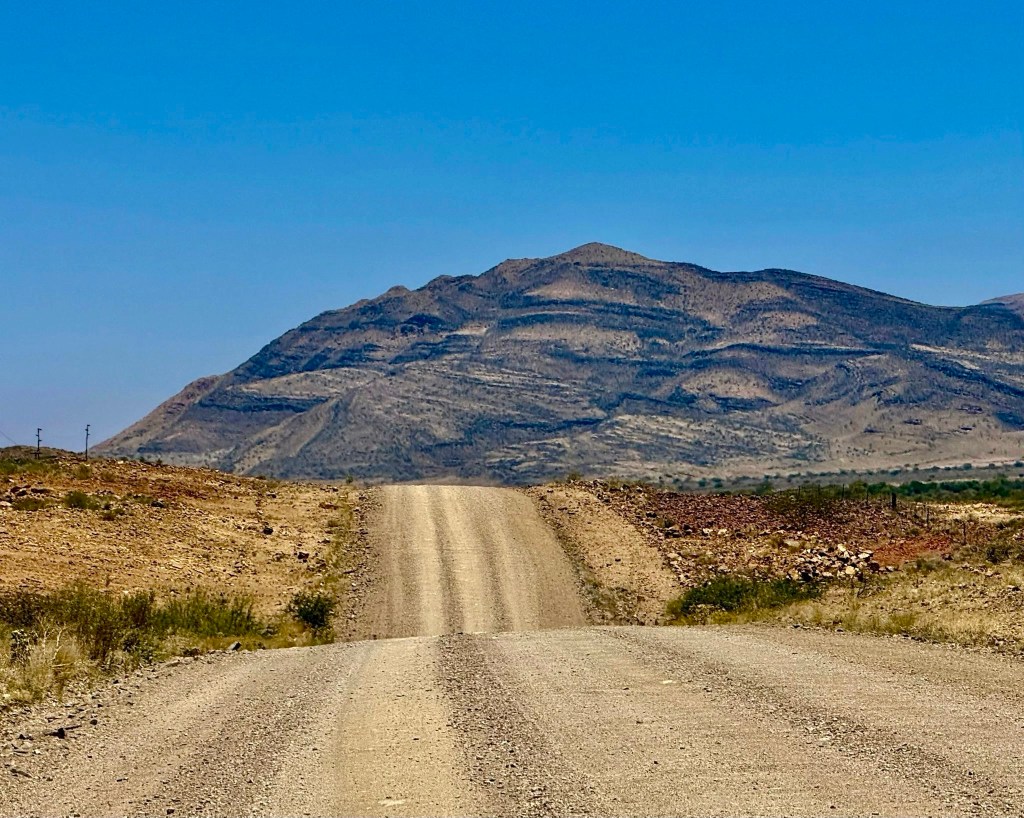
If you want to get around this country and access all areas, a 4×4 is recommended. The roads here vary greatly, some tarmac or gravel or sand or salt based.
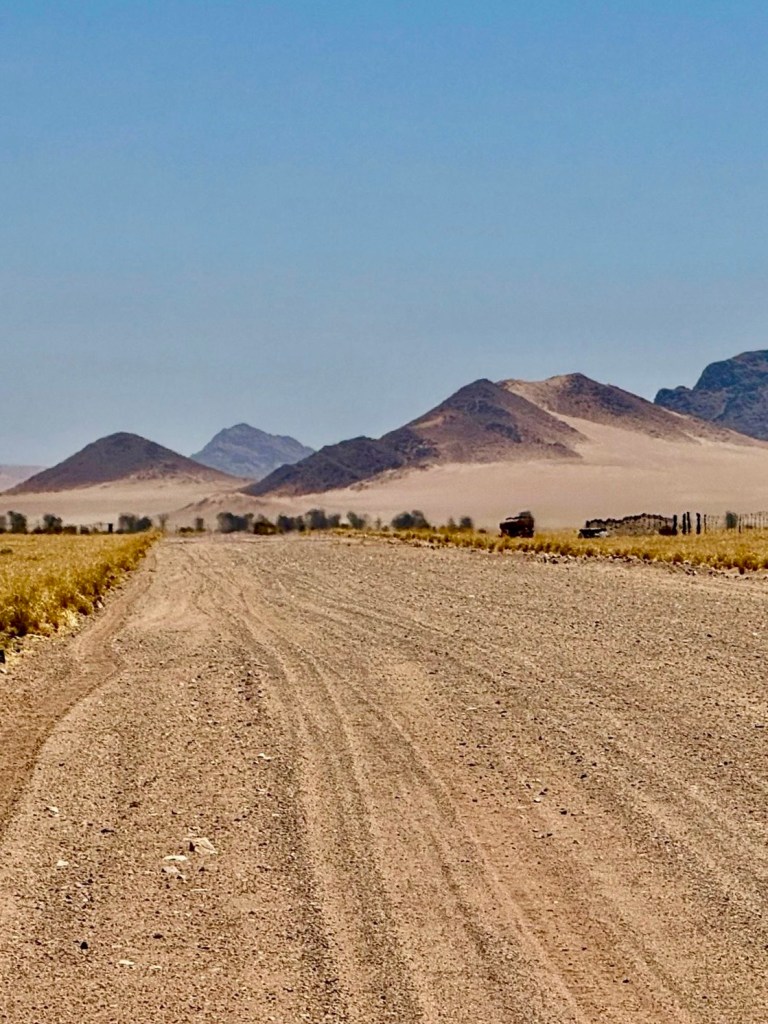
Our drive from Windhoek to Sossusvlei was a great introduction to driving on these varied road surfaces. Sometimes smooth, sometimes jolting and keeping control of the vehicle can be a challenge!
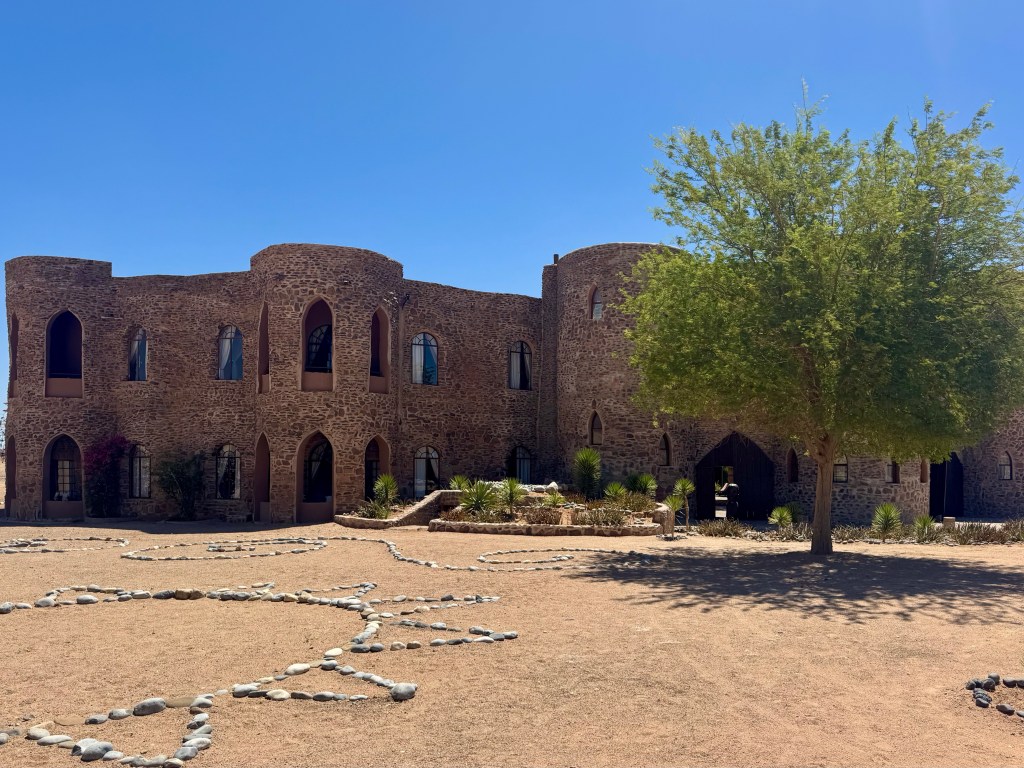
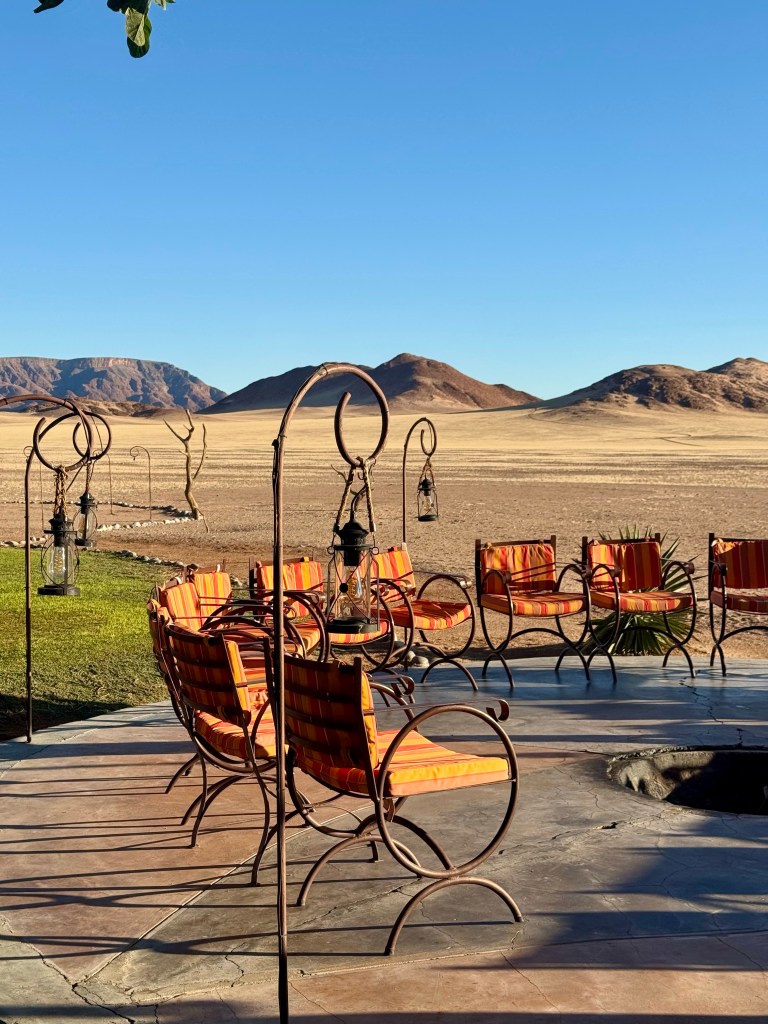
Our hotel was fabulous, set in the desert, it was like an oasis!
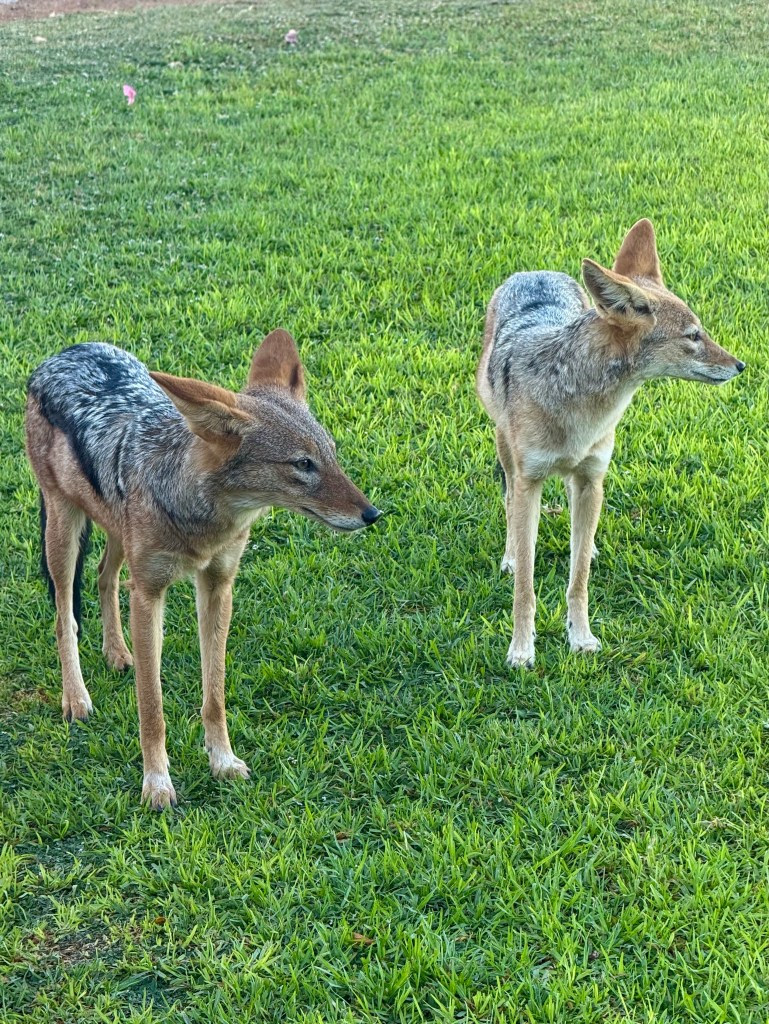
There were a couple of Jackals that wander around the hotel, visiting in the morning and evening when they smell food.
They seemed quite confident to walk close to the property but didn’t pose any danger.
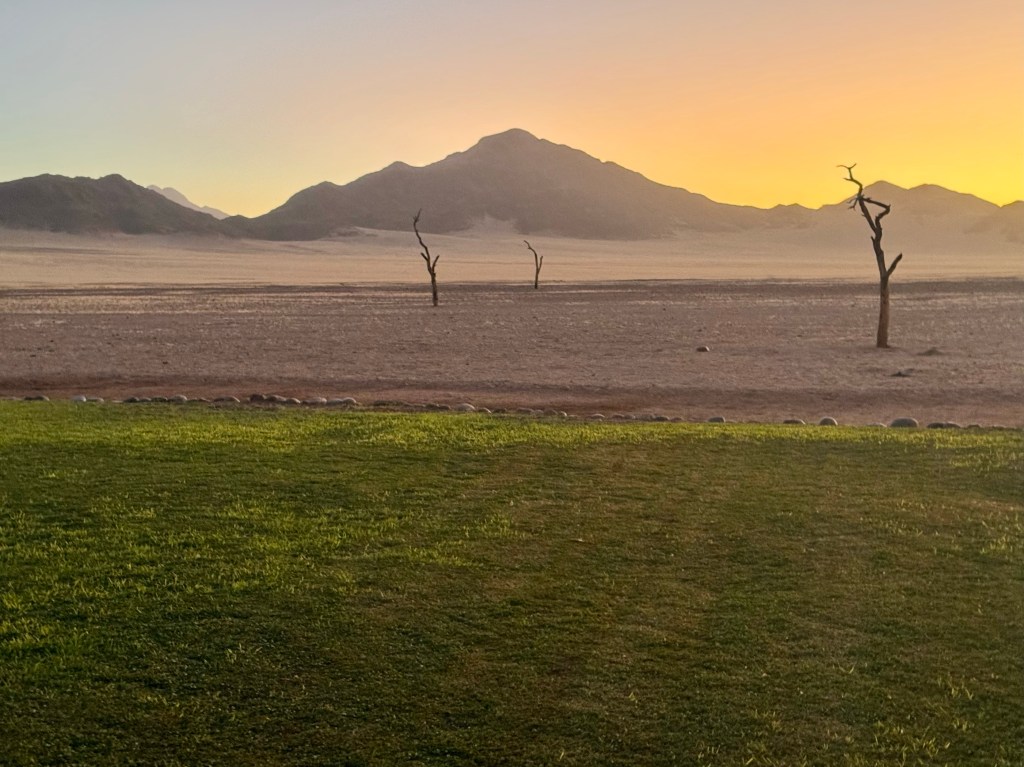
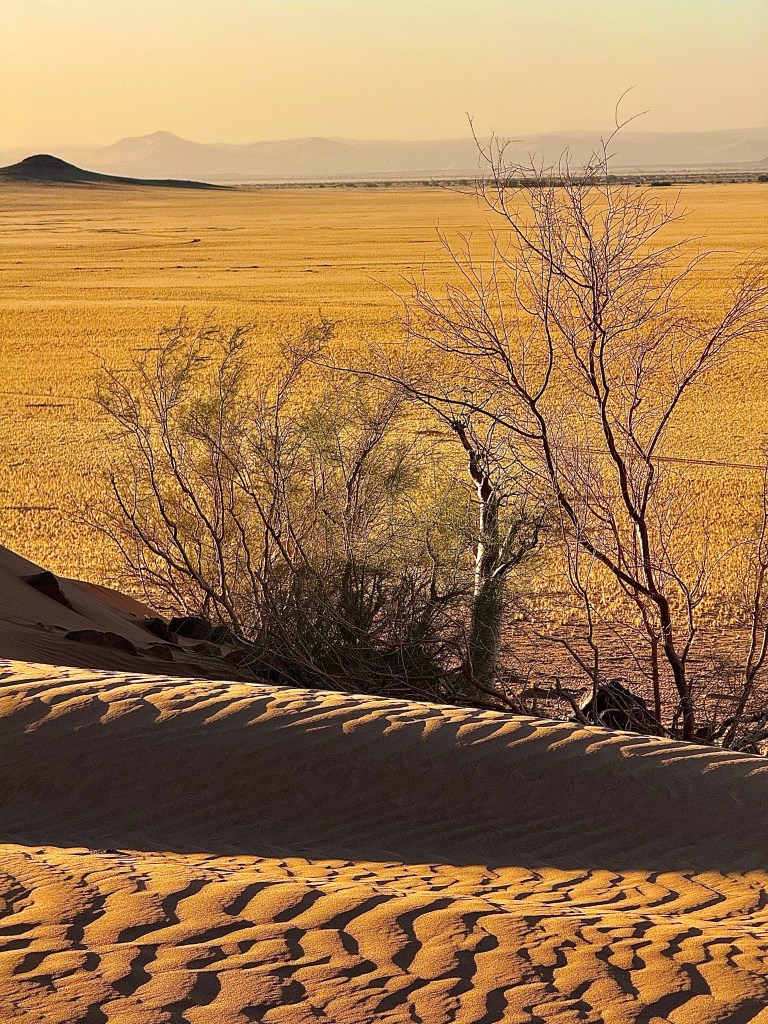
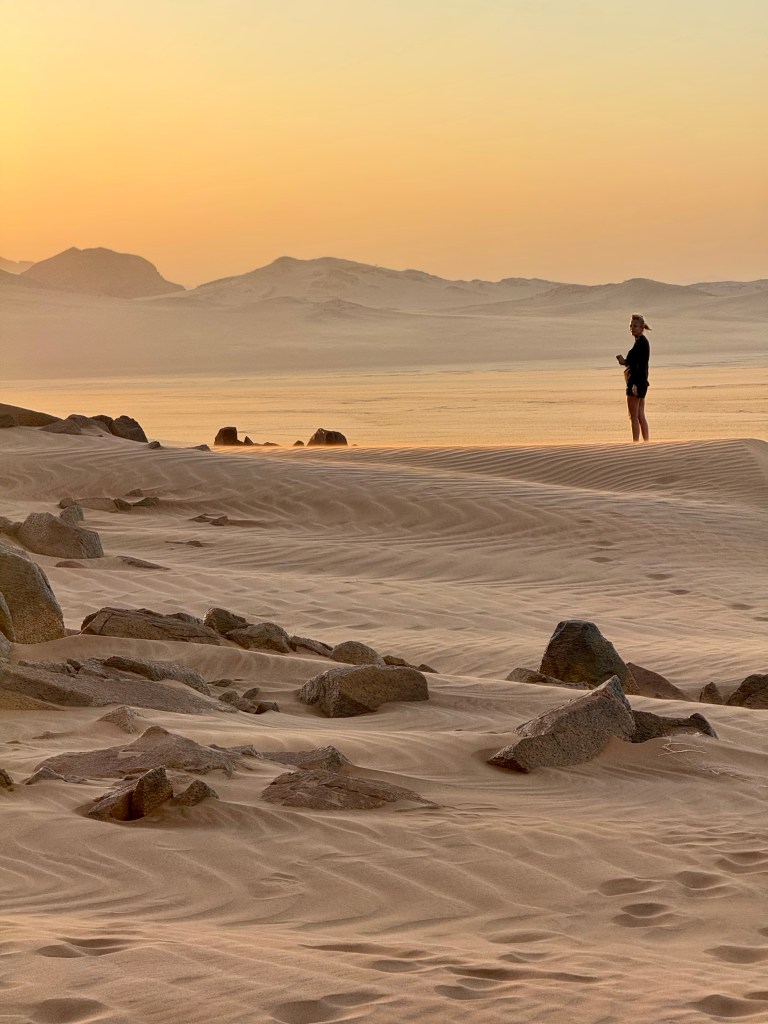
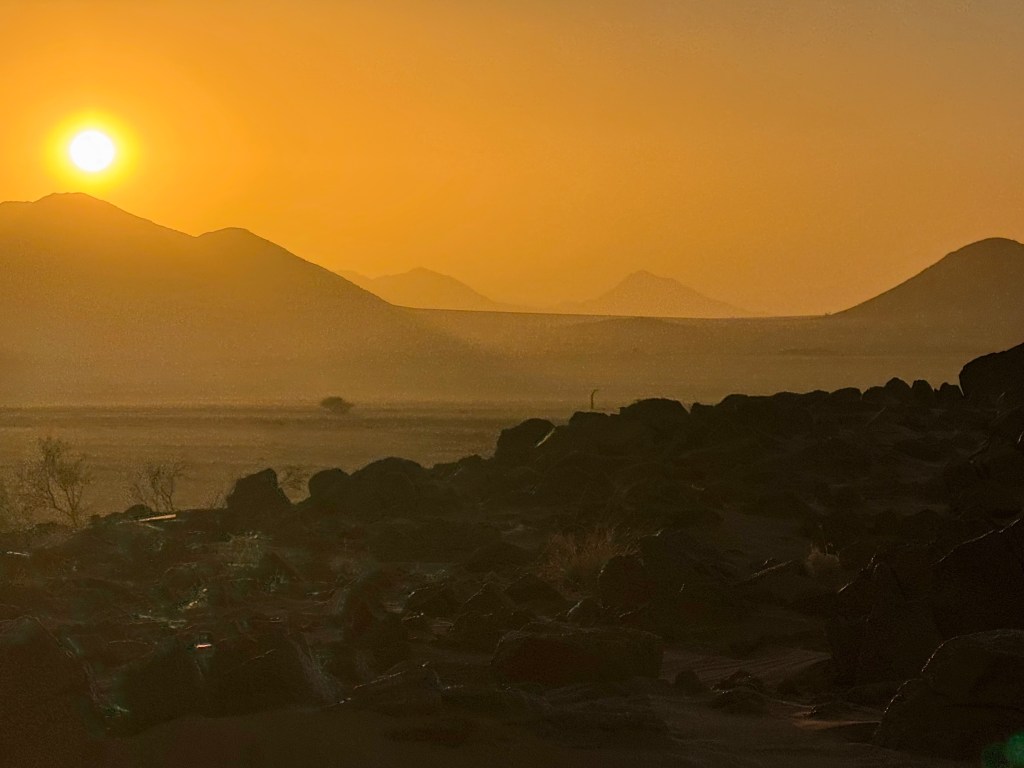
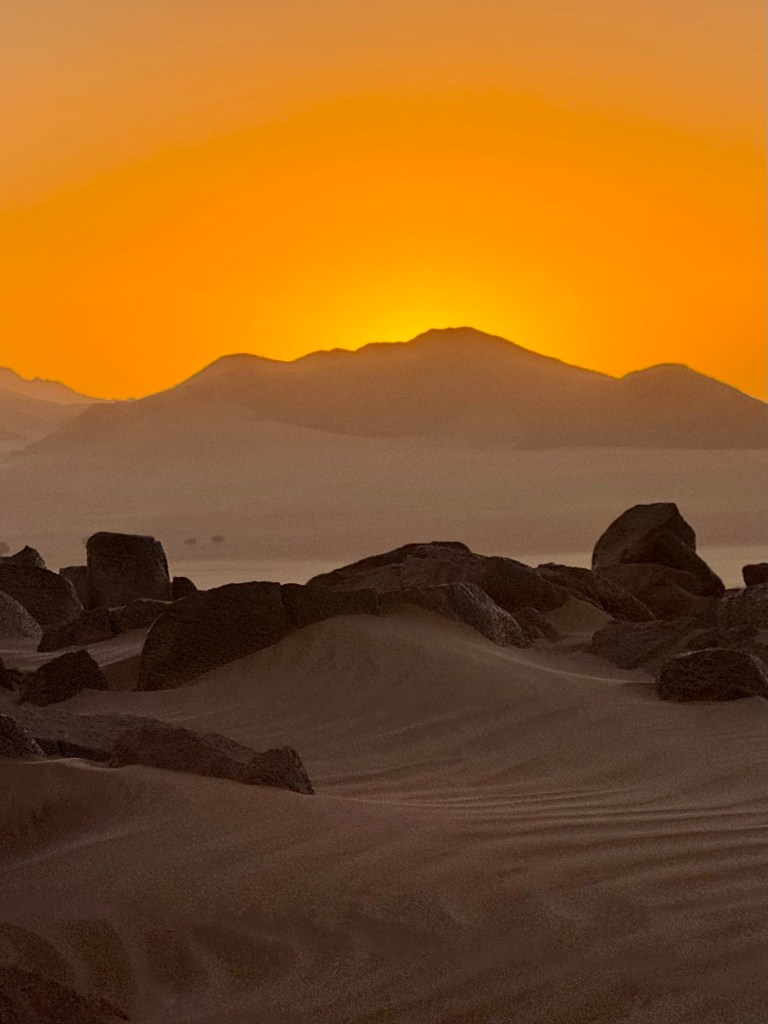
The sunsets in the desert are fabulous, the changing light created a wonderful show for us.
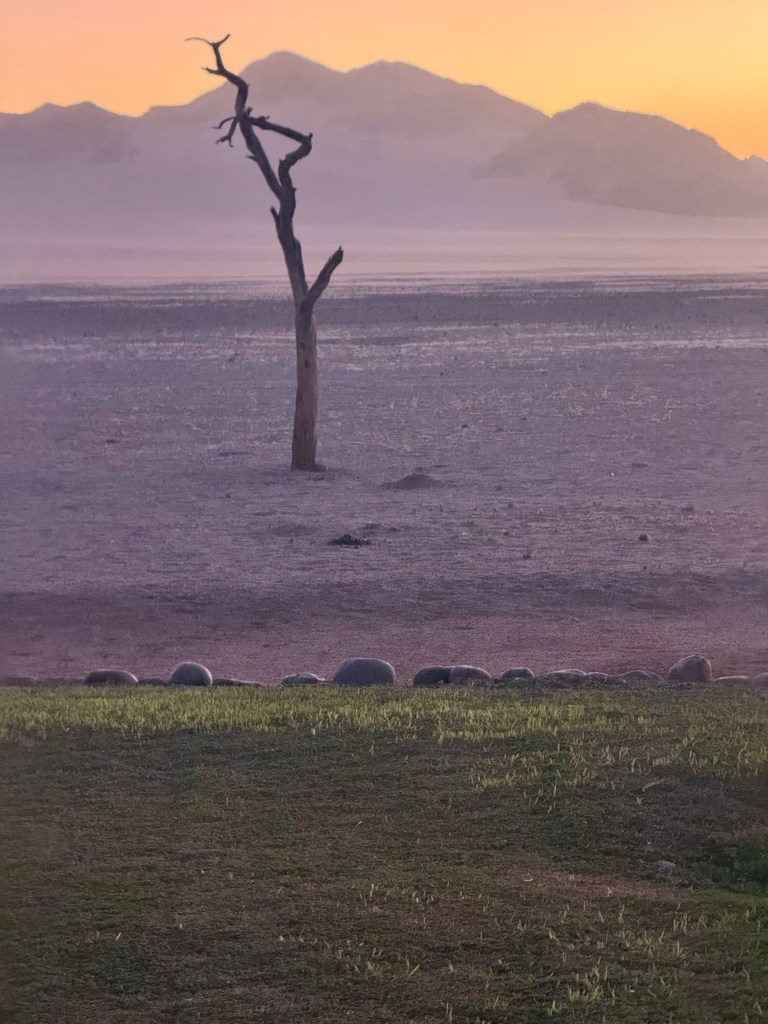
The next evening we went out for a sunset drive, just 30mins from the hotel.
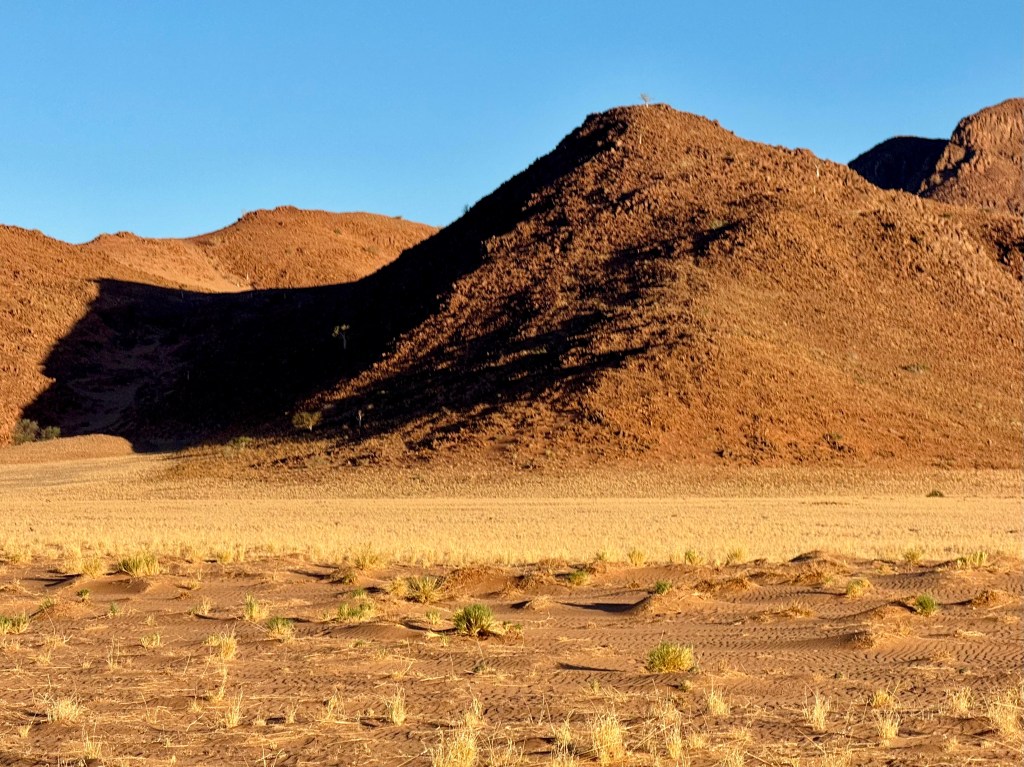
The view across the desert and the surrounding mountains was wonderful. It was hot but the sun was starting to go down and a warm but brisk wind kept us cool enough.
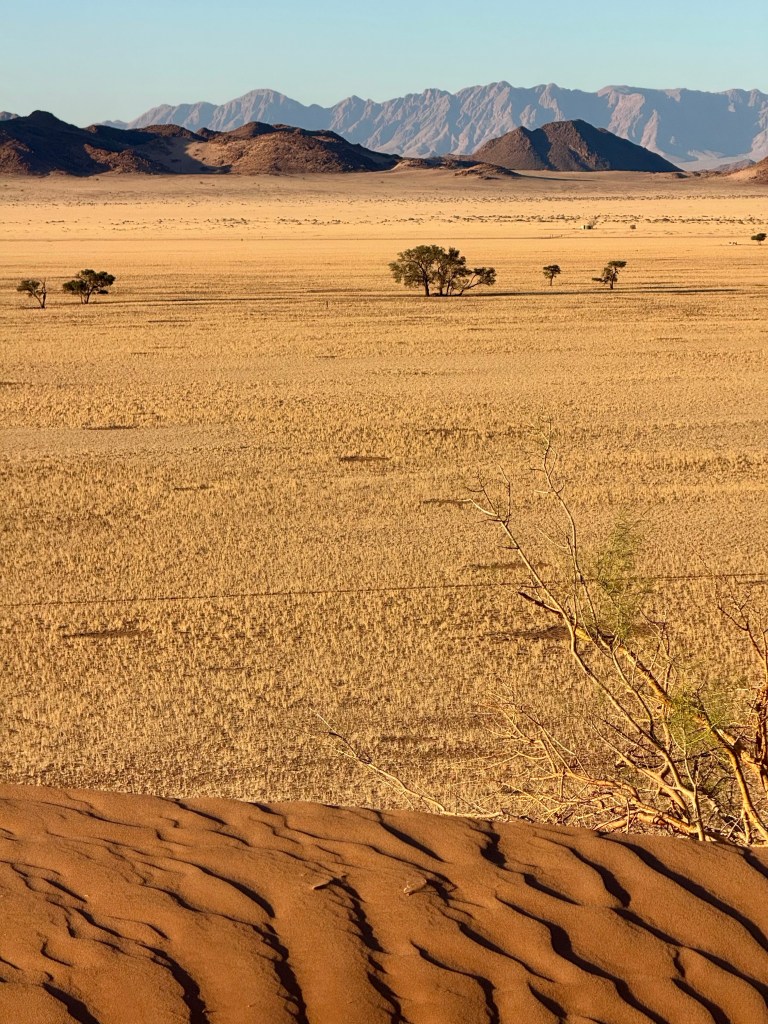
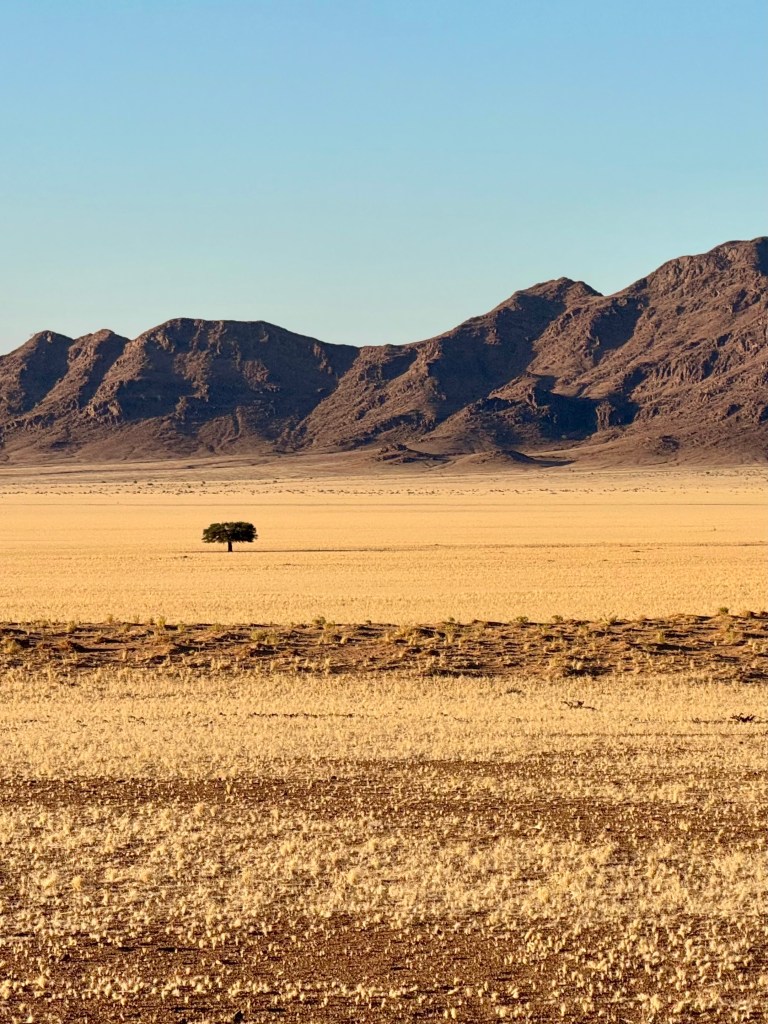
The landscape is like no other I have experienced before, you feel like you have been transported to another world.
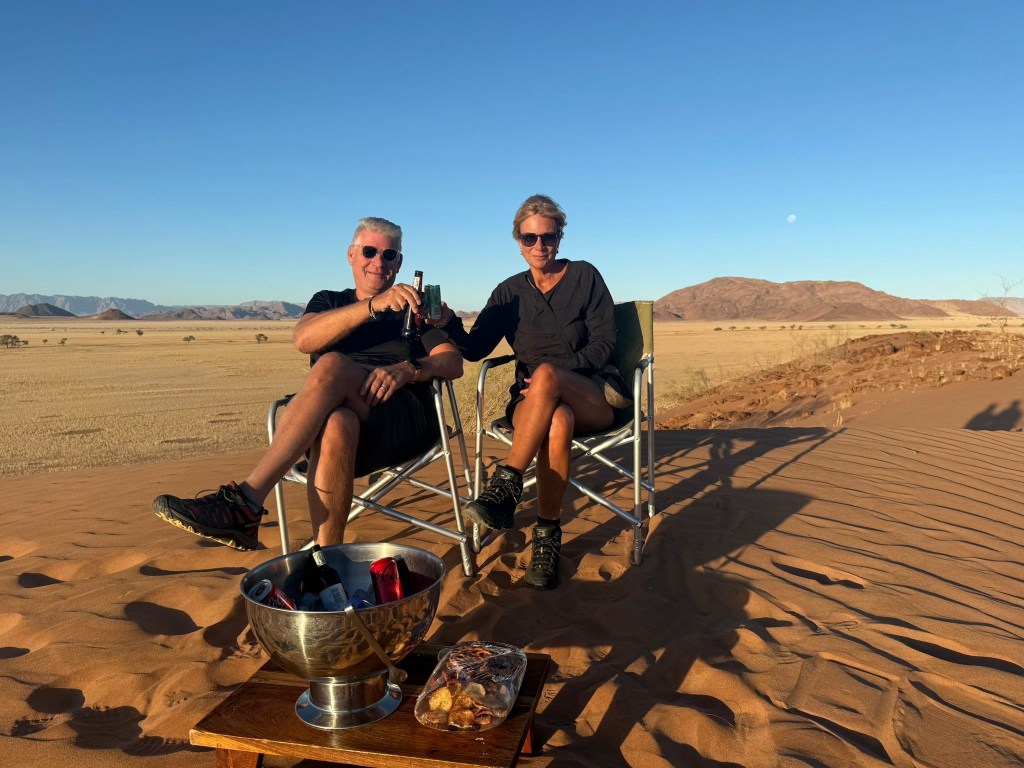
Sunset means time for a ‘sundowner’ drink!
The next day we headed off to check out the nearby Namib-Naukluft National Park.
The area is a salt and clay pan with shifting red sand dunes reaching up to 300-400 metres high.
The Namib desert is one of the oldest in the world, estimated to be between 55 to 80 million years old.
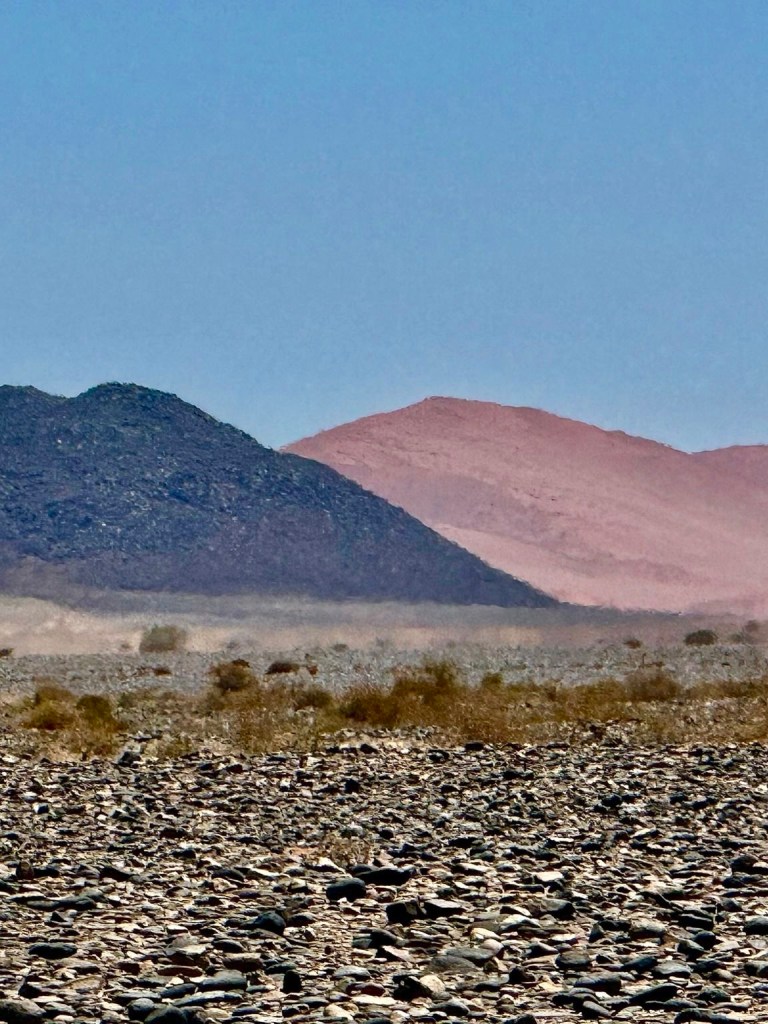
Upon entering the park you drive along a 60km tarmac road to reach a carpark. The next 5km is sand and for 4×4 vehicles only.
We managed the last 5km fine on the way there but I managed to get us stuck in deep sand on the way back. Thankfully a passing guide managed to get us out pretty quickly!
4×4 driving is a learning experience.
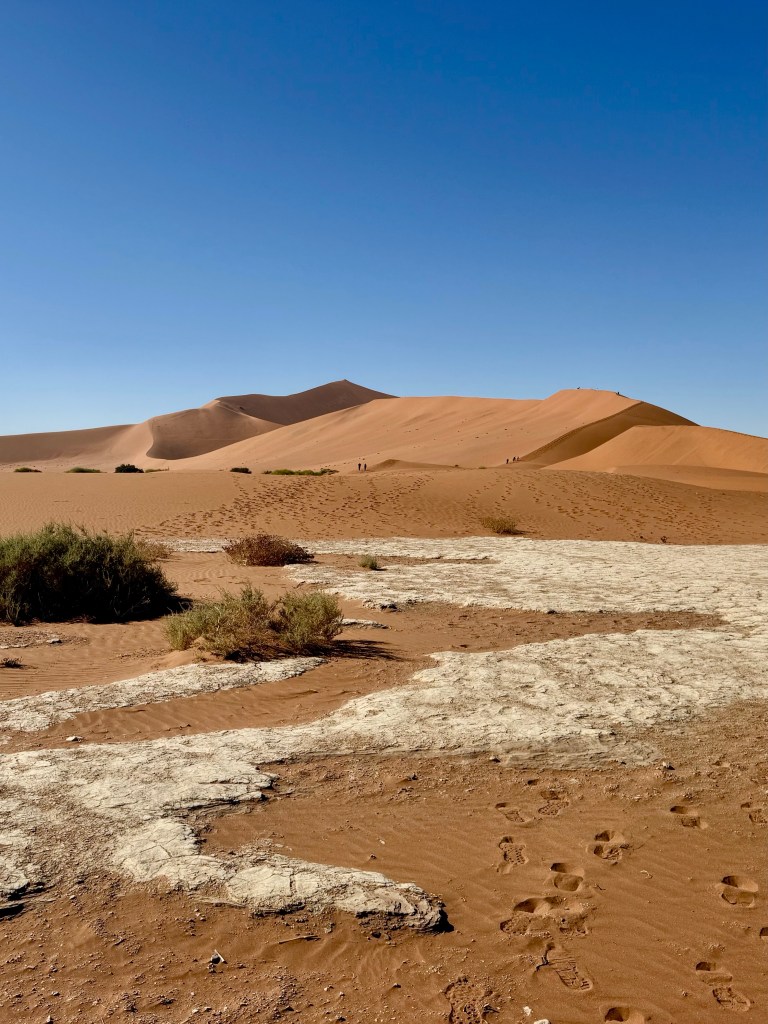
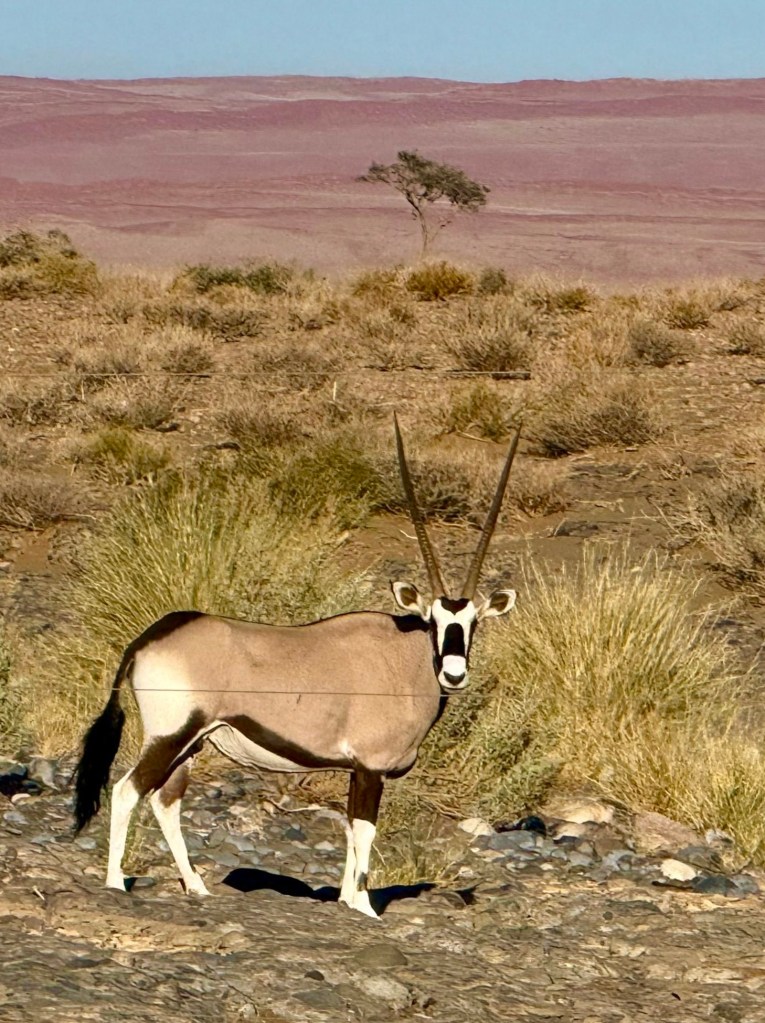
We spotted some wildlife along the way, first some Springboks and then some Oryx, Namibia’s national animal.
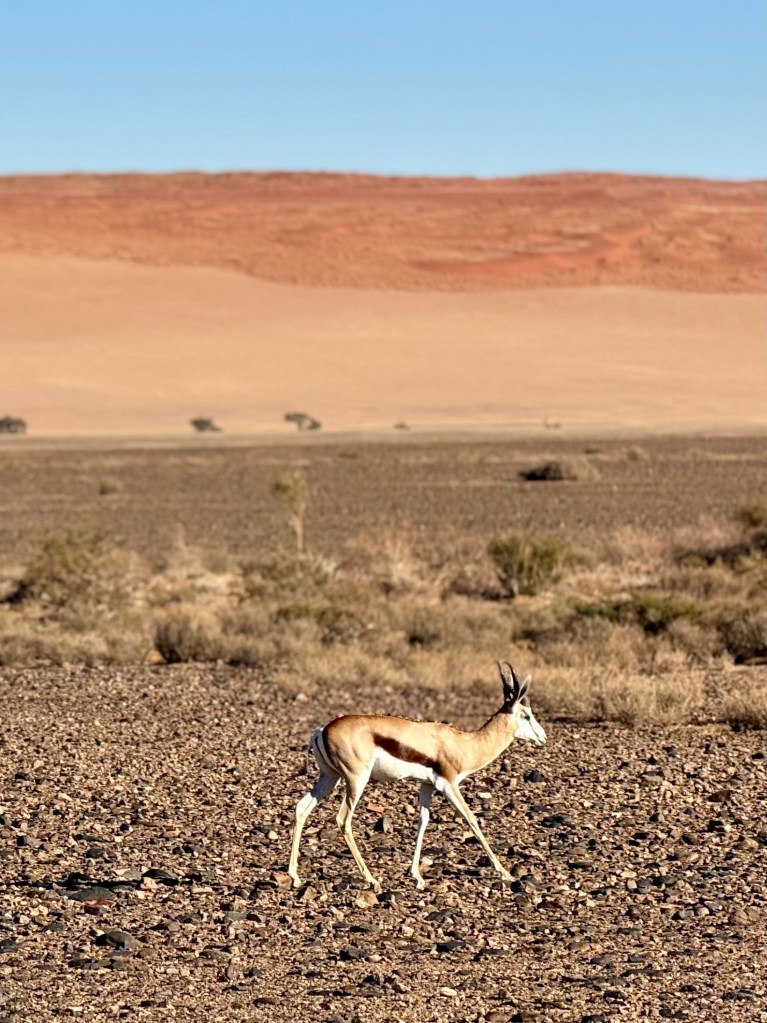
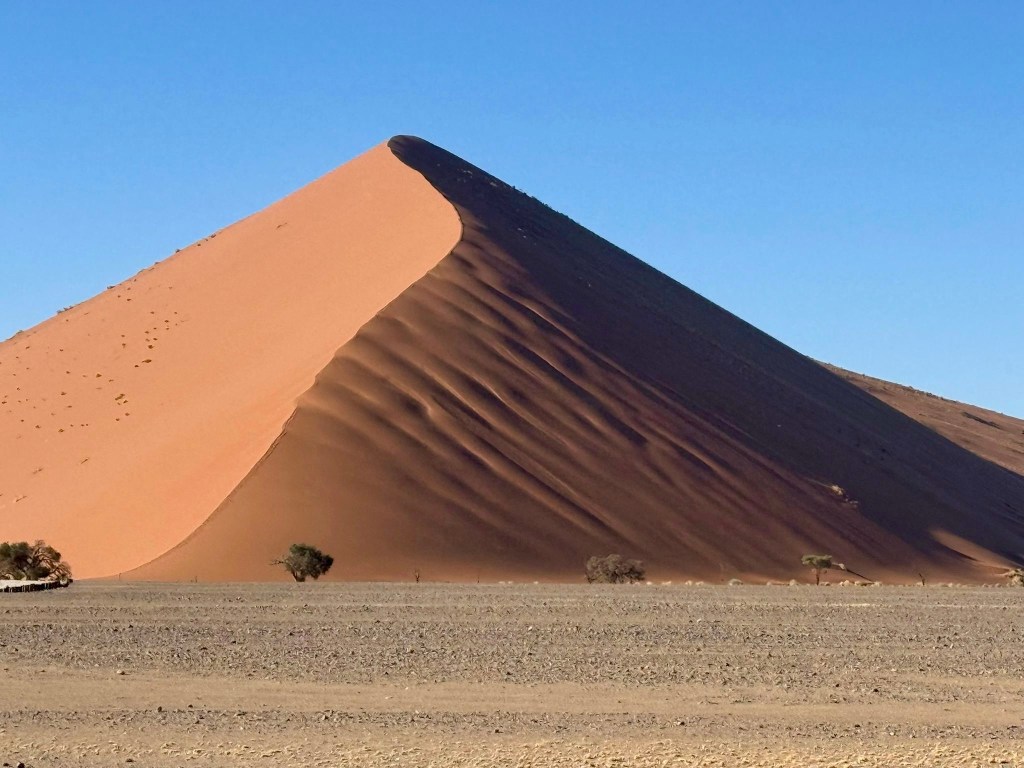
The sand dunes are so impressive, their rich red/orange colour is due to their rusted iron content.
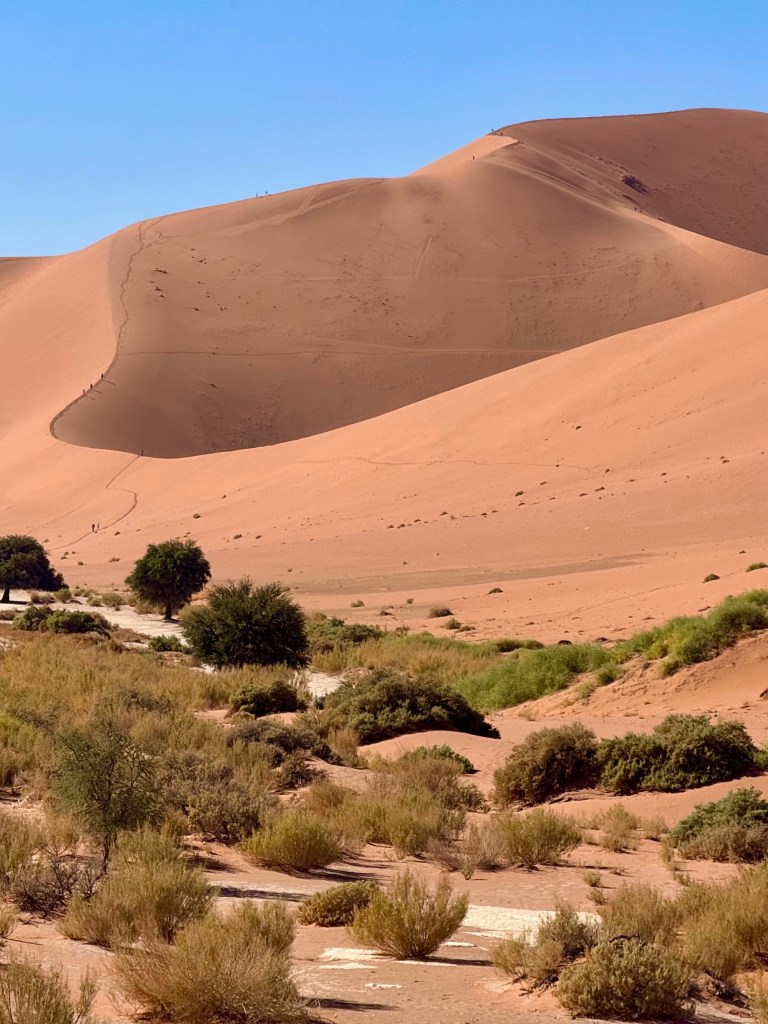
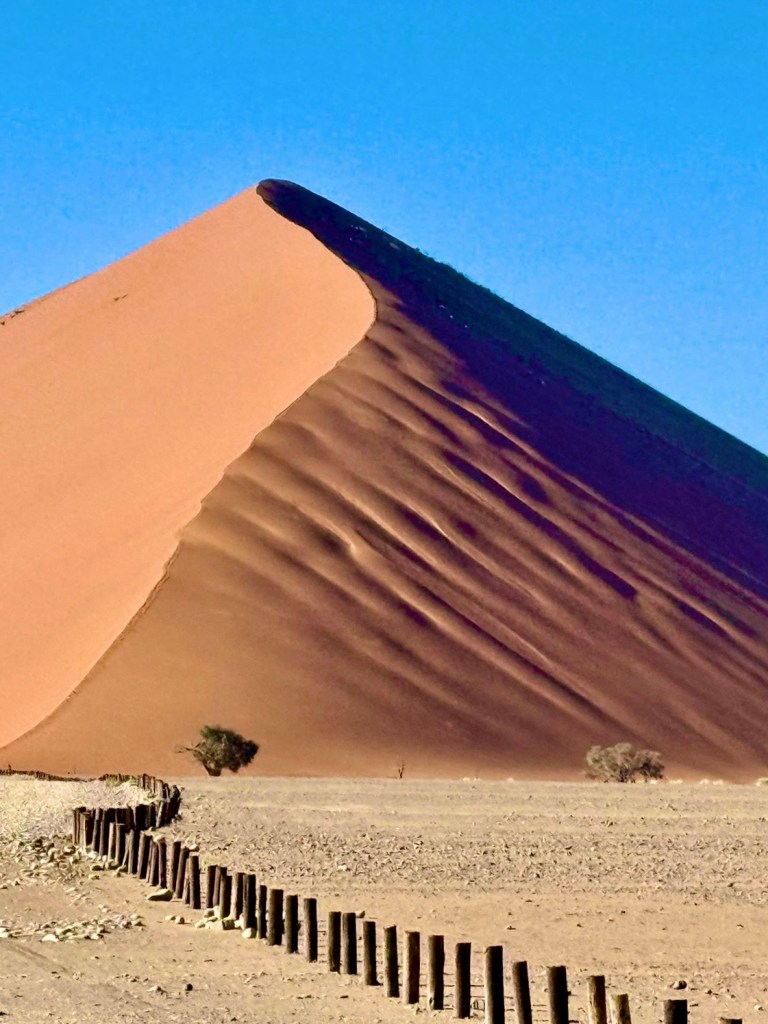
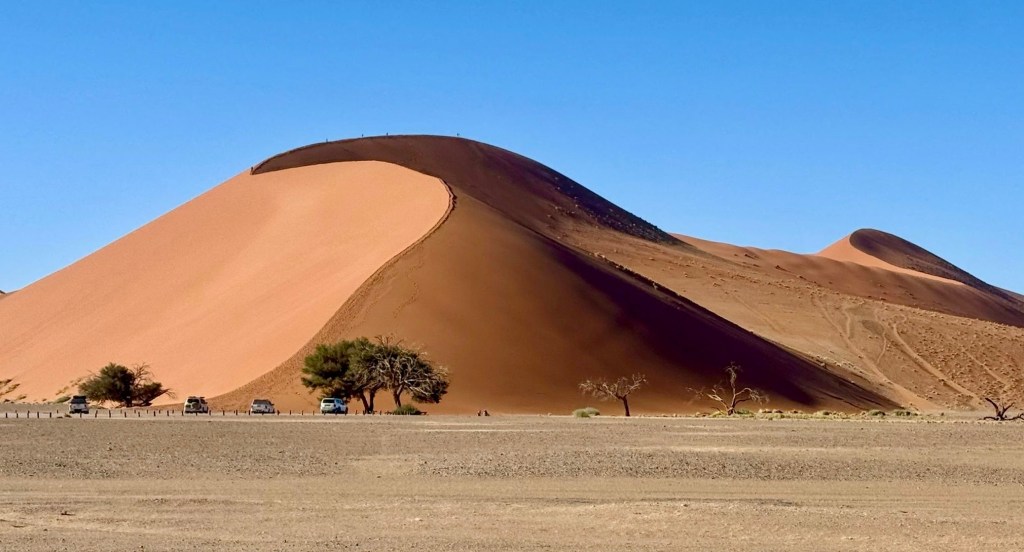
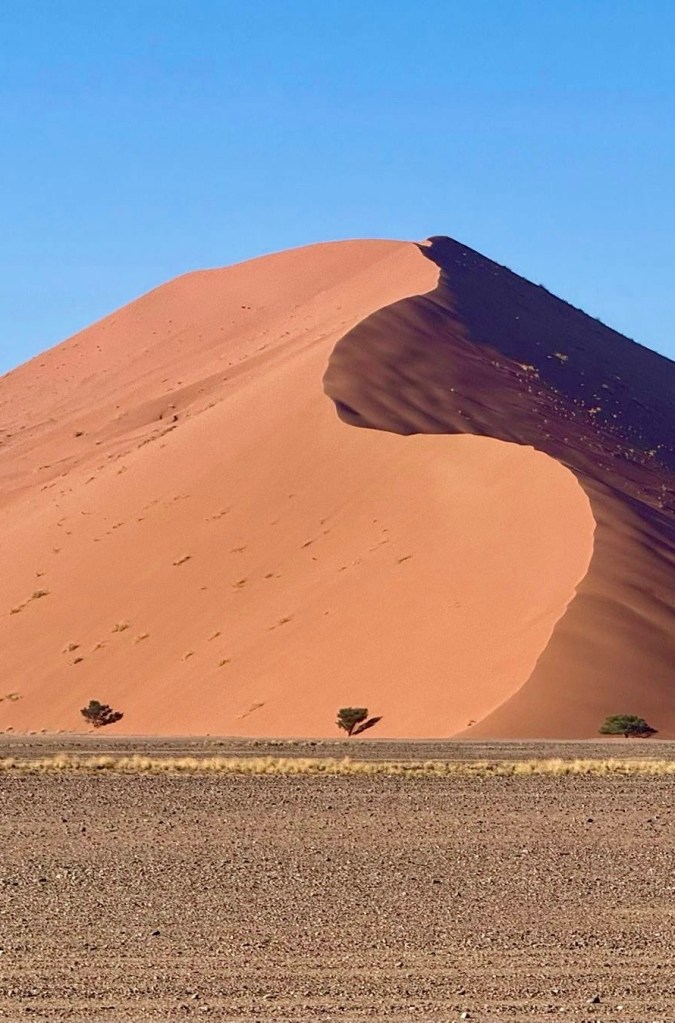
You can walk up the dunes too, the largest is known as Big Daddy but it’s hard walk in the intense heat and as you climb it feels like you make little progress!
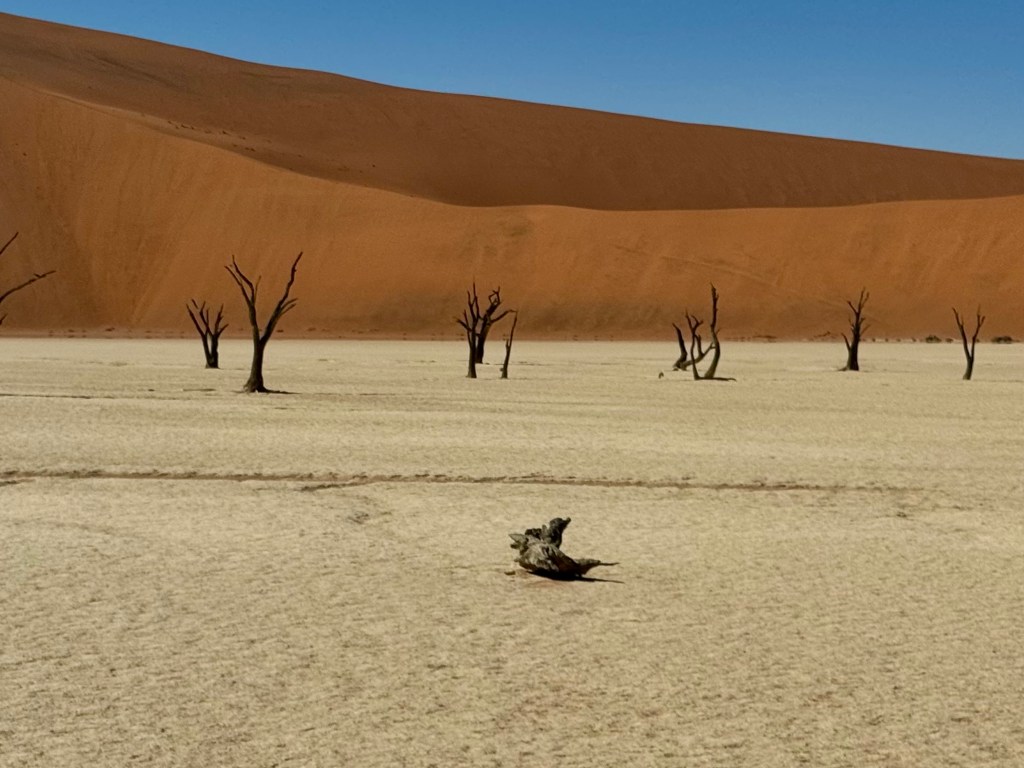
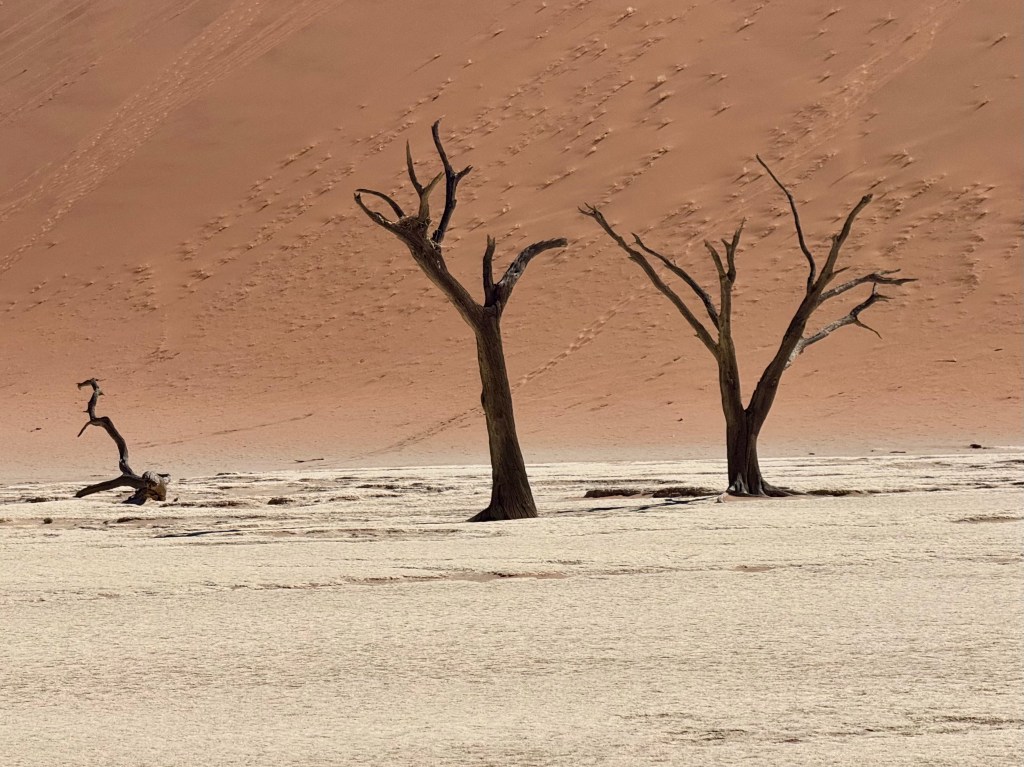
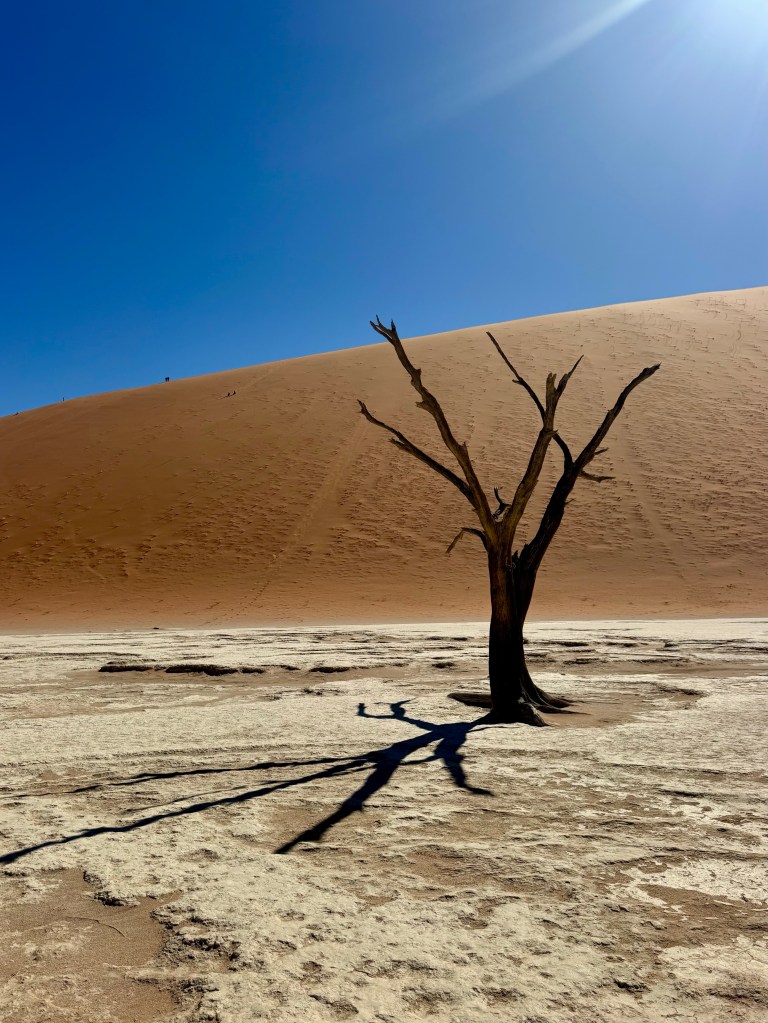
Near Big Daddy is an area named Deadvlei, where the dried up clay pan hosts the remains of 600 to 900 year old trees. They remain in place given the dry desert air.
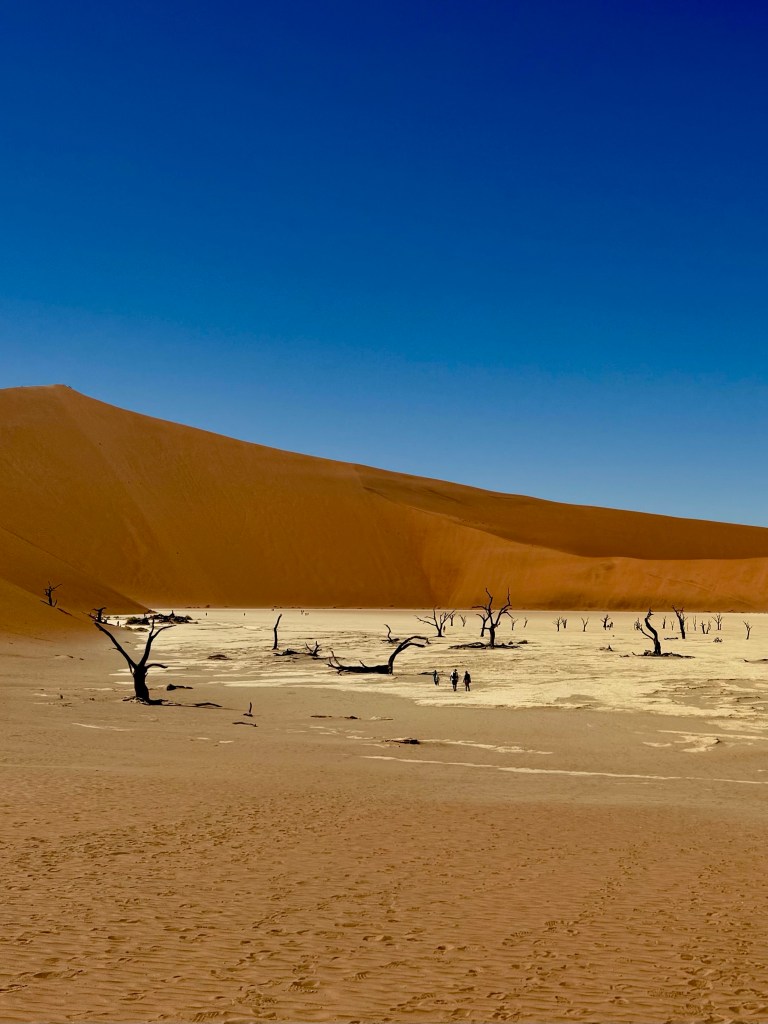
It’s a quite a surreal sight to behold.
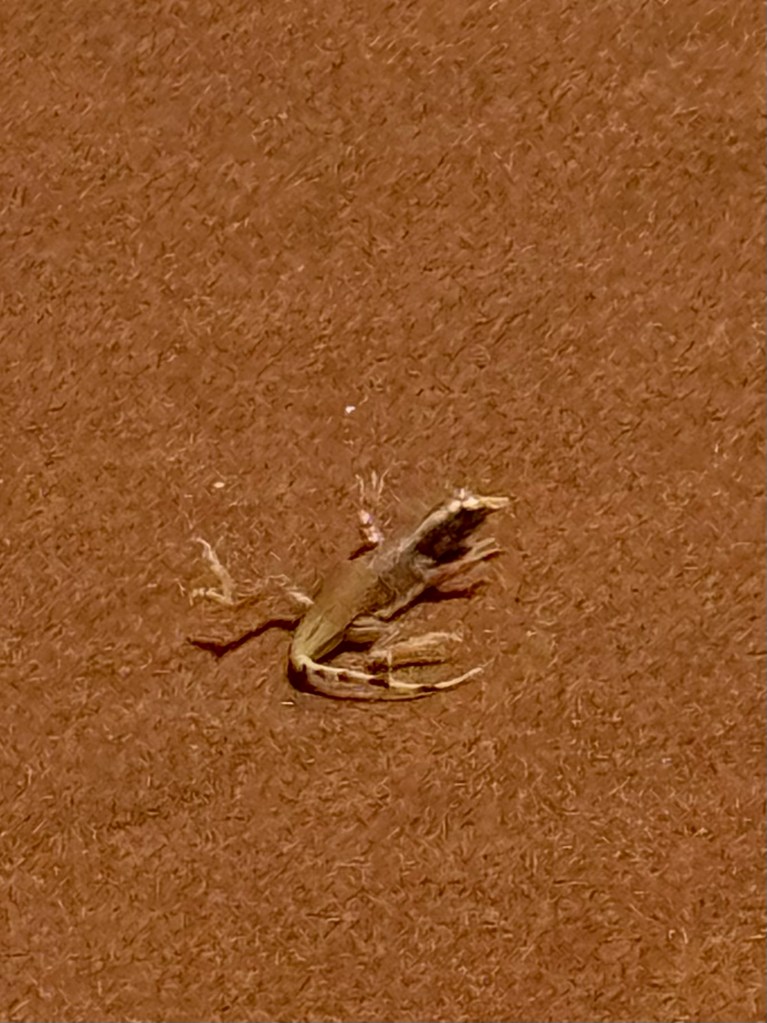
We spotted some small desert geckos, this one keeping it’s feet above the hot sand floor.
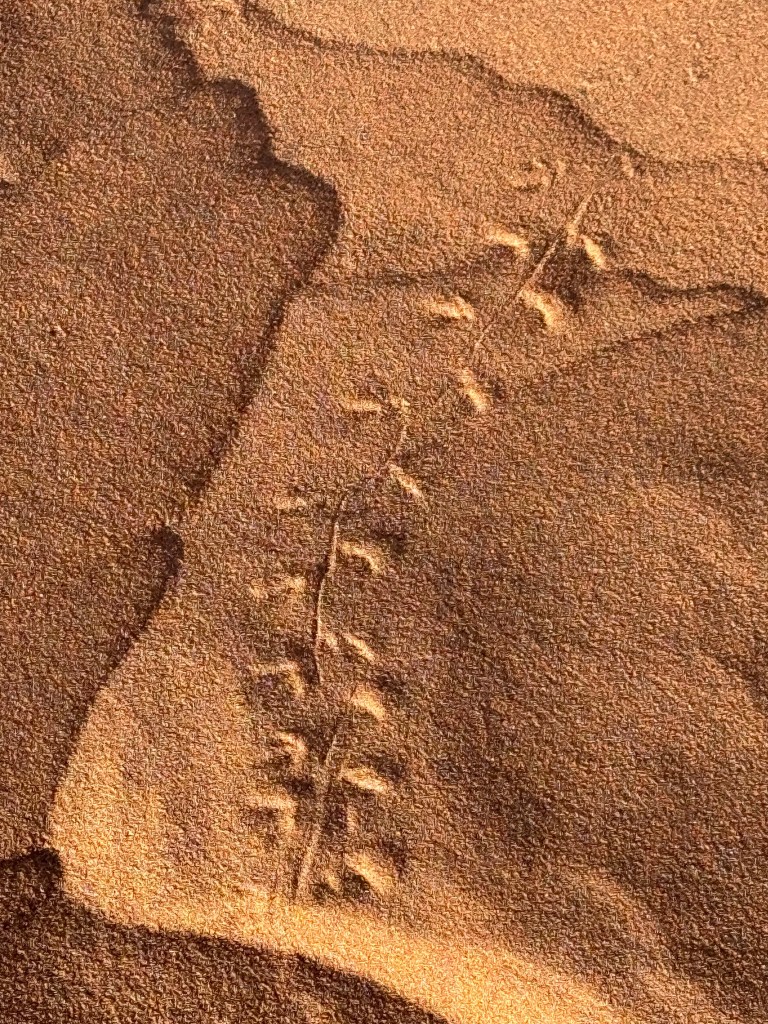
It’s walking trail below looks like a plant stem with leaves.
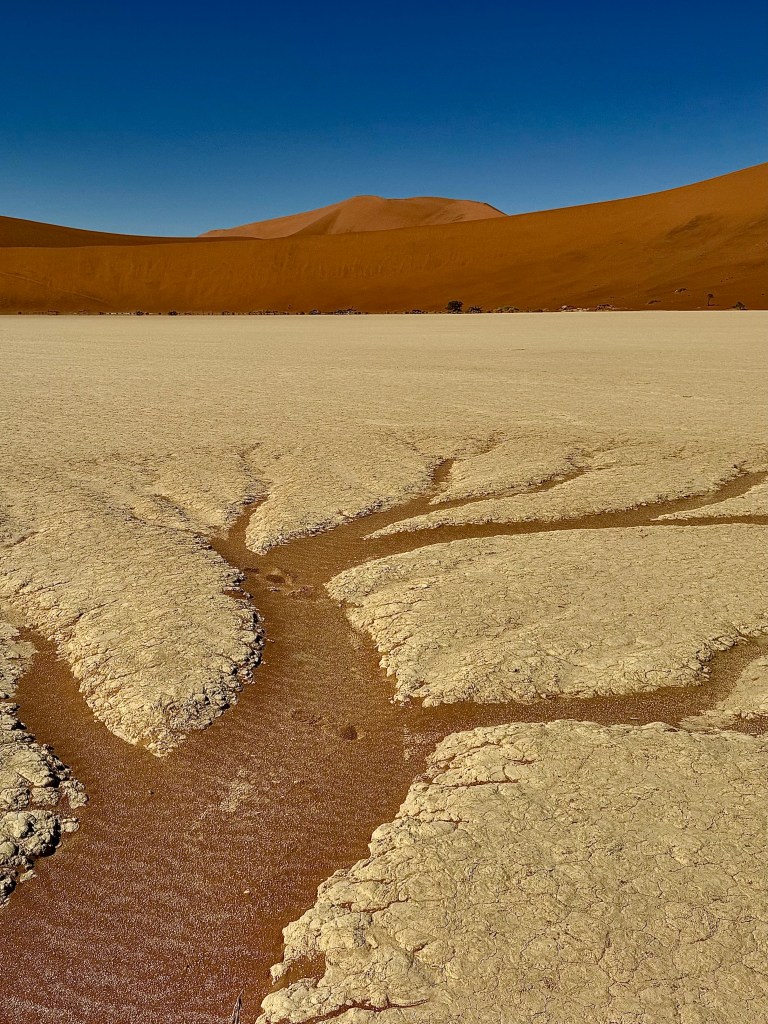
The colours here are not enhanced, it really is this dramatic.
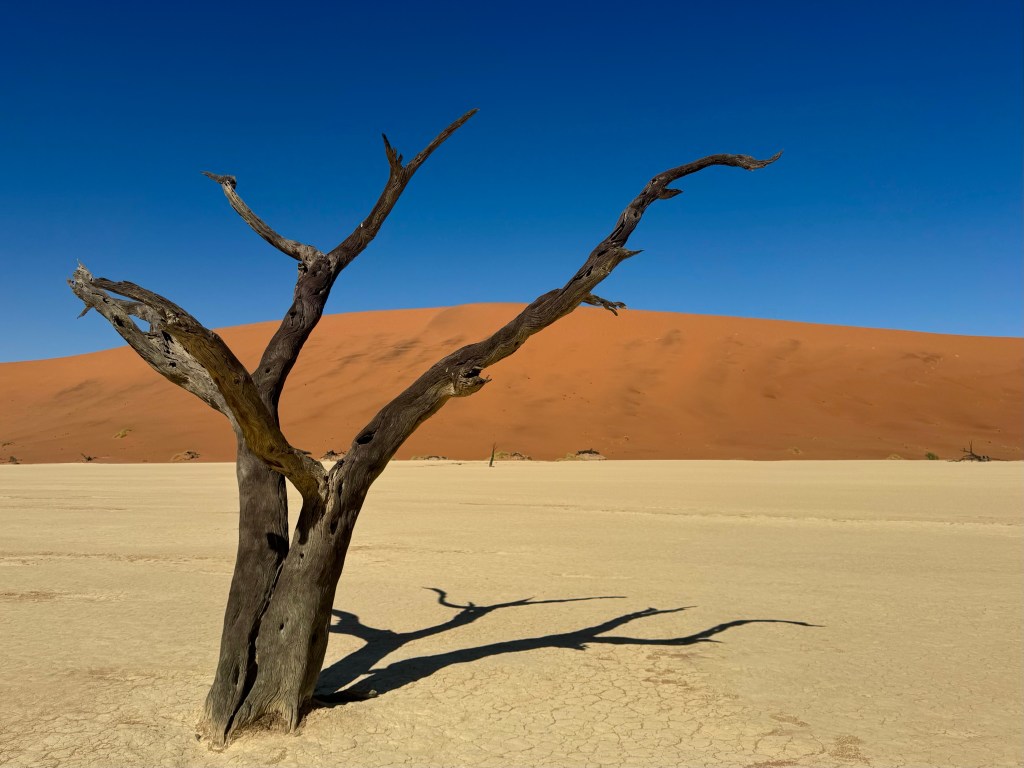
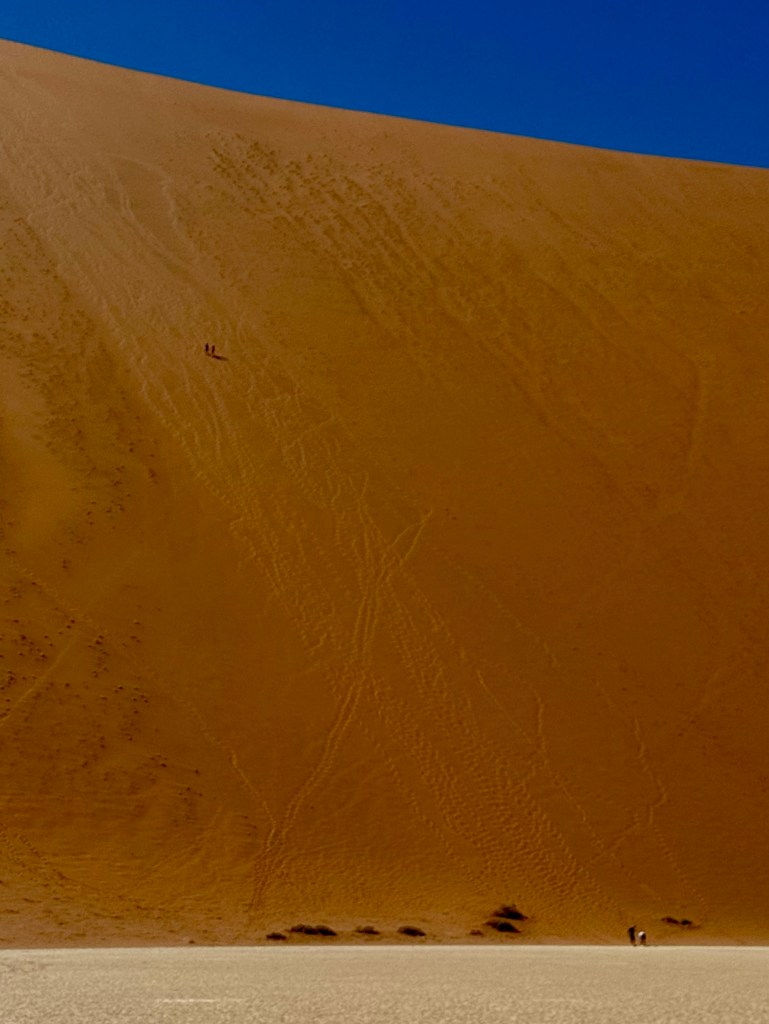
I added this picture to try and illustrate the scale of the sand dunes.
To the bottom right are two adults and towards the top left are two more traversing their way down.
This is our first proper stop in Namibia and it has surpassed all of our expectations, it truly is an exceptionally dramatic place.
Next we drive to the coastal town of Swakopmund to see where the sand dunes meet the Atlantic Ocean.
 Jeff's Travel And Photo Blog