We got back into the 4×4 for a five and a half hour drive from the desert to the coastal town of Swakopmund.
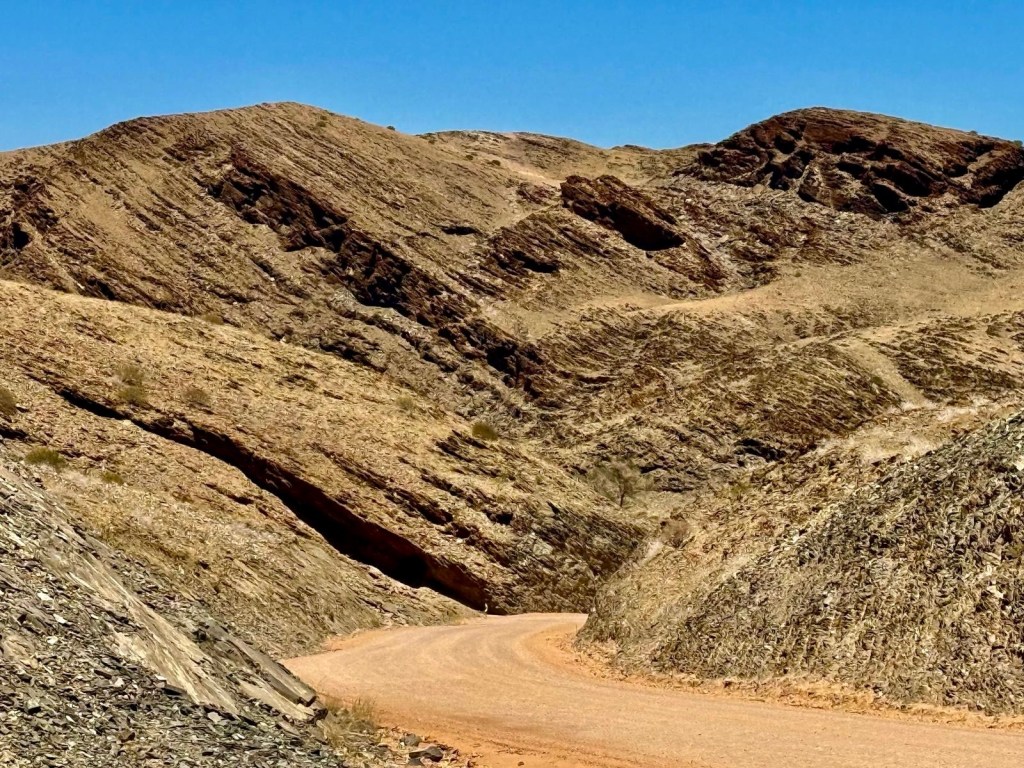
The drive provided plenty of the wonderful landscapes that we are becoming accustomed too in Namibia. And of course a few interesting moments on the gravel and sand based roads…
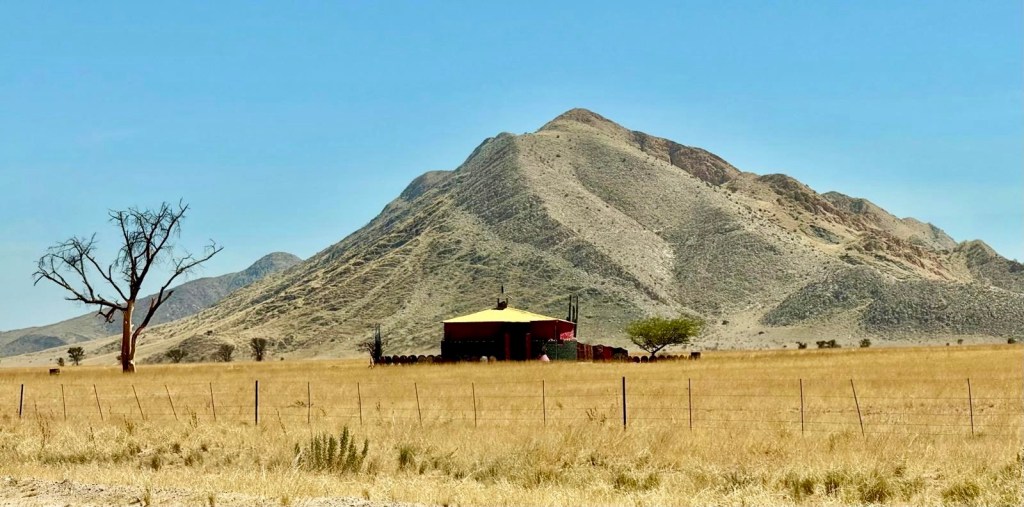
Along the way we stopped at a well known pit stop called McGregor’s Bakery in a town called Solitaire to fuel our journey.
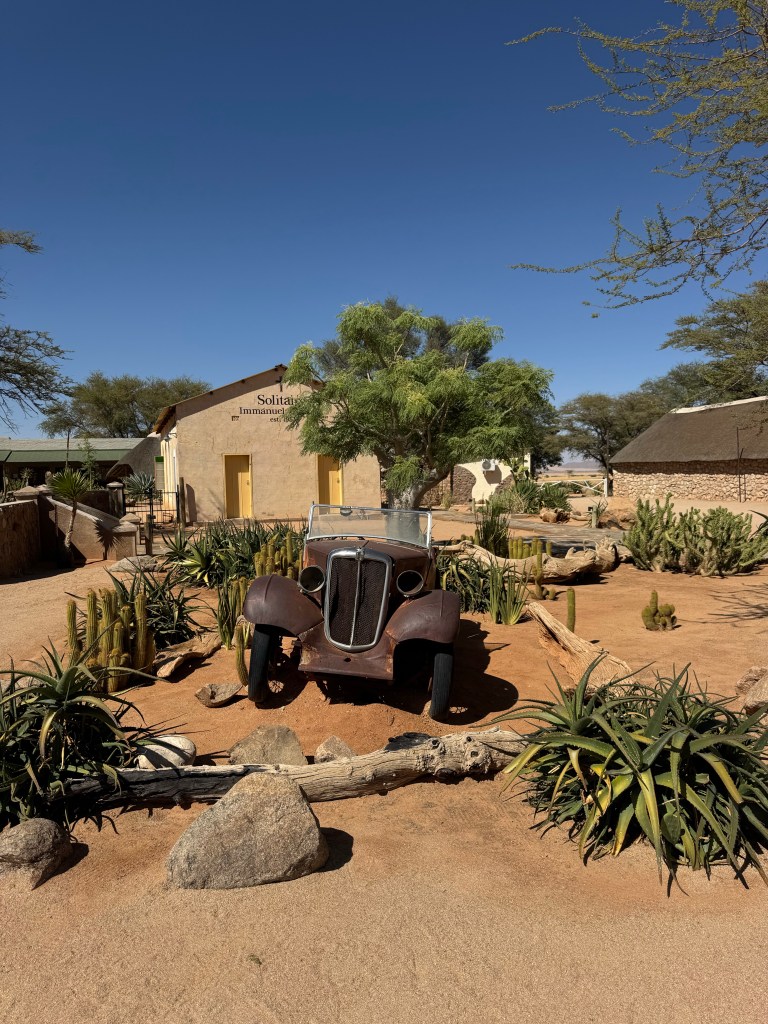
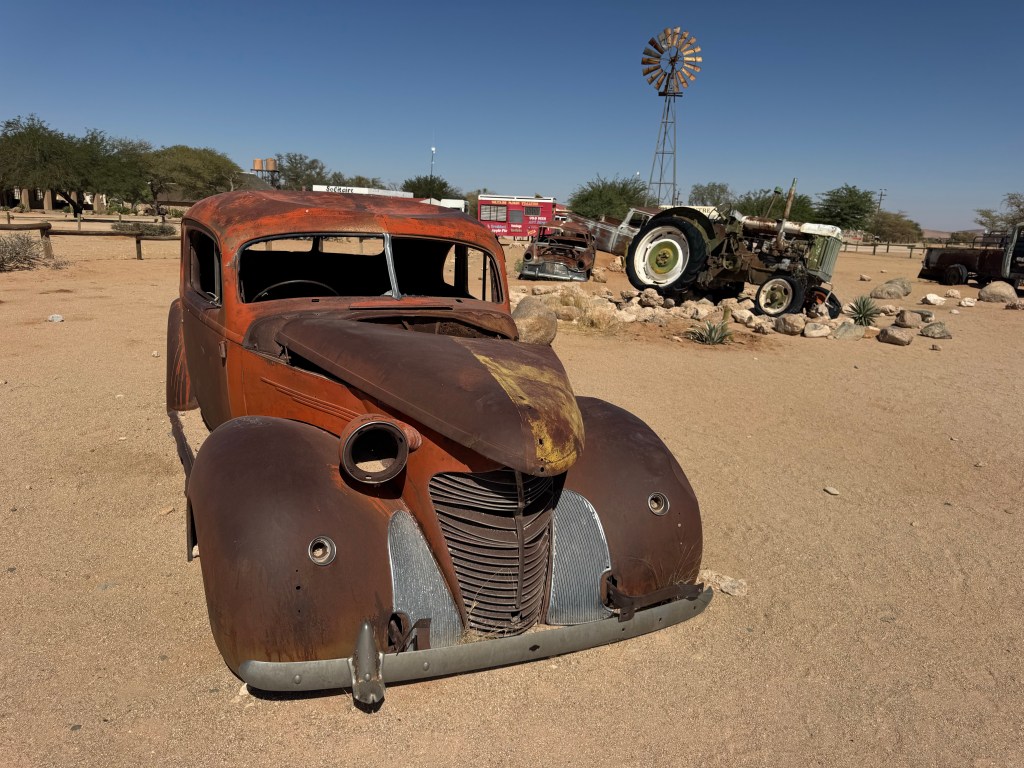
Old vehicles were on display there but I focused on my newly purchased pies!
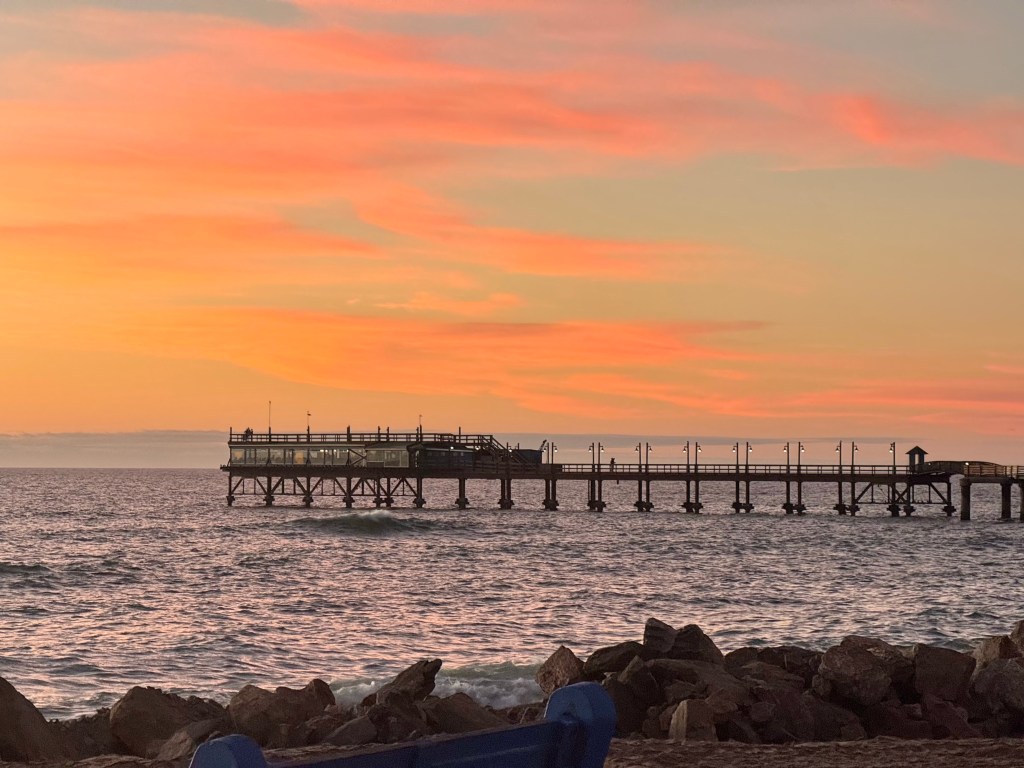
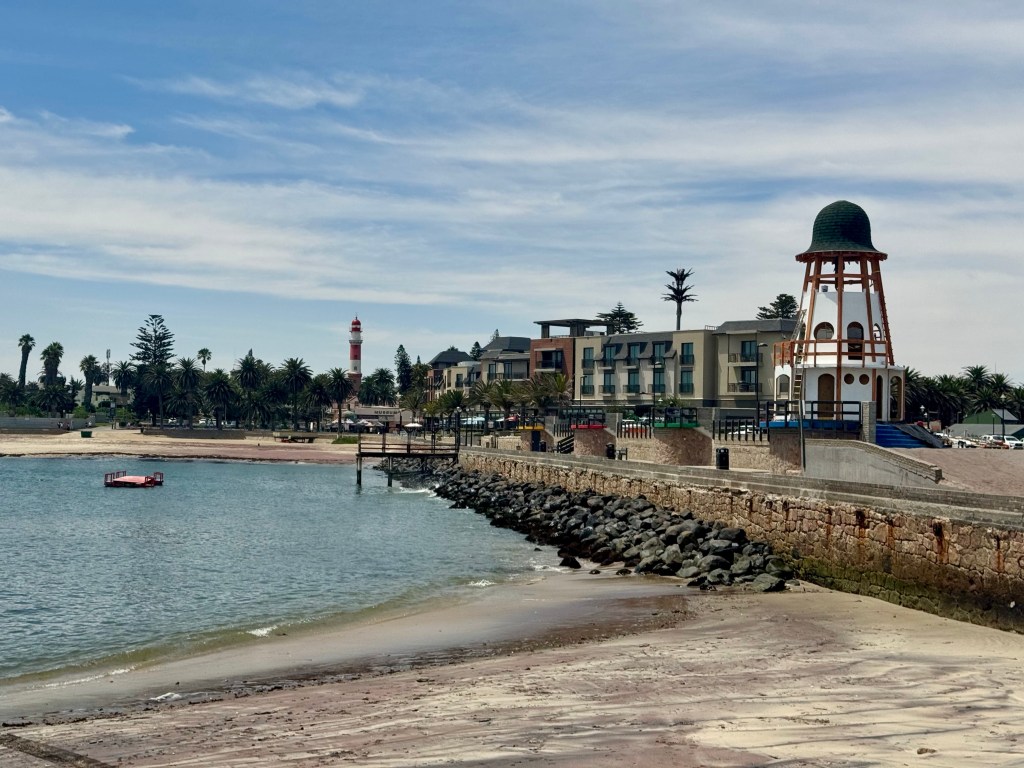
Swakopmund sits next to the Atlantic Ocean and the weather changed from the hot and dry desert heat to an easier sea breeze cooled temperature.
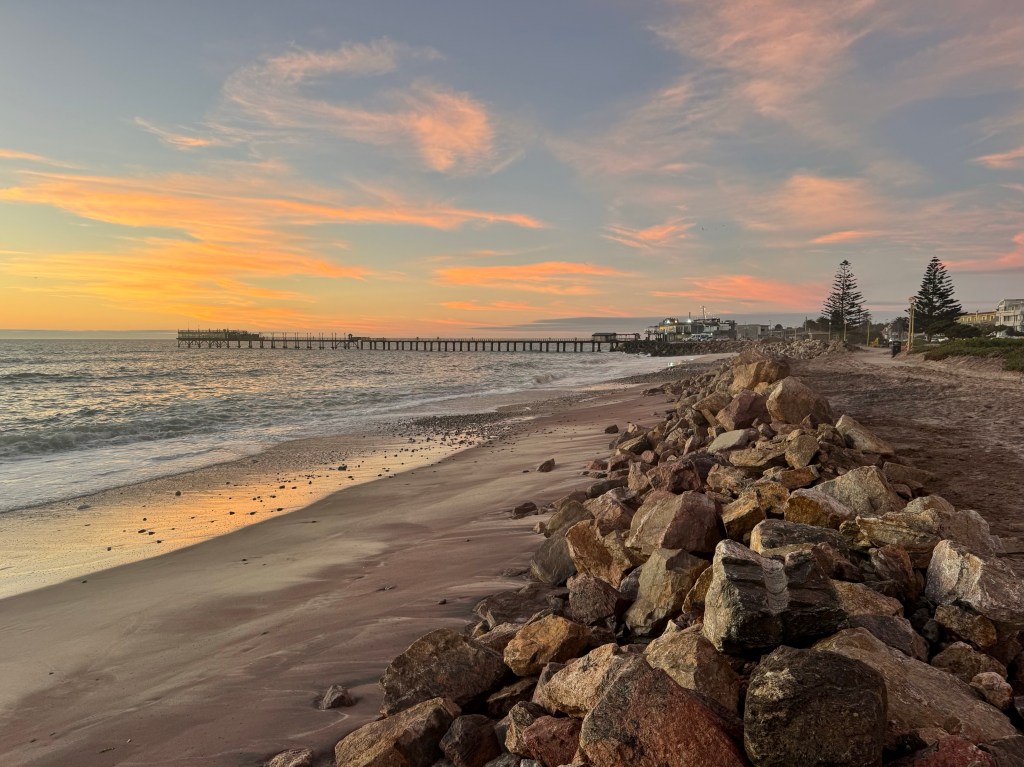
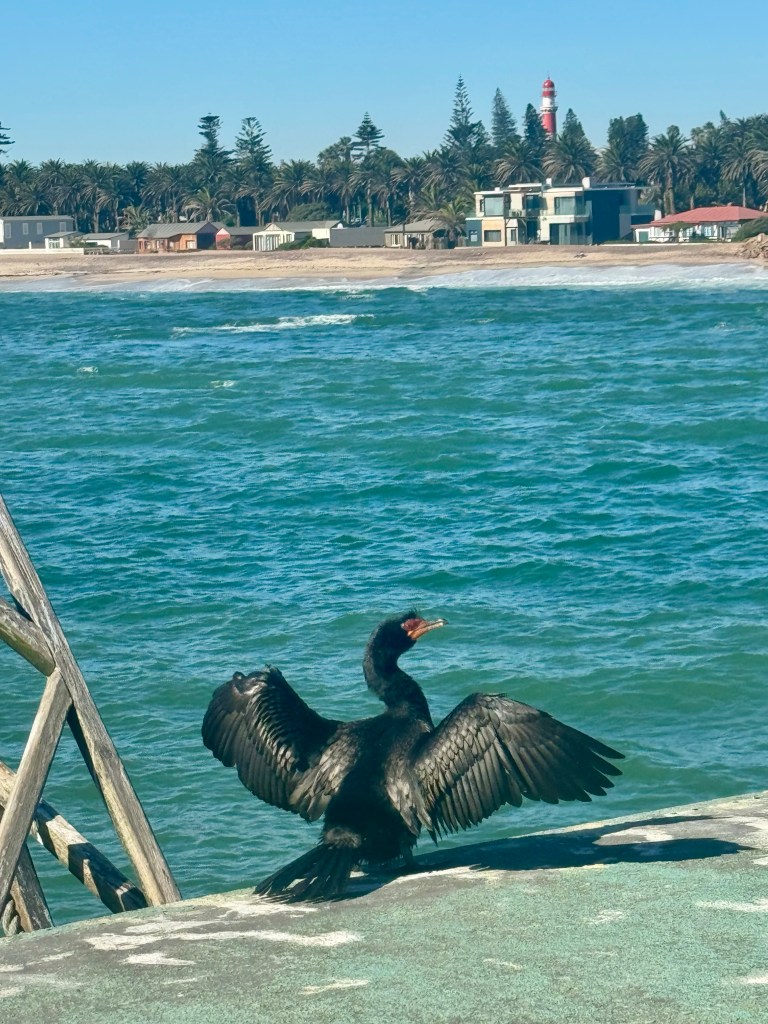
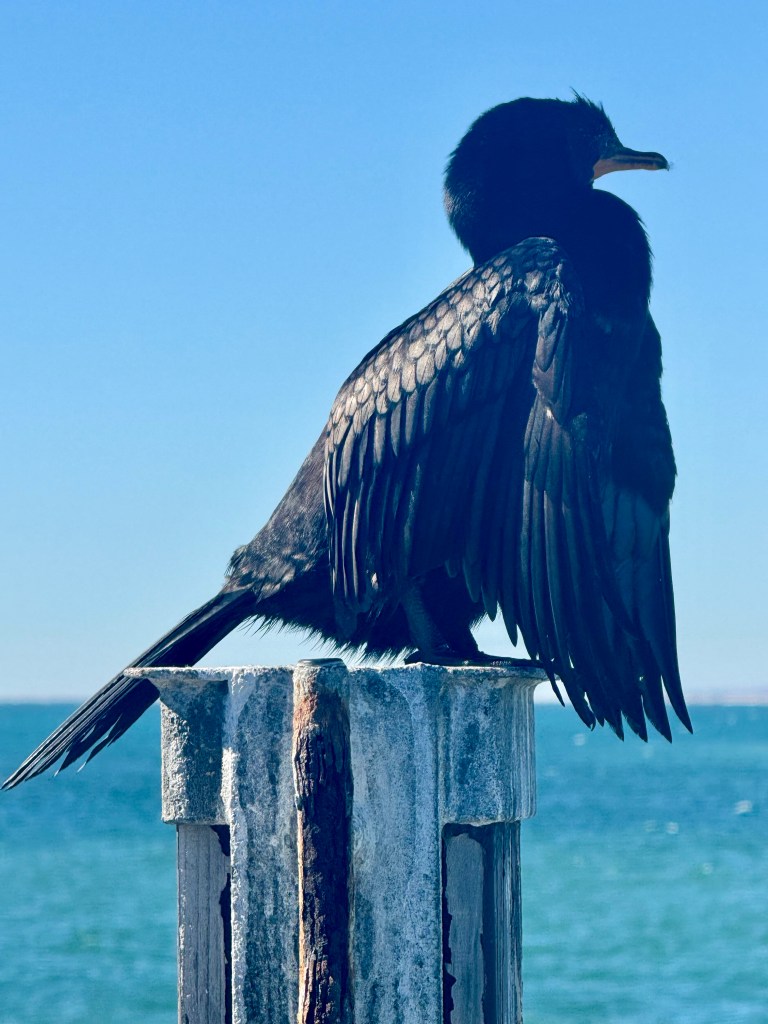
There were lots of Cormorants resting on the jetty, apparently their feathers are not waterproof and so they spend a lot of time with their wings stretched out to dry them.
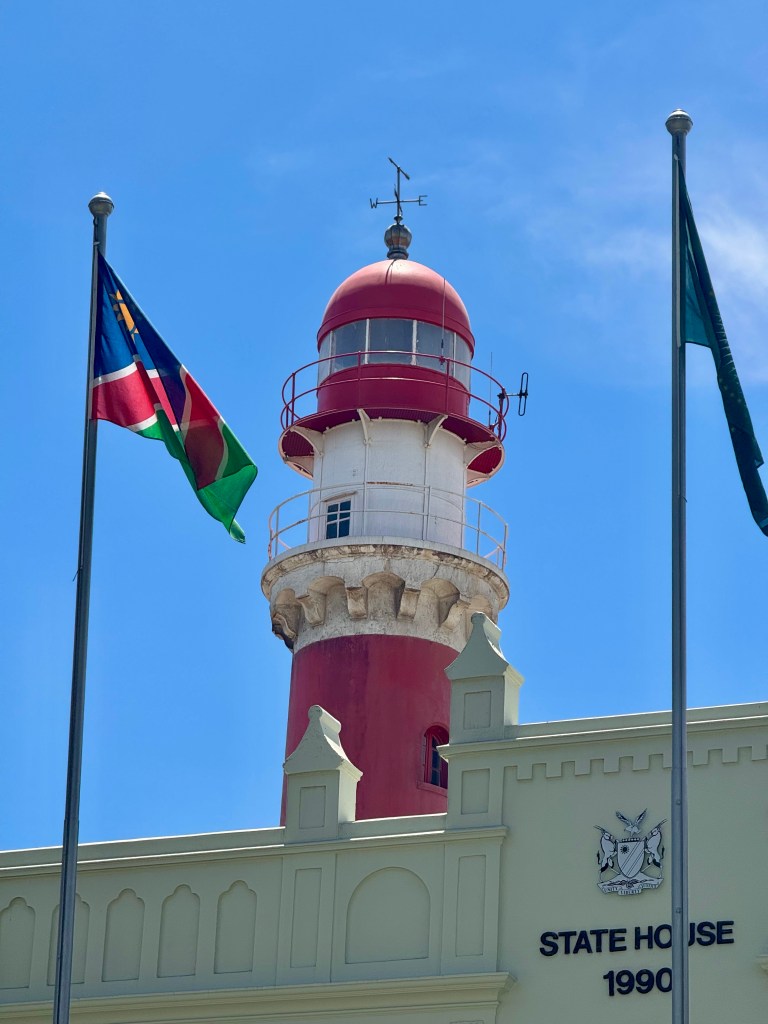
The German influence is clear, from the town’s architecture to the restaurants and bars.
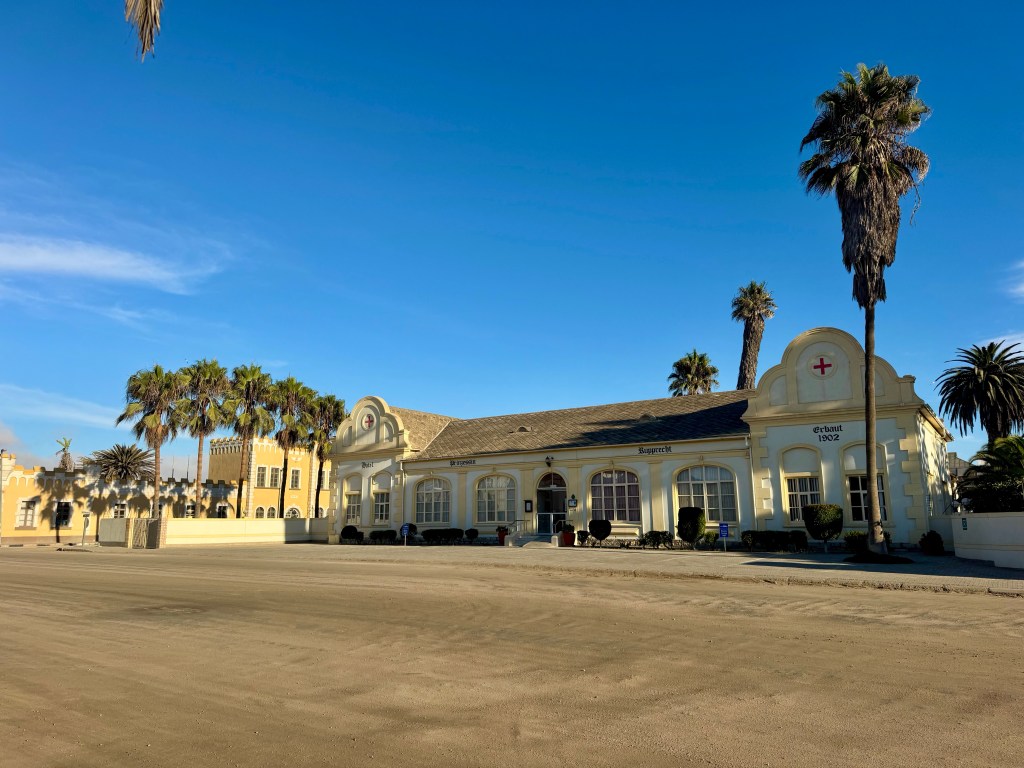
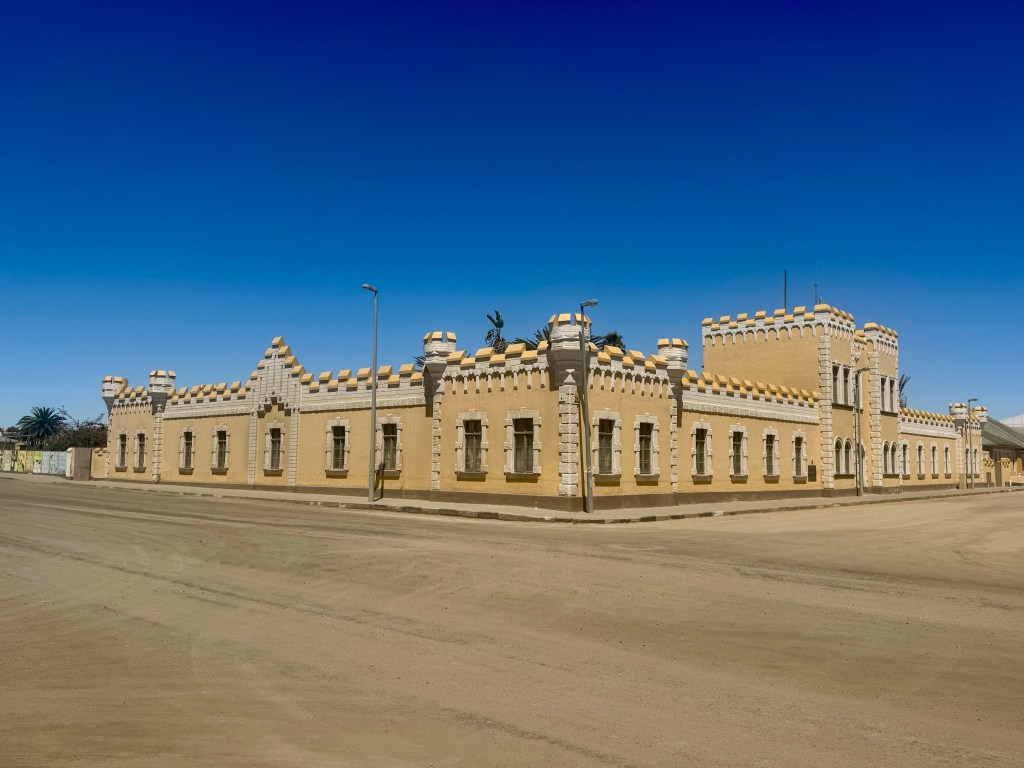
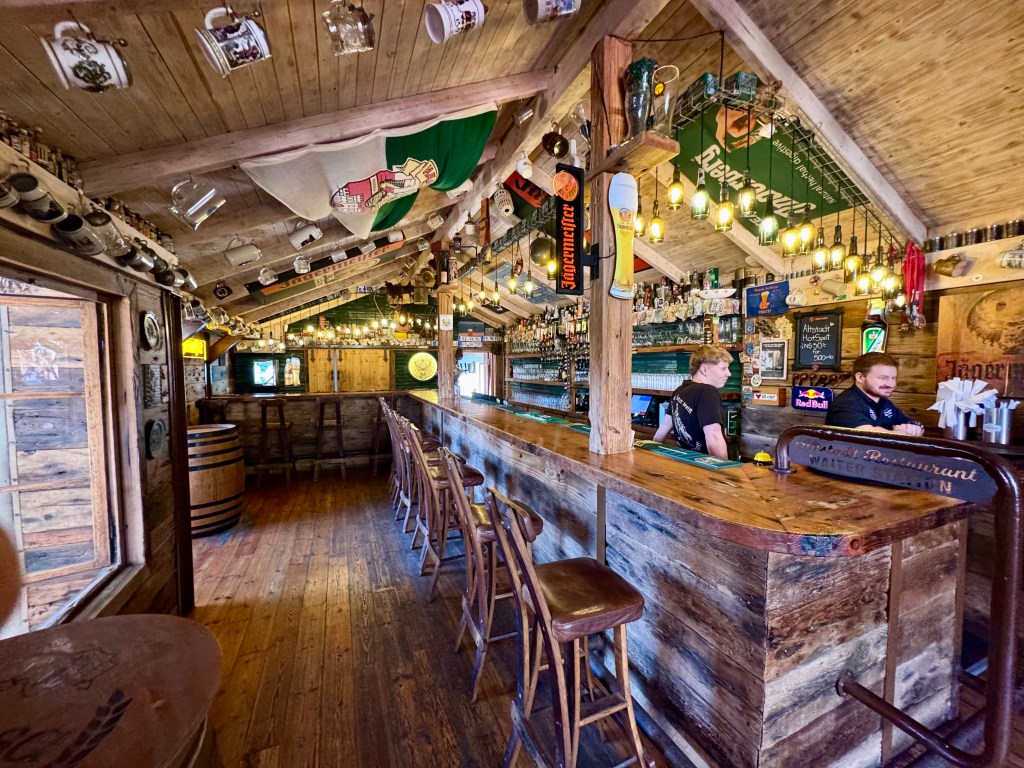
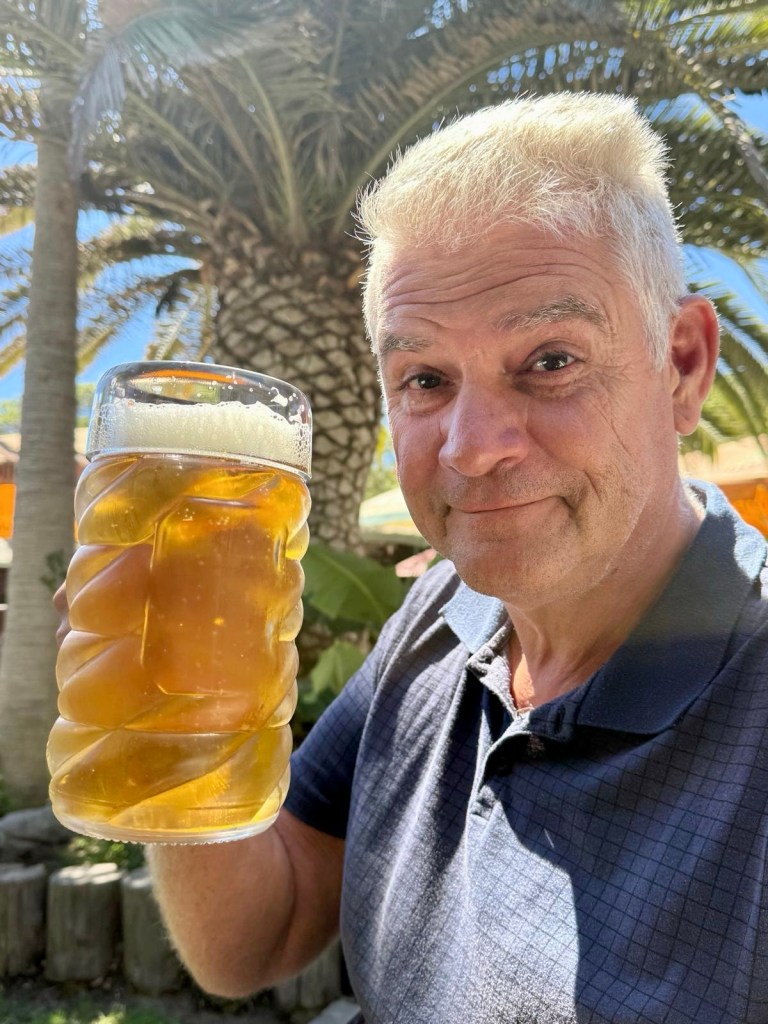
We found a fabulous German bar in town.
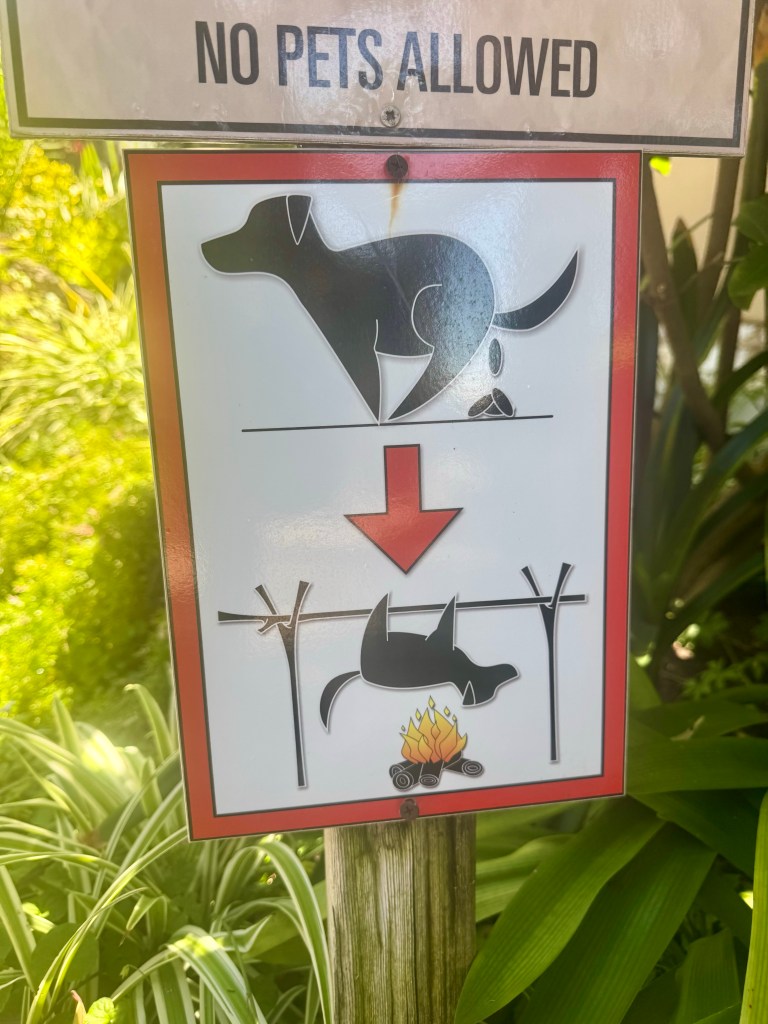
With some interesting signage.
As a part time traveler it is important to immerse yourself in the local culture!
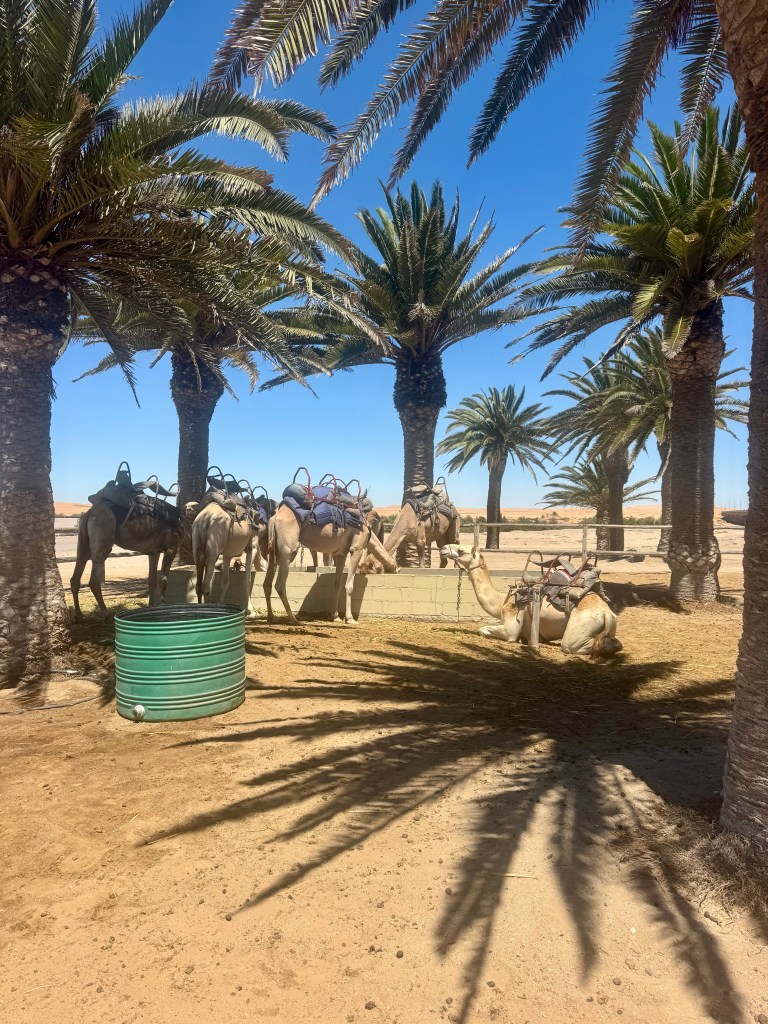
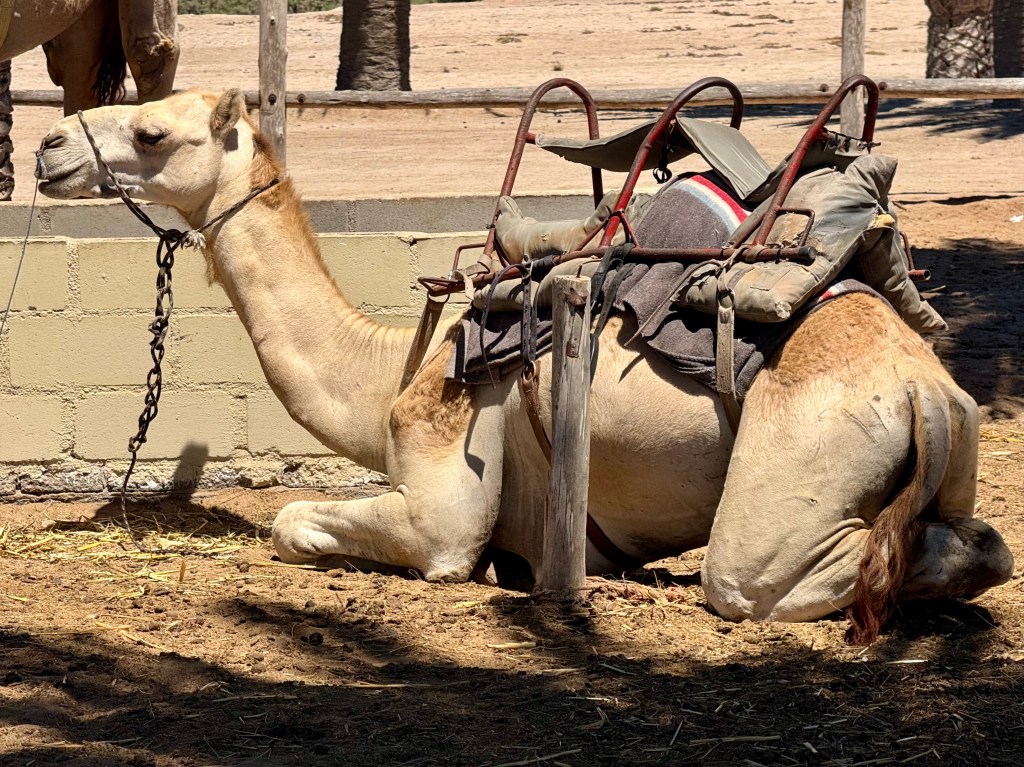
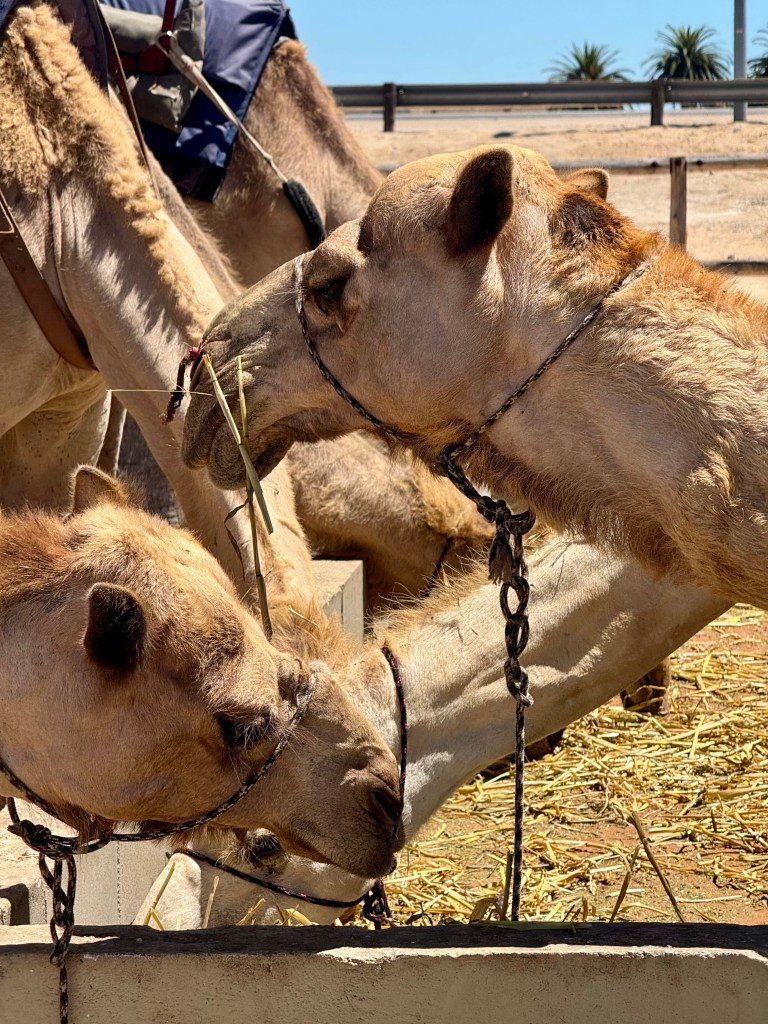
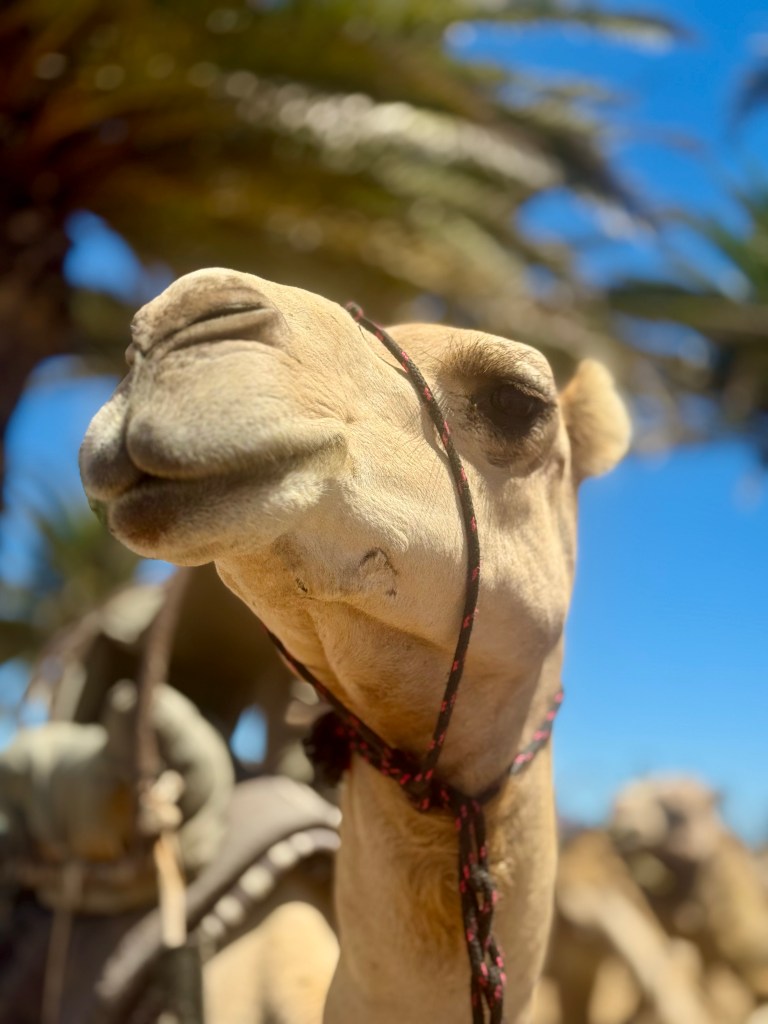
Just outside the main town is a Camel ride activity centre, no riding for us, but we thought we would take some photos.
Not too far from Swakopmund is a town called Walvis Bay, this is where the tours to Sandwich Harbour start.
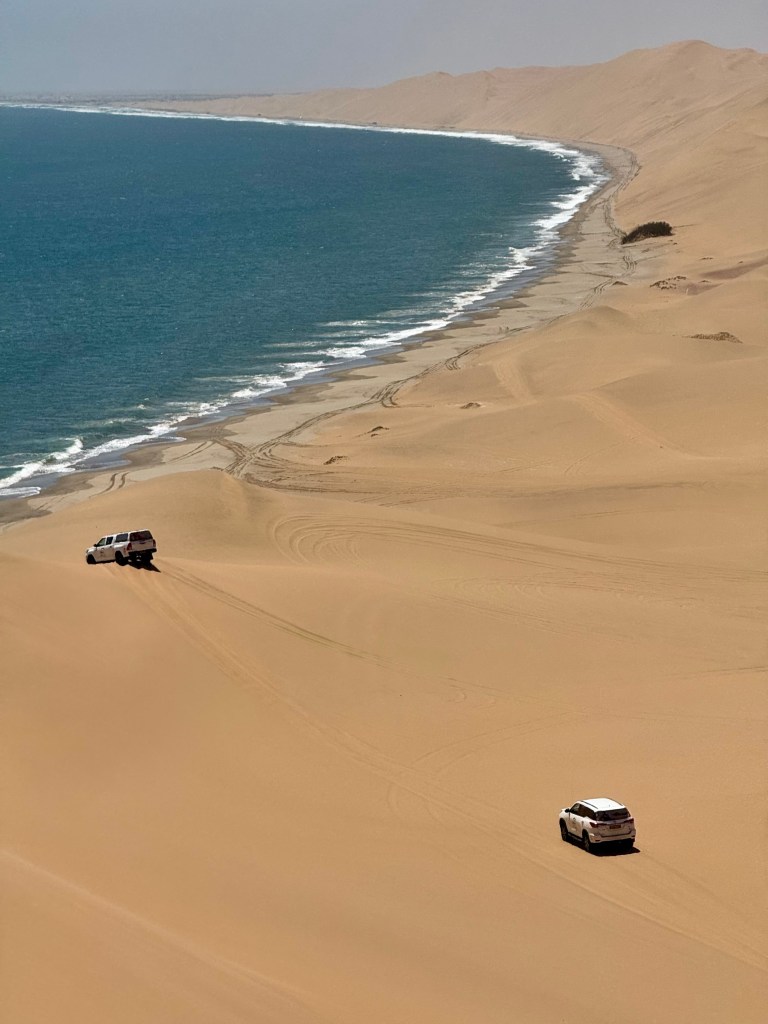
The tours specialise on driving along the beach and up onto the sand dunes that run to the water’s edge.
Along the way you pass a salt mine.
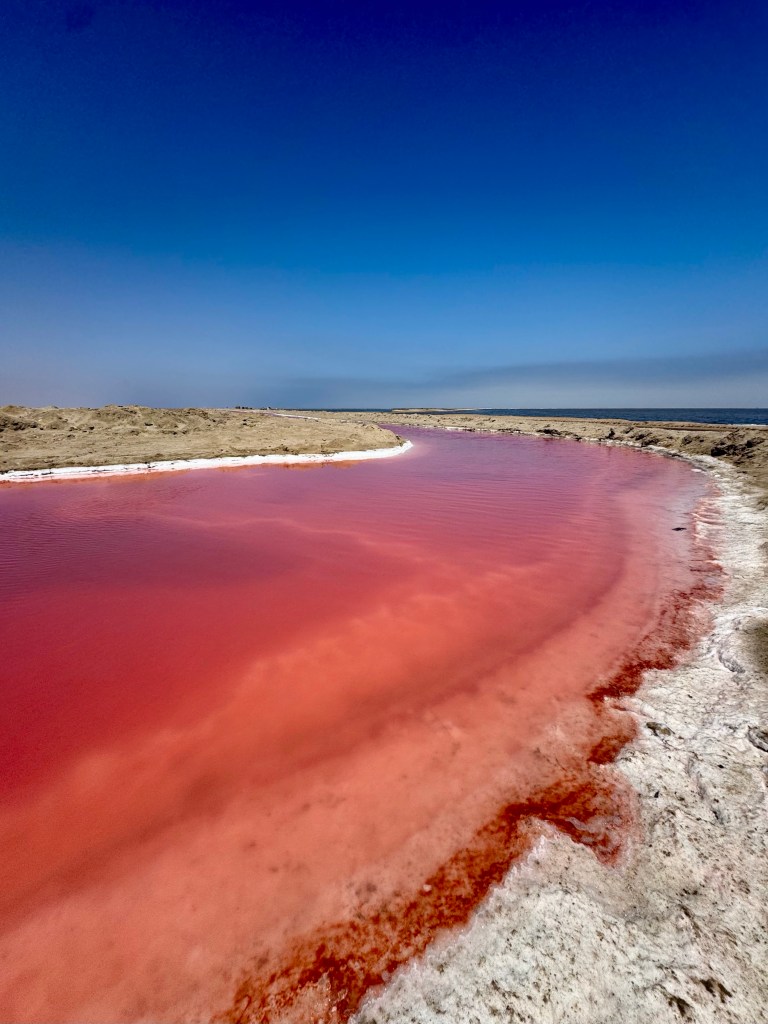
The red colour of these man made salt ponds is produced by salt tolerant bacteria and algae.
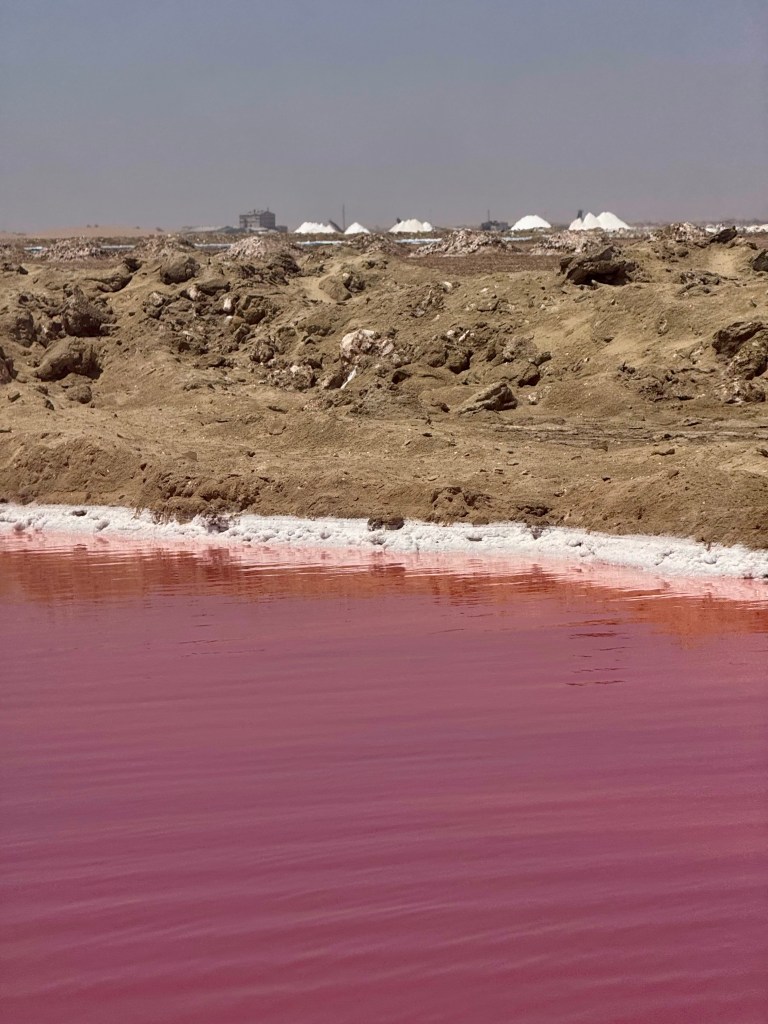
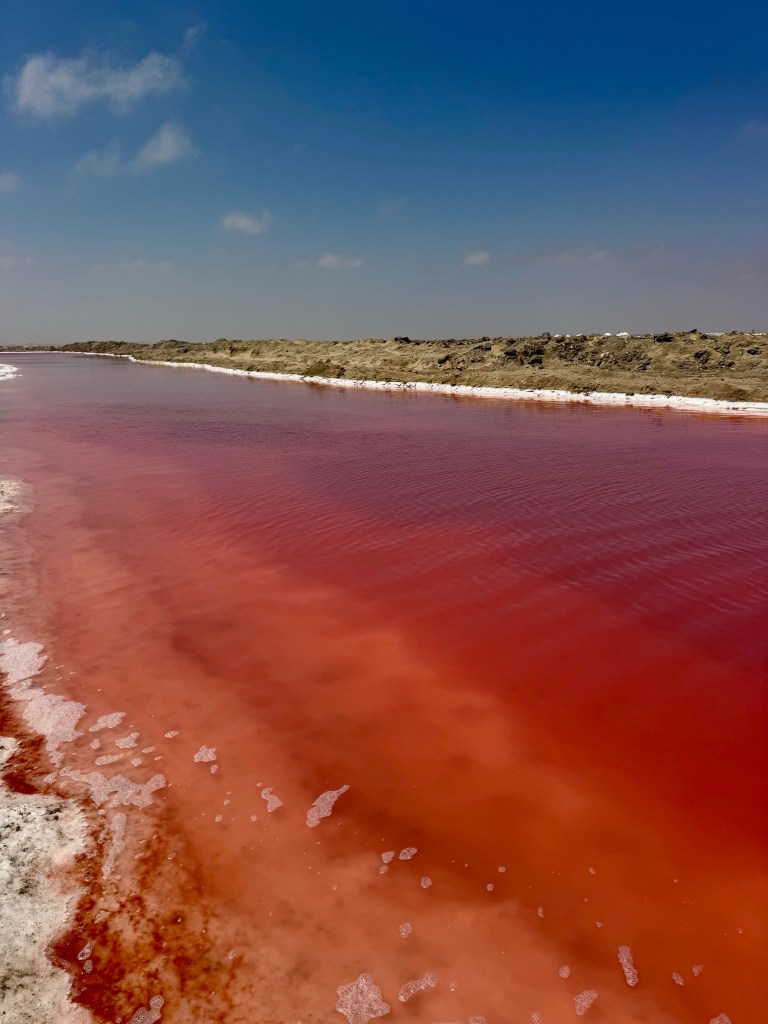
Here is where your table salt is produced.
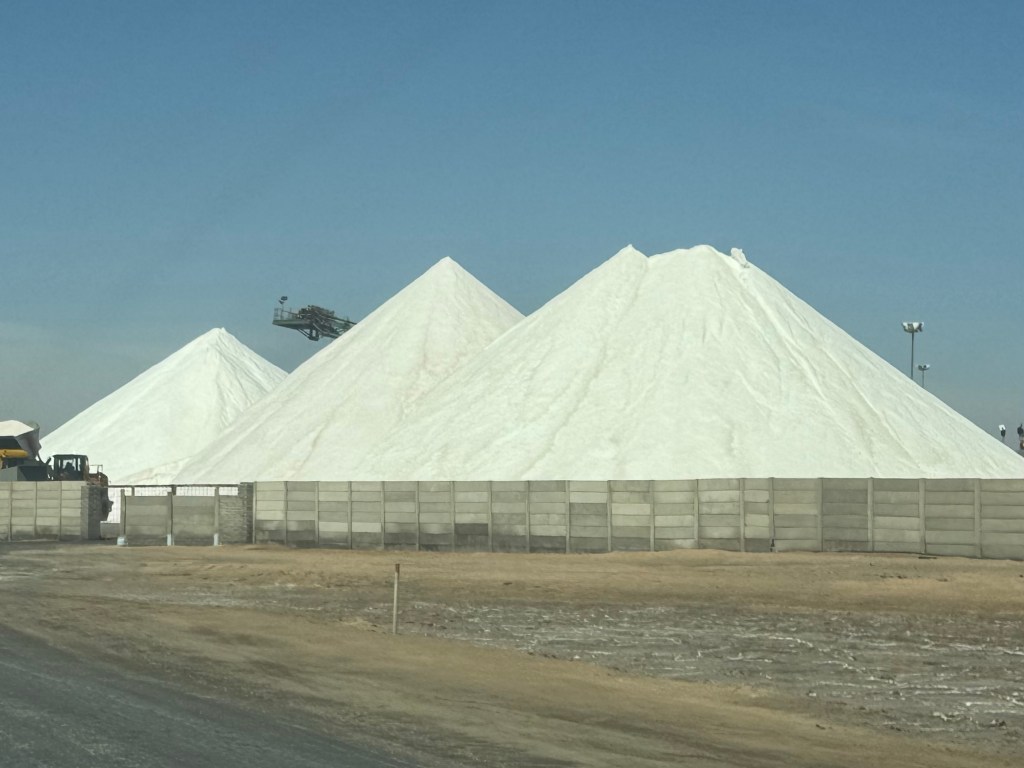
Onward we went to the main event.
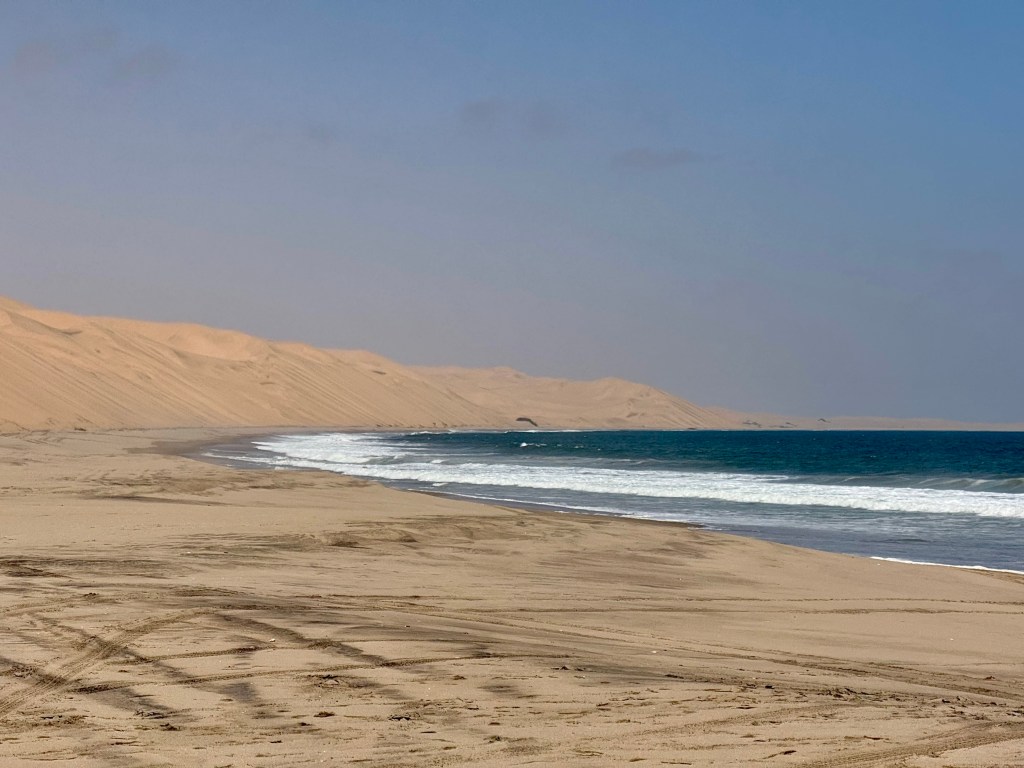
Some sections of the beaches show a pink/red colour too. This is due to iron oxidation (rust) of some of the iron rich sand content.
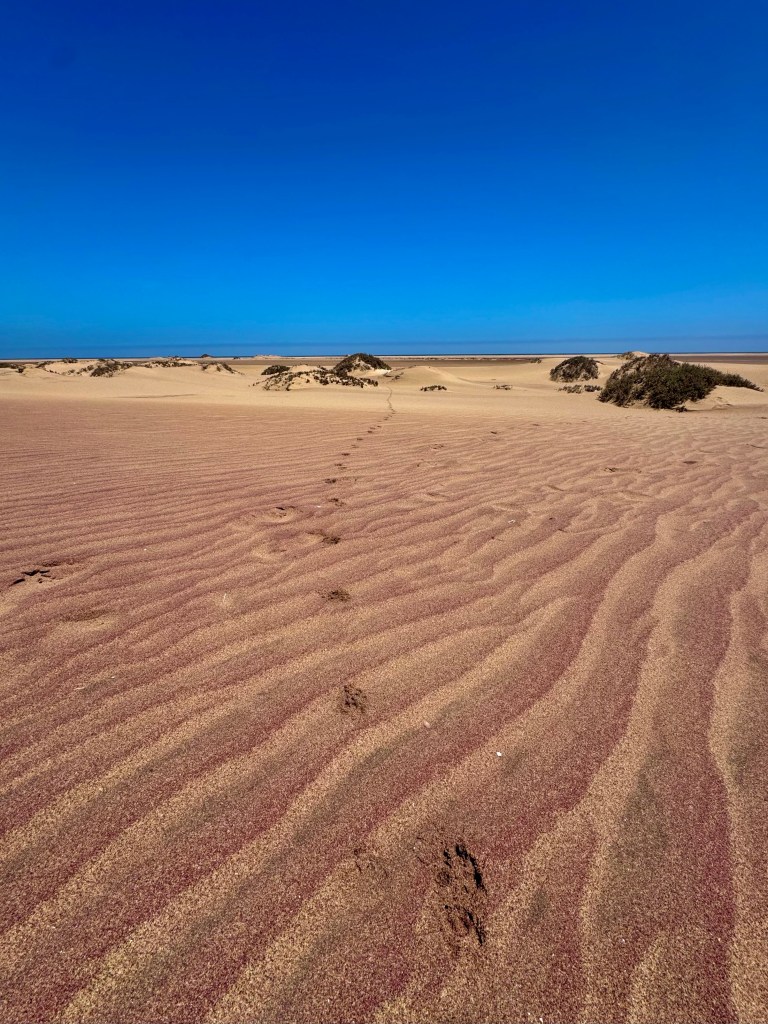
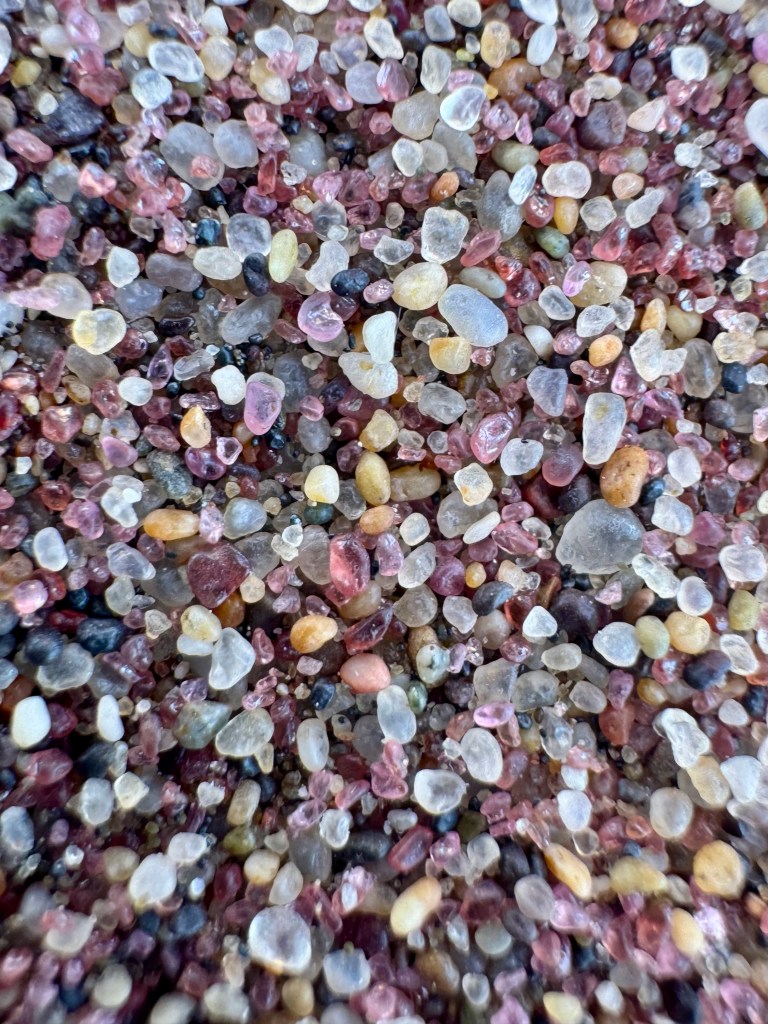
A closer look at the sand shows its complex make up. People have also found semi-precious stones here too.
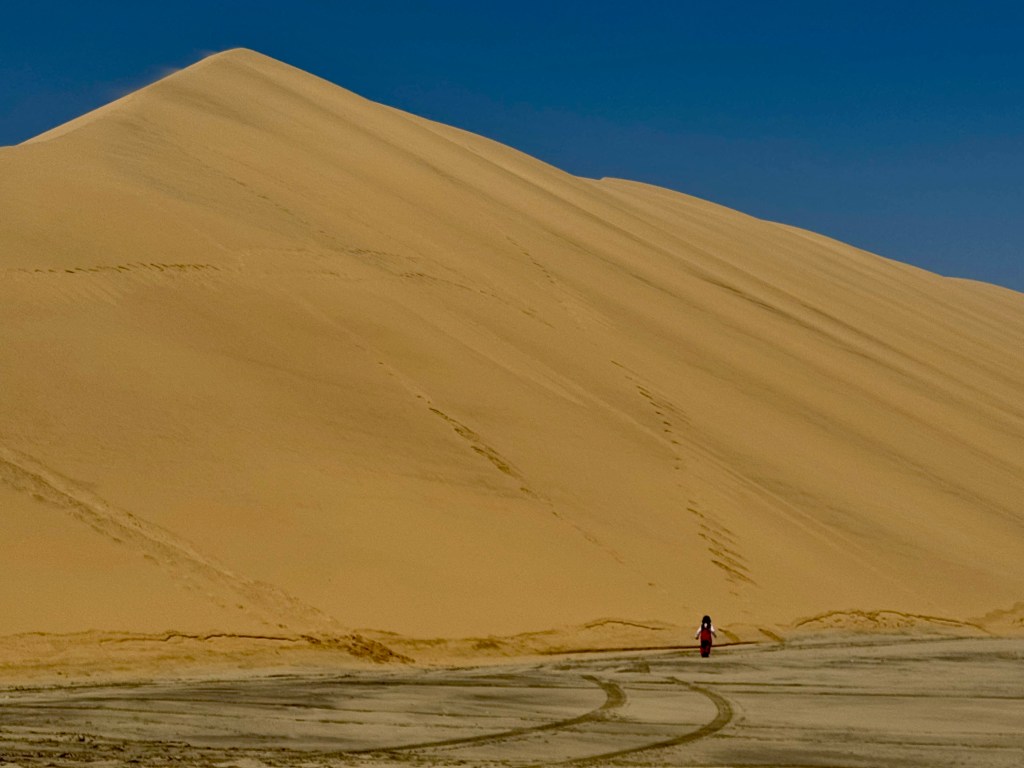
To illustrate the size of the dunes, see the young girl walking beneath one below.
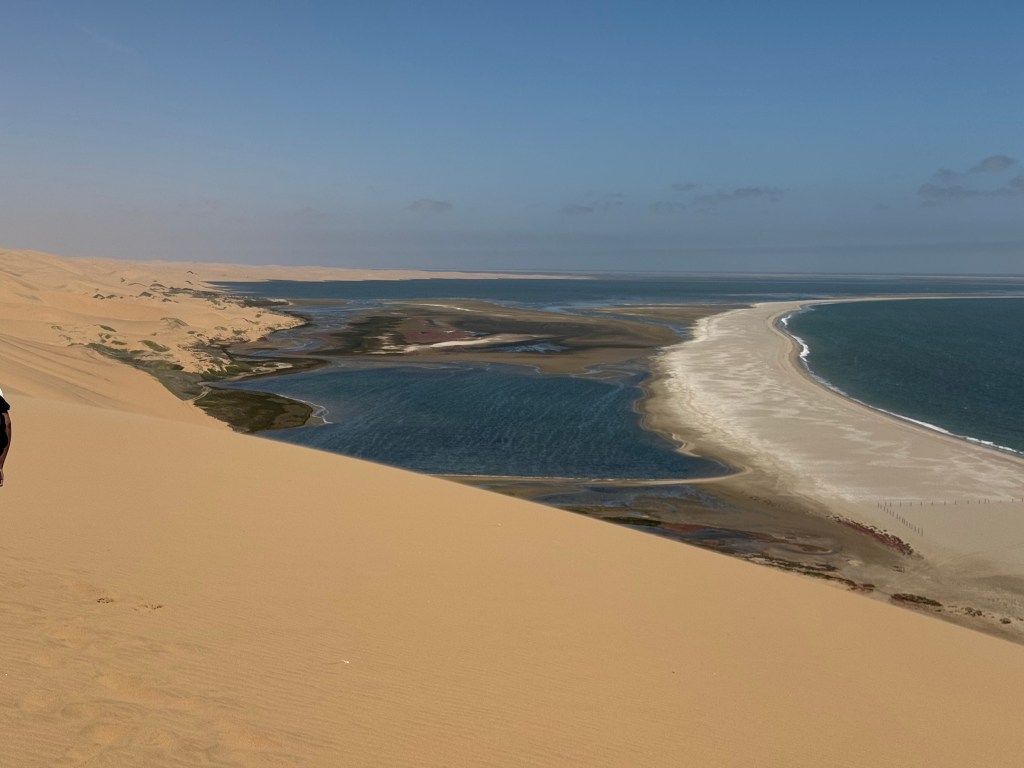
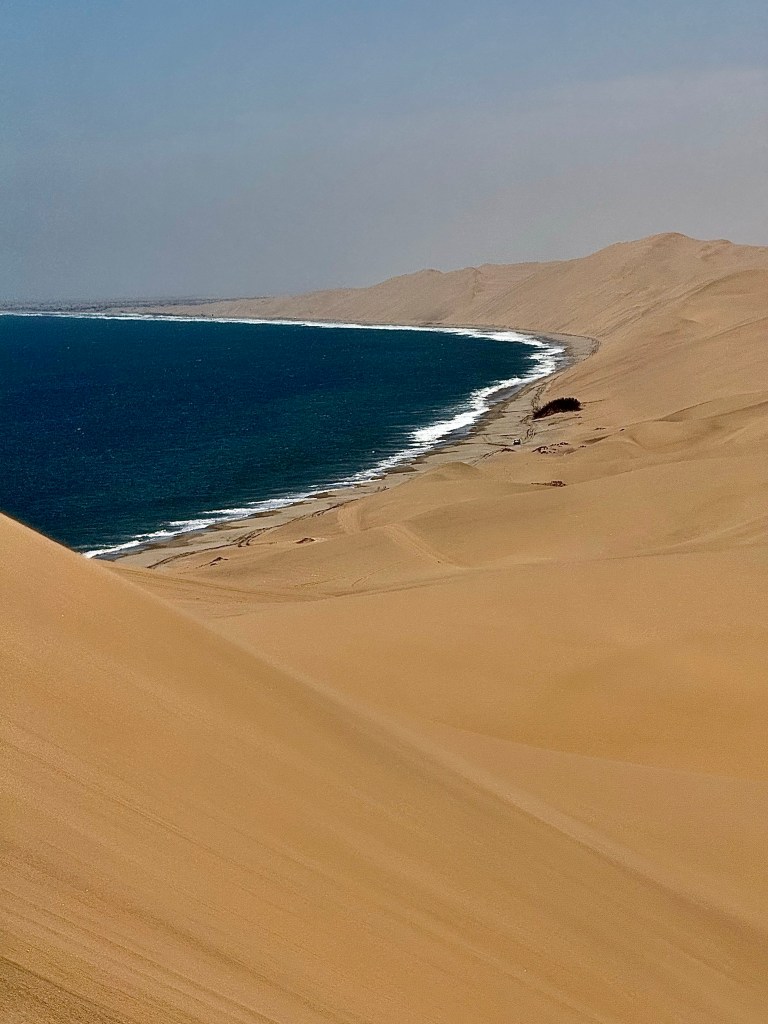
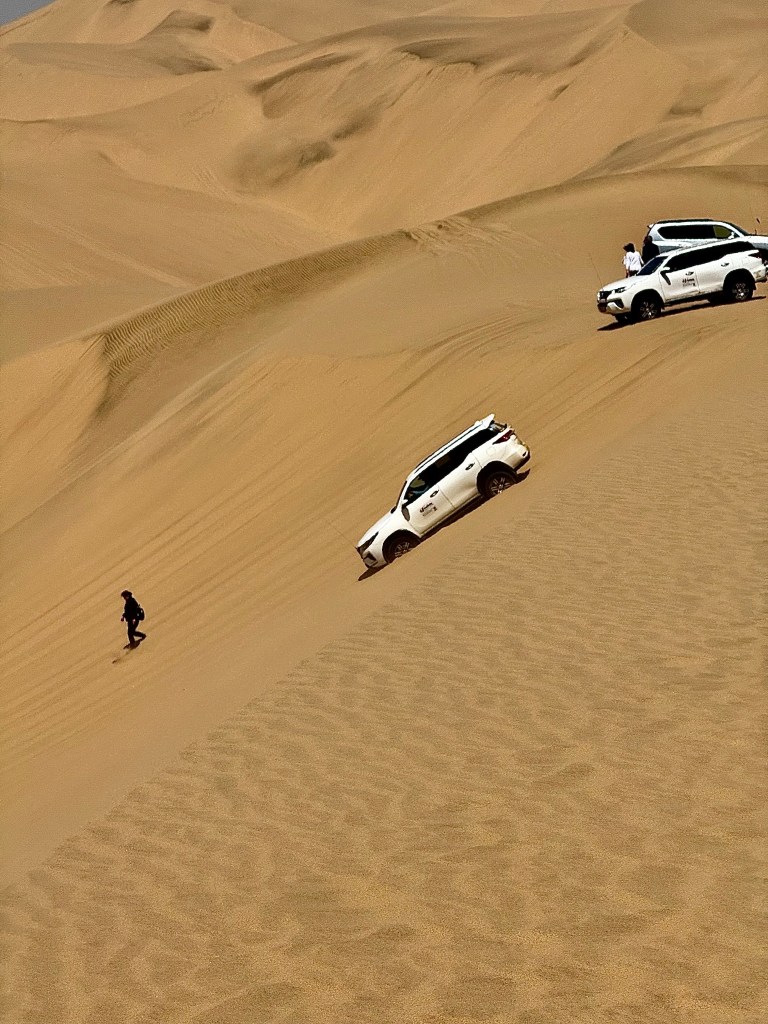
The experienced drivers take pleasure in scaring their passengers by plunging down the edges of these massive sand dunes. Some prefer to walk this bit!
We spotted some wildlife on this tour too.
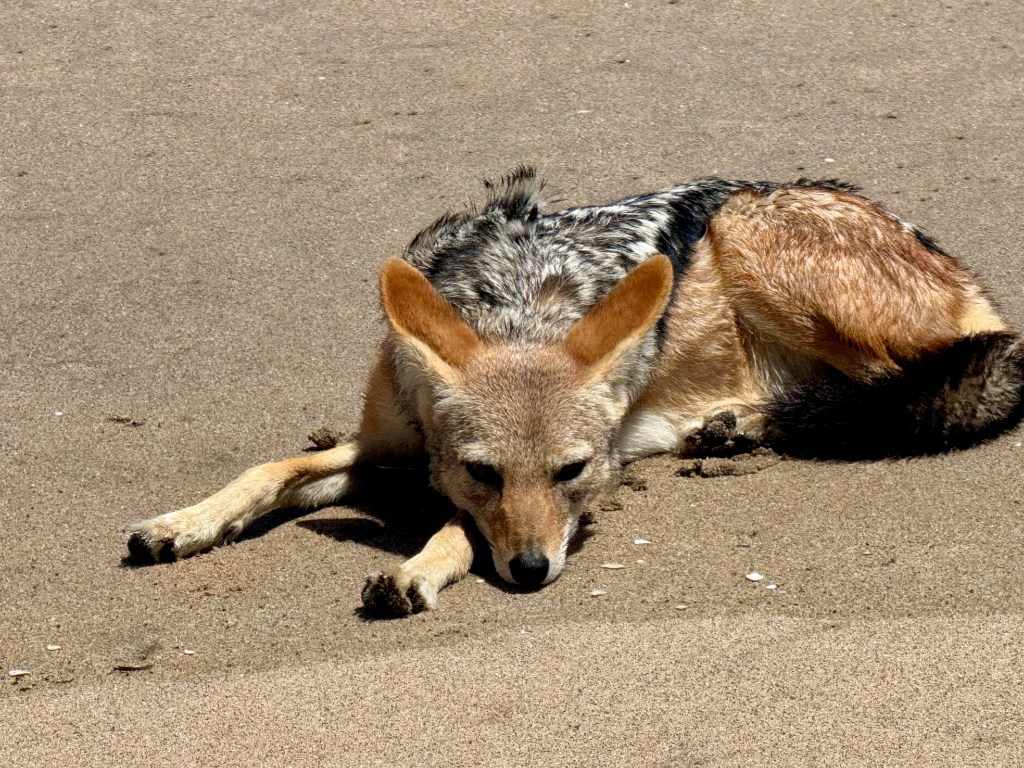
Below a Jackal rests on the beach as we drive by.
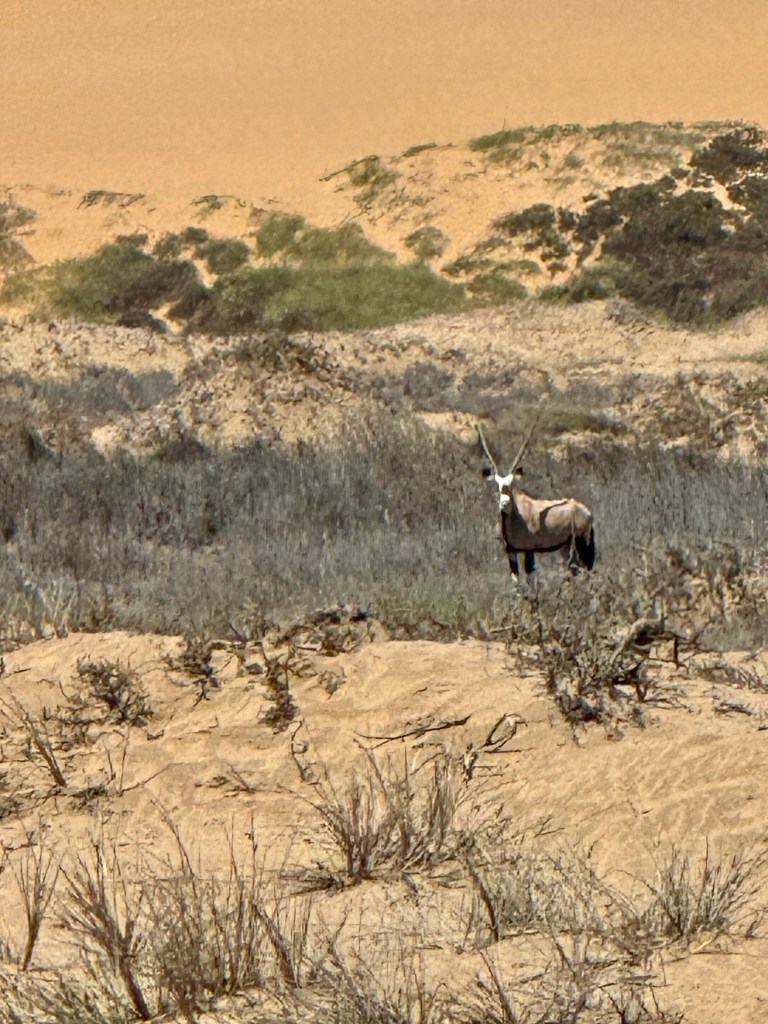
An Oryx checks us out from afar below.
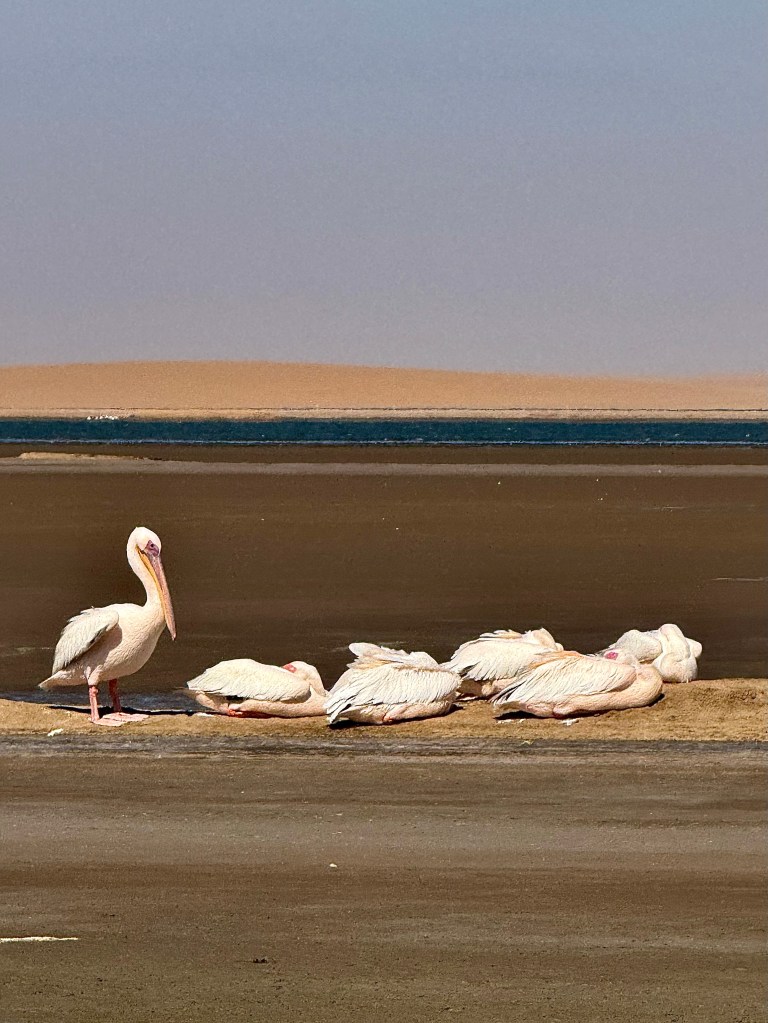
There are Pelicans and Flamingos here too.
The coast north of Swakopmund is named the Skeleton Coast. Named to reflect the number of seal and whale skeletons that are found here.
Below is a strange human skeleton arrangement of non human bones, arranged together to attract us visitors.
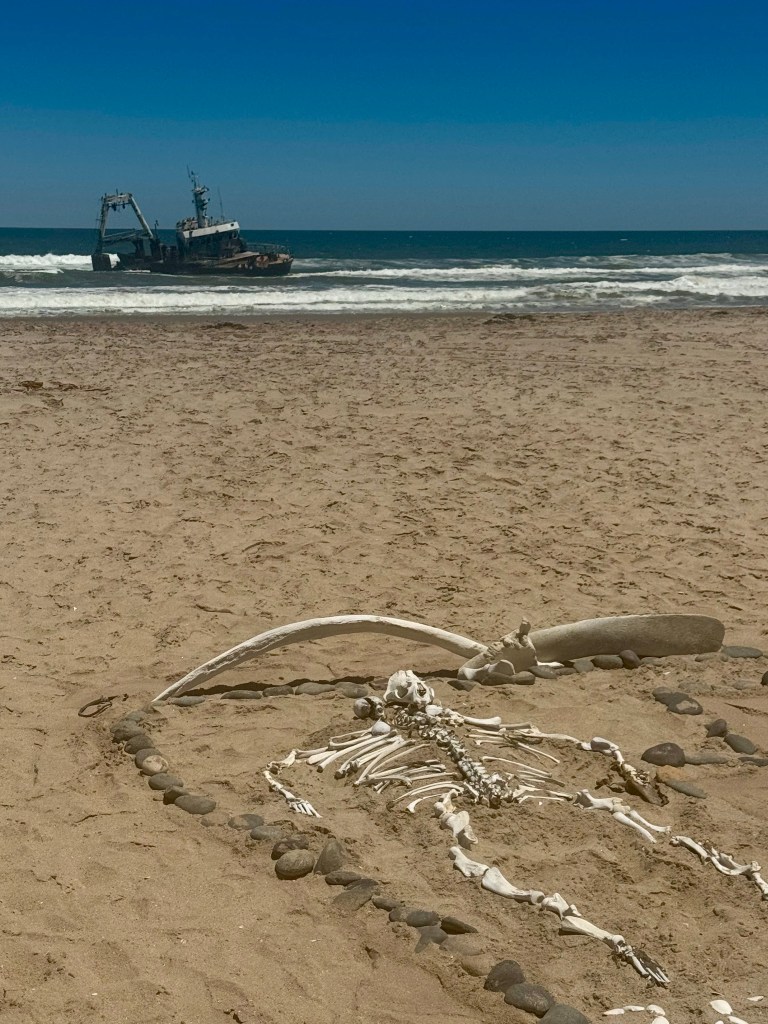
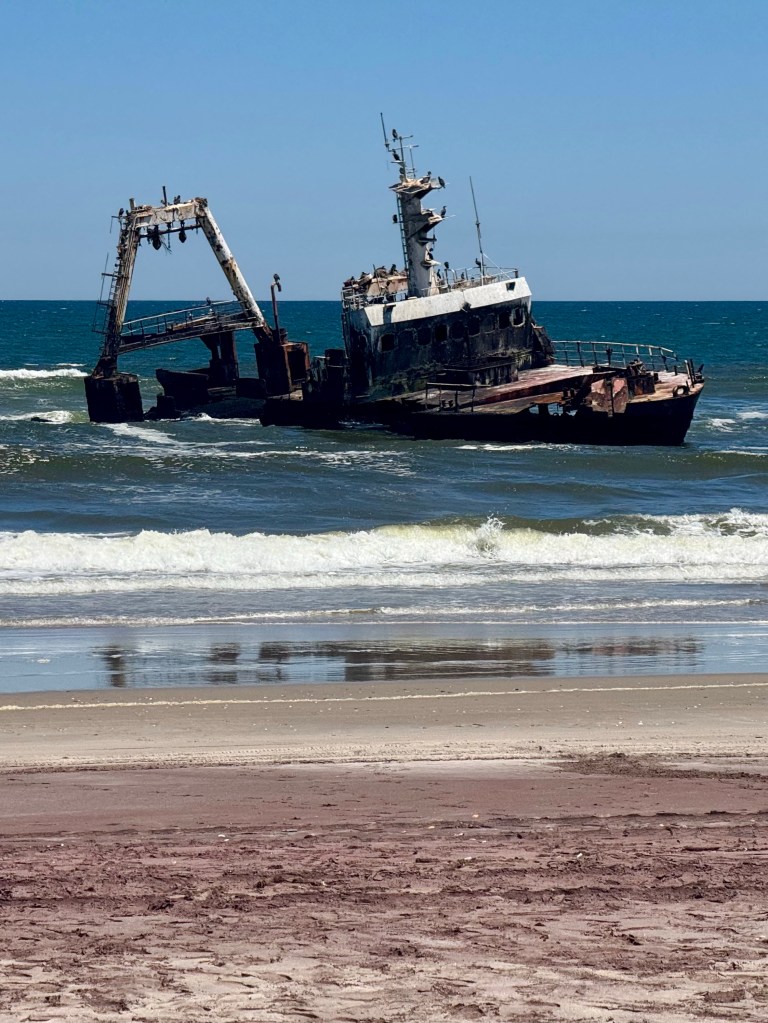
There are also a number of shipwrecks that can be seen.
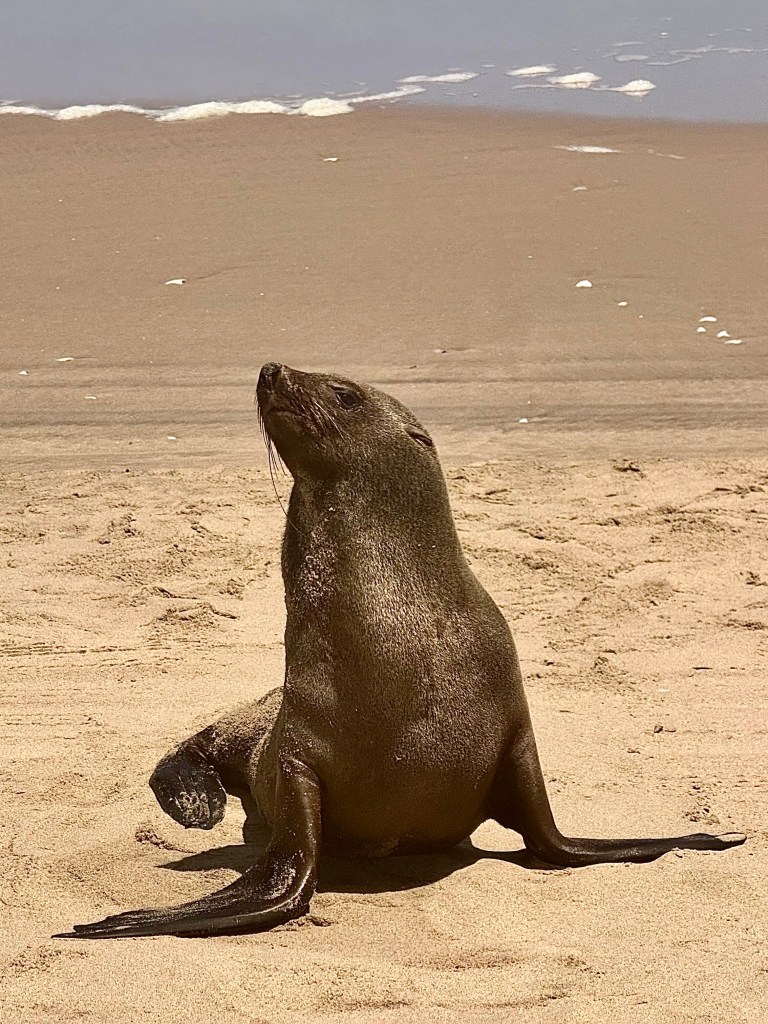
We headed further north to visit a seal colony at Cape Cross.
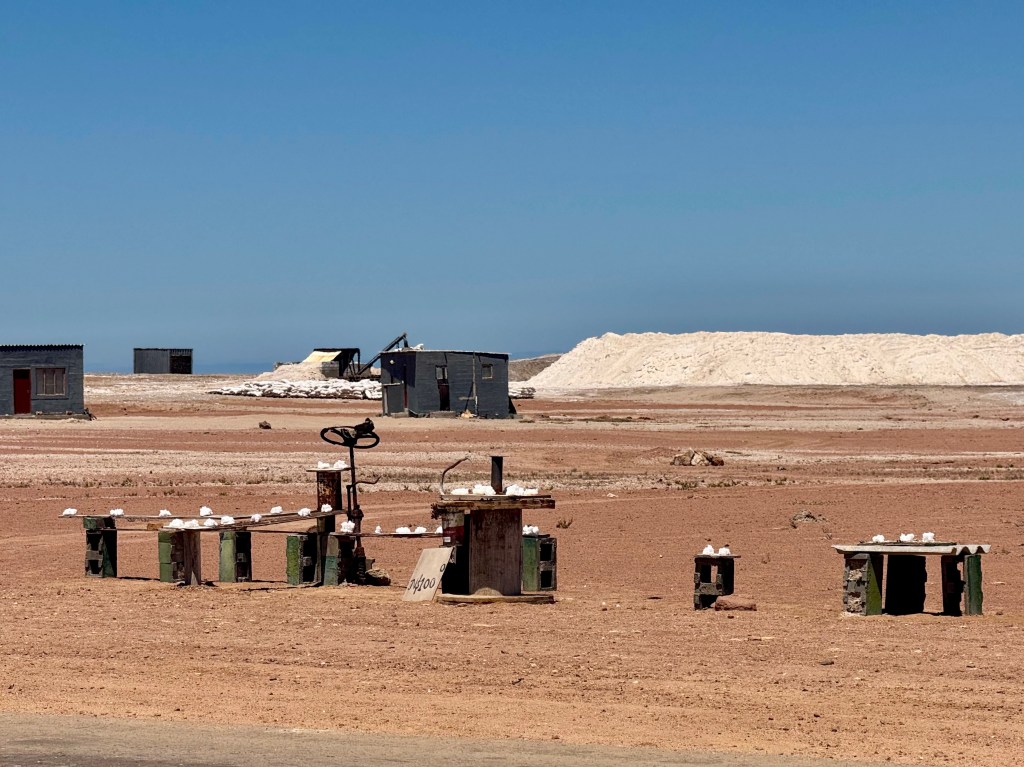
As we approached we saw lots of these small stalls by the roadside, hosting bags of salt crystals. Each plinth had a selection of white, pink or green salt crystals and a small honesty box for payment.
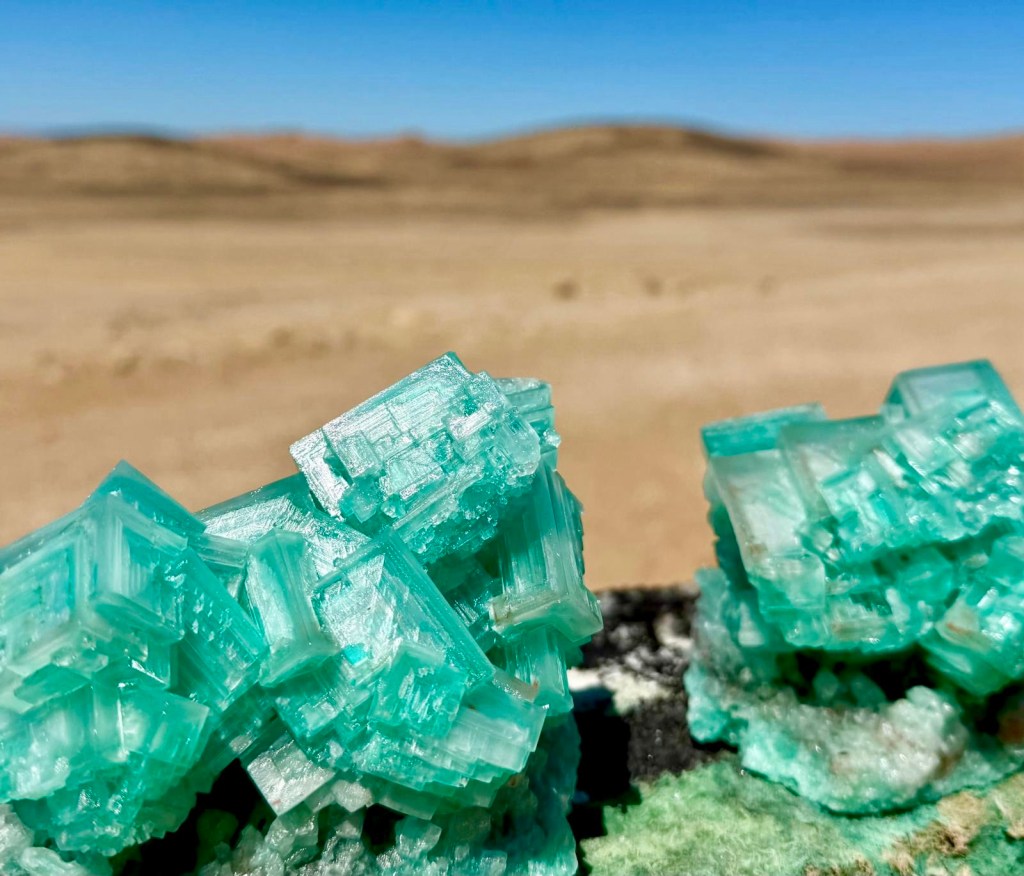
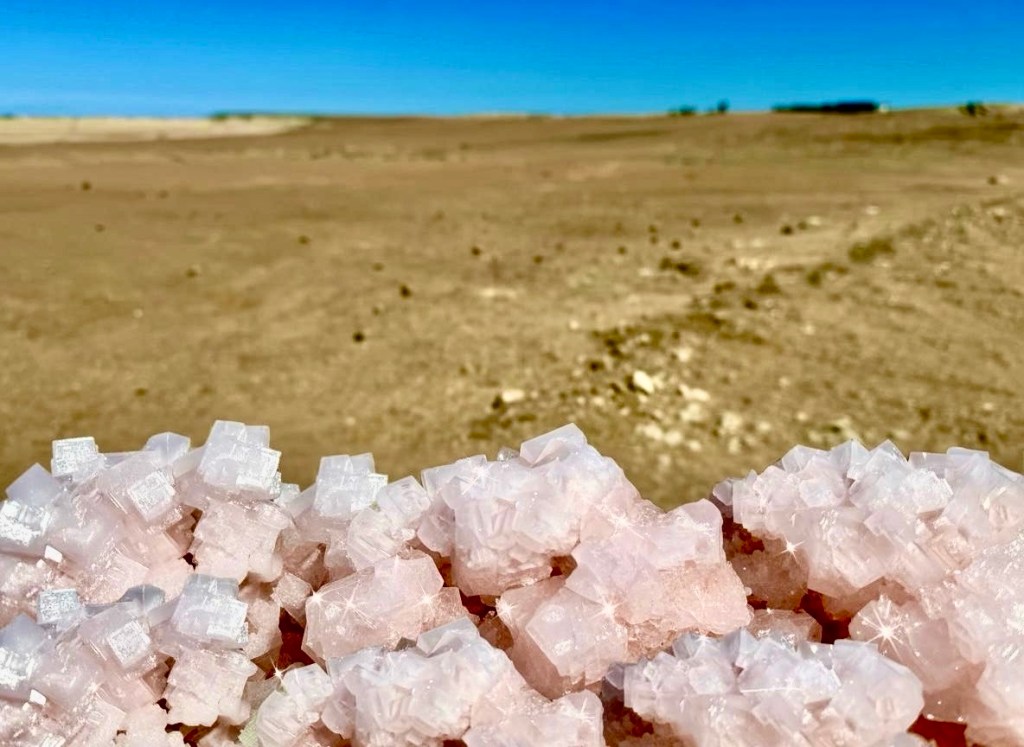
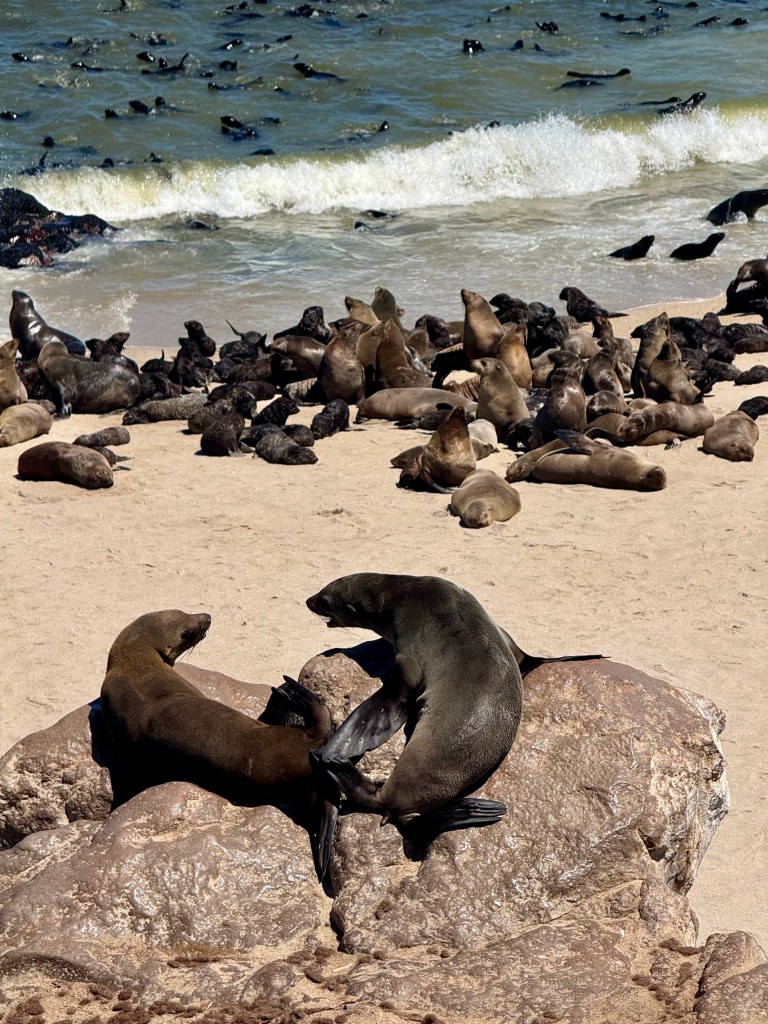
The seal colony here is the largest in the world, thought to contain around 200,000 seals.
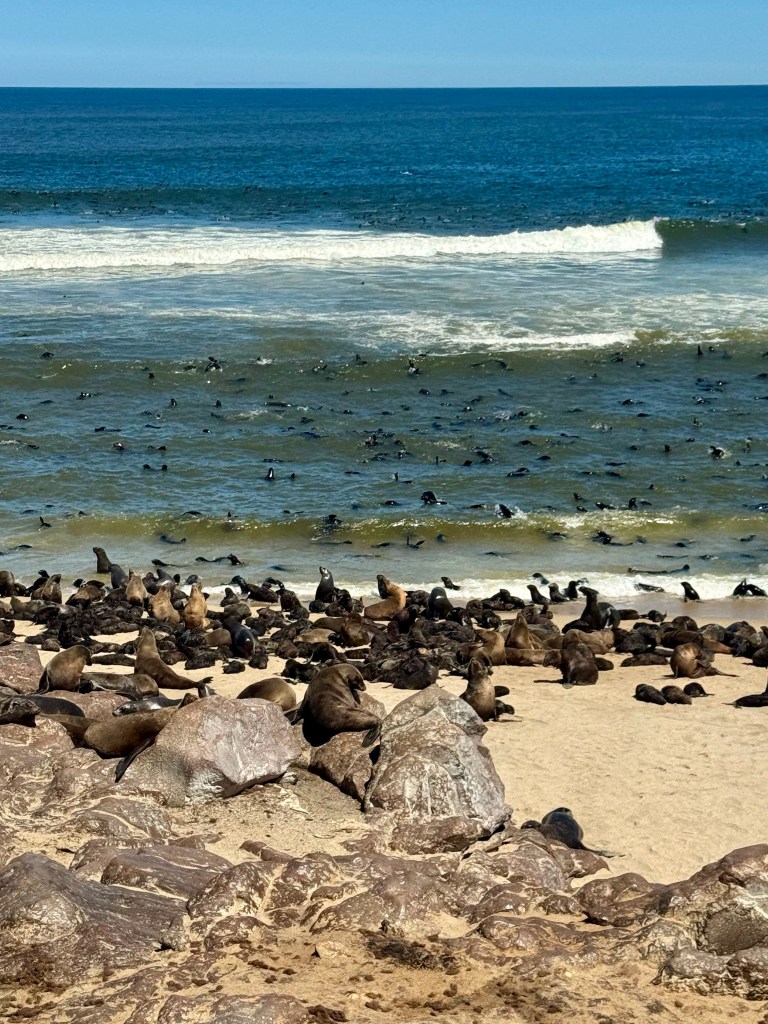
It is quite a sight but that many seals projects quite a smell too!
The sea looks like seal soup and it is hard to distinguish between seals and rocks on the beach.
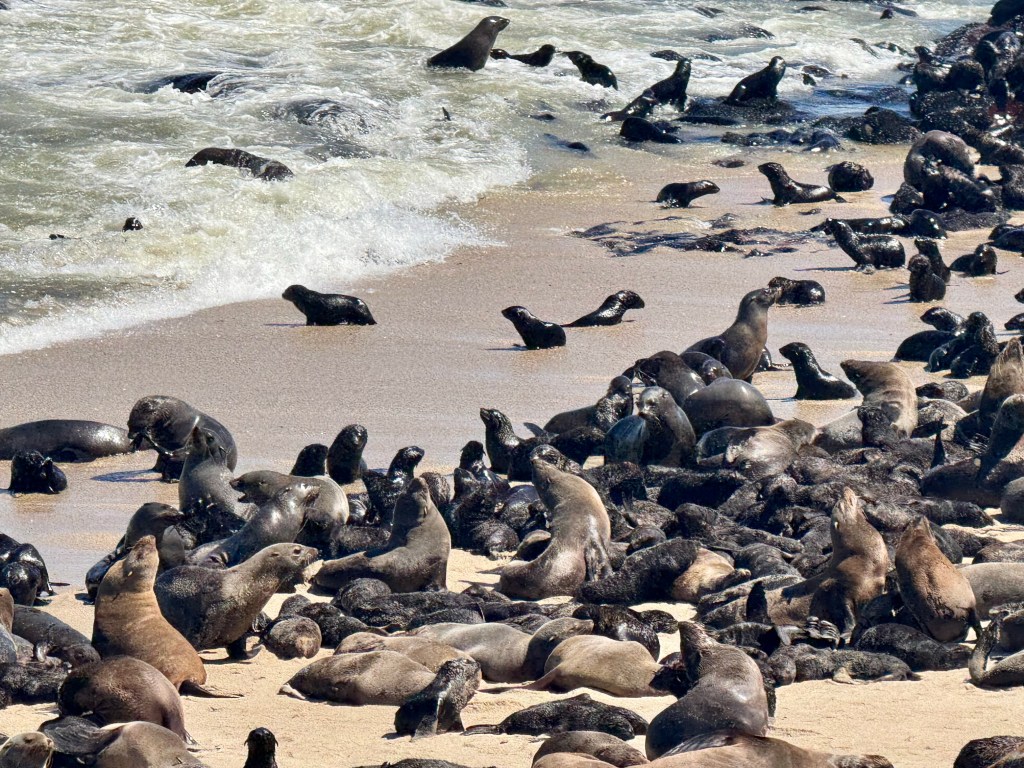
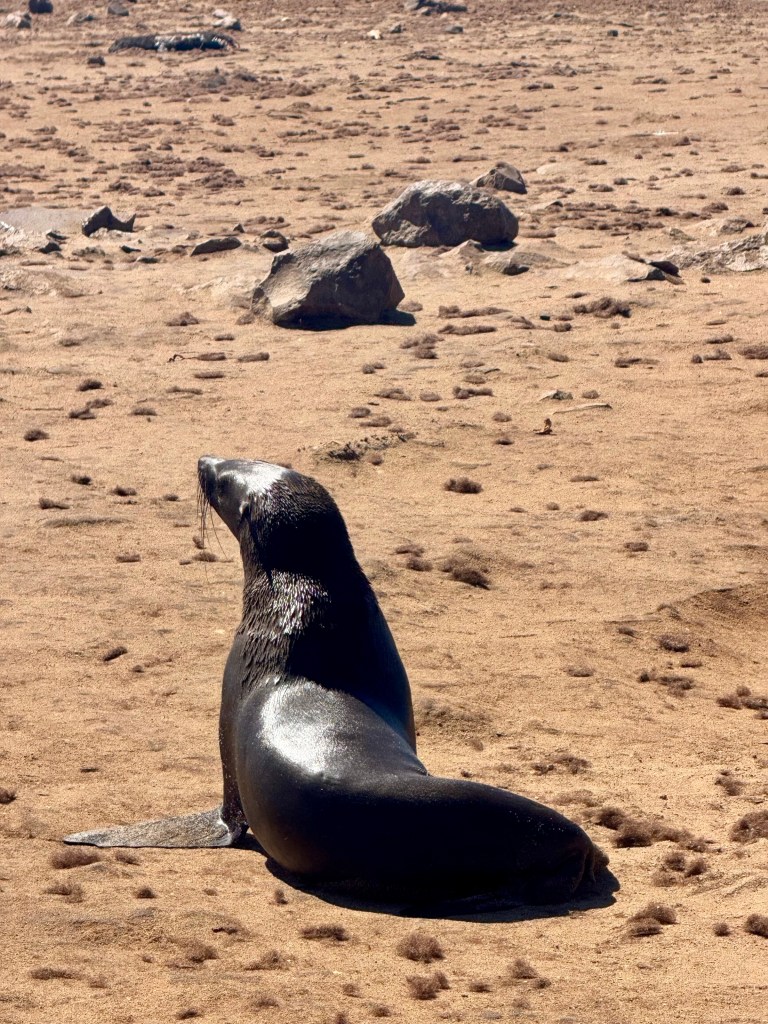
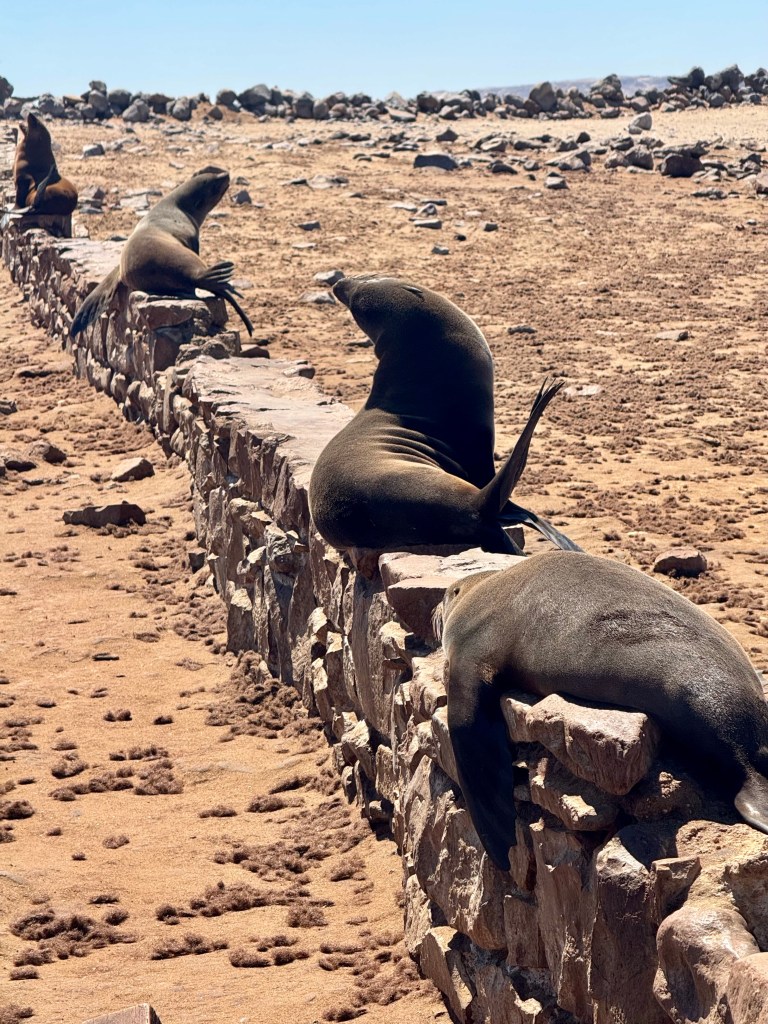
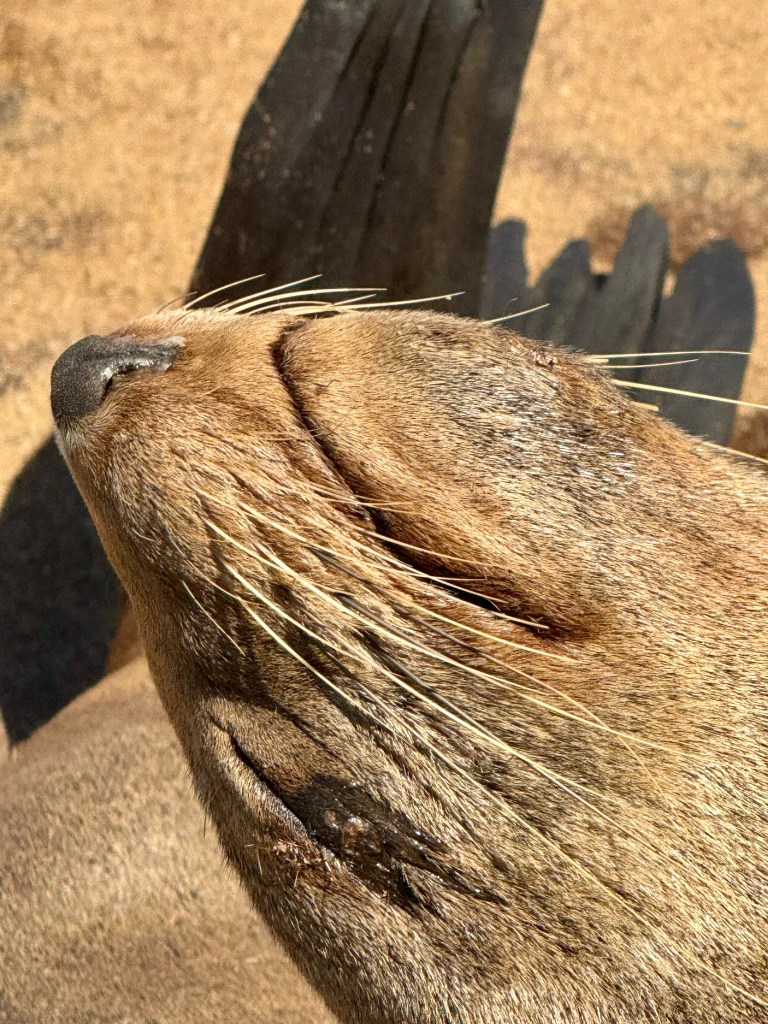
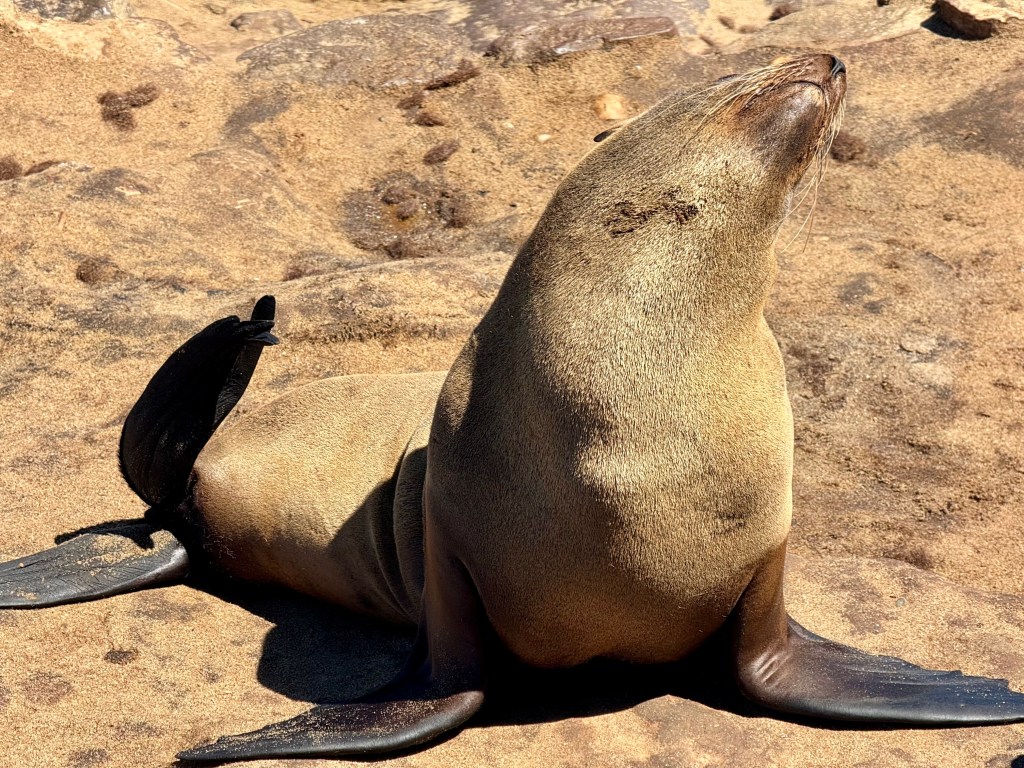
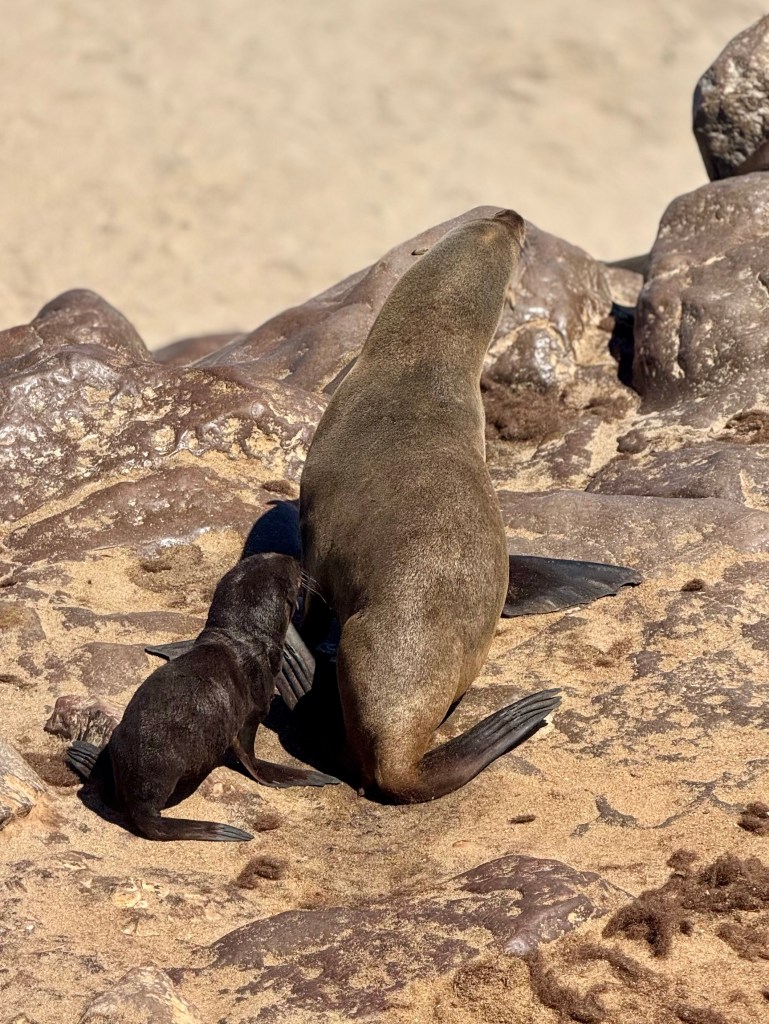
The baby seals make quite a noise as they seek out their mothers on the beach.
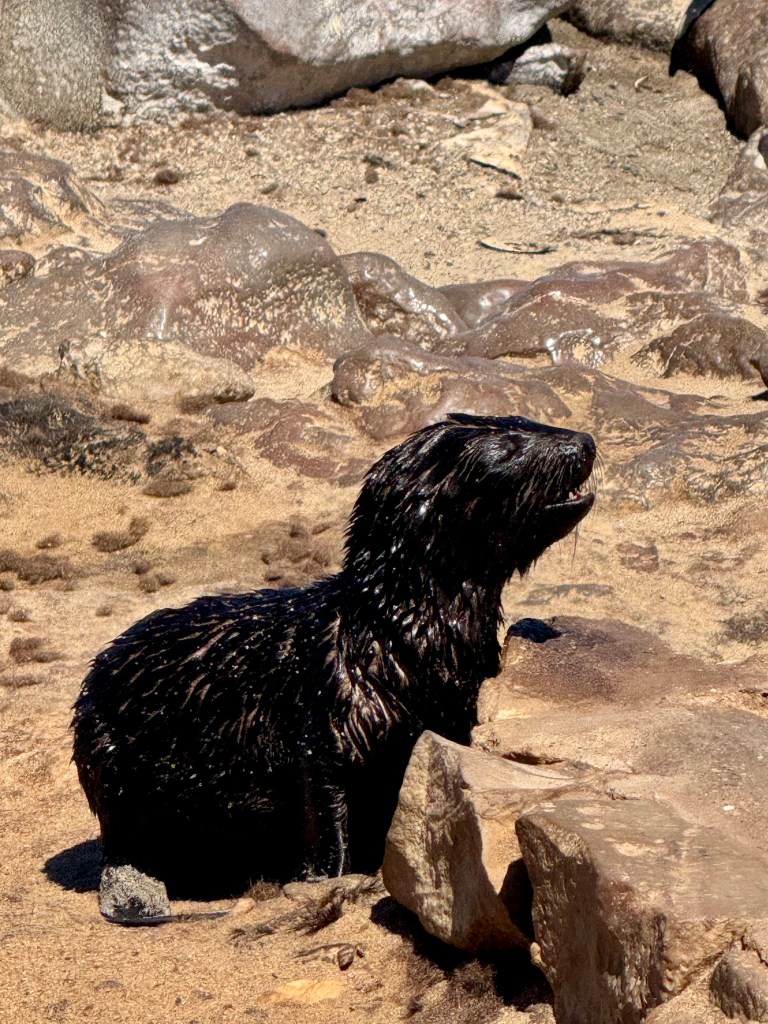
There is plenty of squabbling for space here, teeth are shown for unwelcome visitors.
Cape Cross is also famous as the landing point for the Portuguese explorer Diogo Cao who landed here in 1486, the first recorded European to land in Namibia.

That’s the last time we will see the west coast on this trip. Next we head inland to Damaraland.
 Jeff's Travel And Photo Blog