
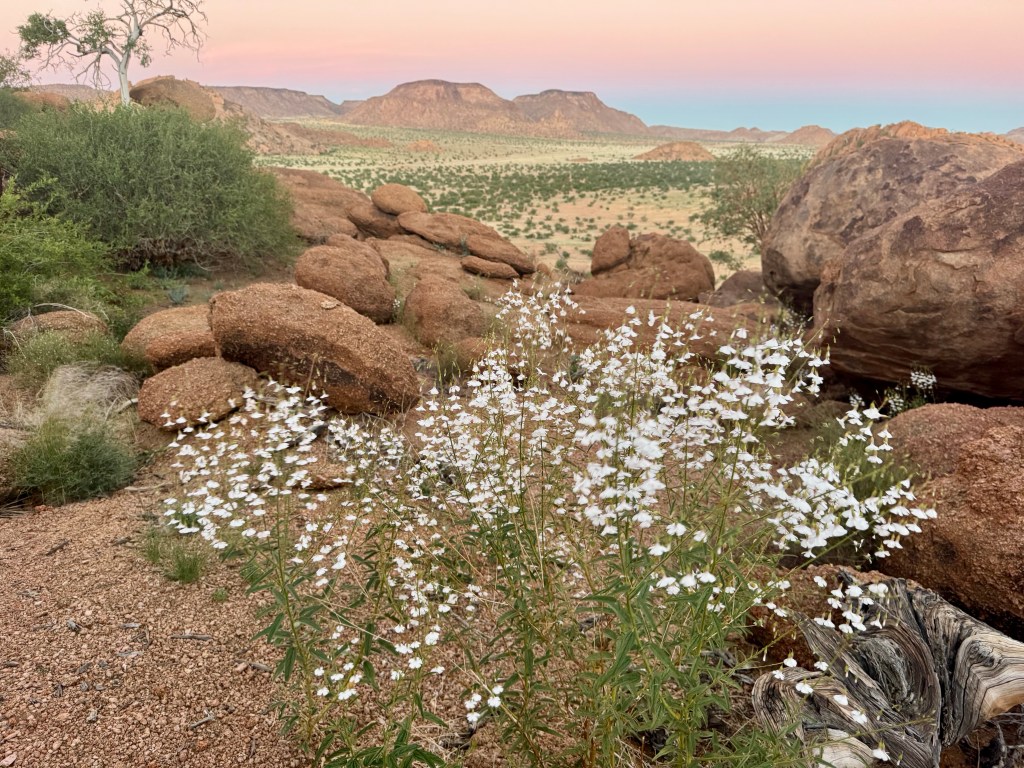
Our final stop in Namibia was in Twyfelfontein, an area in the north west of the country.
We took a slight detour to visit Spitzkoppe along the way.
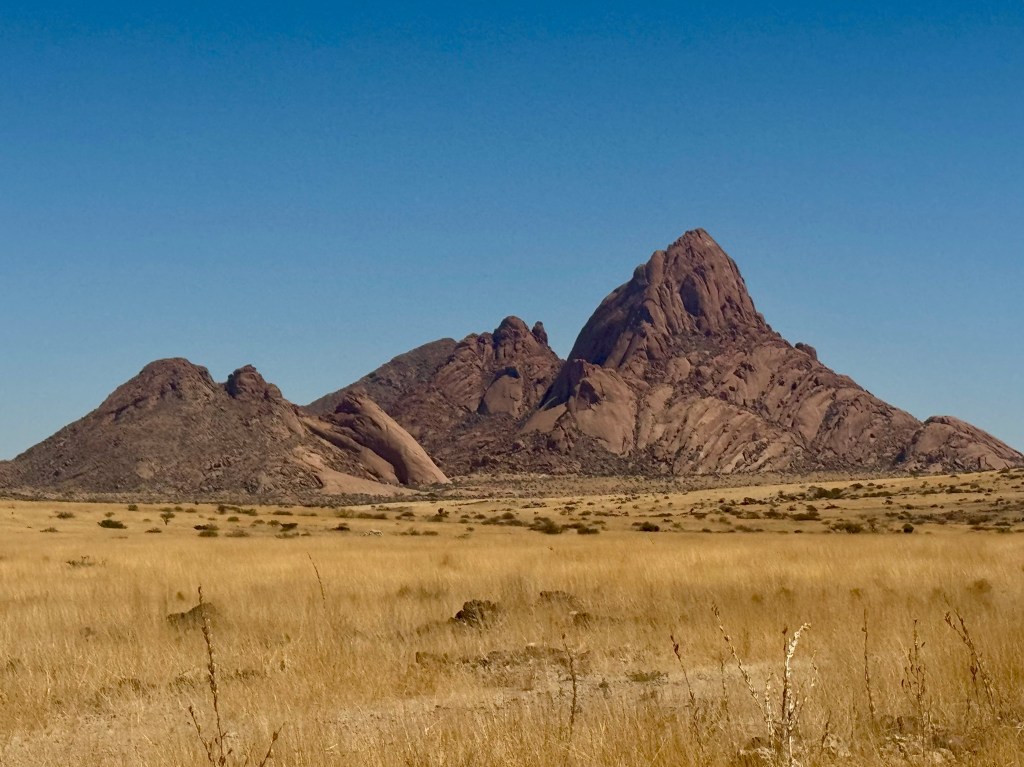
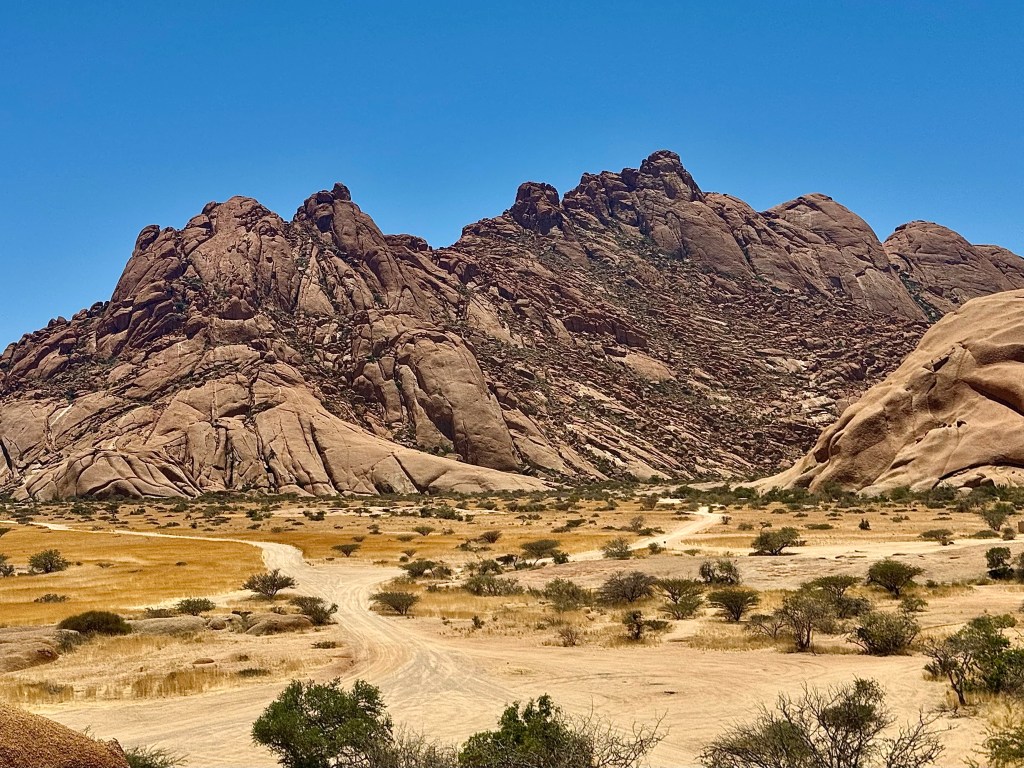
Spitzkoppe is known as the ‘Matterhorn’ of Namibia with its 120 million year old bald granite peaks rising nearly 2,000 metres above the desert plains.
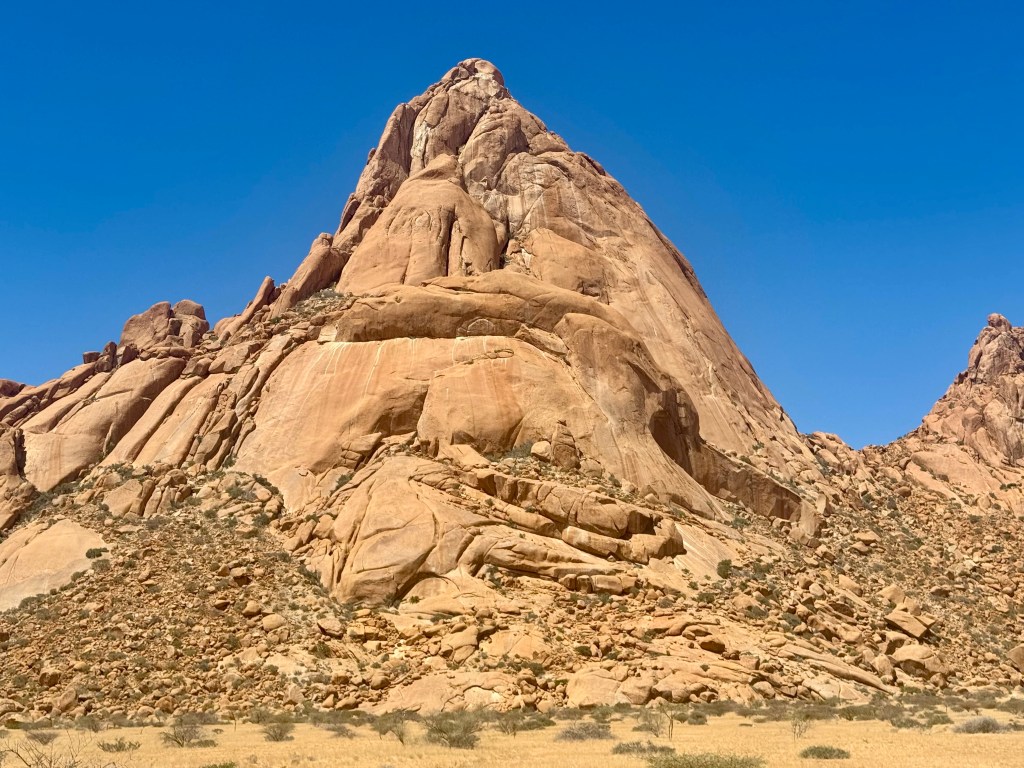
You can spot the peaks from miles away although finding the entrance to the park was more tricky.
However, we did get to see the peaks from all sides as we circled the mountain!
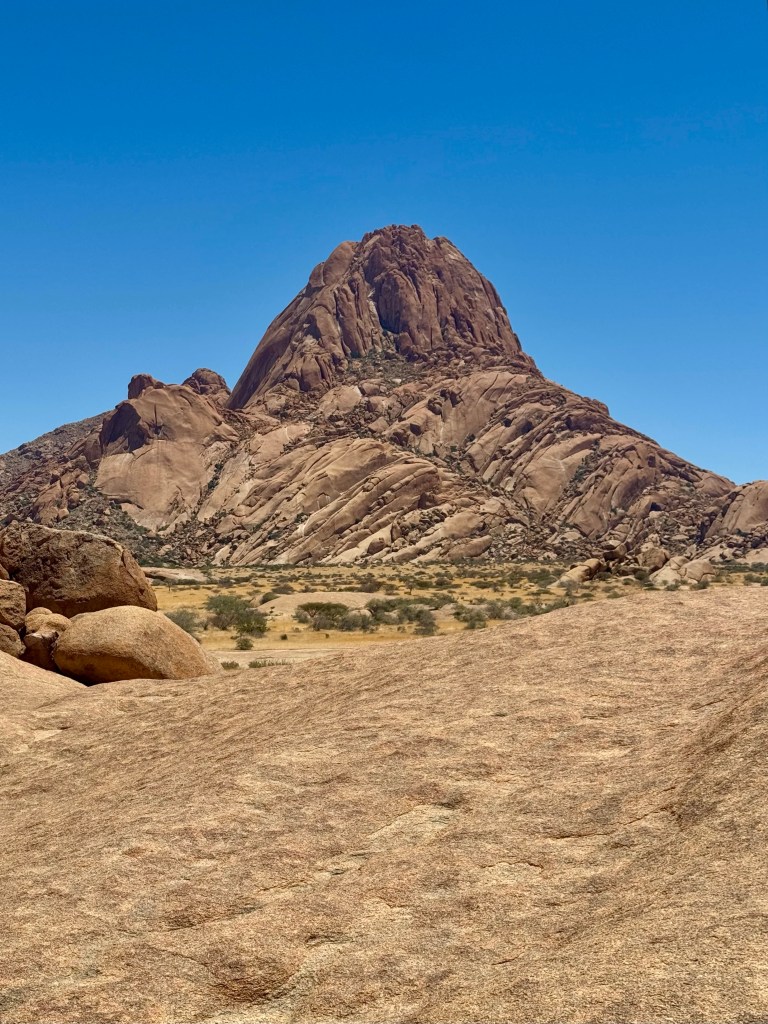
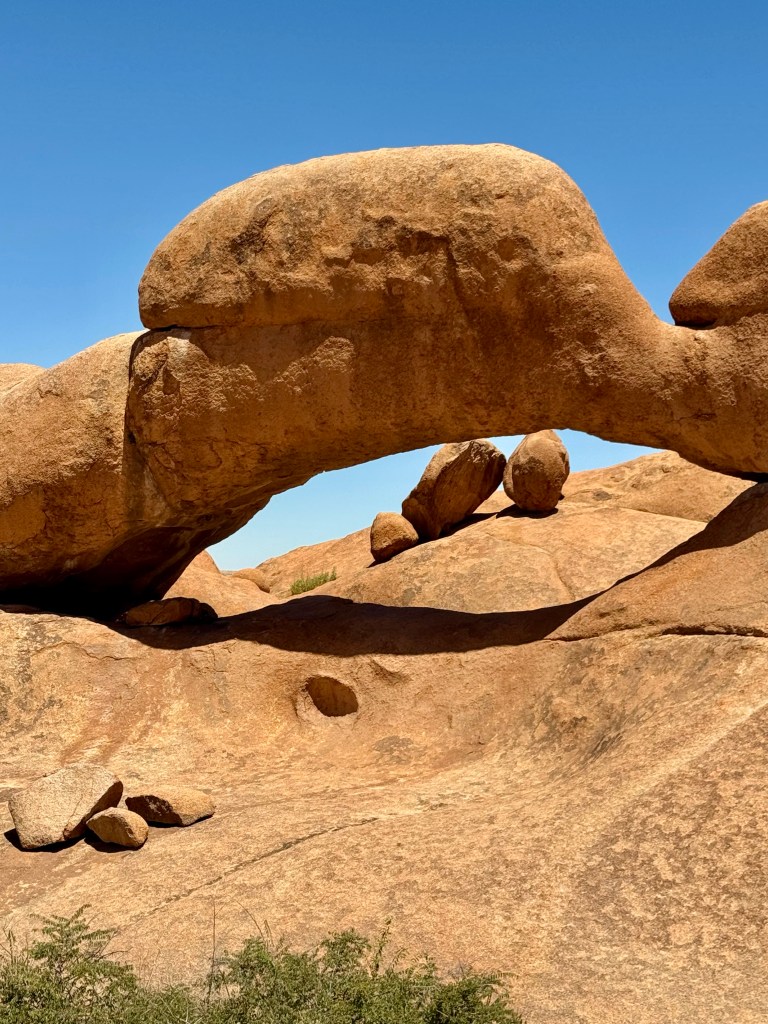
Below is the Spitzkoppe Arch, formed by millions of years of erosion forming a bridge like structure.
We traveled onwards to Twyfelfontein, a location rather than a town.
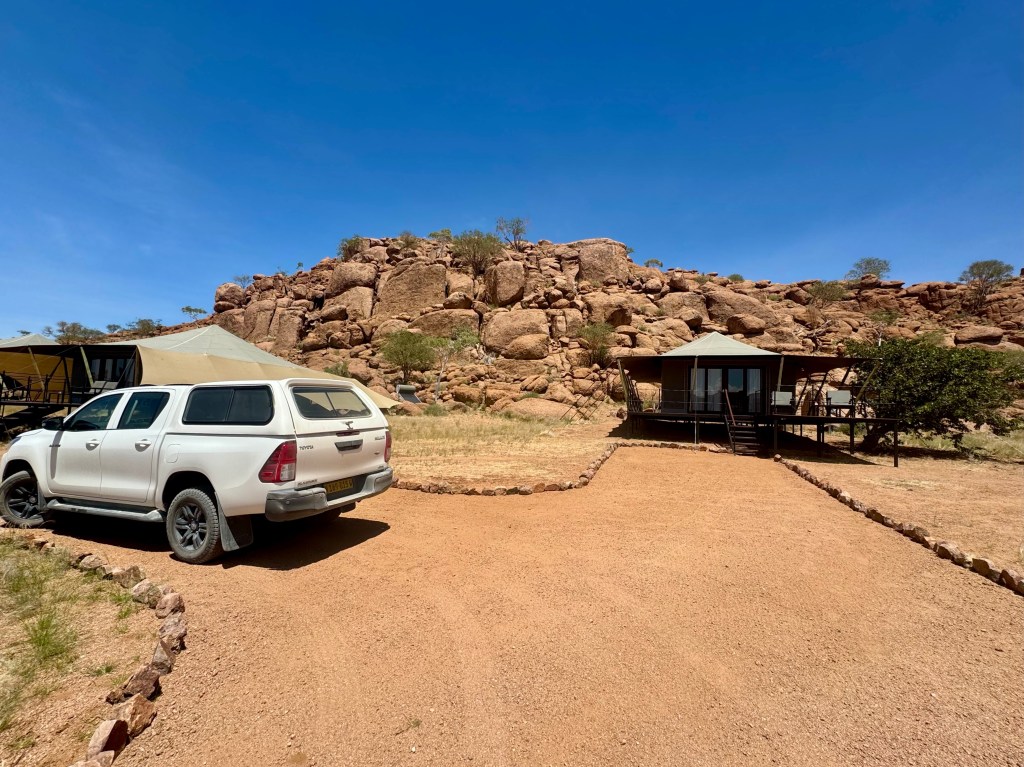
We parked our hard working 4×4 outside our rather wonderful ‘tent’ for the night, this is as close as I get to camping!
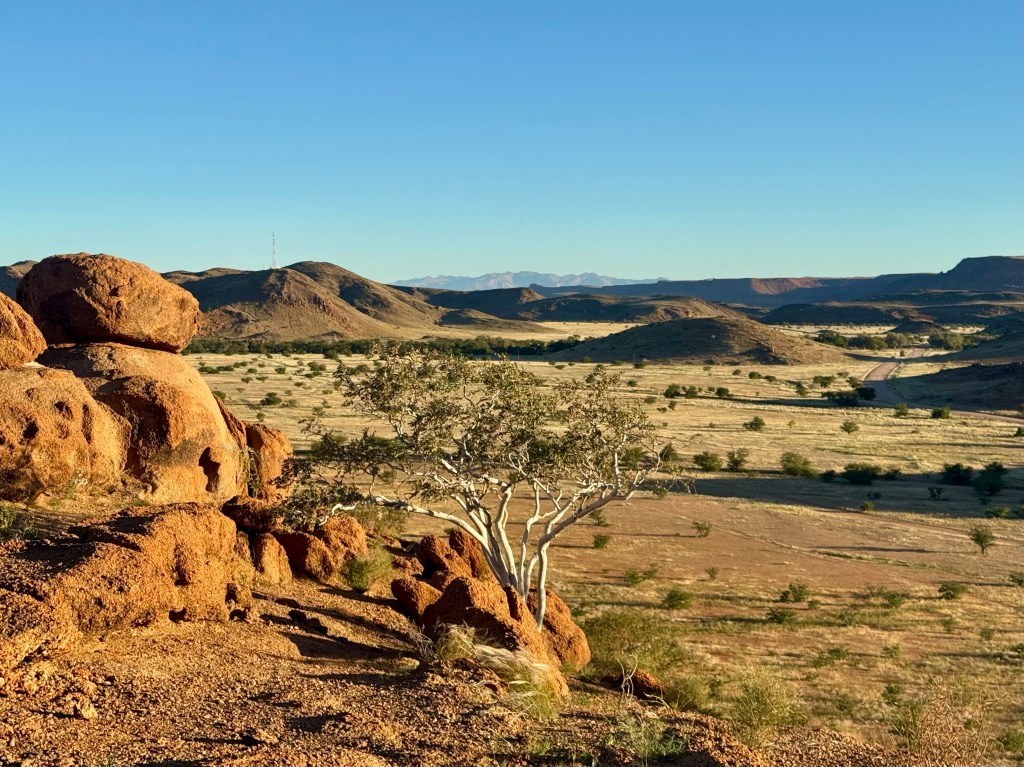
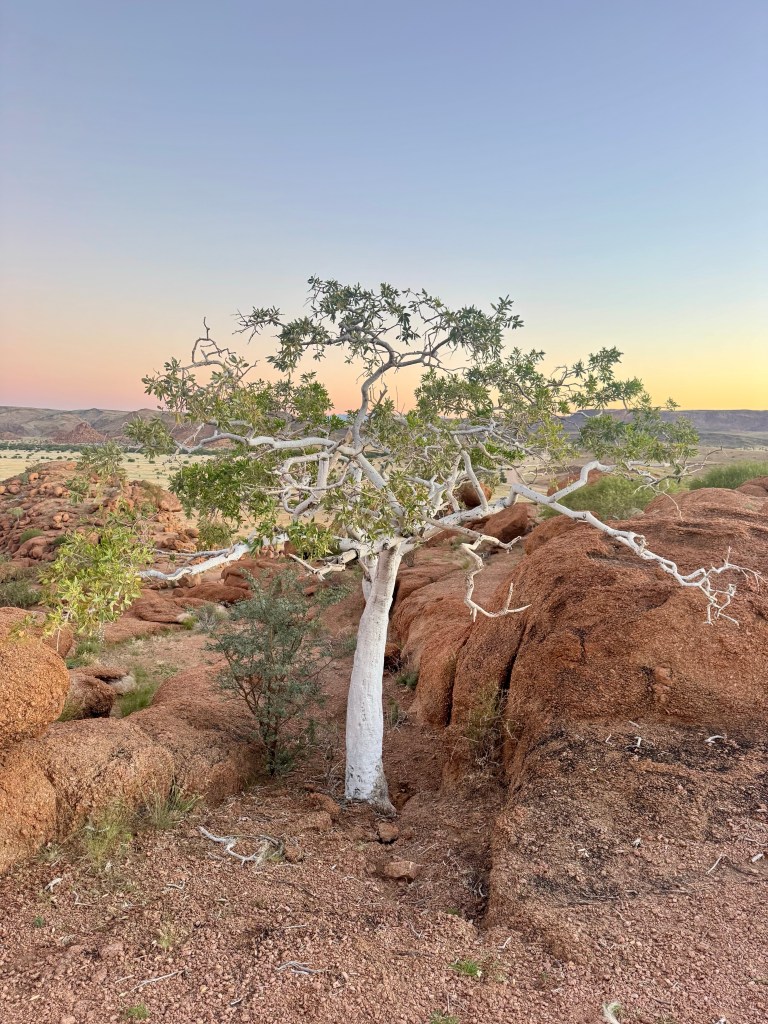
The views from the camp were wonderful, the white bark of the tree below has evolved as a form of sunblock.
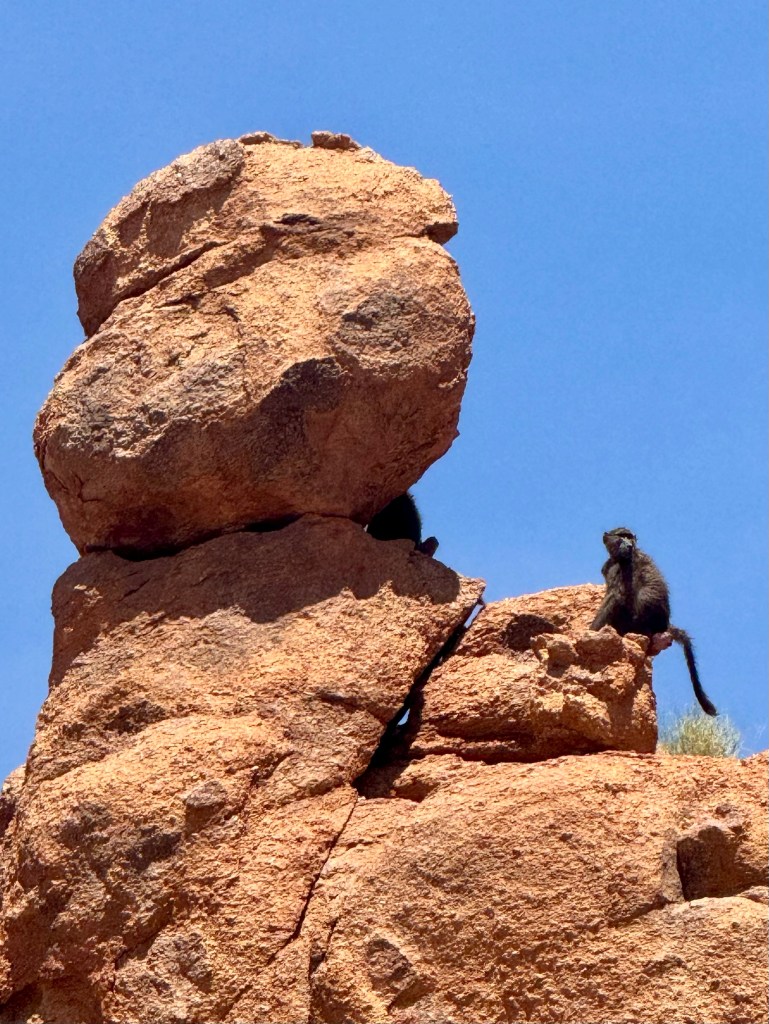
A troop of Baboons visit the camp area in the day time, sitting above us on the rocks.
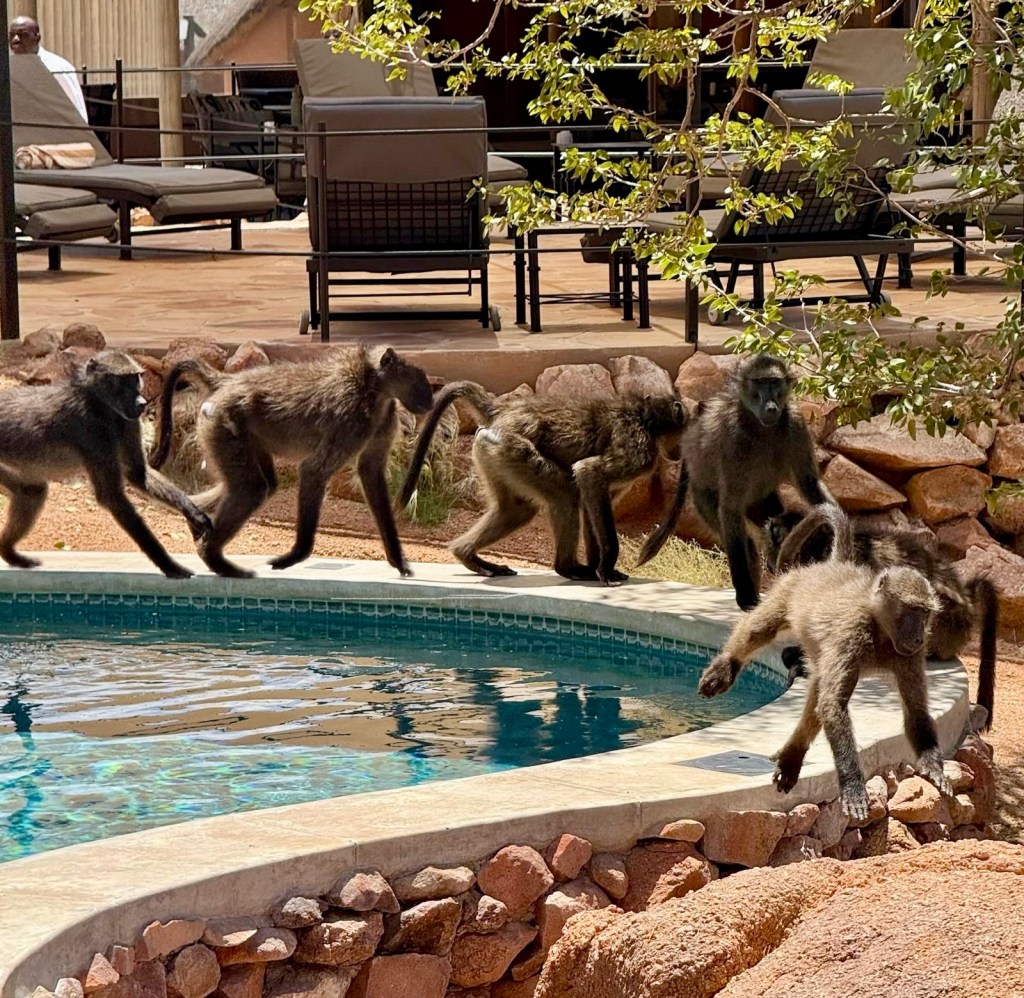
When there are no guests around the Baboons take their opportunity and can be seen coming down to the pool area.
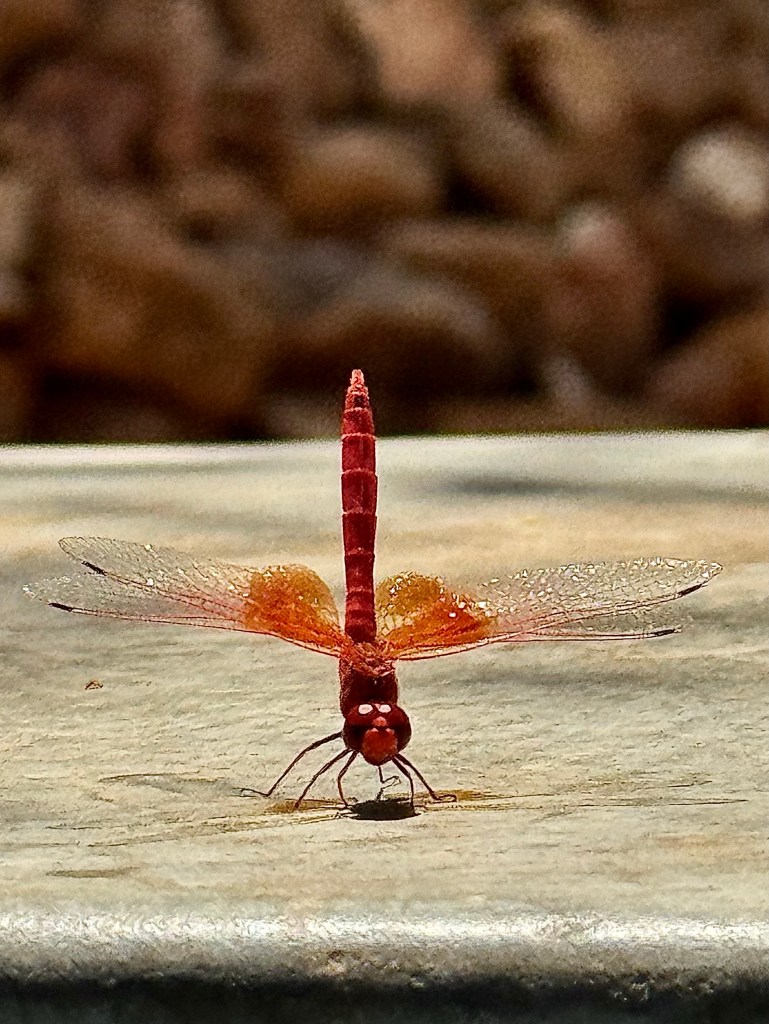
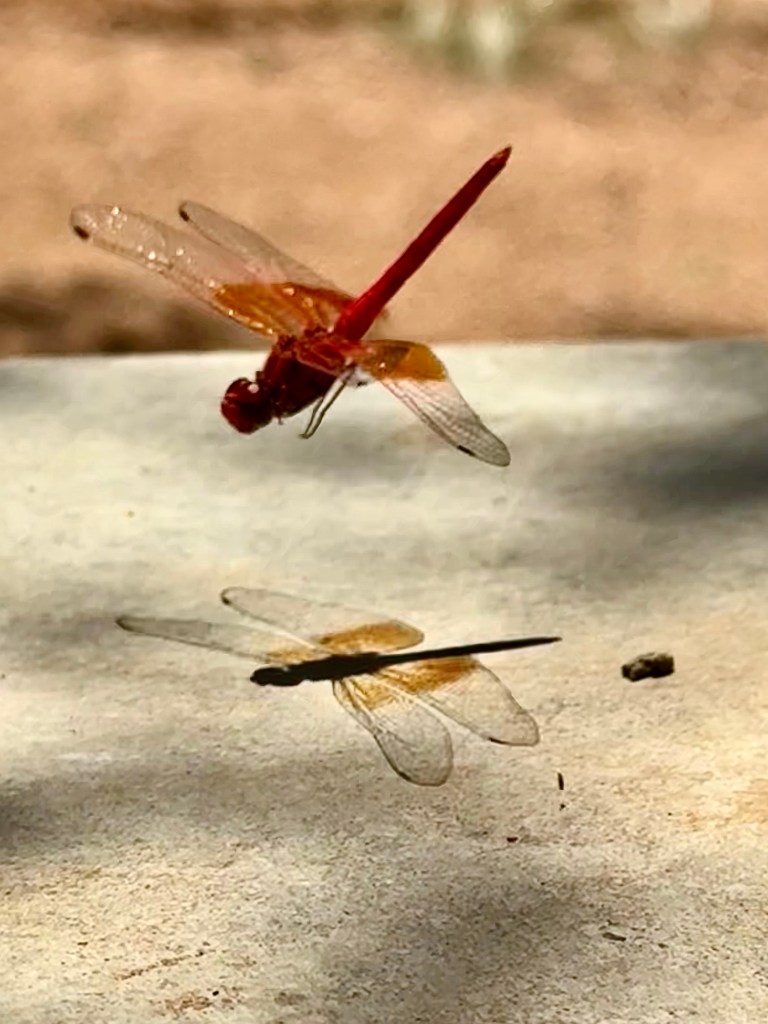
The pool was also a hotbed for these elegant red dragonflies.
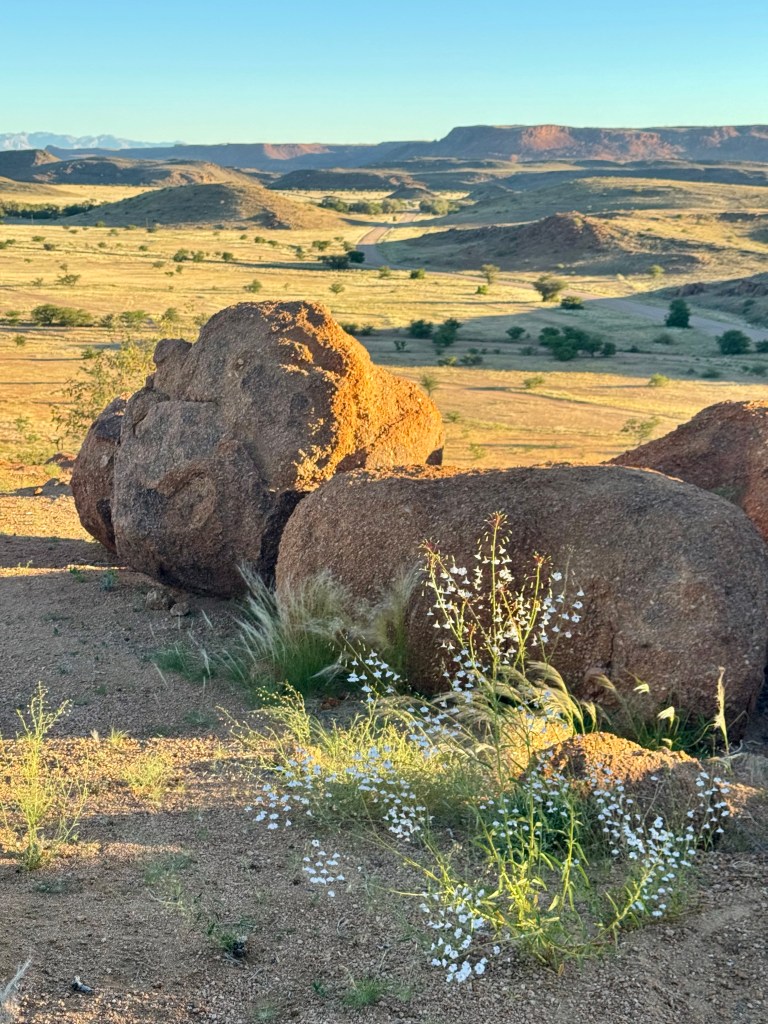
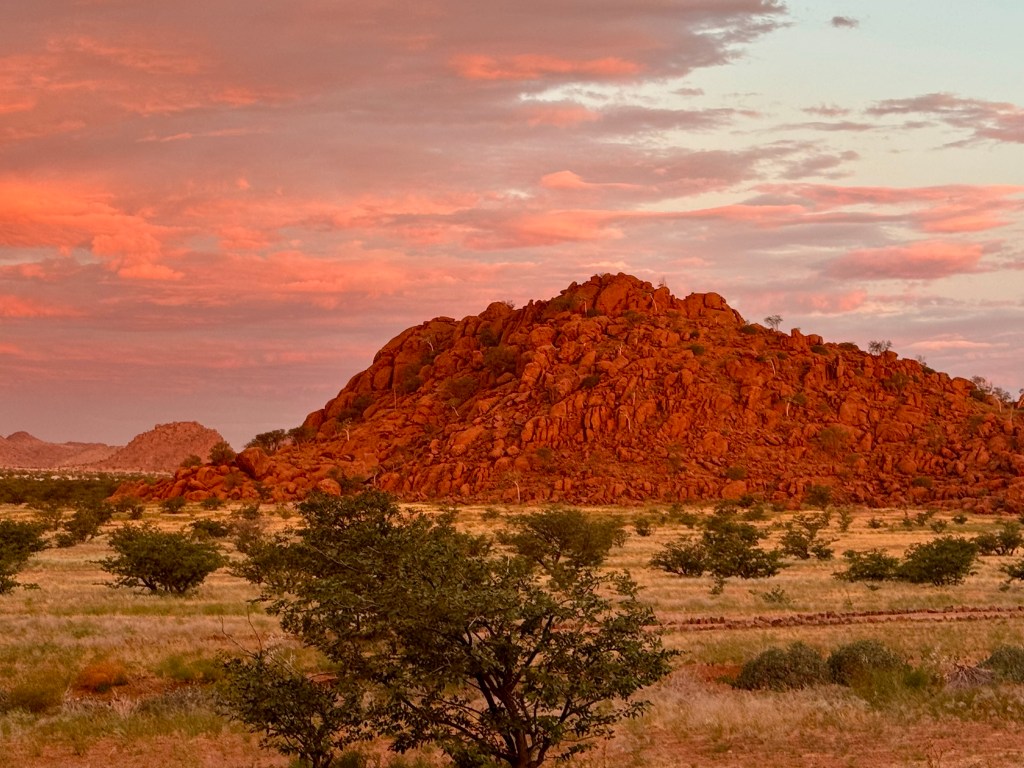
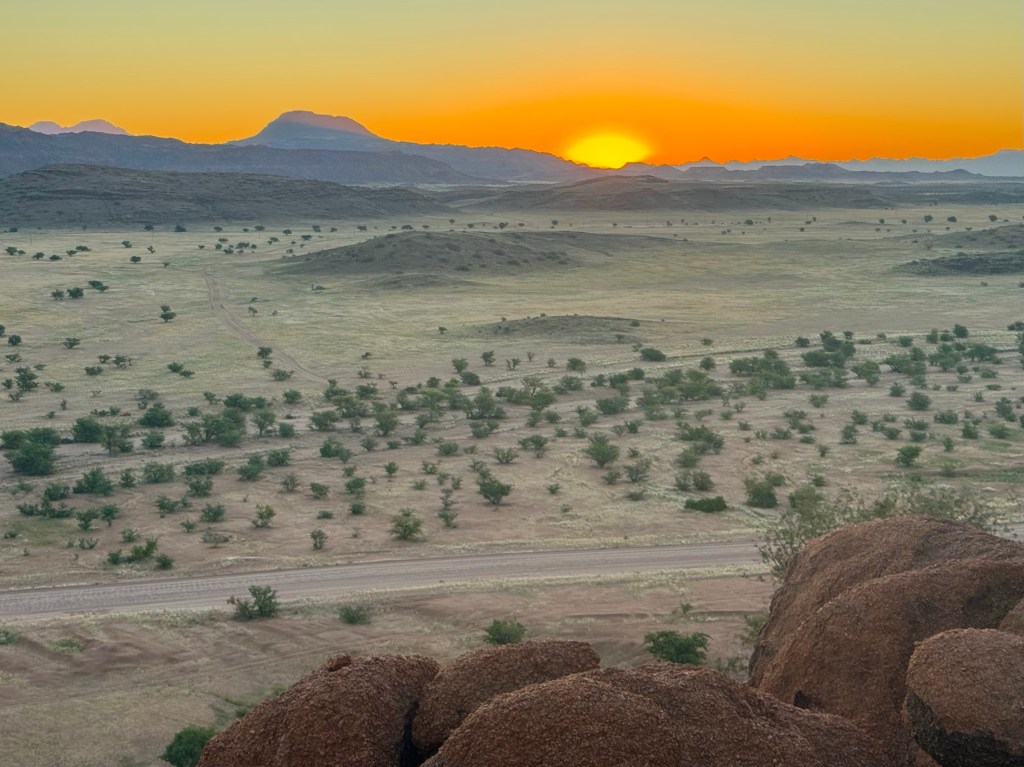
As the sun started setting, the nearby mountains took on a sumptuous glow and the sky put on a wonderful show for us.
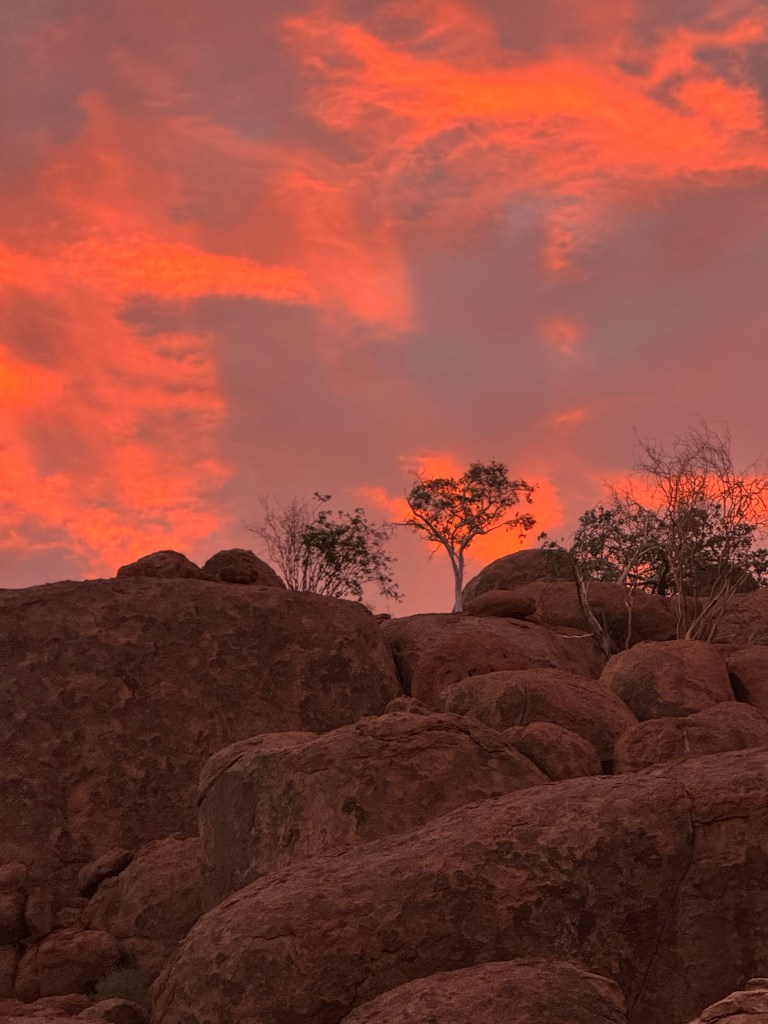
We climbed up to the rocky hill behind us to watch the sunset.
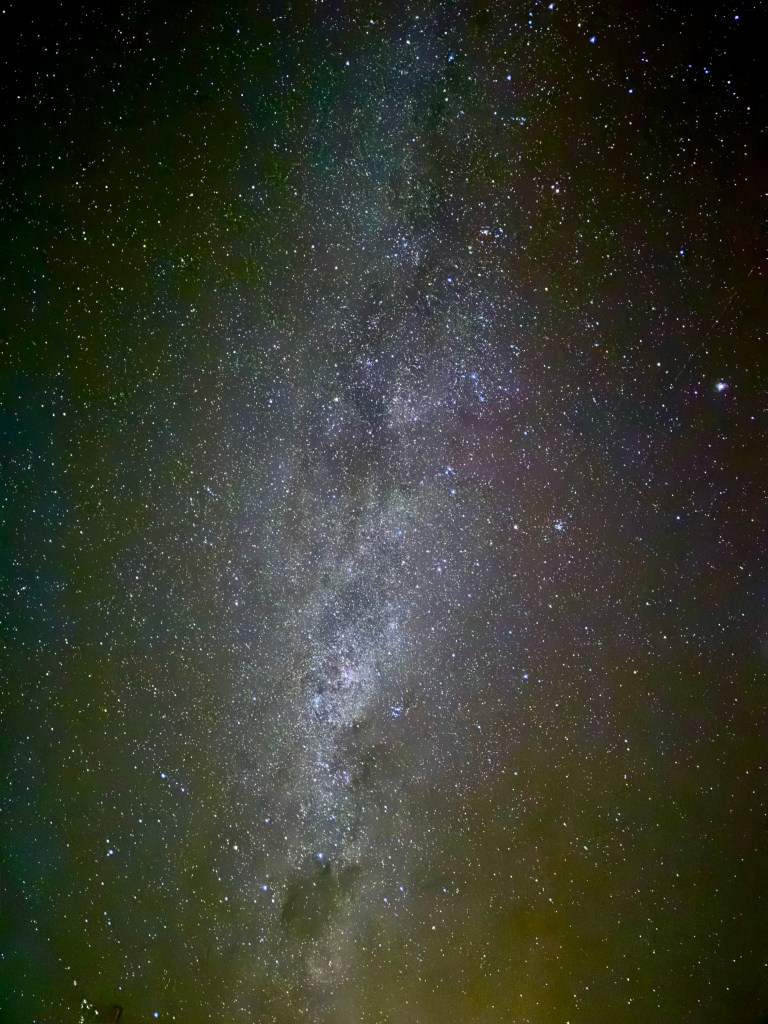
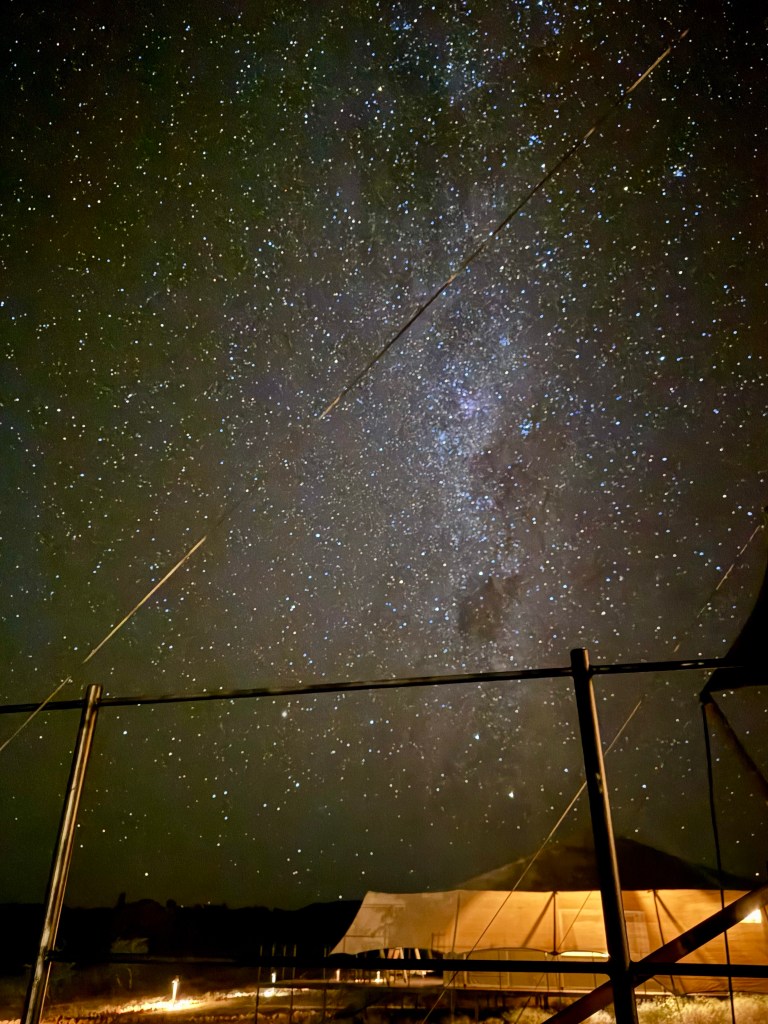
The stars on a clear night with little light pollution were beautiful.
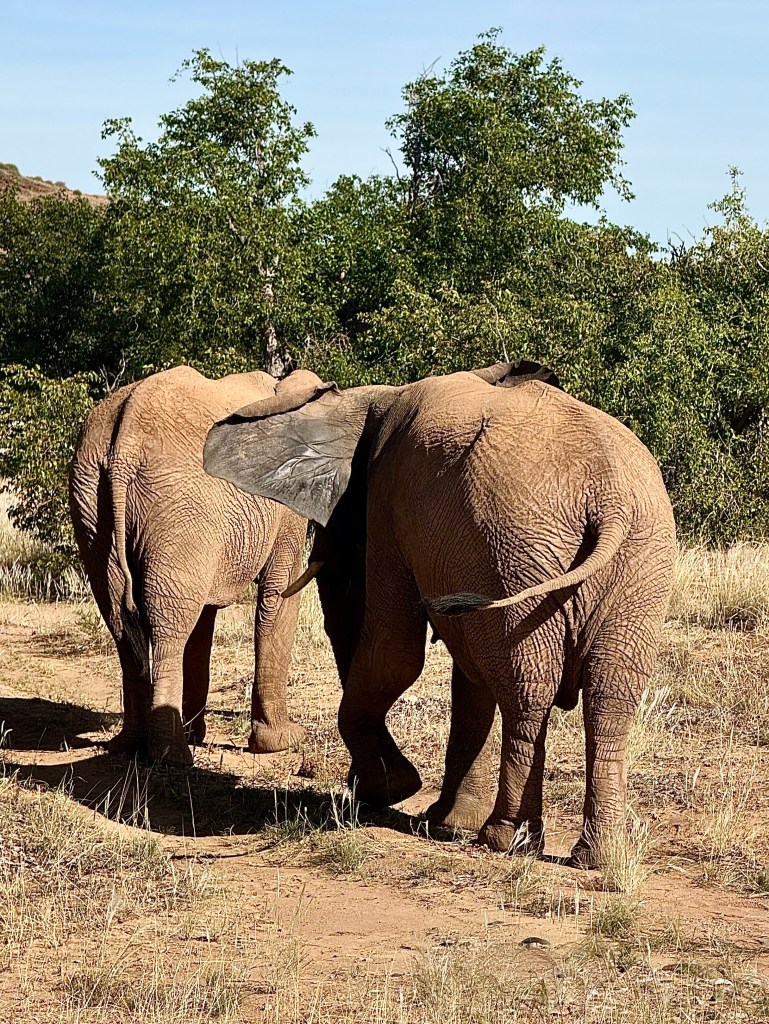
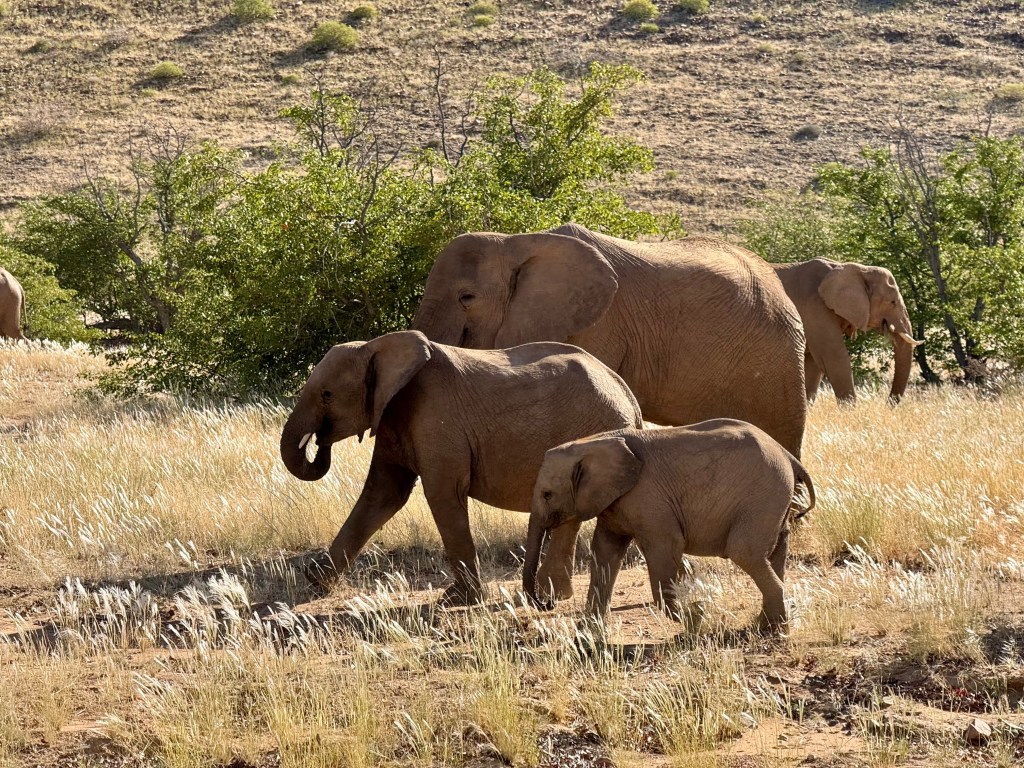
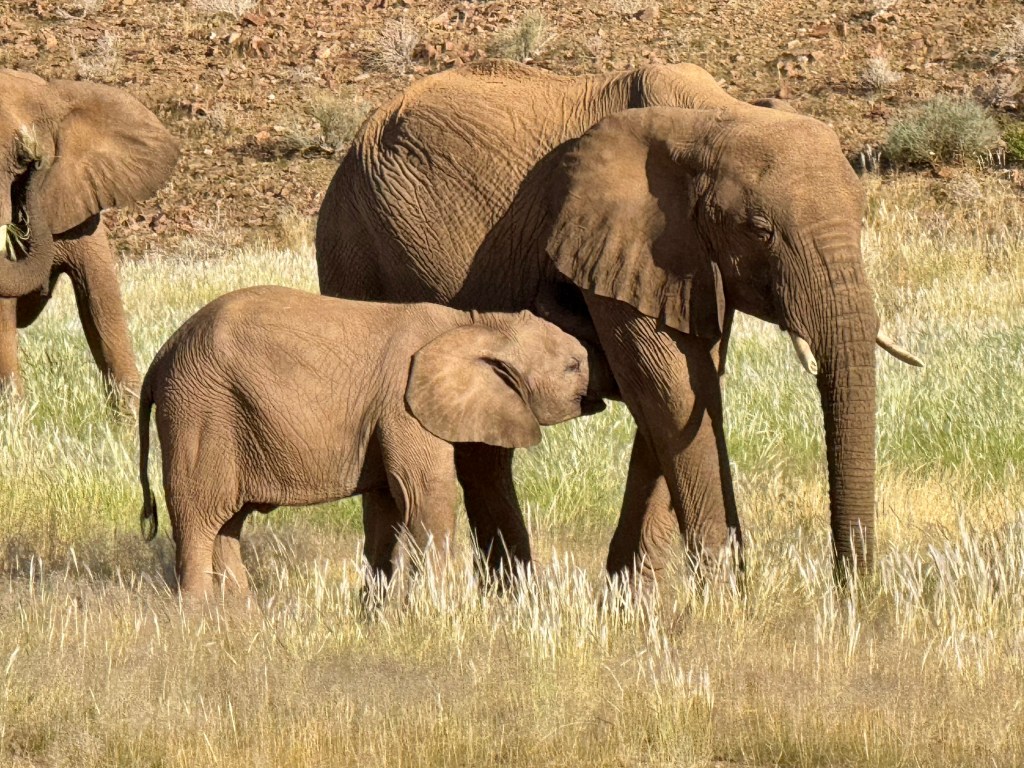
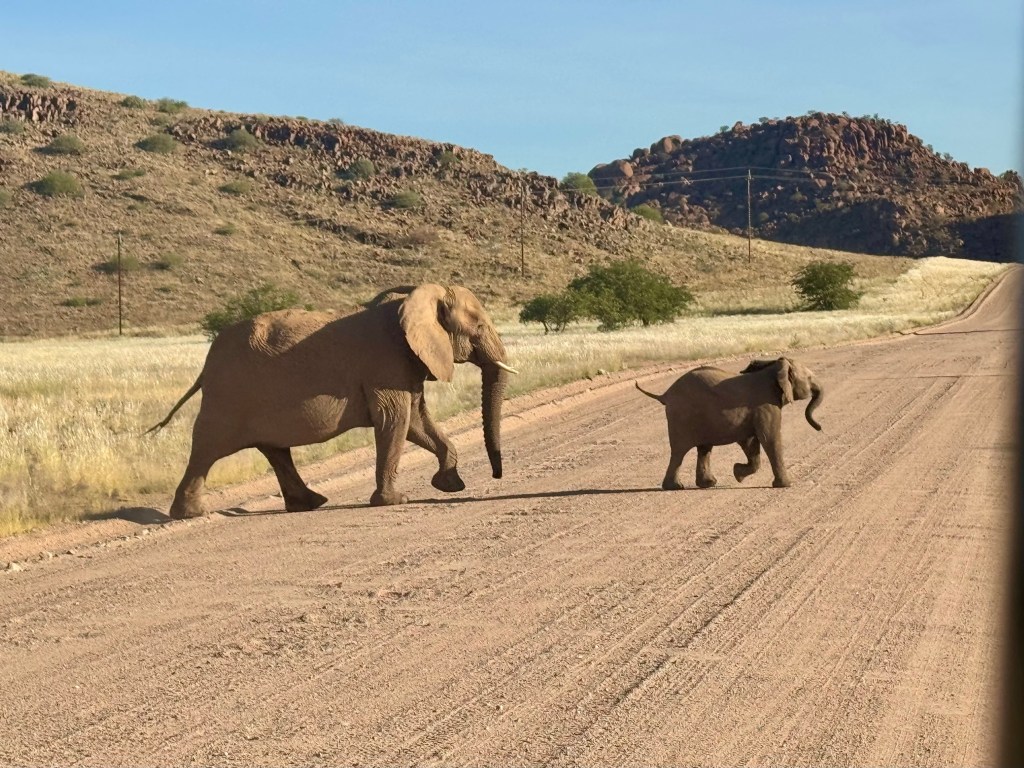
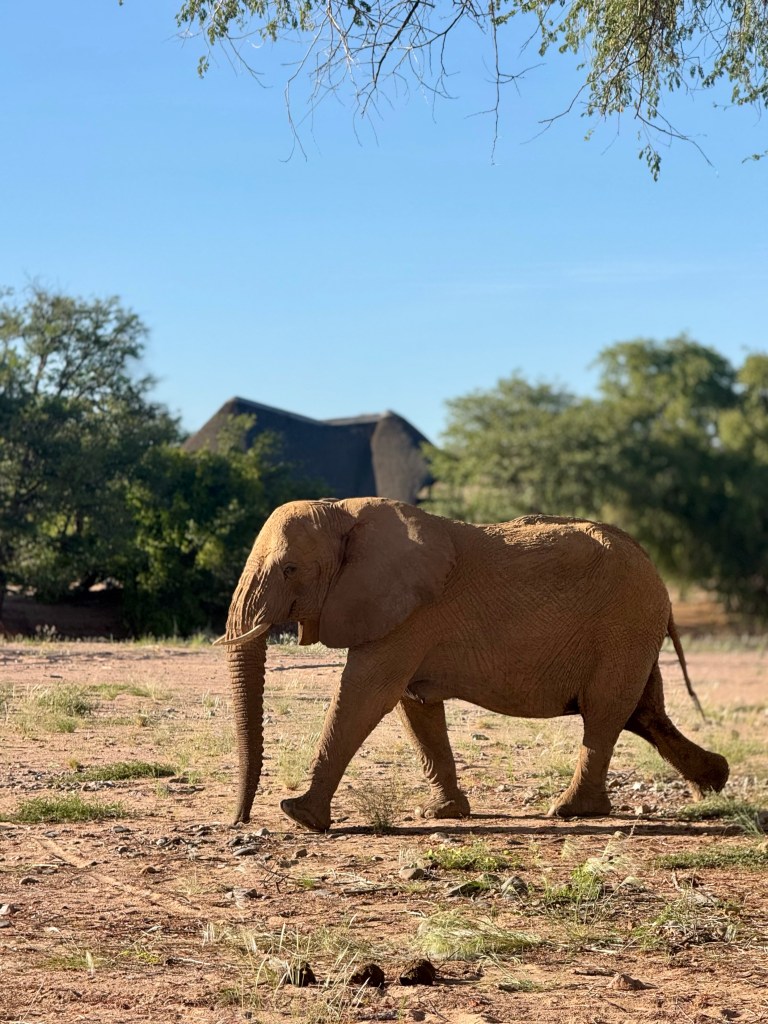
There are wild elephants in this area too, these are desert adapted ones, able to withstand being without water for a few days.
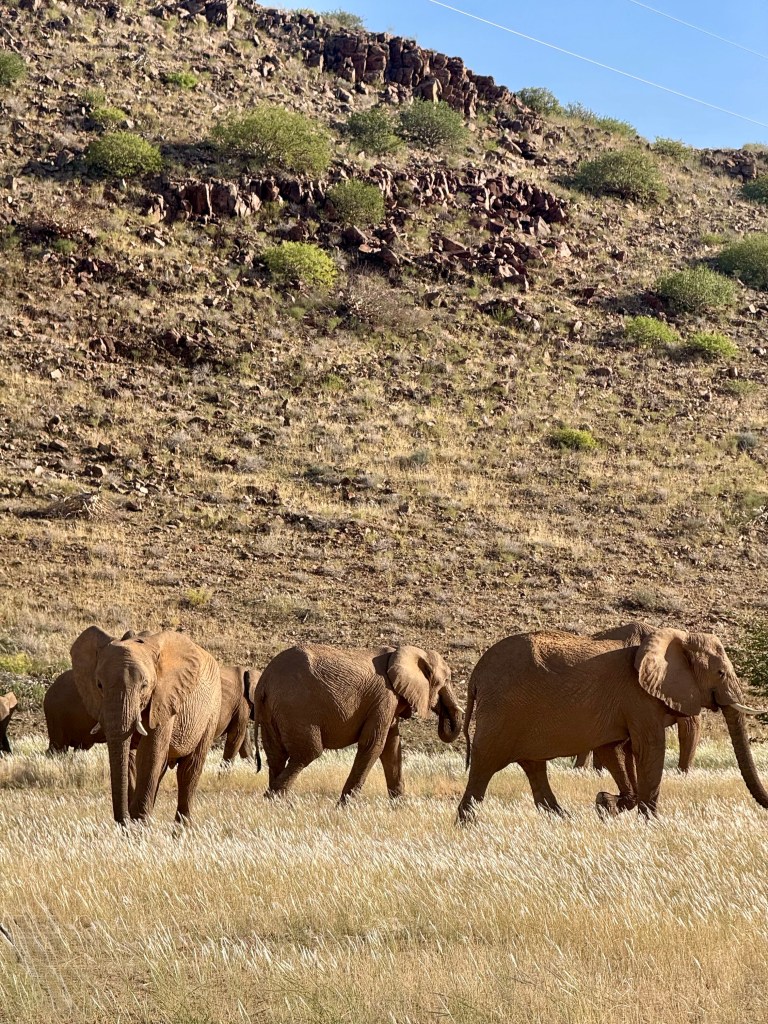
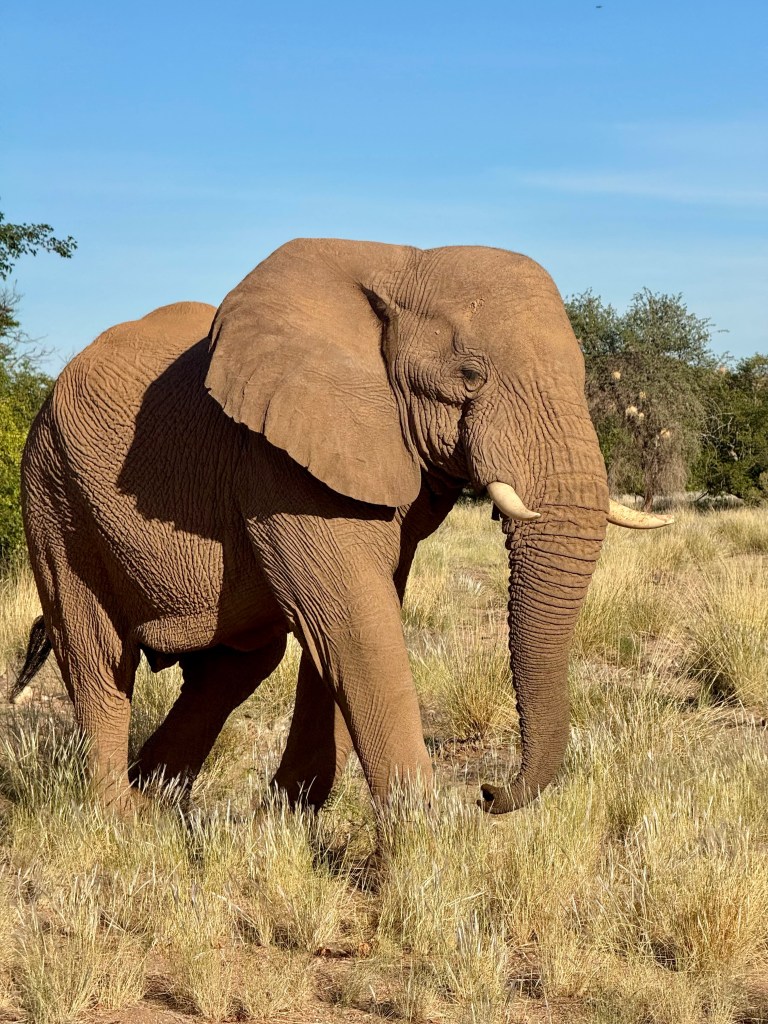
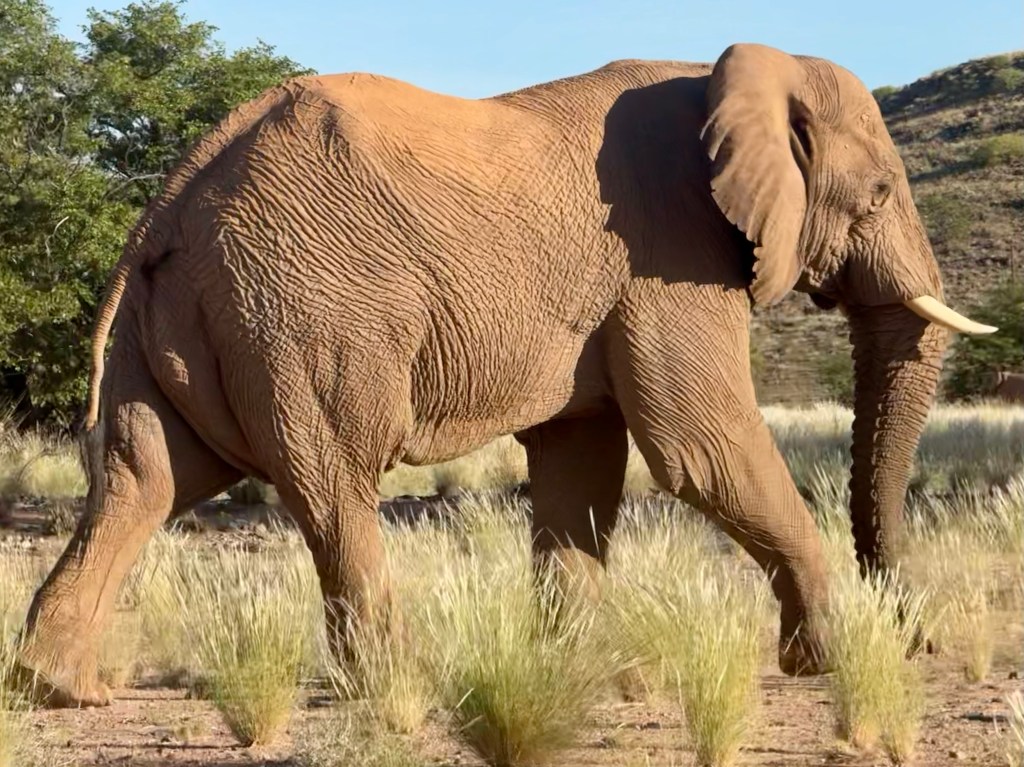
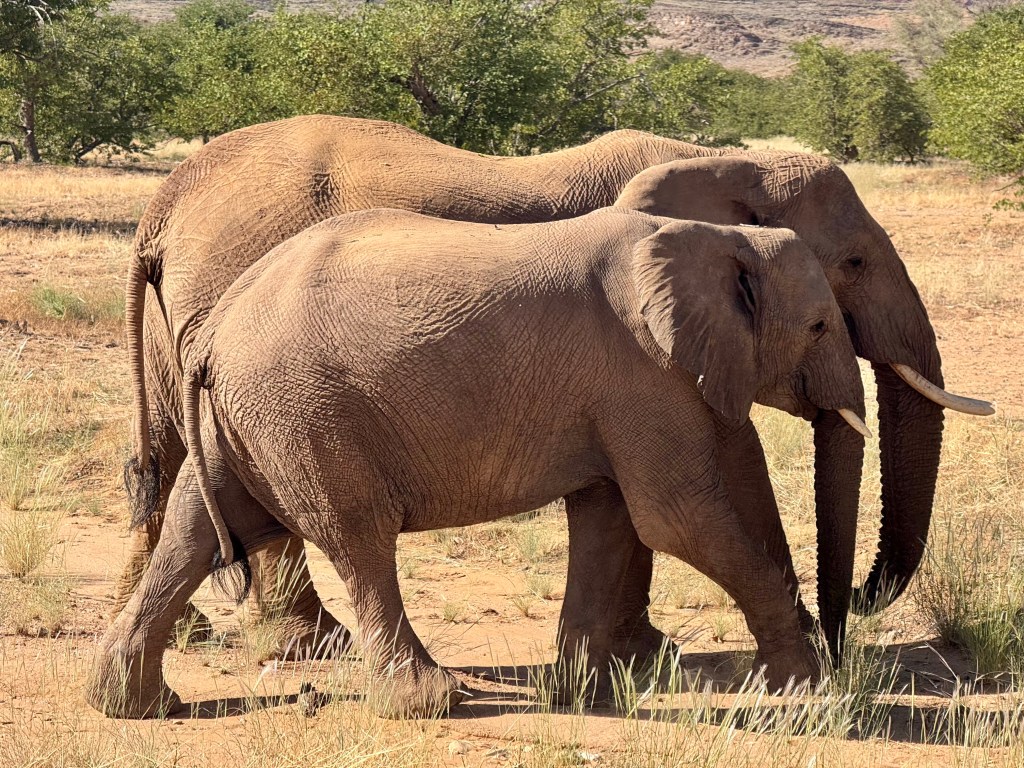
If you look at the back of an elephant’s ears you can see a rich grouping of blood vessels. When they flap their ears it acts as a cooling method for their blood thereby reducing their body temperature.
We were told another fascinating fact about some of the trees that the elephants feed from.
Once a tree’s leaves are eaten by the elephants, the tree emits a pheromone like signal to the trees downwind which triggers a reaction.
The tree start increasing the tannin content in their leaves making them distasteful to the elephants thereby saving their leaves from being eaten!
Furthermore, the elephants seem to have adapted to this by feeding from the trees upwind or eating from trees more widely spaced to negate this defence mechanism.
Just amazing!
Our Namibian trip has sadly come to an end.
Tomorrow we have a 6 hour drive back to Windhoek with an early flight to Botswana the next morning.
 Jeff's Travel And Photo Blog