Our last African safari was in Botswana’s Chobe National Park.
The park runs along the Chobe river, forming a border line with Namibia on the other side.
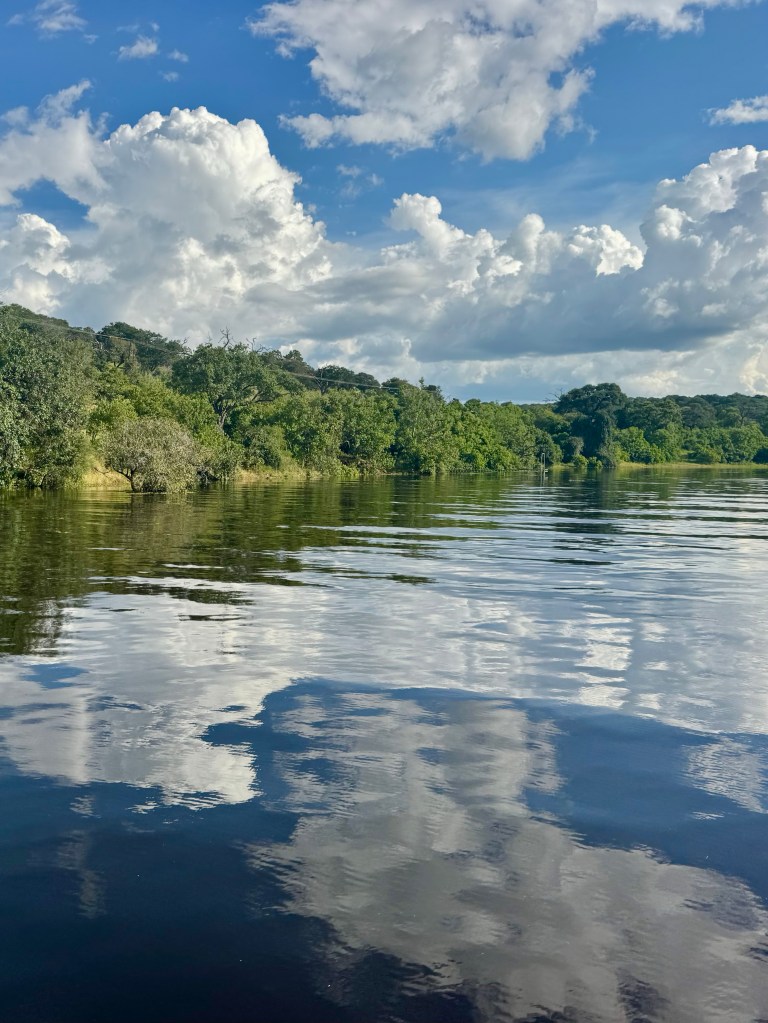
It’s quite different as you get to take boat cruises to see the wildlife by the riverside as well as do traditional game drives.
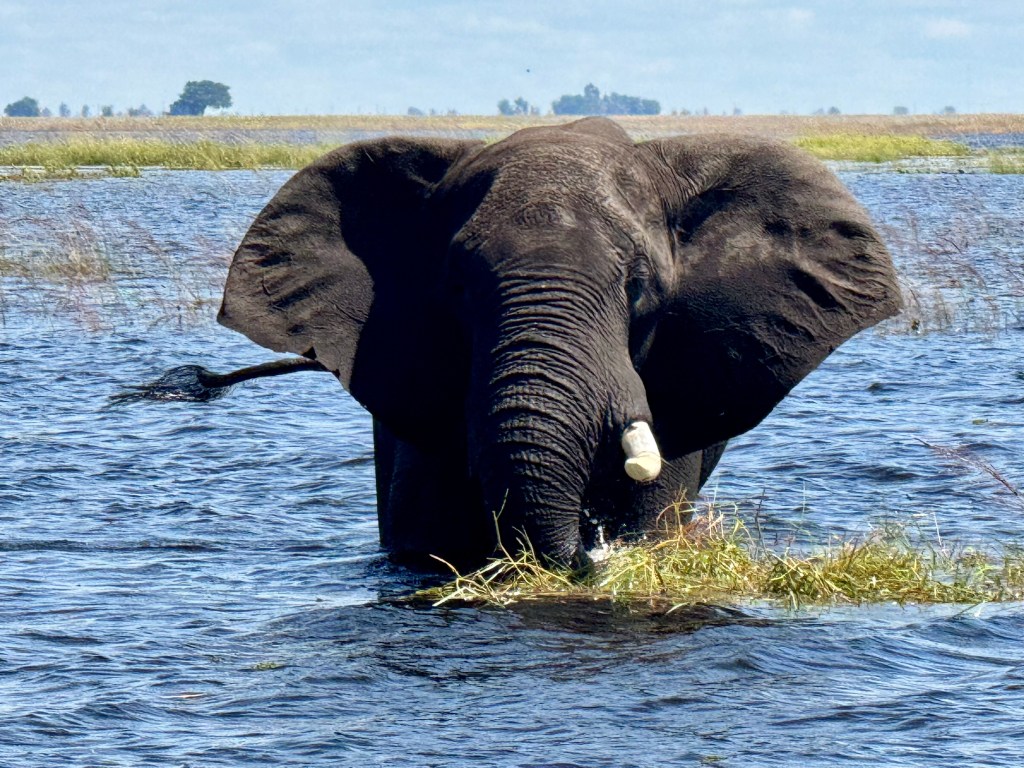
The park’s big draw are it’s Kalahari elephants, with 50,000 to 110,000 known to exist in the area.
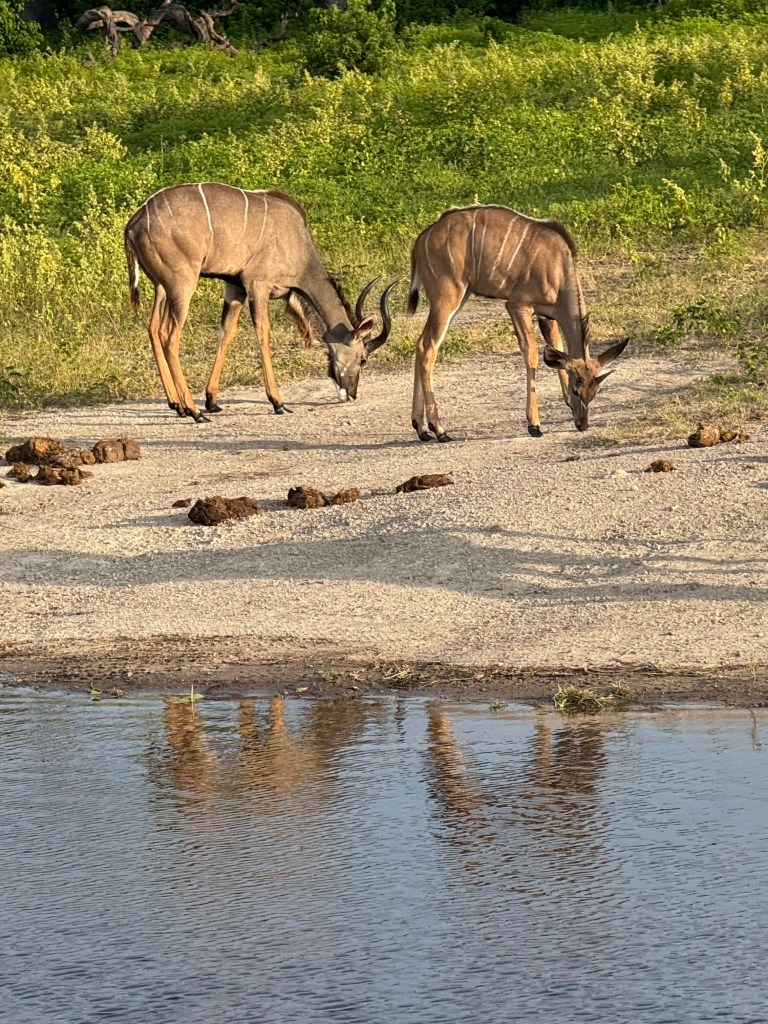
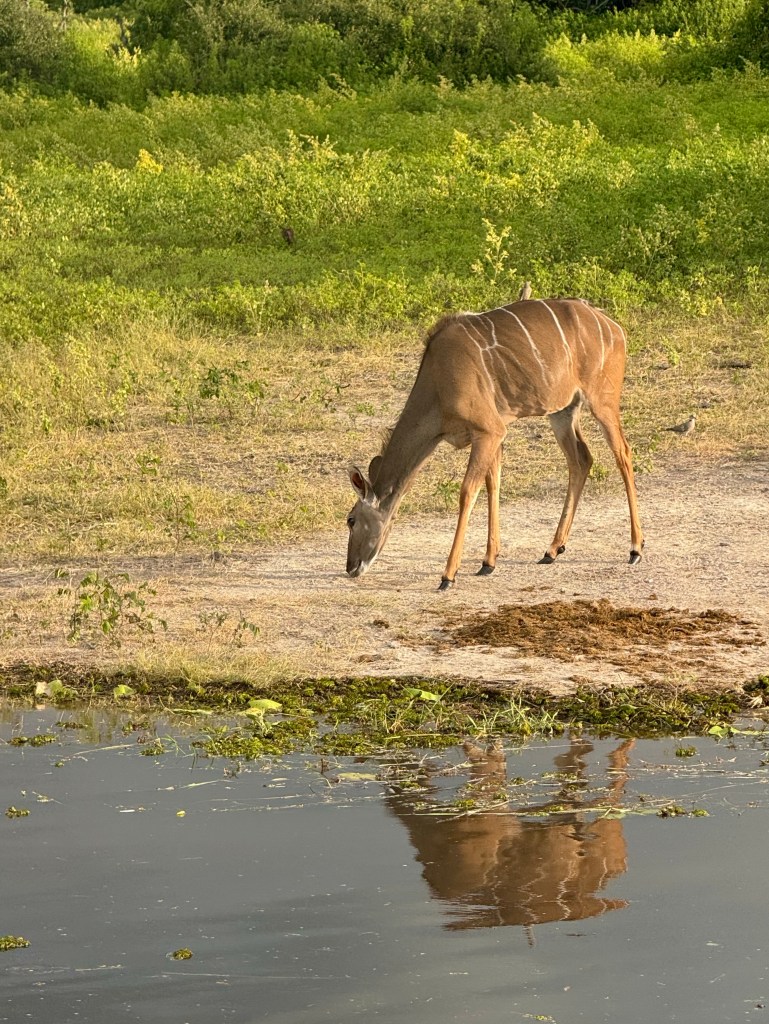
Above two Kudu antelopes eat minerals from the riverside soil.
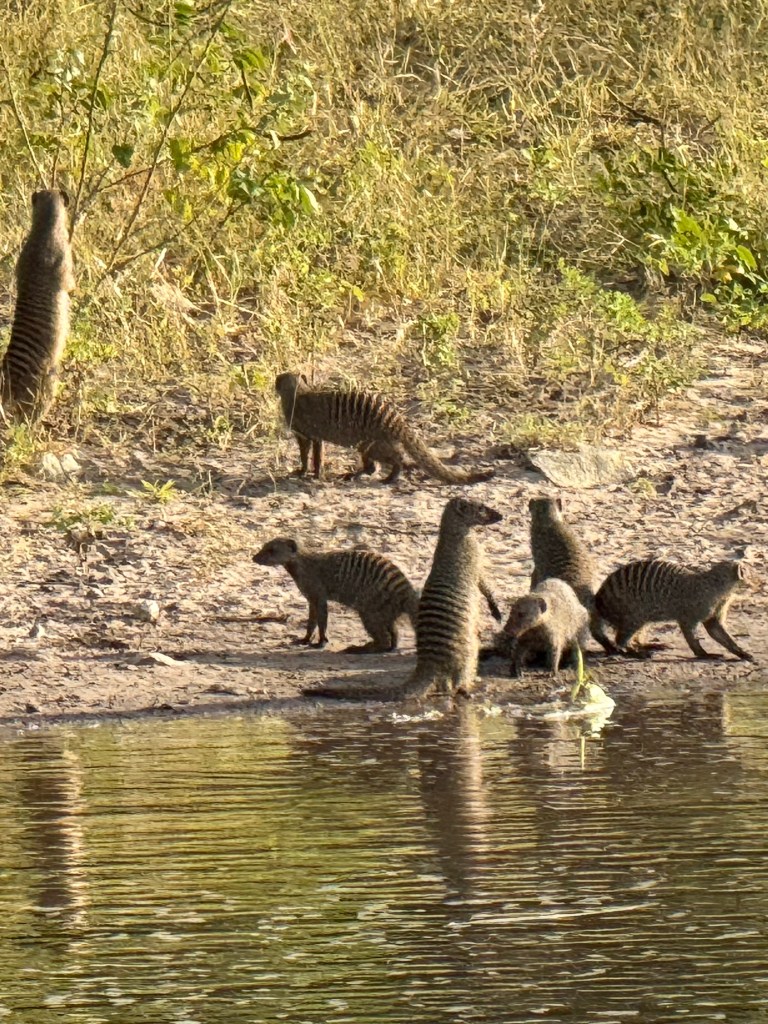
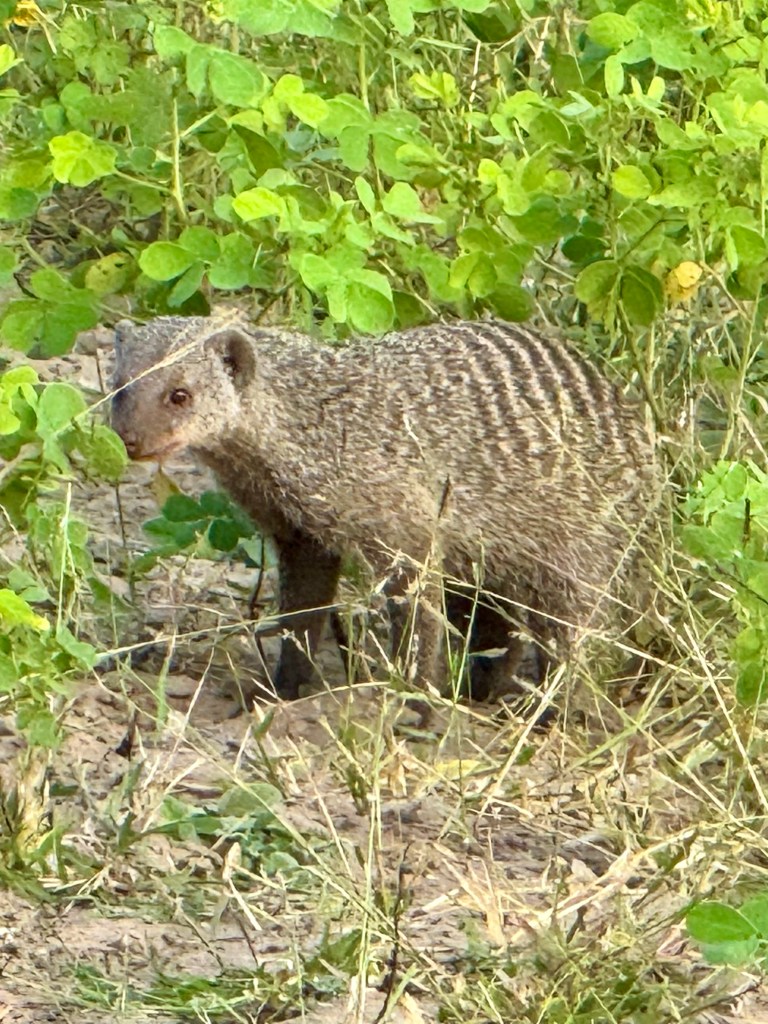
There are mongoose to be seen along the riverside.
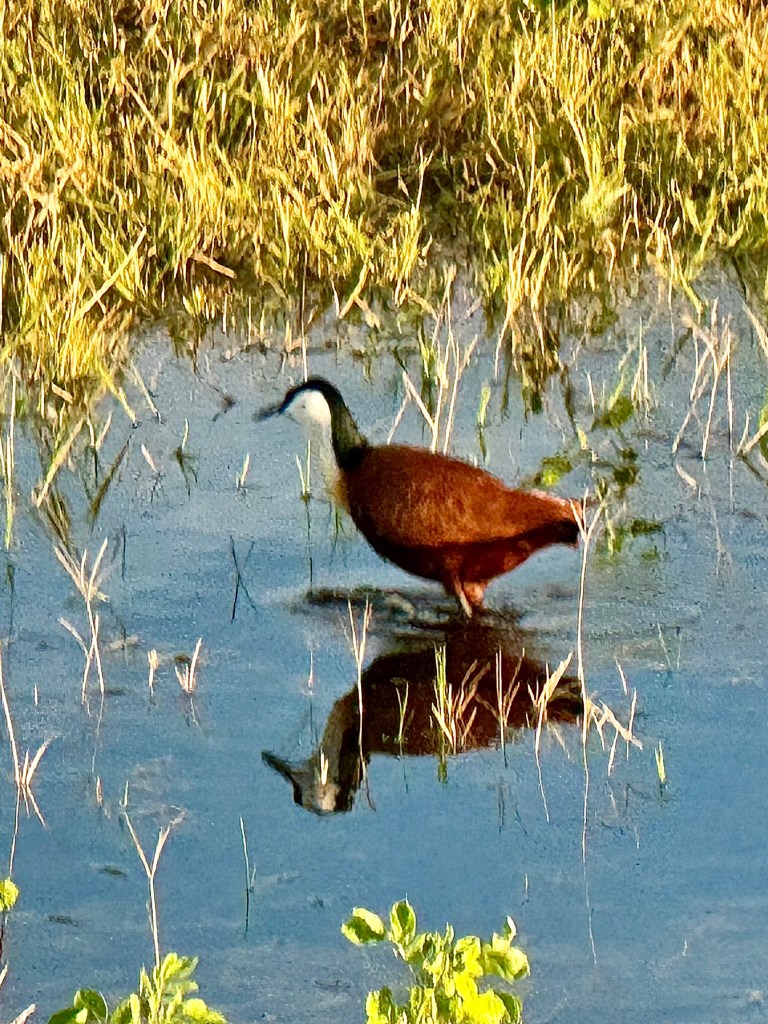
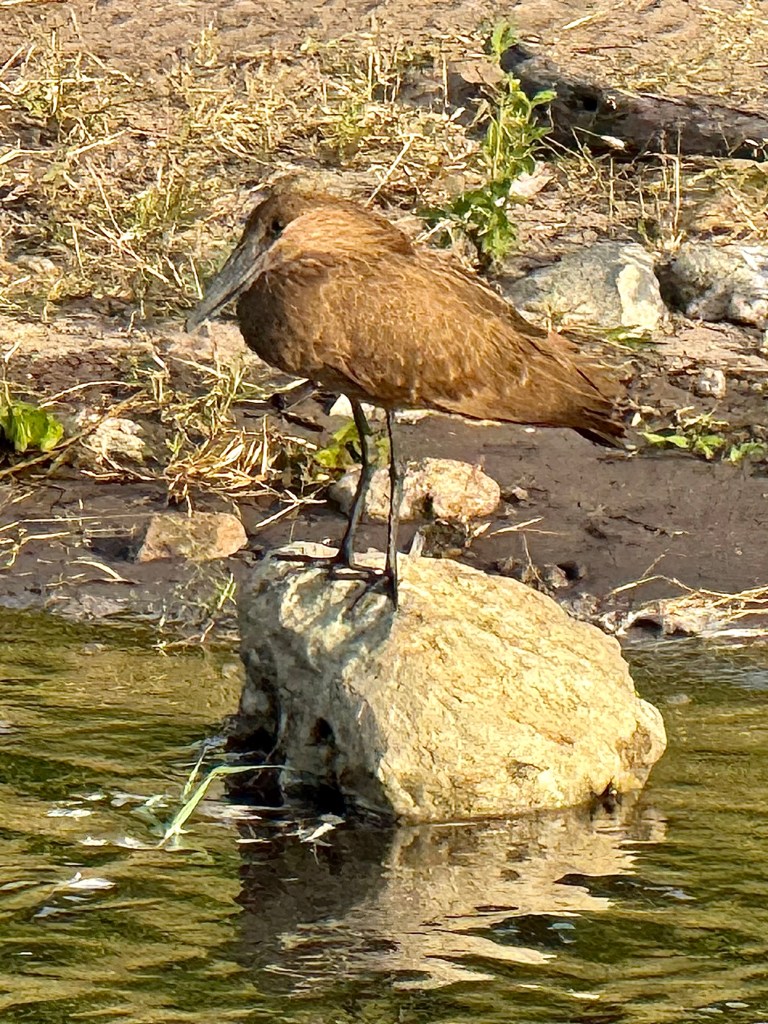
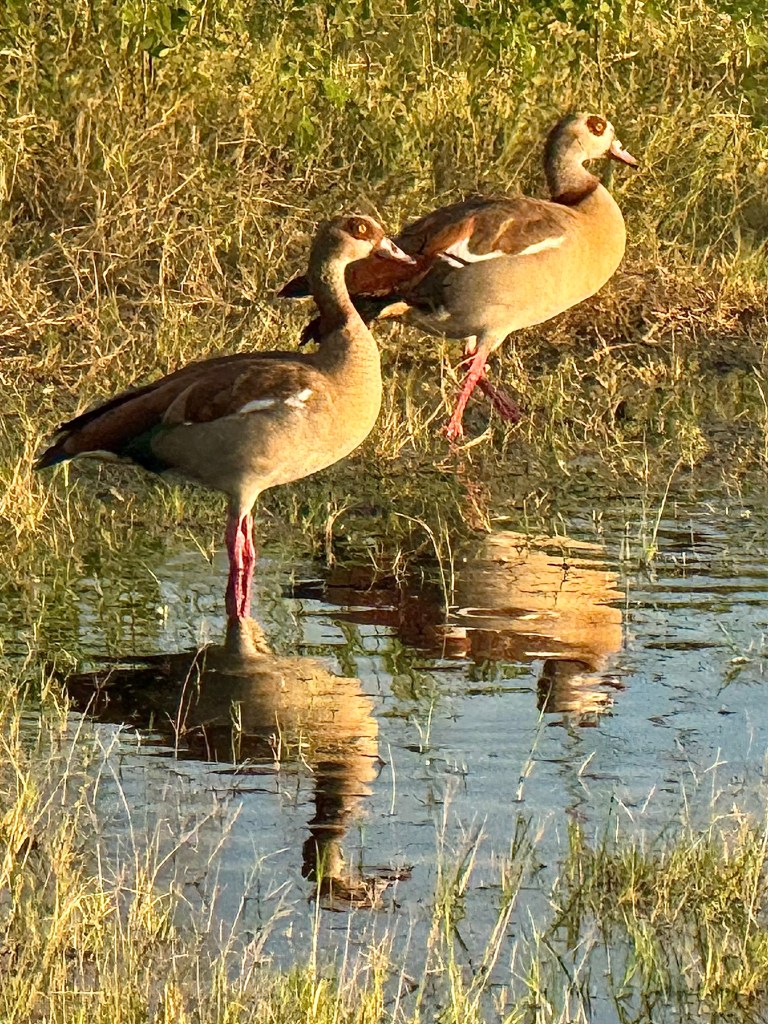
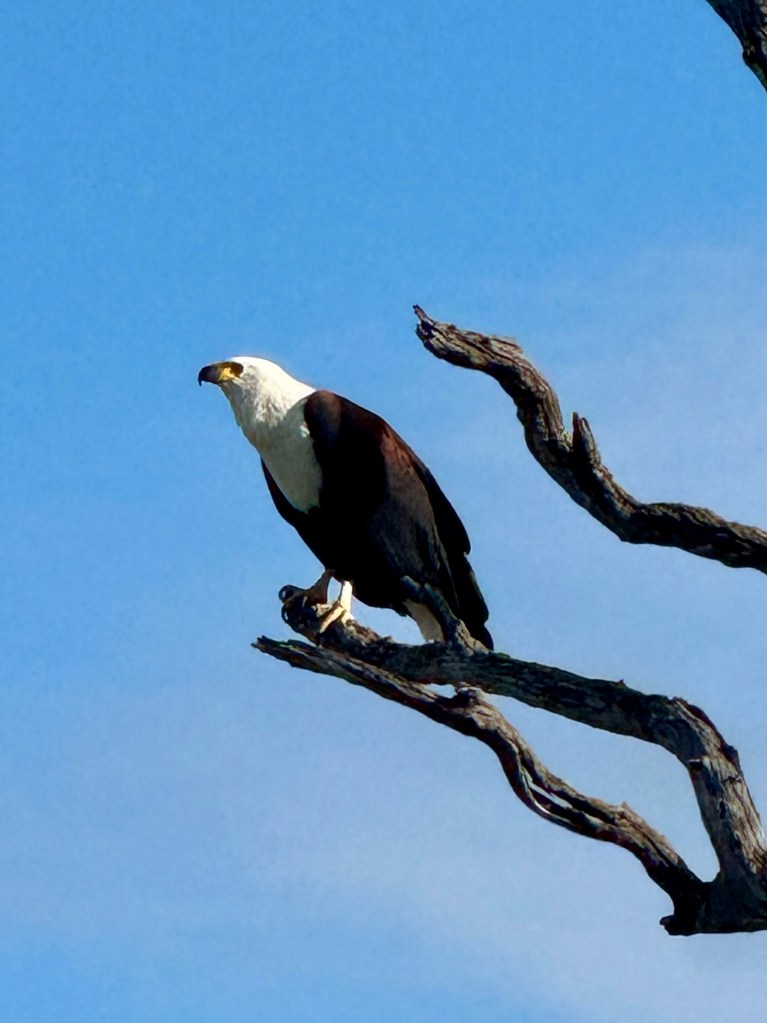
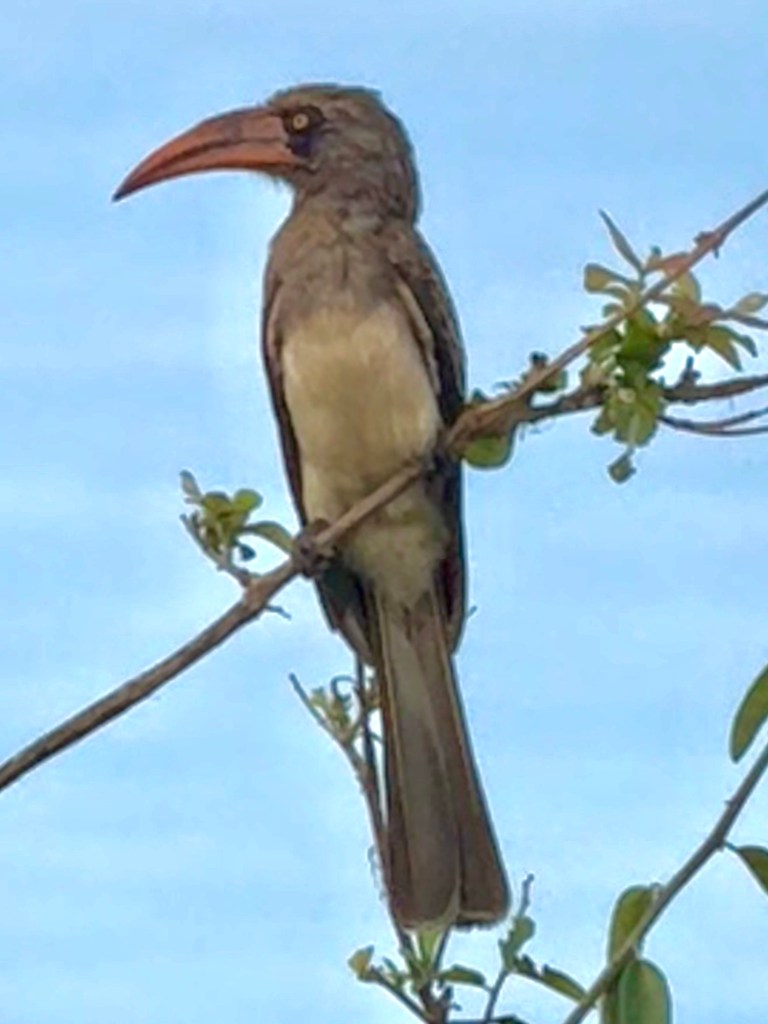
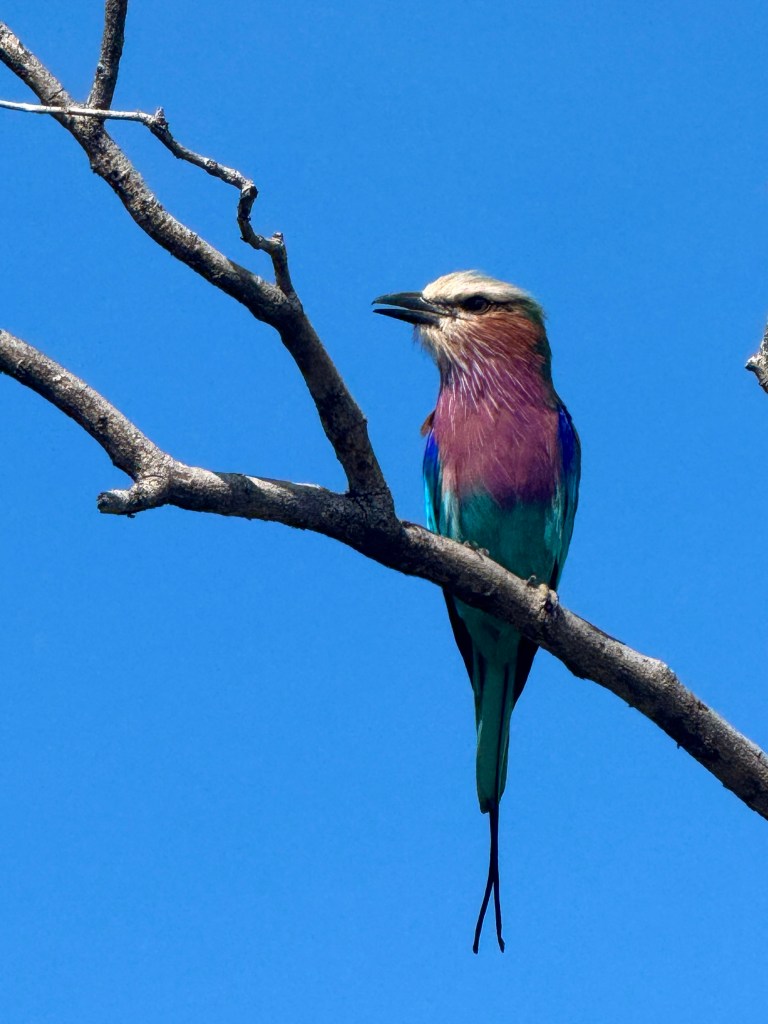
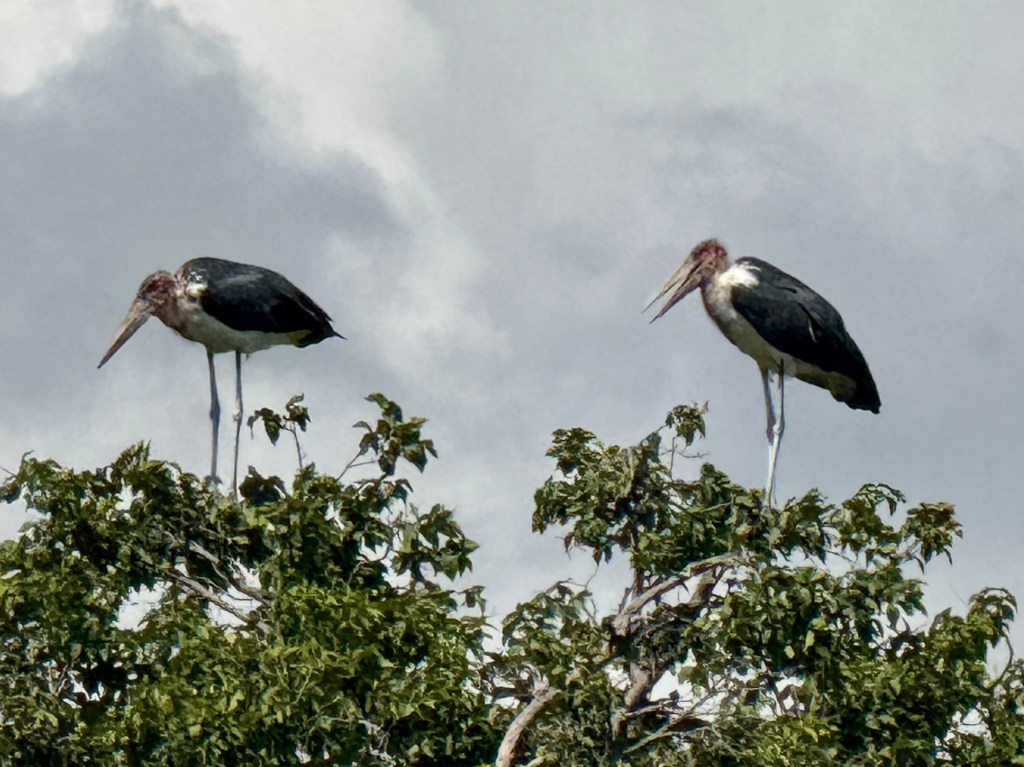
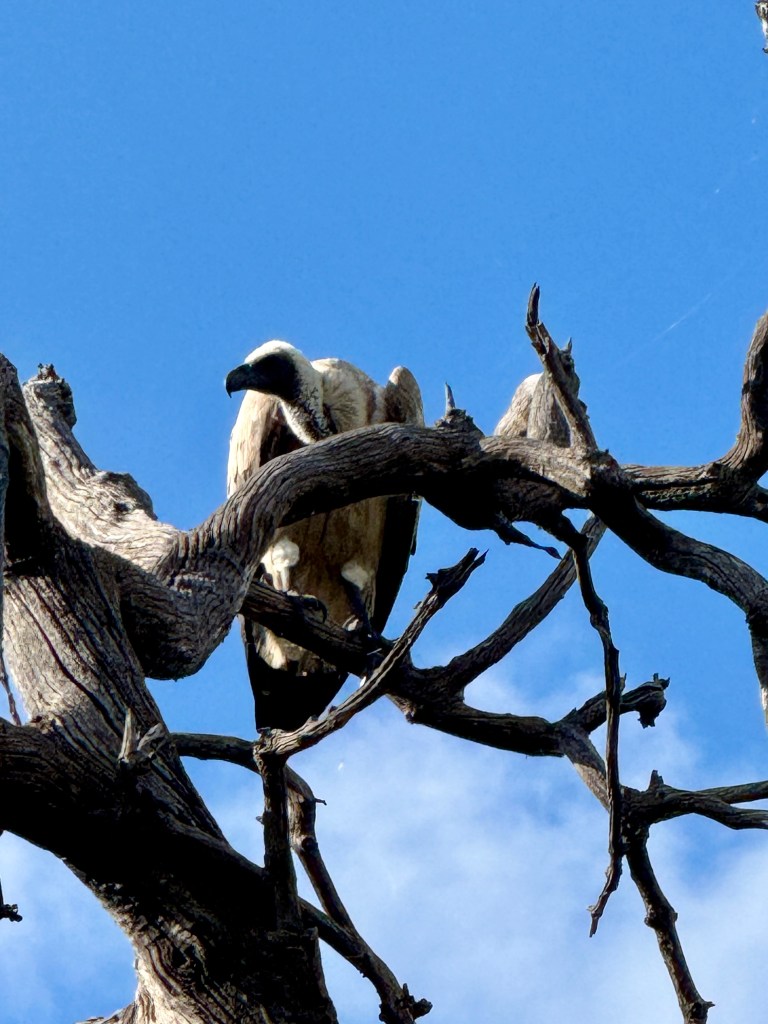
The water source also draws plenty of birdlife.
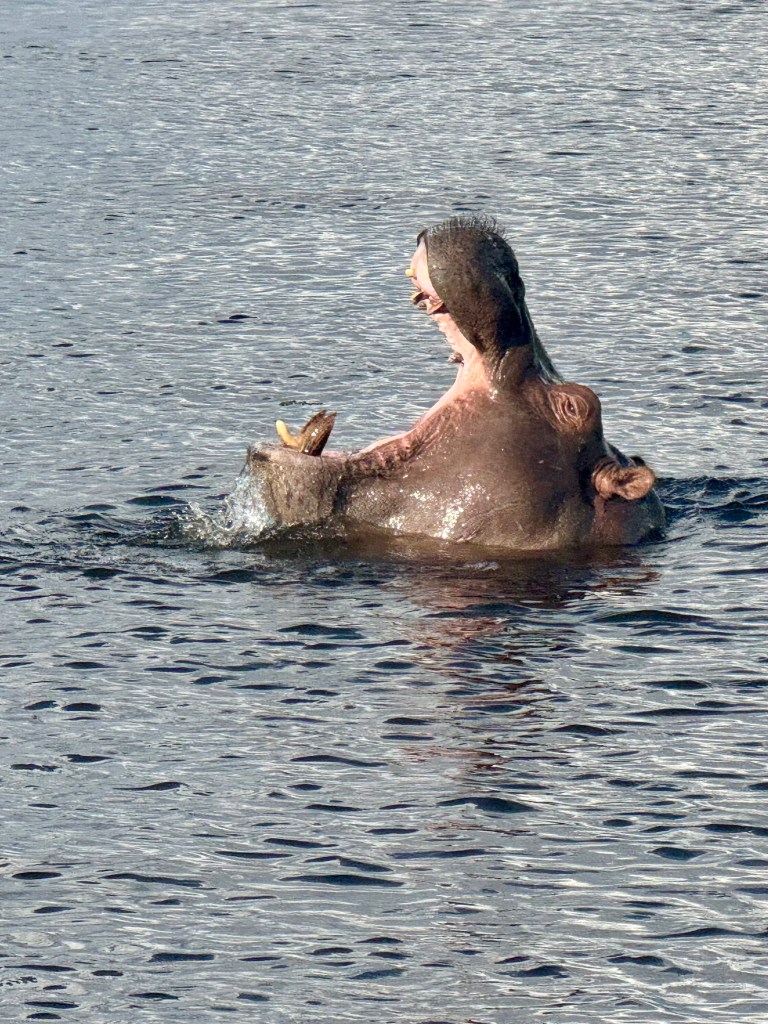
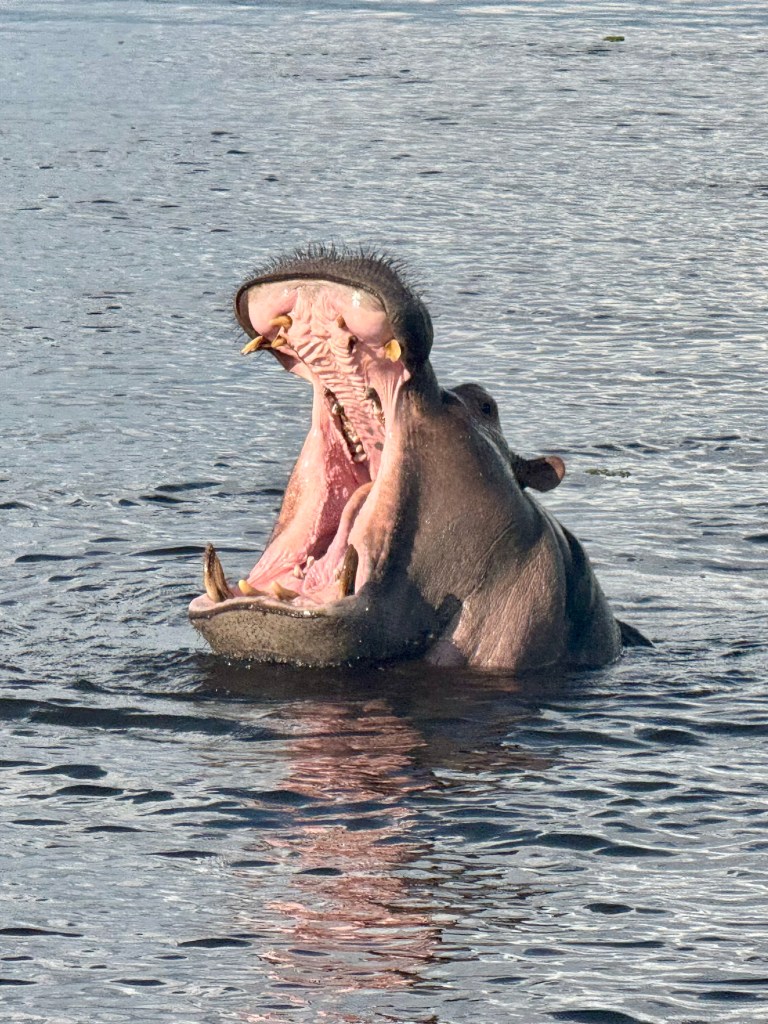
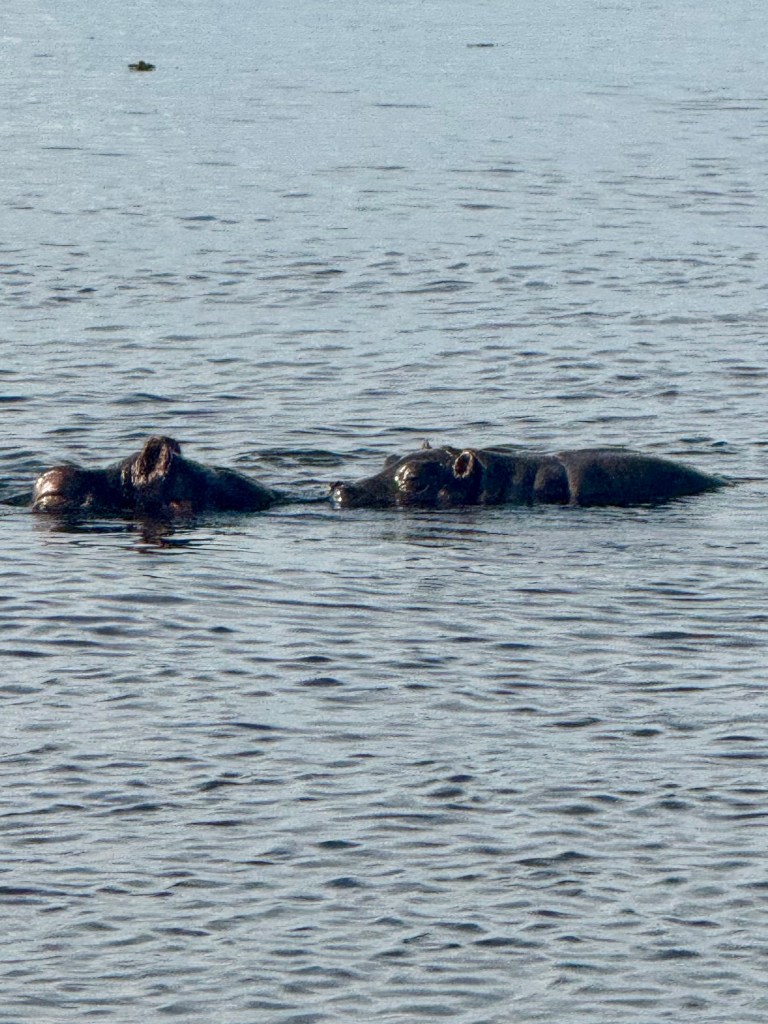
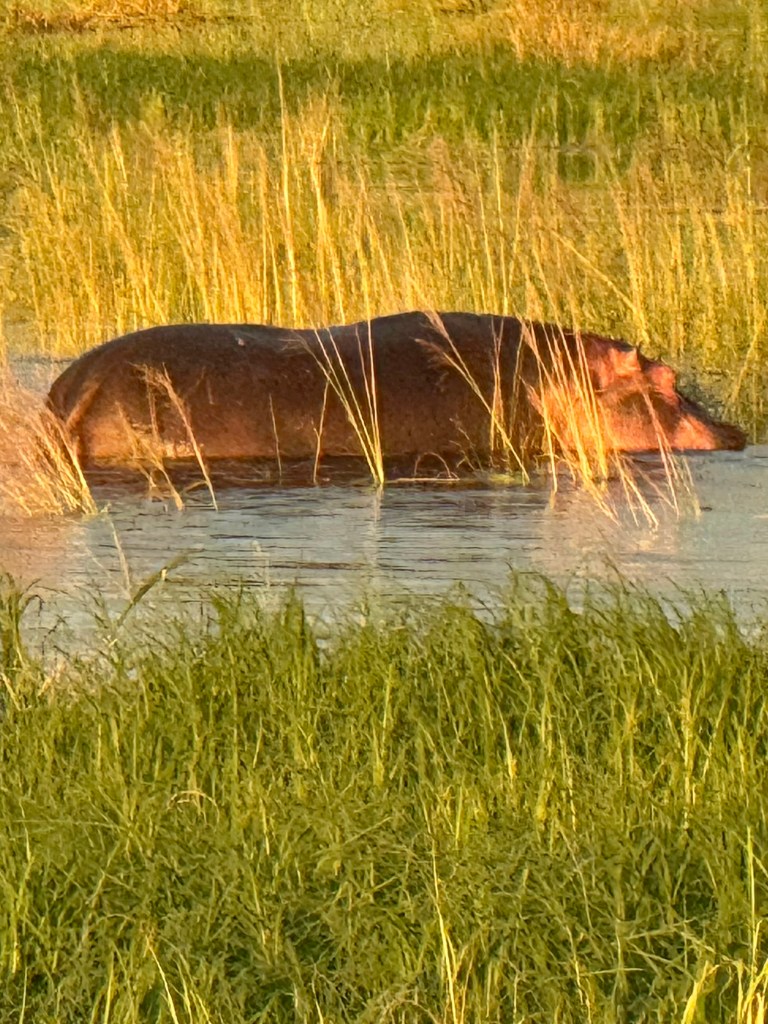
The river is full of hippopotamuses, they can spend as much as 16 hours in the water and dive beneath the water for up to 5 minutes, before rising to the top for air.
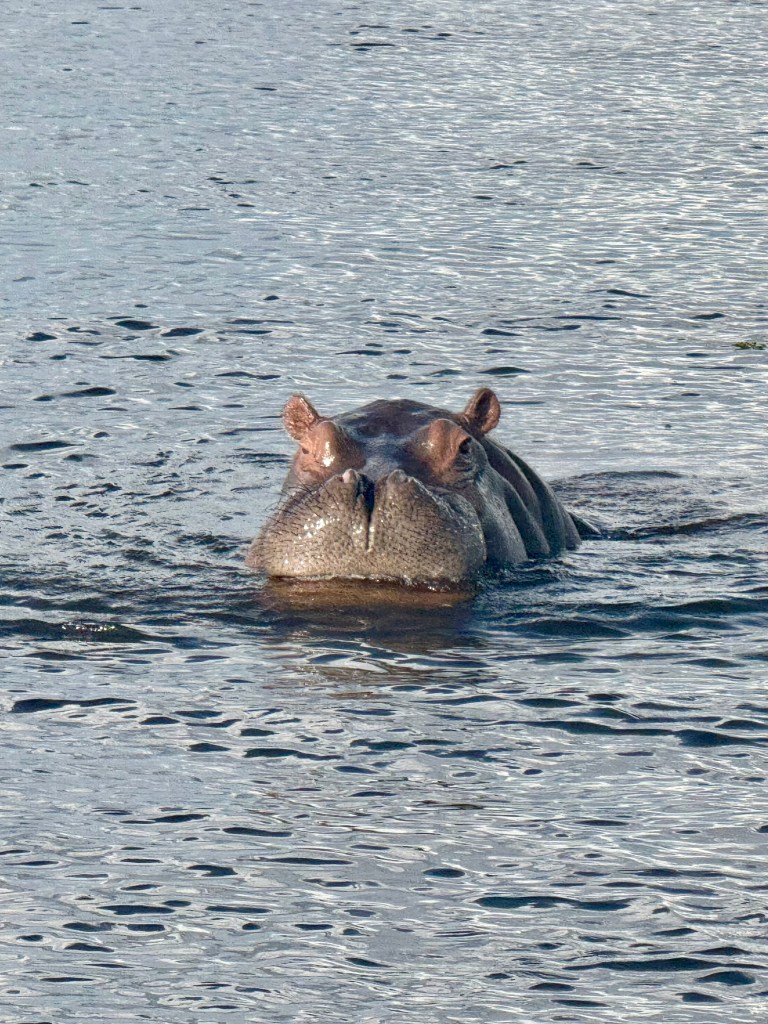
The can open their mouths up to 150 degrees, us humans can manage 40 degrees.
Below a baby sits on its mother’s back in the river.
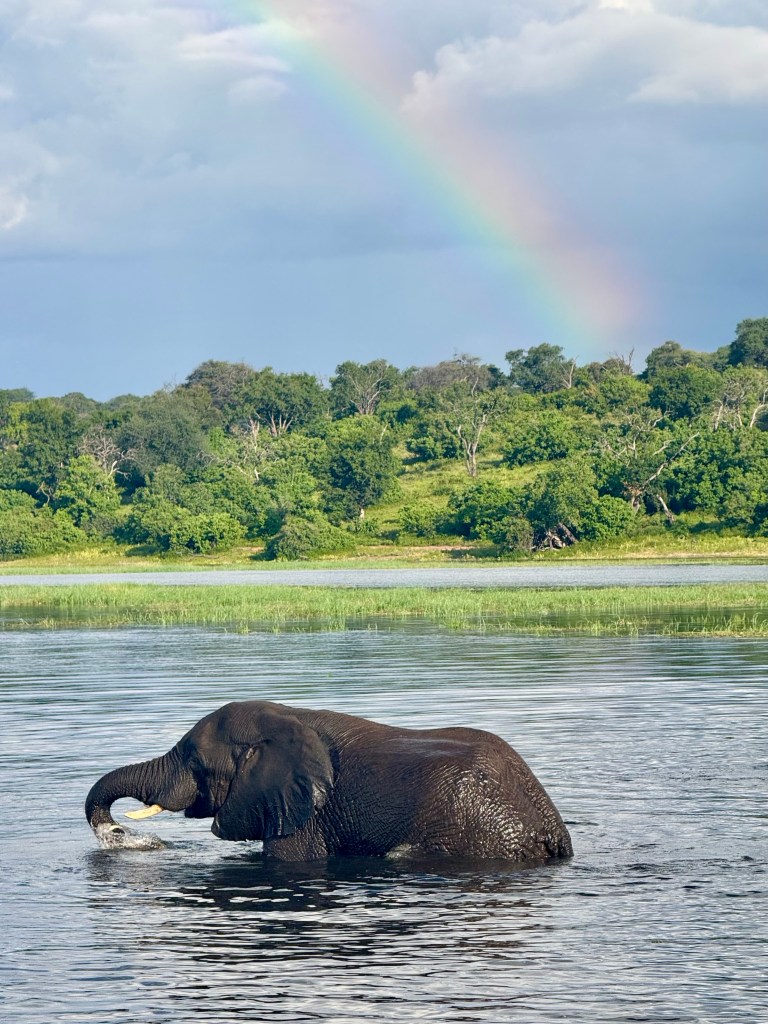
The elephants will also walk into the deep water, below, a crocodile glides past in the foreground.
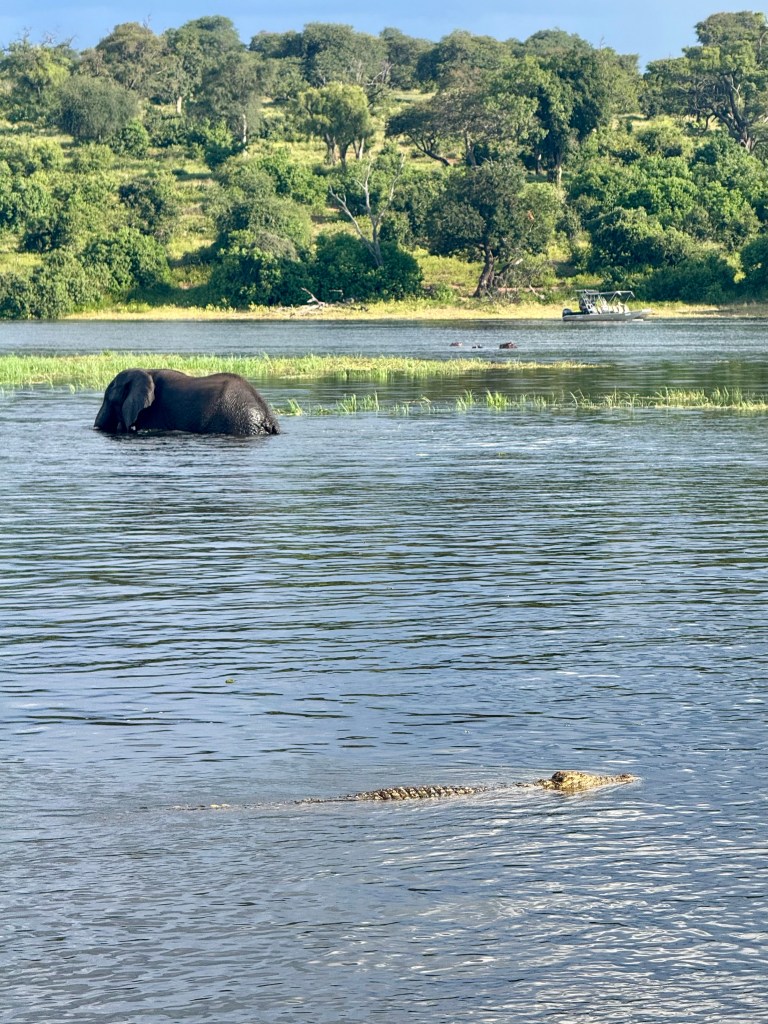
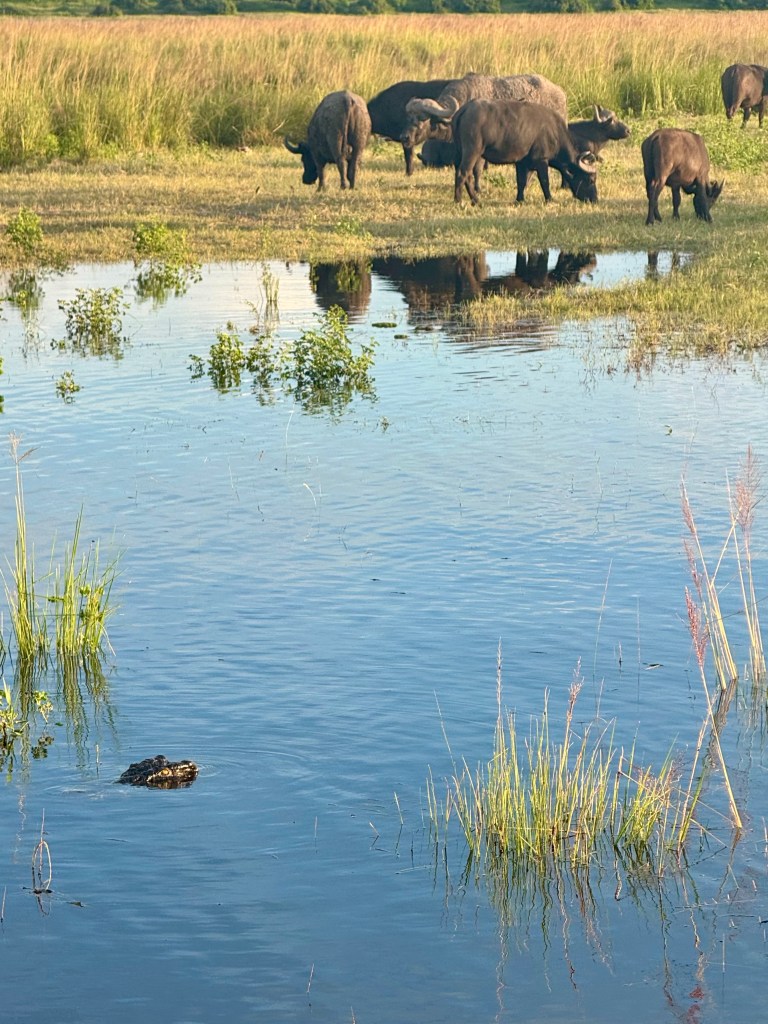
We also spotted a number of crocodiles along the riverbank.
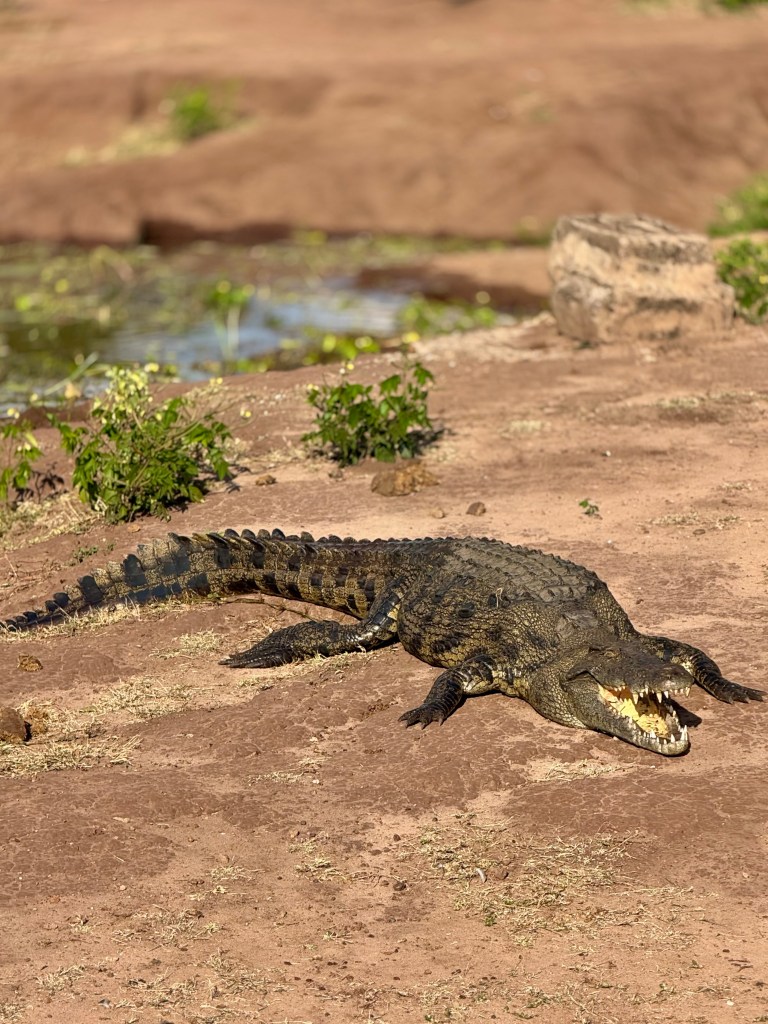
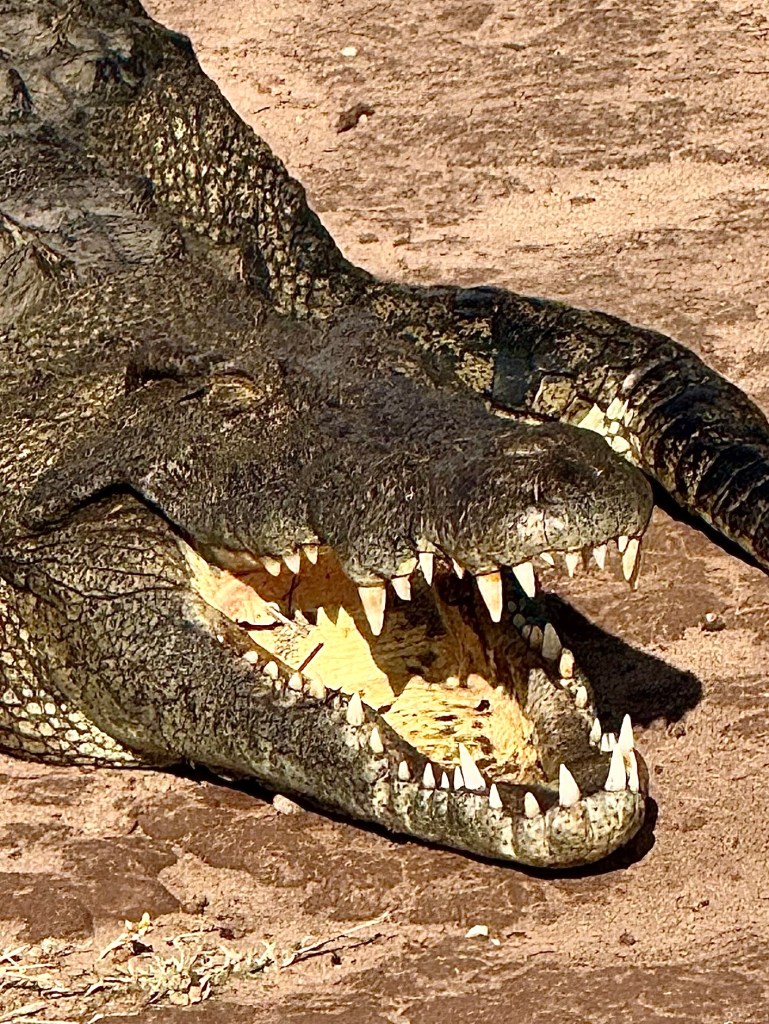
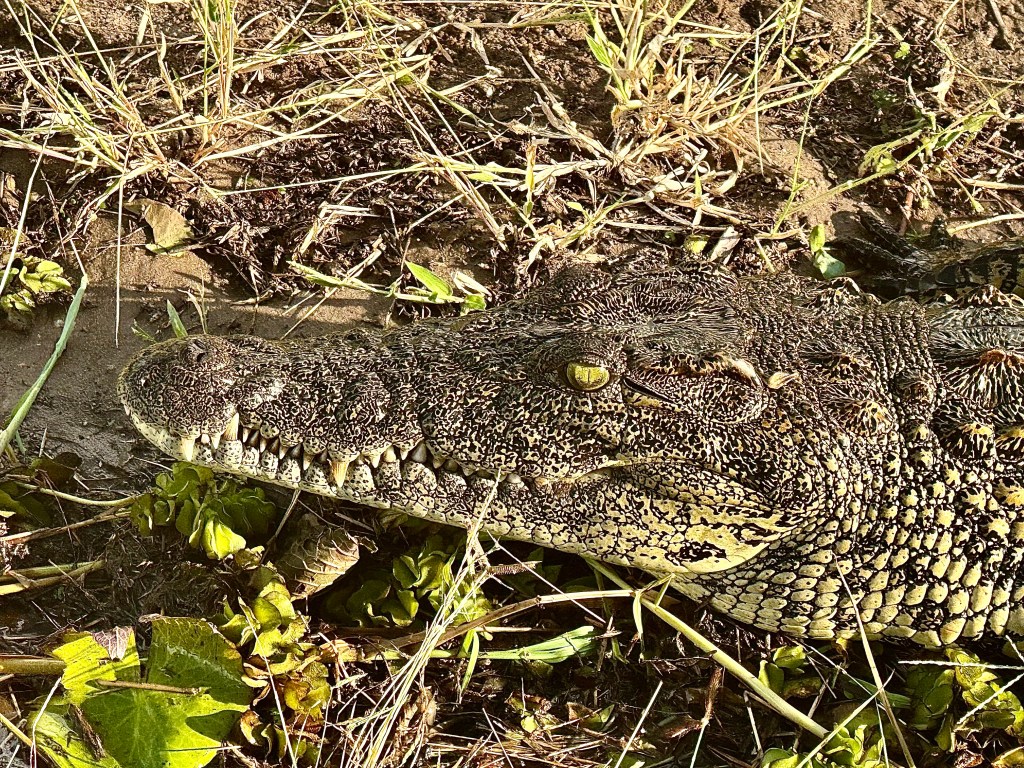
A crocodile patrols the riverbank looking for possible unaware prey below.
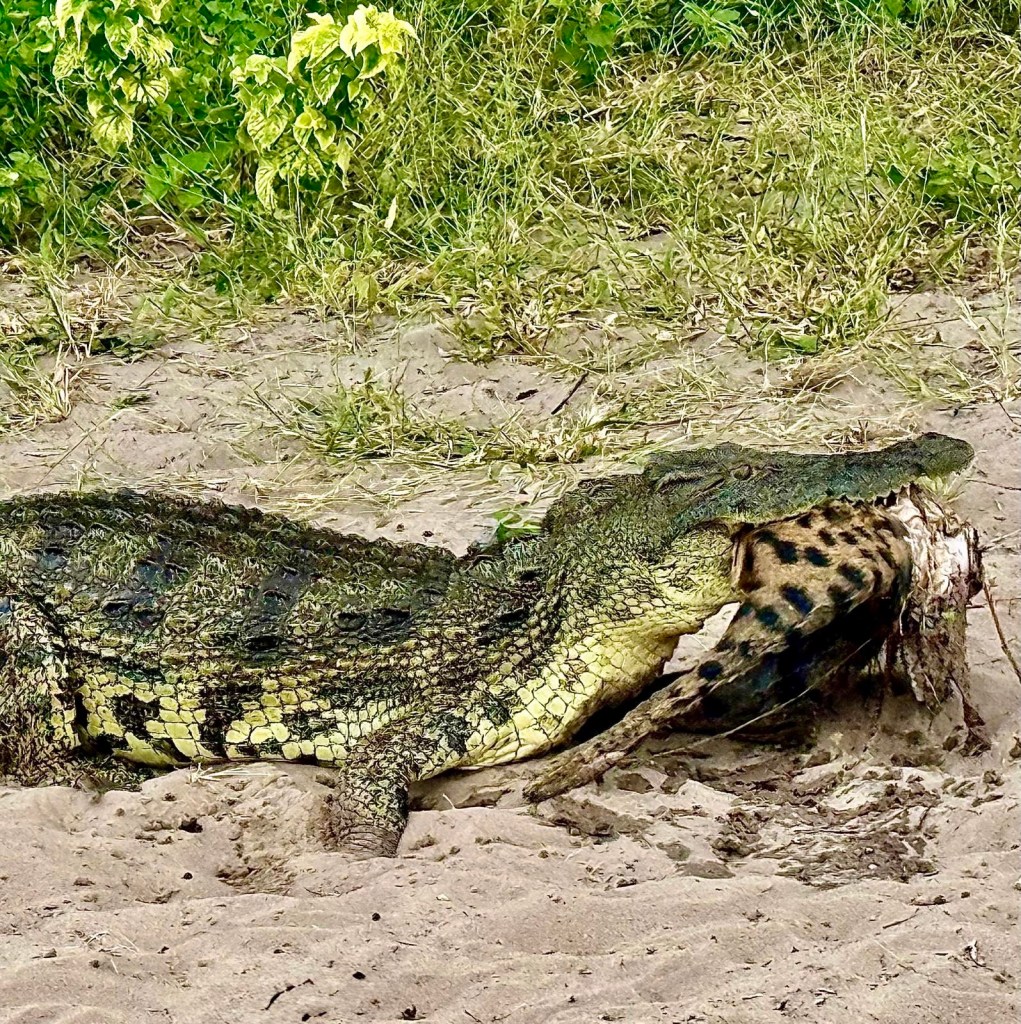
We spotted this crocodile with the leftovers of a Leopard in it’s jaws. There were thought to 49 leopards in the park, now 48 it seems.
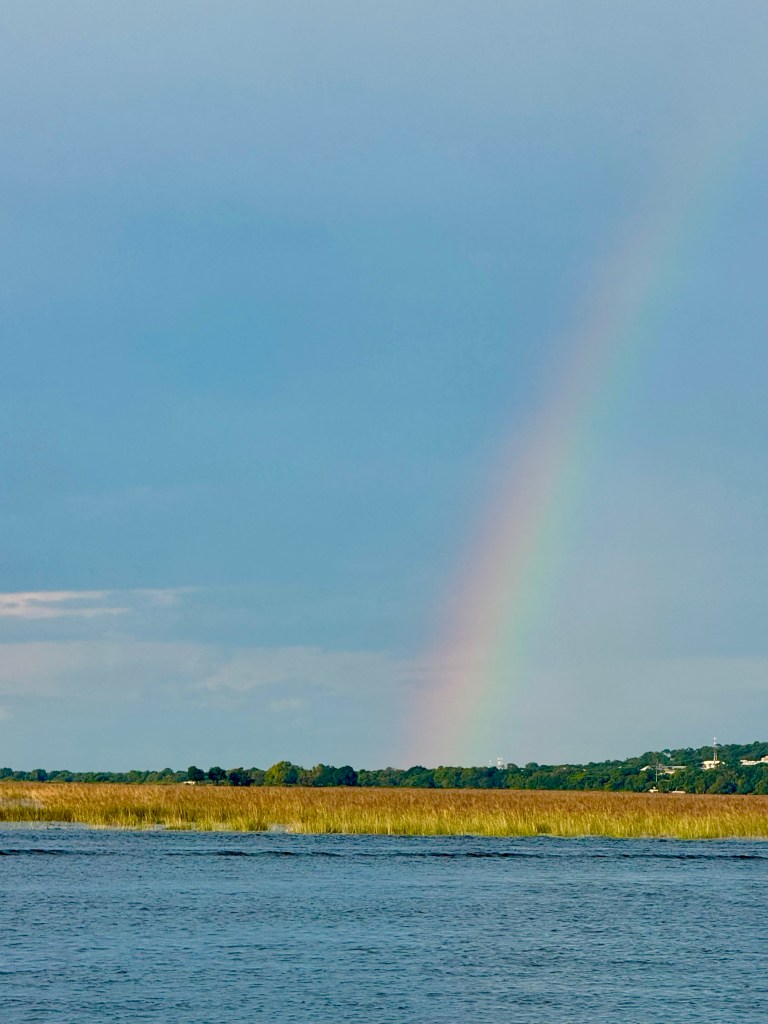
A short rainfall creates a rainbow.
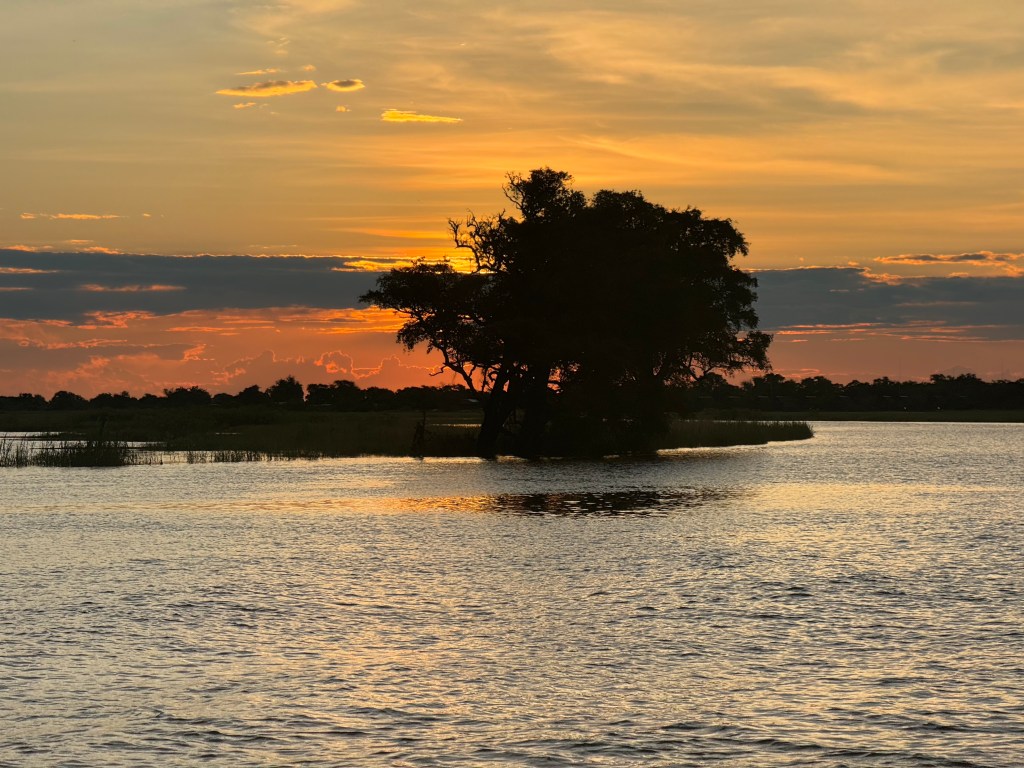
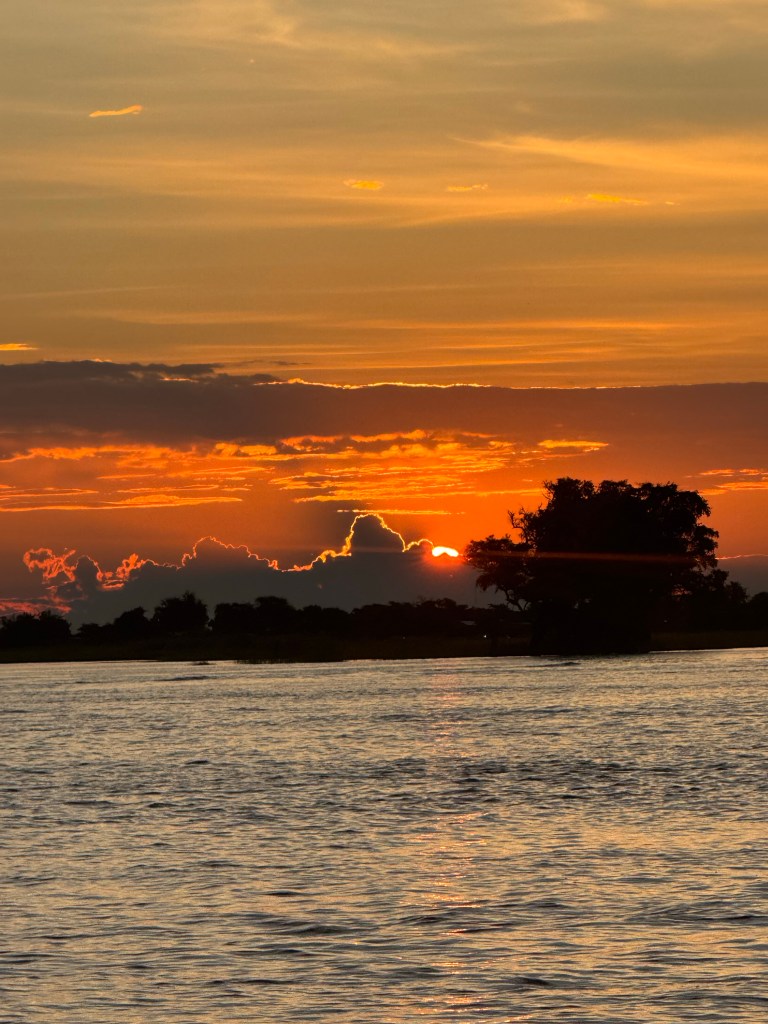
Sunset on the river is very scenic.
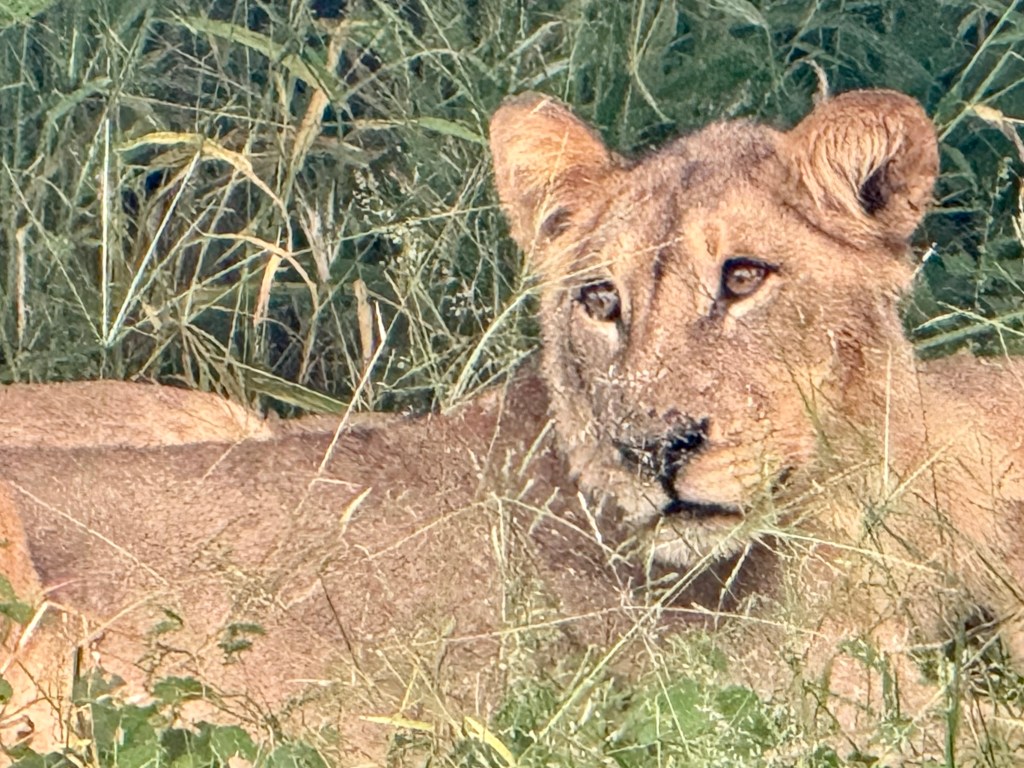
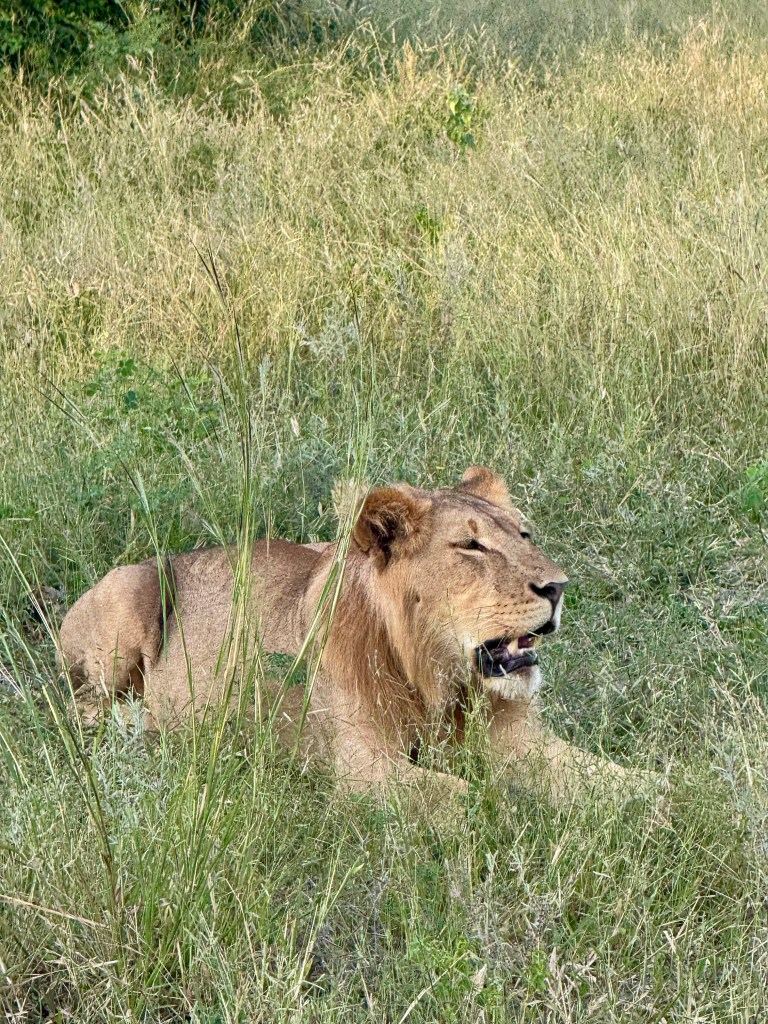
The park itself has lions too, although there are parts where there are lots of bushes which can make them hard to spot.
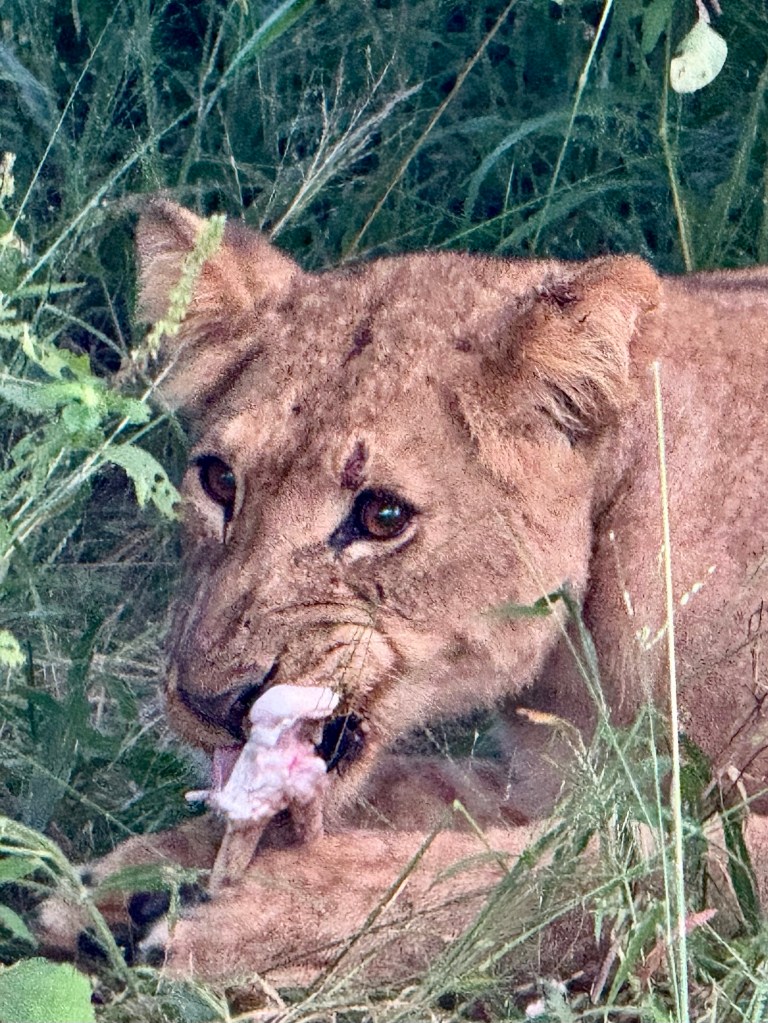
The young lion below gnaws on a bone.
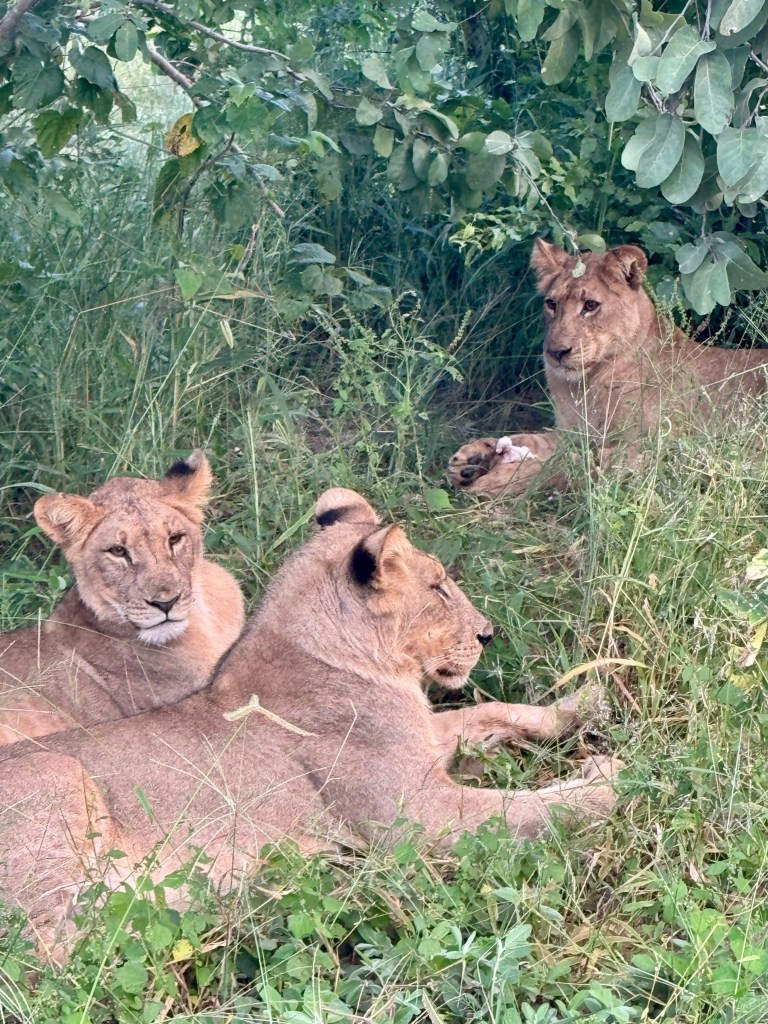
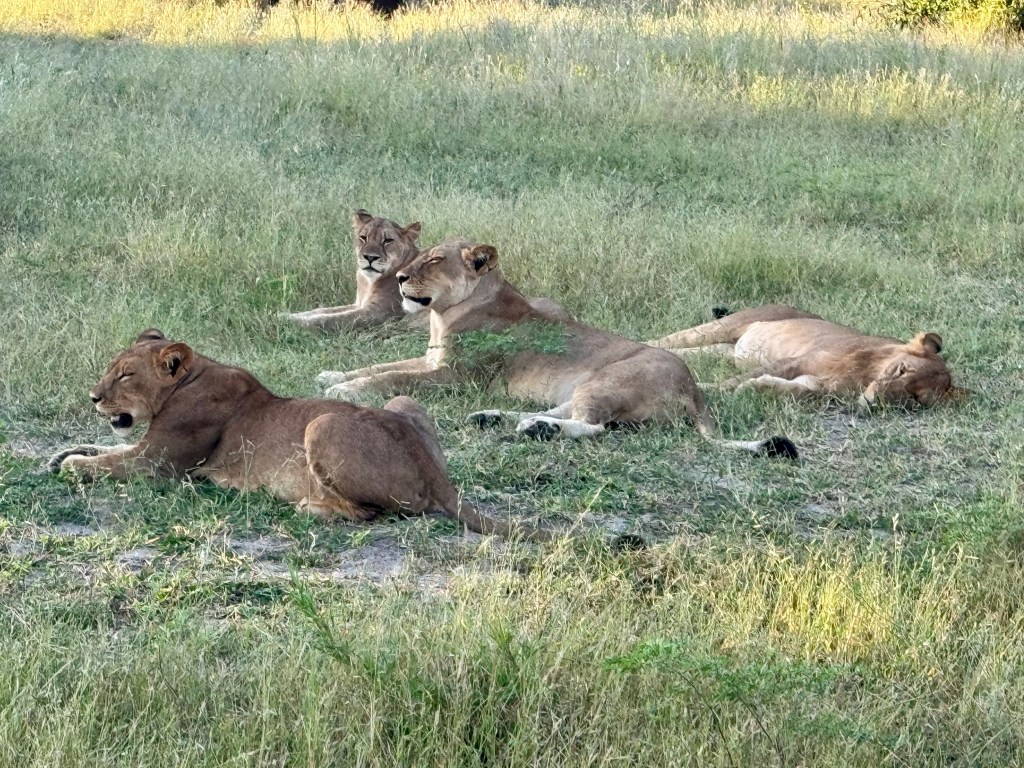
Later in the afternoon we spotted this group lounging in the afternoon sun.
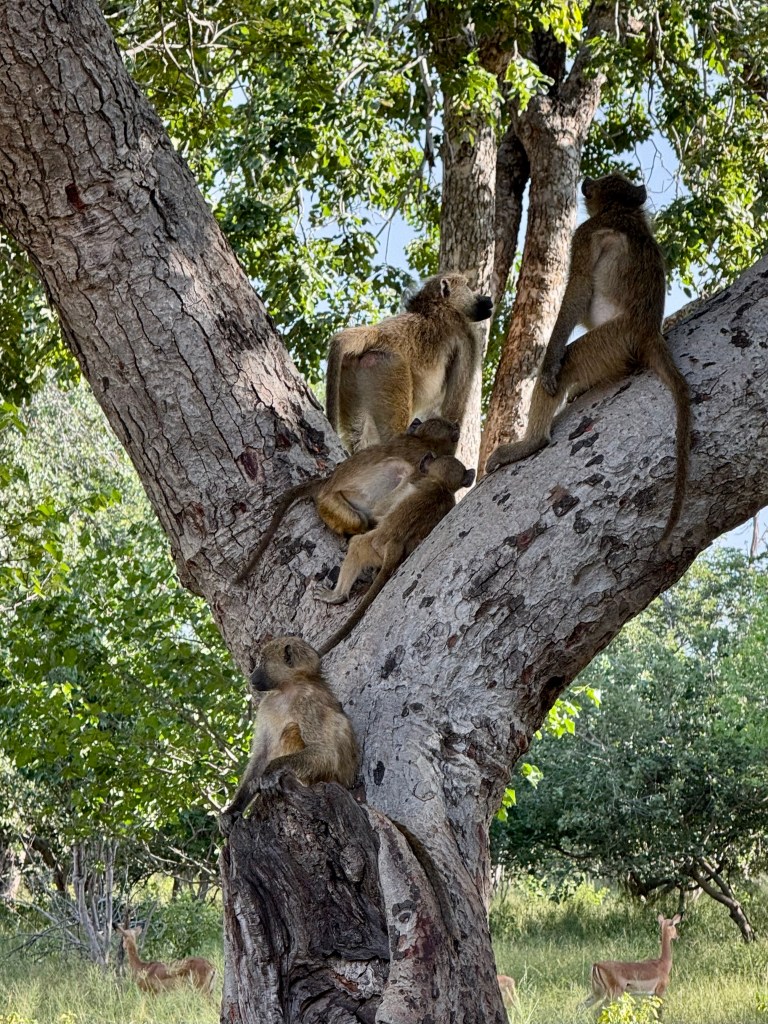
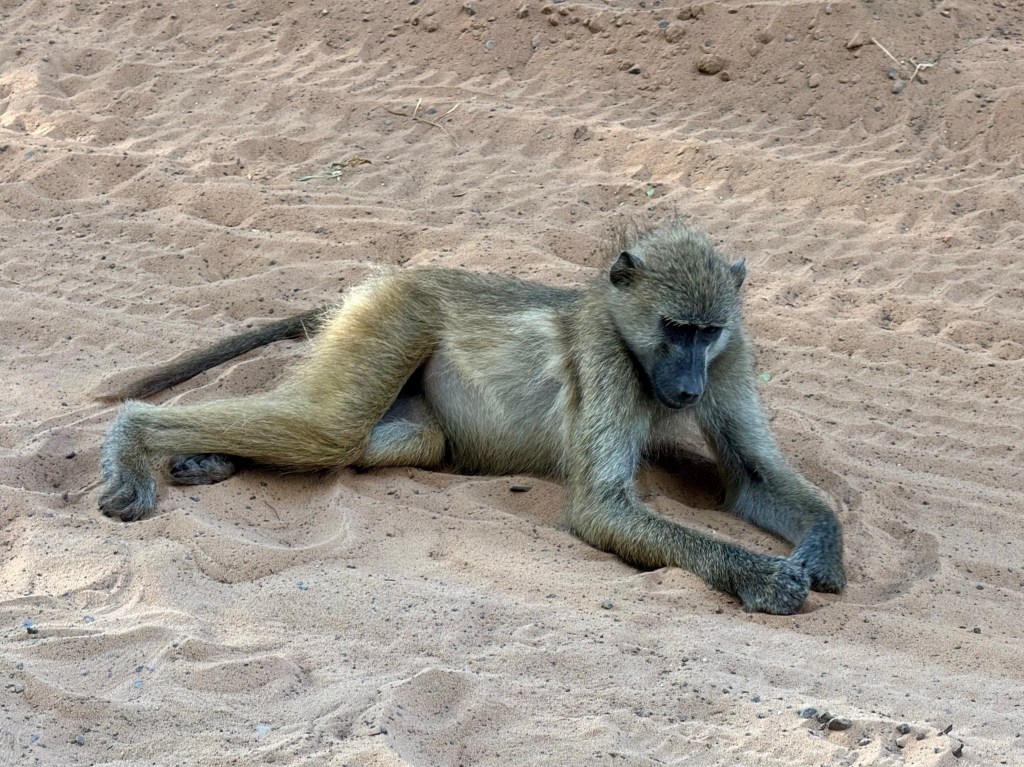
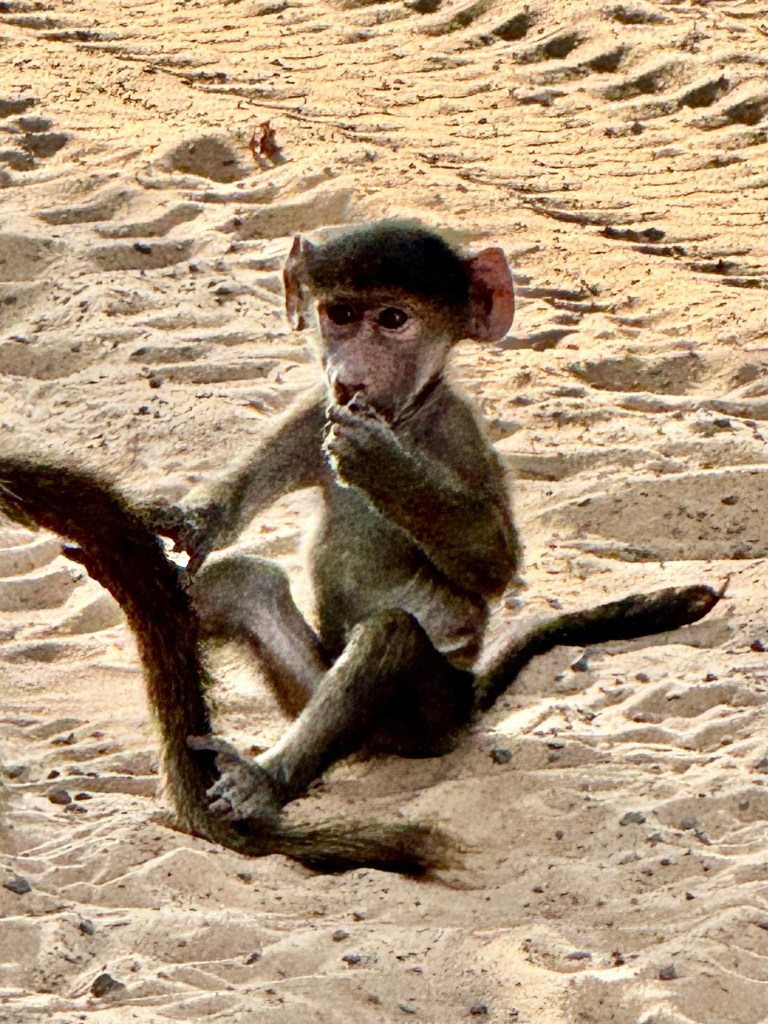
Baboons can be seen across the park, these were relaxing and playing on the road.
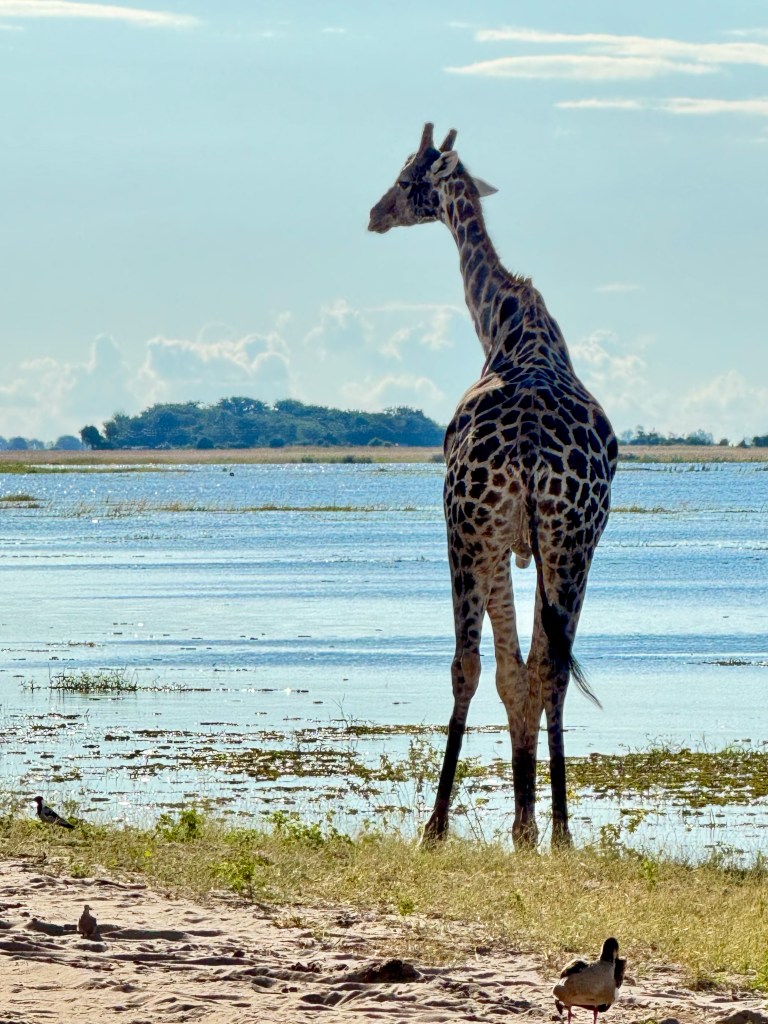
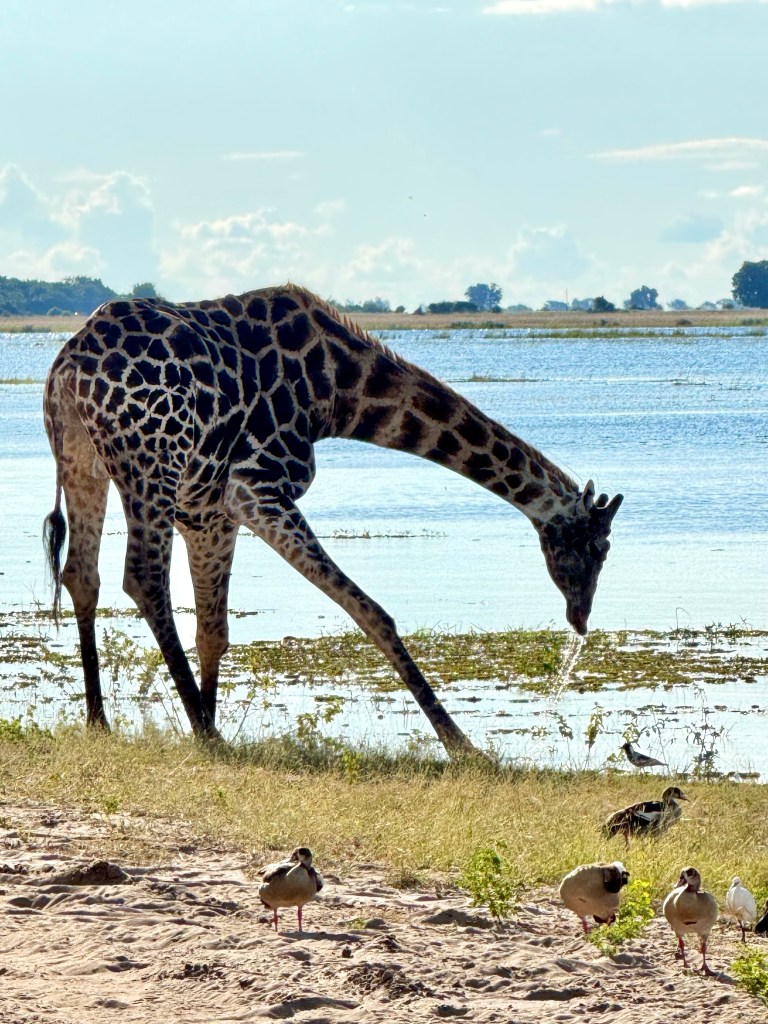
Giraffes walking to the riverside to drink.
However, the main event here is the elephants.
In hot weather they visit the riverbank in the morning and in the afternoon.
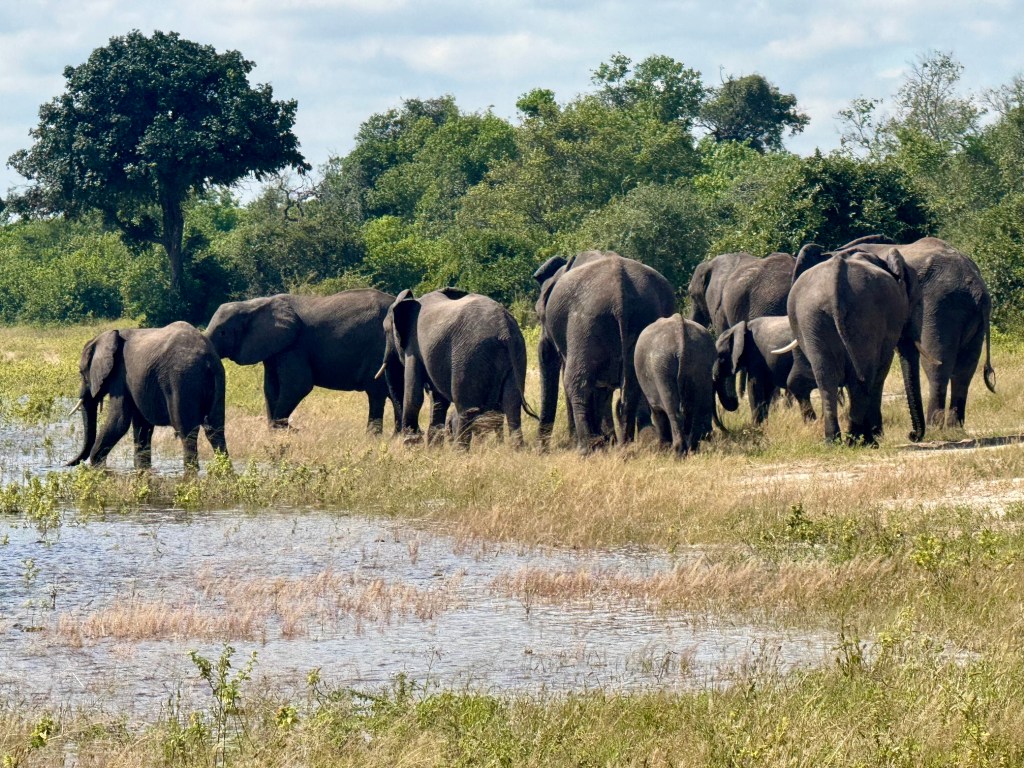
It is a sight you could watch for hours.
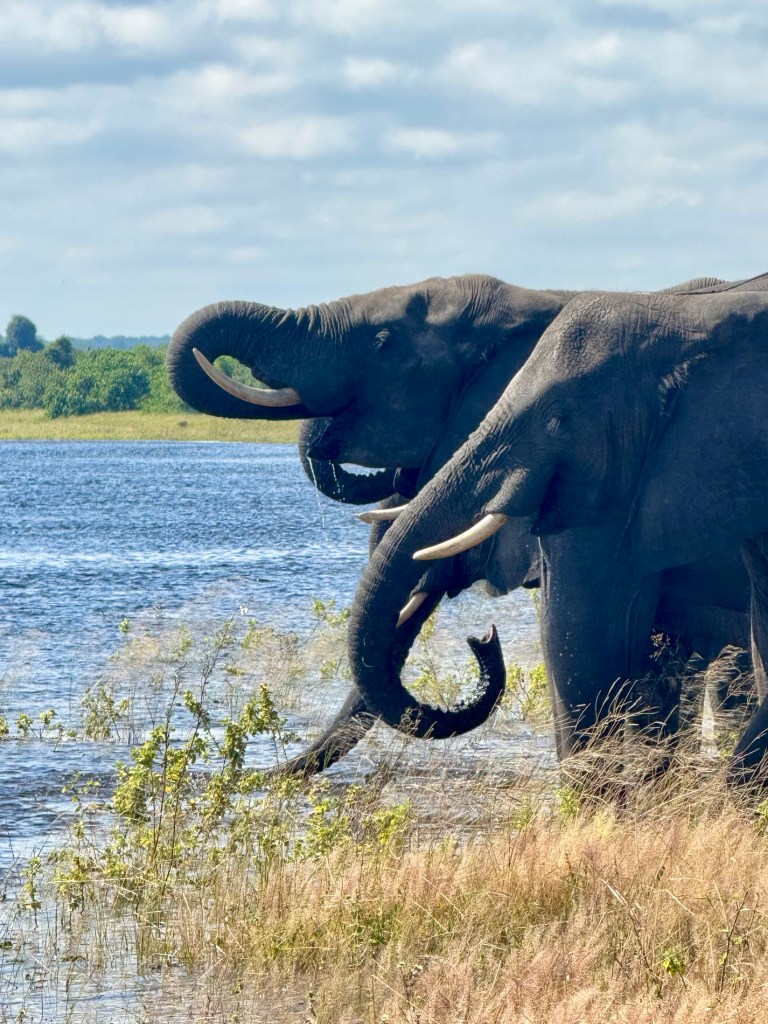
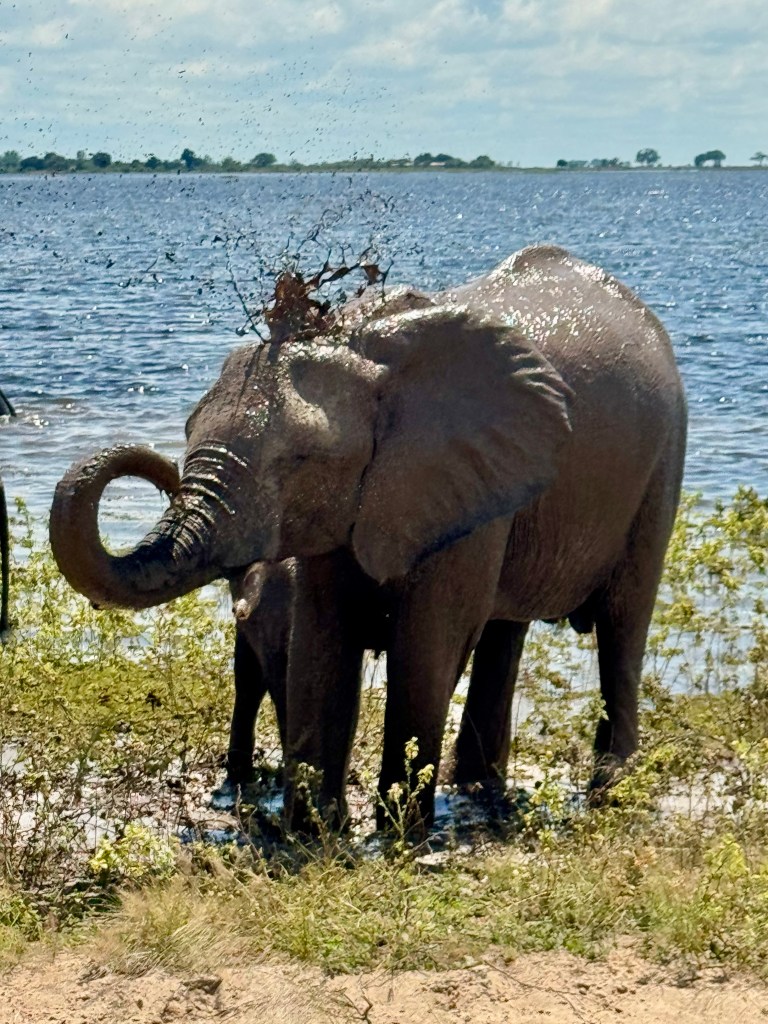
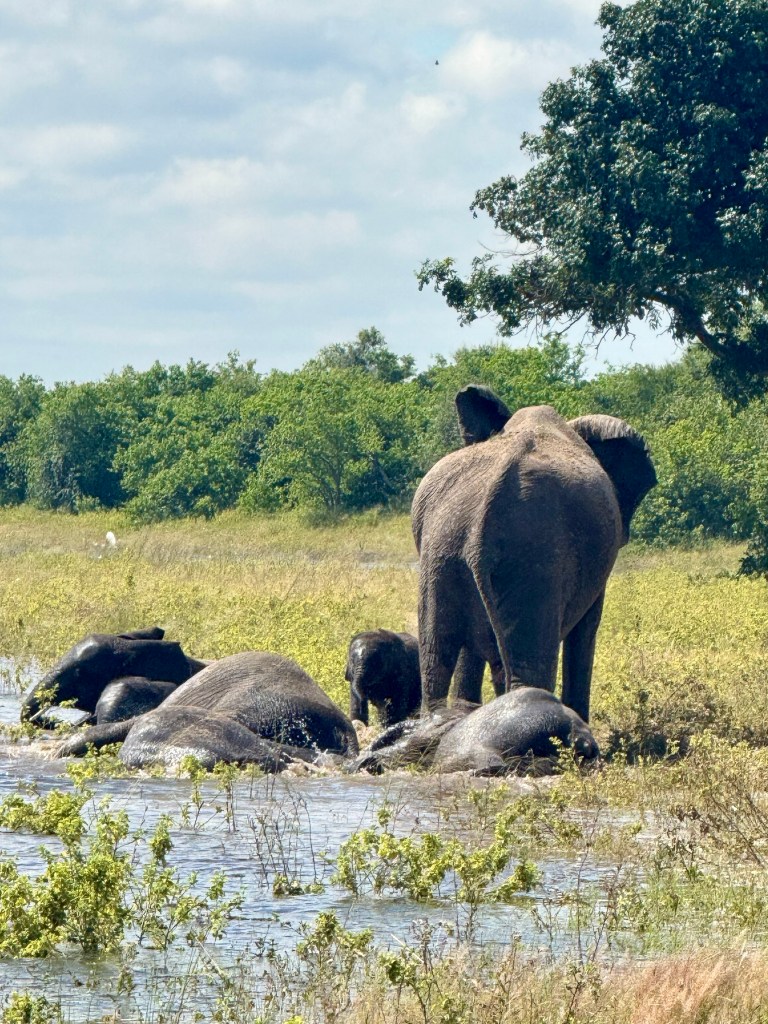
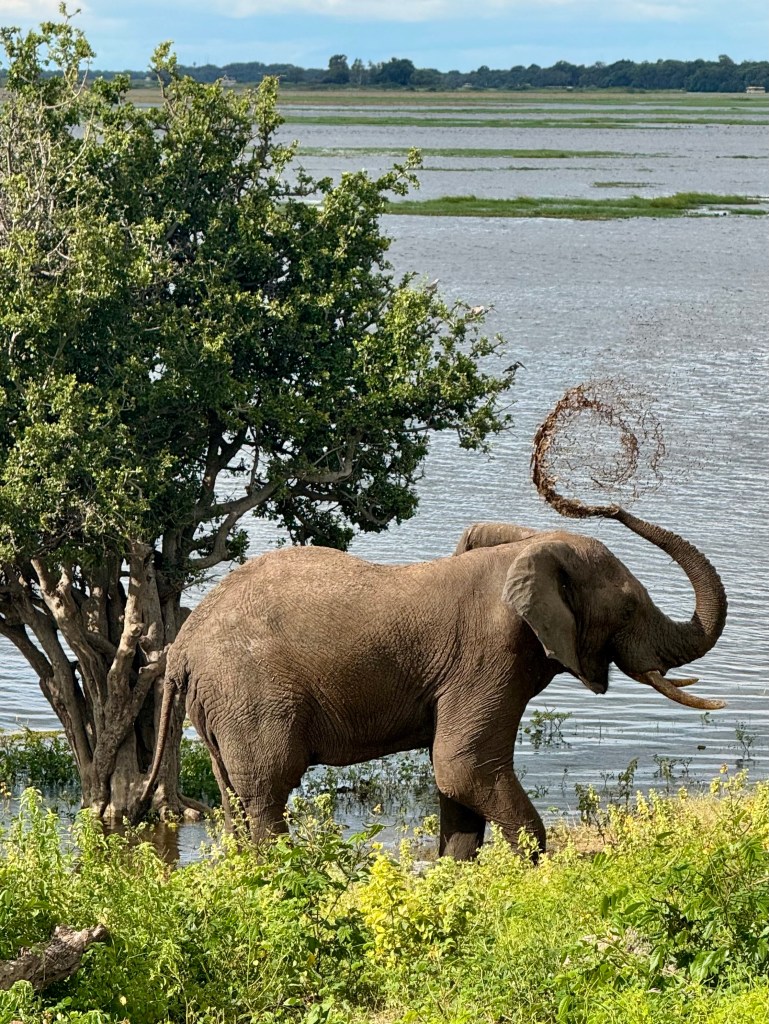
The groups of elephants come down, take a drink of water and then cover themselves in mud before walking into the river.
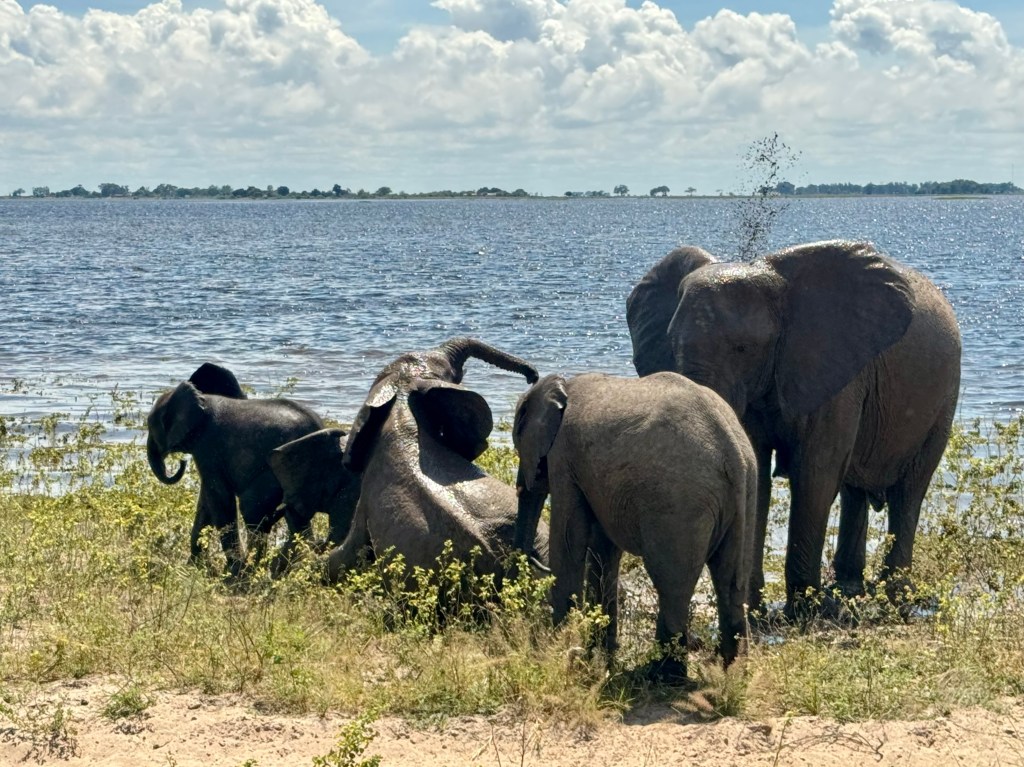
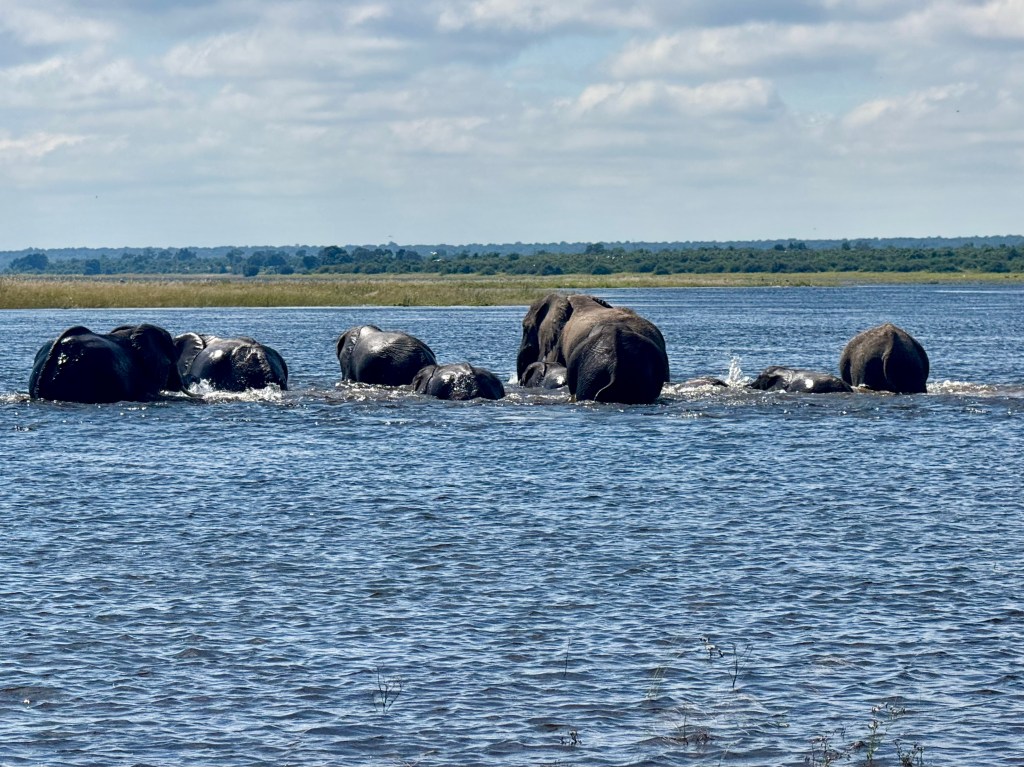
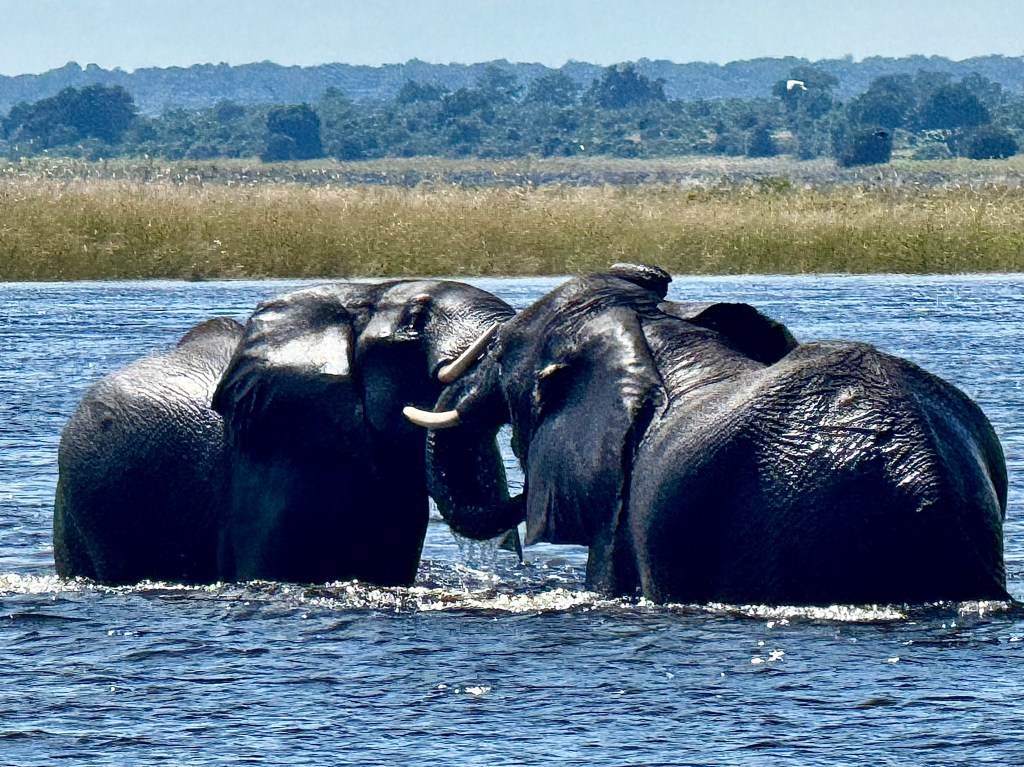
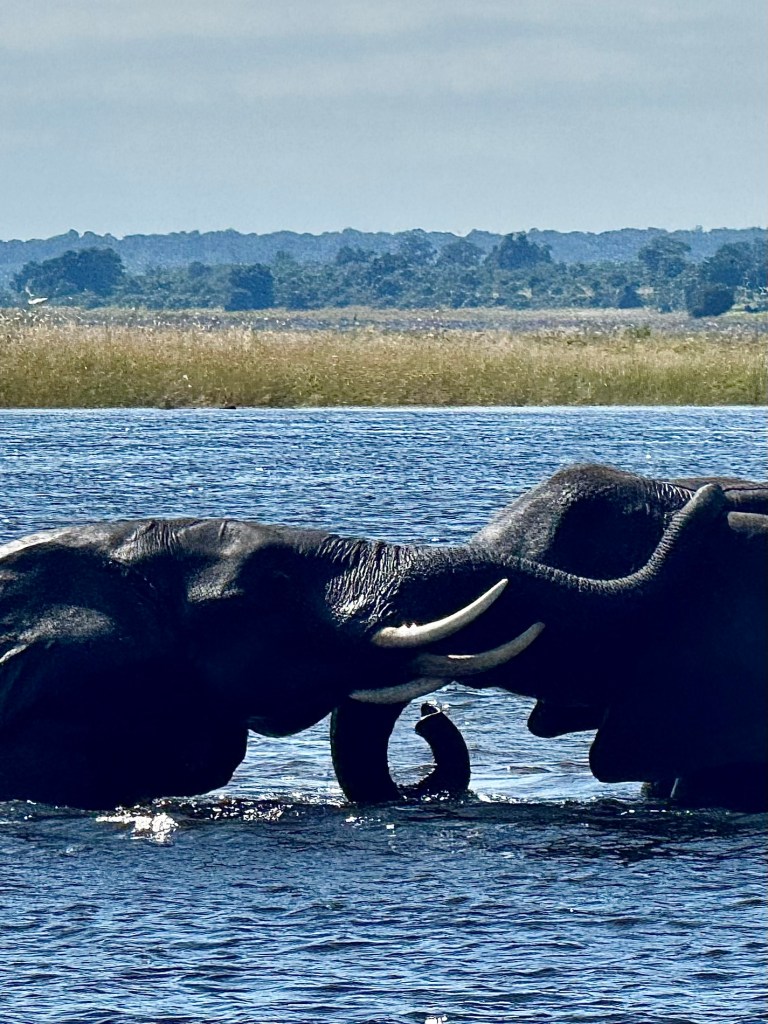
Some of the younger males tussle and play in the deep water.
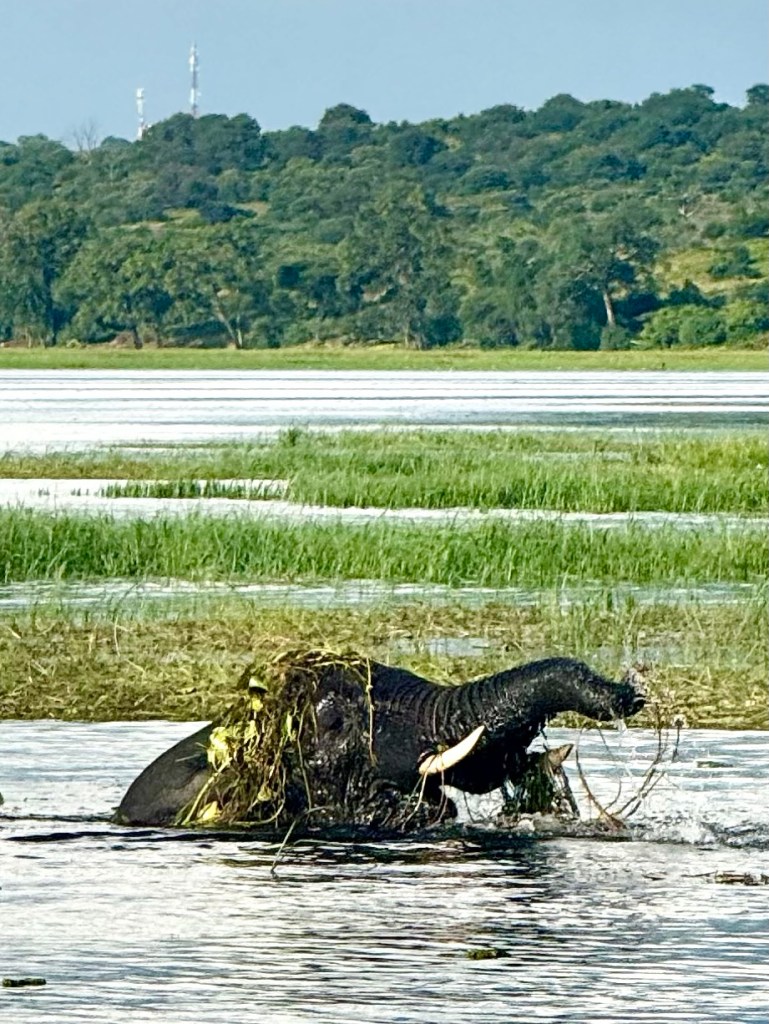
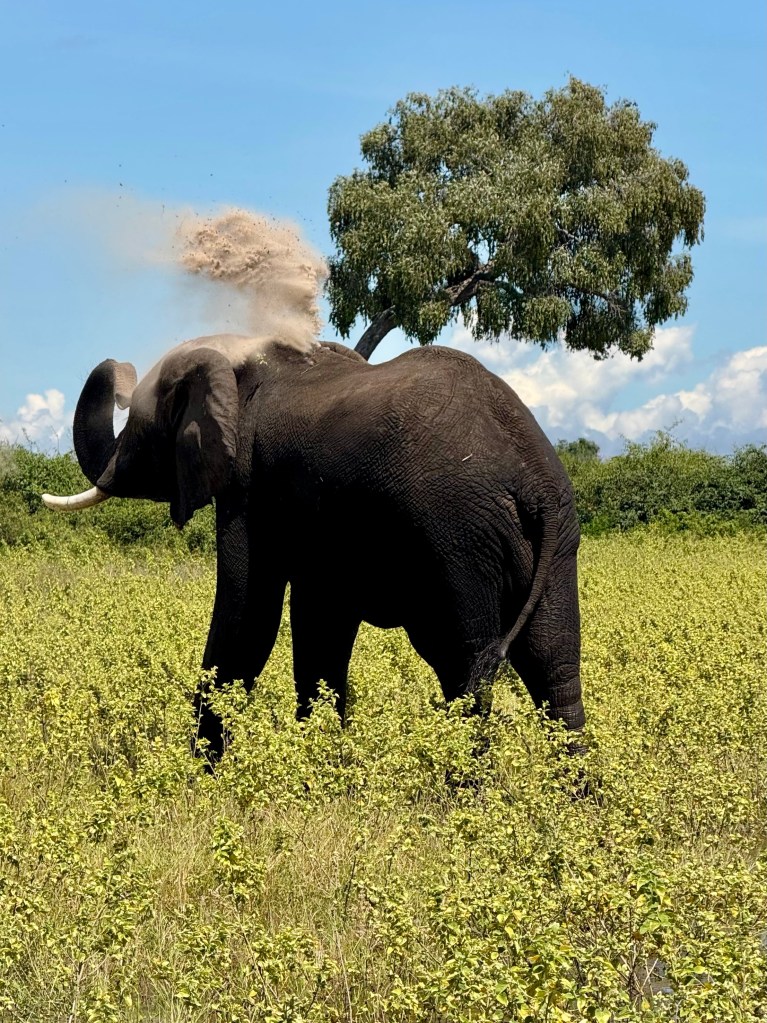
Once out, they dose themselves in more mud and dust which helps to keep parasites off their bodies as well as protecting them from the sun.
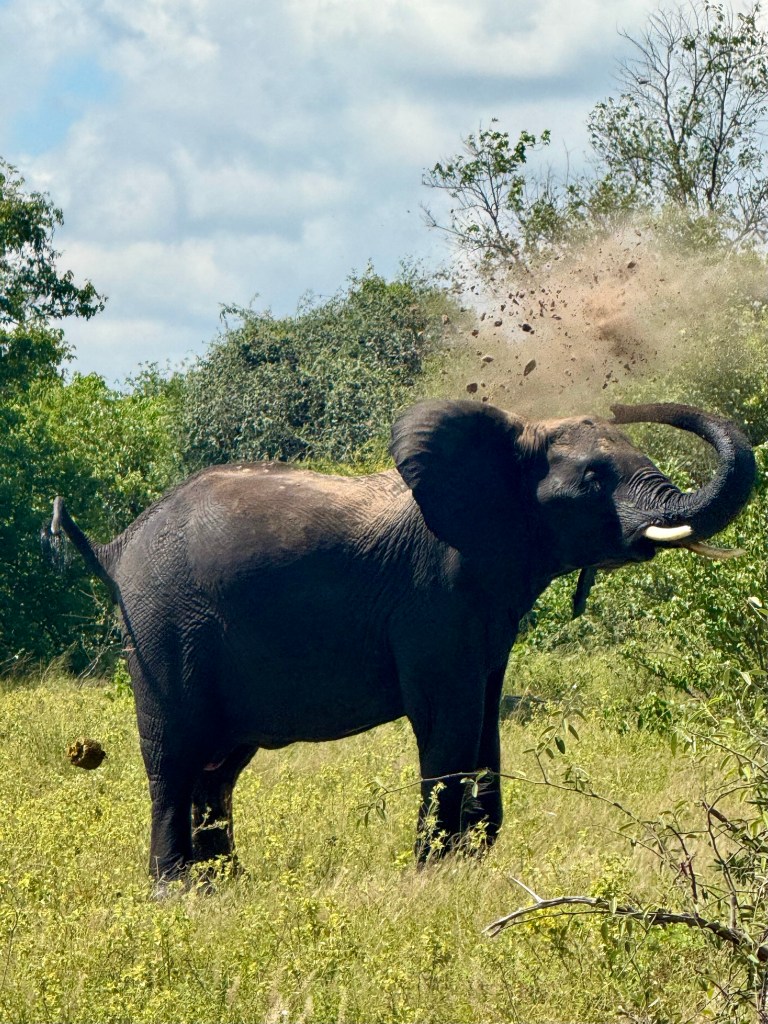
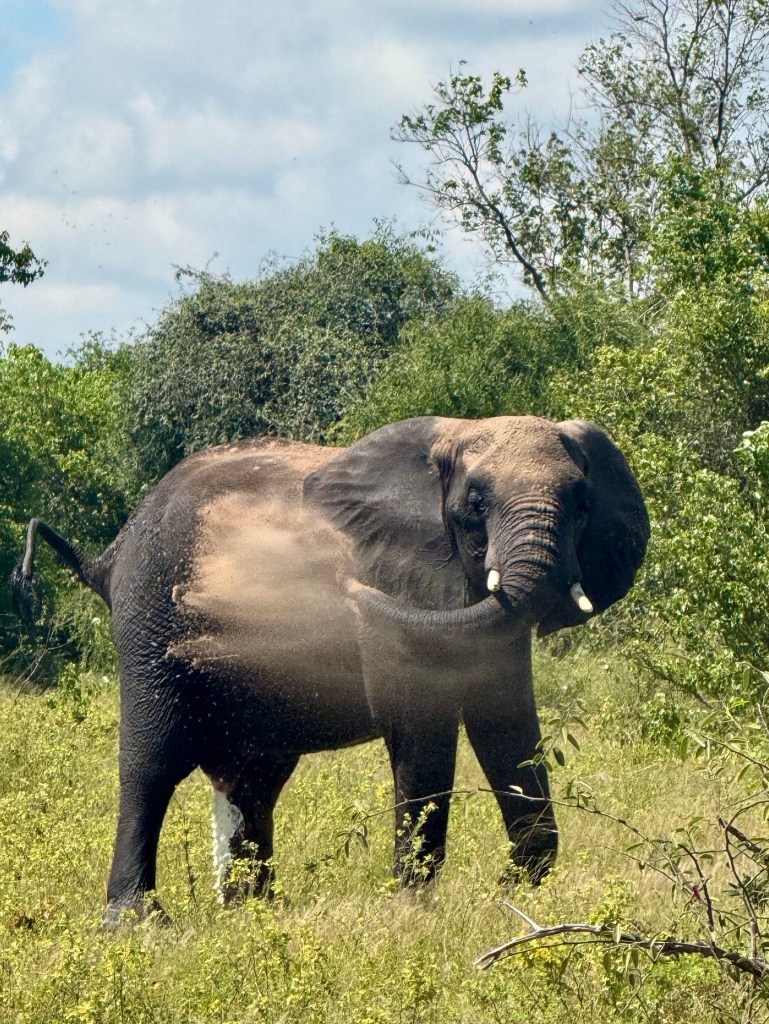
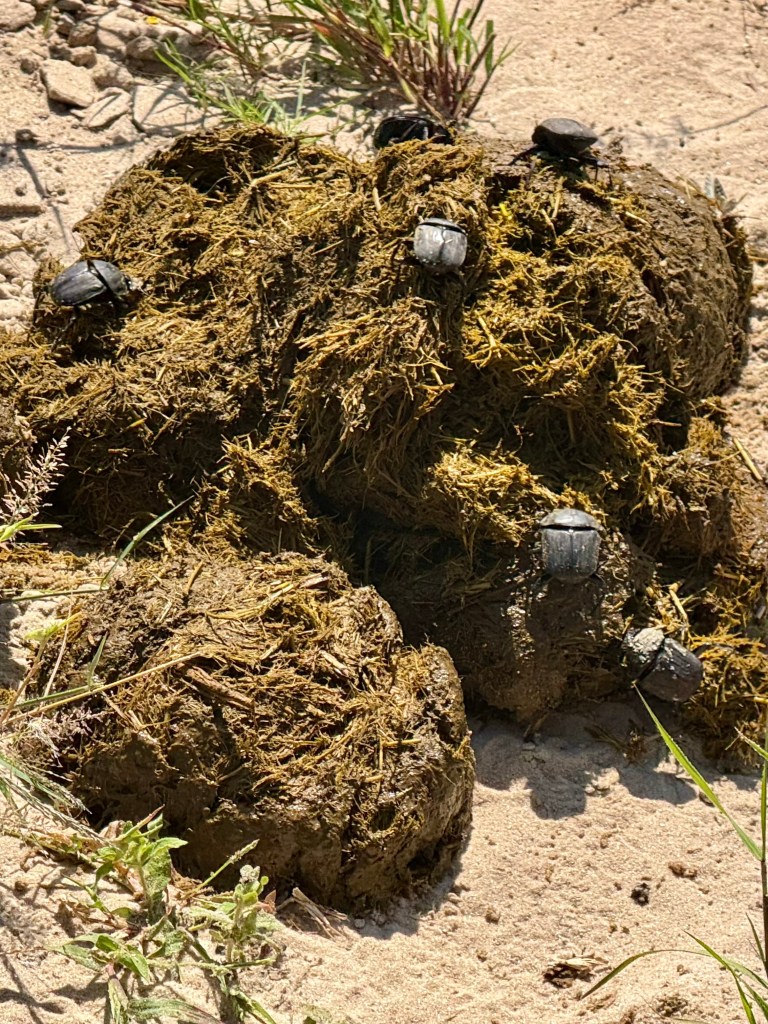
The dung beetles get to work!
Our Botswana safaris have been fabulous, next we cross the land border into Zimbabwe just an hour away.
 Jeff's Travel And Photo Blog
Oh my goodness, what glorious photos, enjoyed to commentary too 😄.
LikeLike